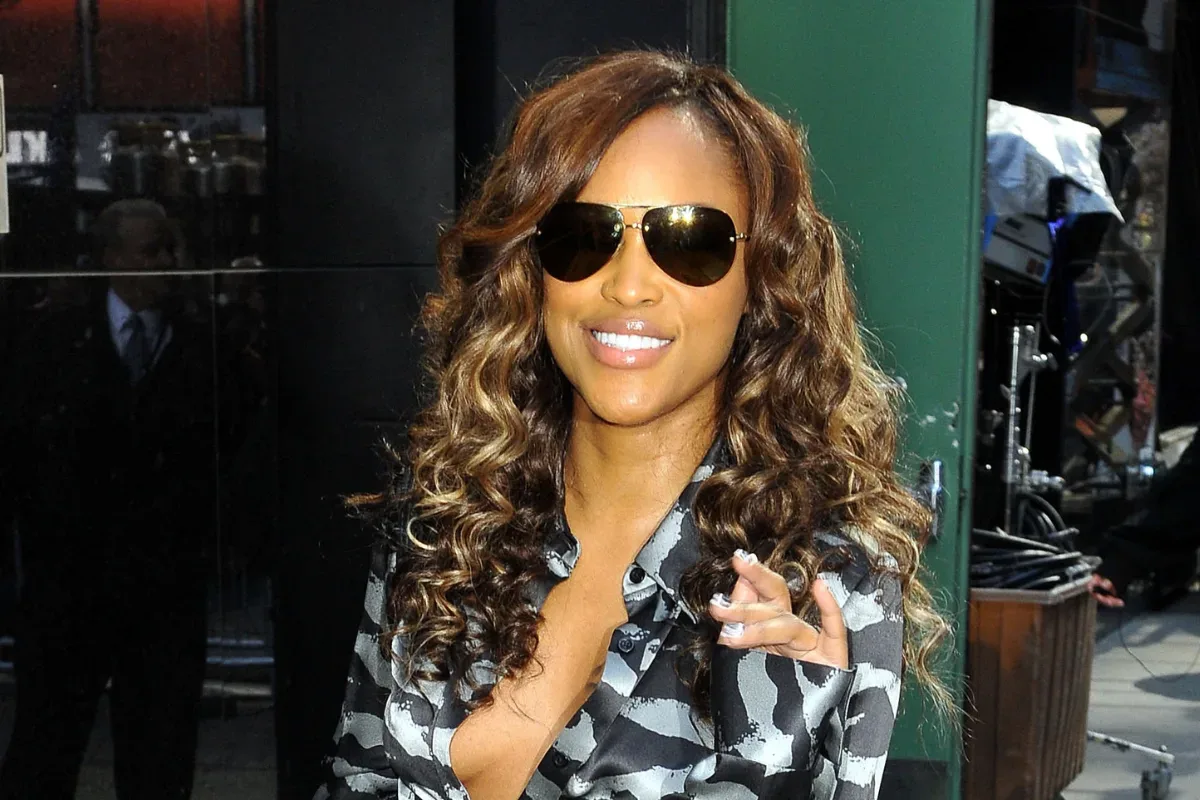
Eve is offering a refreshingly unflashy answer to a question celebrity culture often makes needlessly complicated: what keeps a long-term relationship steady? For the rapper and actor, the essentials are not a mysterious set of rules, a grand public display, or a formula designed to work for every other couple. They are room to remain individual people, honest conversation, and active support for the work each partner cares about.
Her marriage to entrepreneur Maximillion Cooper has now lasted more than a decade. The two met in 2010 at the launch event for Cooper’s Gumball 3000 motor rally, a connection that began amid a busy week-long occasion and grew into a lasting relationship. They married on June 14, 2014, with Bun B officiating the ceremony. In the years since, their family has expanded while their professional lives have remained highly visible and demanding.
That public-facing context is what makes Eve’s emphasis on ordinary, practical relationship habits especially notable. Her description does not suggest that a healthy marriage requires two people to erase their separate ambitions. It makes the opposite case: support can include creating space, and closeness can coexist with independence.
Two adults arriving as themselves
Eve pointed to the stage of life at which she and Cooper married as an important part of their foundation. She was in her mid-thirties, while Cooper was entering his second marriage. In her view, both people came into the relationship already grounded in who they were.
“I think we both came into the relationship fully ourselves.”
That idea is straightforward, but it has real weight. A relationship can involve compromise without requiring either person to become a permanent supporting character in the other’s story. Eve’s framing leaves room for a partnership to be a shared project while recognizing that each member still has a separate career, personal history, responsibilities and sense of self.
It is also a useful antidote to the tidy celebrity-couple narrative, in which success is often presented as either constant togetherness or total spectacle. Eve’s account is more grounded. The relationship is not described as a brand or a performance; it is described as a continuing practice of paying attention to when a partner needs room and when they need presence.
Communication without a rulebook
The core of Eve’s explanation is communication. She has said that she and Cooper enjoy watching one another pursue what they love, while also recognizing the need to step back at some moments and move closer at others. The goal, as she describes it, is to be candid with each other.
Related coverage includes Eve on Building a Marriage With Space, Honesty and Communication.
That approach matters because honesty is broader than simply resolving a disagreement after it has already reached the boiling point. It can mean talking clearly about work commitments, available energy, the need for personal time, family logistics, and the changing emotional needs that arrive in a long relationship. Eve specifically connects that candor with both career decisions and personal space.
“Just allowing each other to be who they are” is central to what helps their relationship, Eve explained, alongside being communicative and honest when it is needed.
There is an important distinction in that perspective. Space is not automatically distance, and a partner’s independent pursuit is not automatically a threat to the relationship. In Eve’s telling, each person can appreciate the other’s passions rather than treating those passions as competing with the marriage. The practical challenge is staying clear enough with one another that independence does not turn into assumption or silence.
It is a message that lands beyond the details of any one couple’s lives. People do not need identical careers, identical schedules or identical interests to build a durable partnership. But they do need a way to discuss the pressure points that emerge when those differences are real. Eve’s comments place the emphasis on the ongoing conversation rather than a supposedly perfect relationship rule.
A blended family in London
Eve and Cooper live in London and share a son, Wilde Wolf, who was born in February 2022. Cooper also has four children from a previous relationship: Jagger, Lotus, Mini and Cash, making Eve a stepmother within a blended household.
The family picture makes the couple’s focus on communication feel even more practical. Blended families are not a simple extension of a two-person relationship. They involve existing bonds, different ages, multiple needs and a family rhythm that has to account for more than one history. Public summaries of celebrity families can reduce all of that to a neat list of names, but Eve’s comments point toward the kind of flexibility required behind the list.
Her approach does not claim that the work is effortless. Instead, it acknowledges a principle that can matter even more in a large family: everyone benefits when the adults can speak honestly, make room for one another and stay supportive of the identities people bring into the home. A blended family does not need to look like a scripted sitcom to be meaningful; it needs patience, clarity and respect for the relationships that already exist.
That makes the couple’s reported dynamic less about trying to present a flawless image and more about recognizing the moving parts of real life. Careers can be busy. Parenting changes daily routines. Family roles evolve. Being present does not always mean occupying the same room or following the same plan. Sometimes it means trusting a partner to pursue their own work, then remaining available for the conversations that keep the connection intact.
Why mutual support is more than applause
Eve’s comments about enjoying each other’s passions may be the most revealing piece of the picture. Support is easy to praise in the abstract, but it can require deliberate choices when both partners have active professional lives. It means celebrating another person’s momentum without making their success feel like a subtraction from one’s own.
For Eve, that principle arrives during an active period in her own music career. Her 2001 album Scorpion is marking its 25th anniversary, and she has announced dates for a UK and European tour in October. The anniversary naturally brings renewed attention to an album from an era that remains central to hip-hop’s cultural memory, while the tour places her work firmly in the present tense.
There is no need to treat a musician’s home life and artistic life as rival narratives. Eve’s own description argues against that false choice. A relationship that allows each person to do the work they love can make professional ambitions part of the shared landscape instead of an interruption to it. For a performer preparing to take a catalog and career history back to audiences, that flexibility is plainly valuable.
Music, touring and public attention can demand time, travel and concentration. The same is true, in different ways, for entrepreneurial commitments. The relevant lesson in Eve’s account is not that couples should copy one another’s schedules. It is that ambition works better inside a partnership when it is met with understanding rather than control.
A low-drama answer in a high-drama culture
There is a reason Eve’s explanation resonates. Entertainment news frequently rewards revelations of conflict, rules, ultimatums and dramatic turnarounds. A sustained marriage built around openness can sound almost too simple by comparison. But simple is not the same as shallow. The habits she identifies—honesty, personal space, self-knowledge and genuine appreciation for a partner’s calling—are difficult precisely because they must be revisited as circumstances change.
Her words are also careful not to transform one couple’s experience into universal prescription. She is speaking about the dynamic she and Cooper have developed, shaped by their ages when they married, their separate careers, their family and their life in London. That specificity is part of what gives the comments credibility. There is no promised shortcut, only an account of values that have helped them navigate more than a decade together.
As Scorpion reaches its 25-year milestone and Eve prepares for October’s UK and European run, her relationship perspective offers a parallel to the endurance behind any lasting creative career. Neither is sustained by standing still. Both require people to remain themselves, respond to changing conditions and make the effort to communicate clearly when it counts.
For more on another music-centered event spanning London, see Pokémon Night Out’s London and Los Angeles plans.