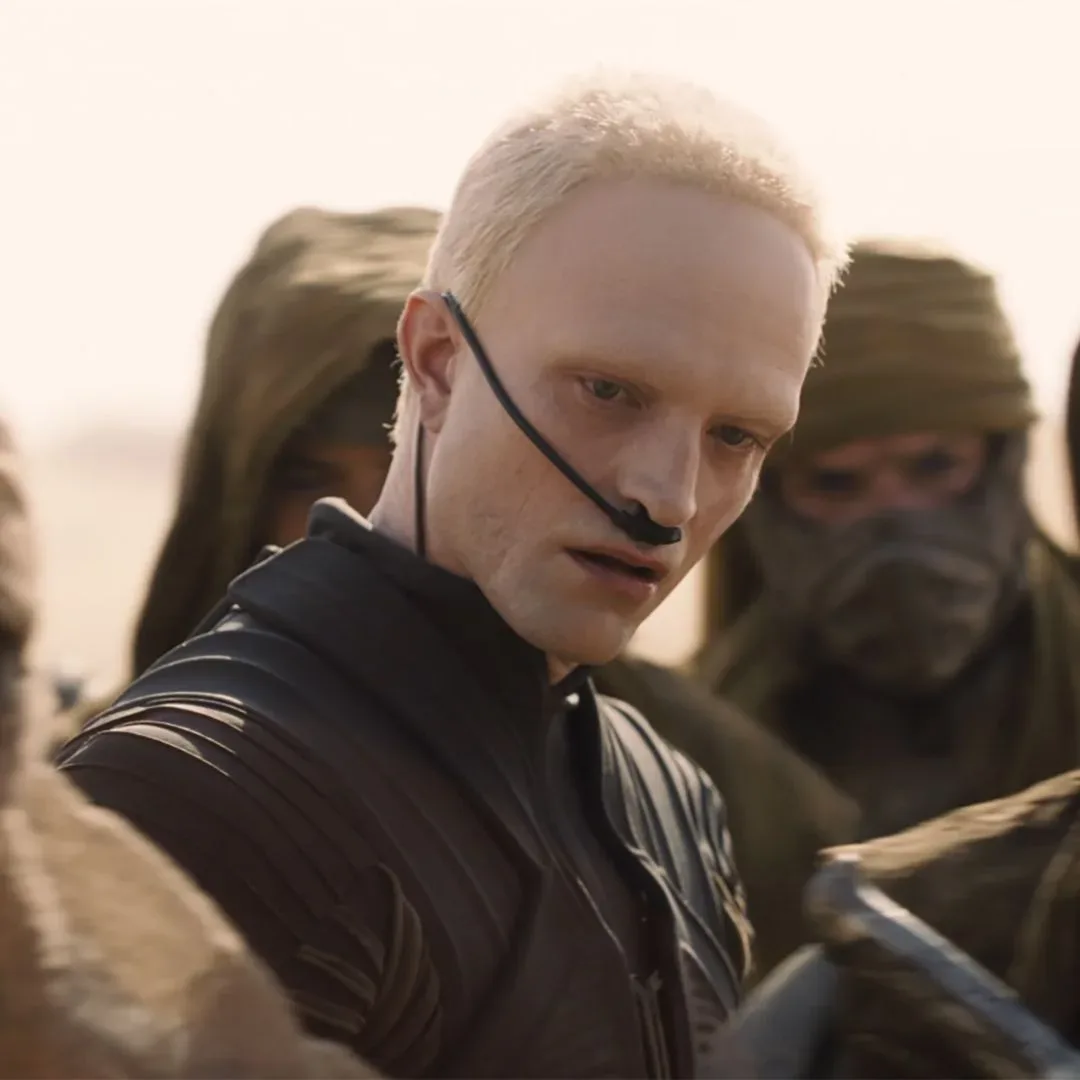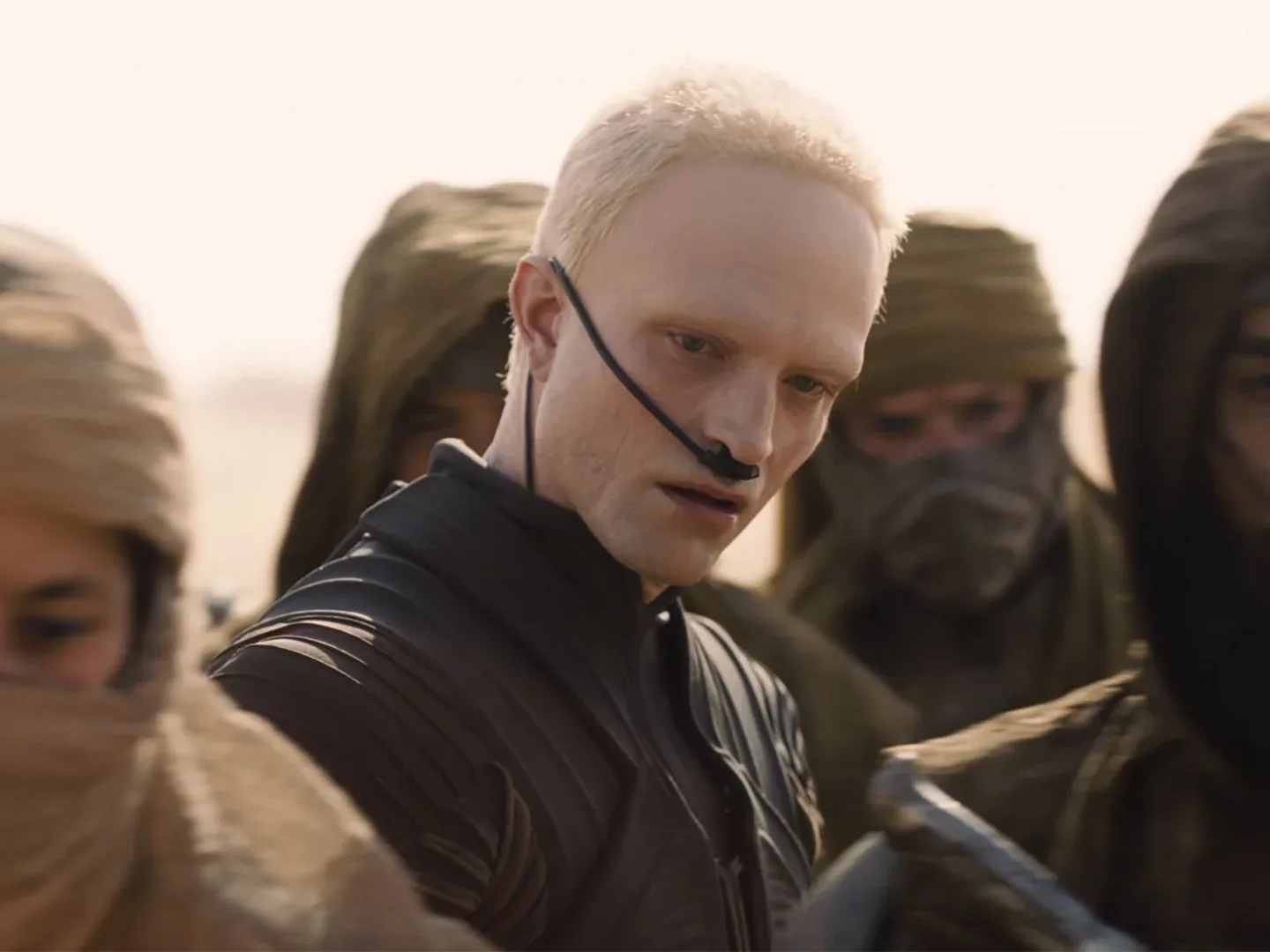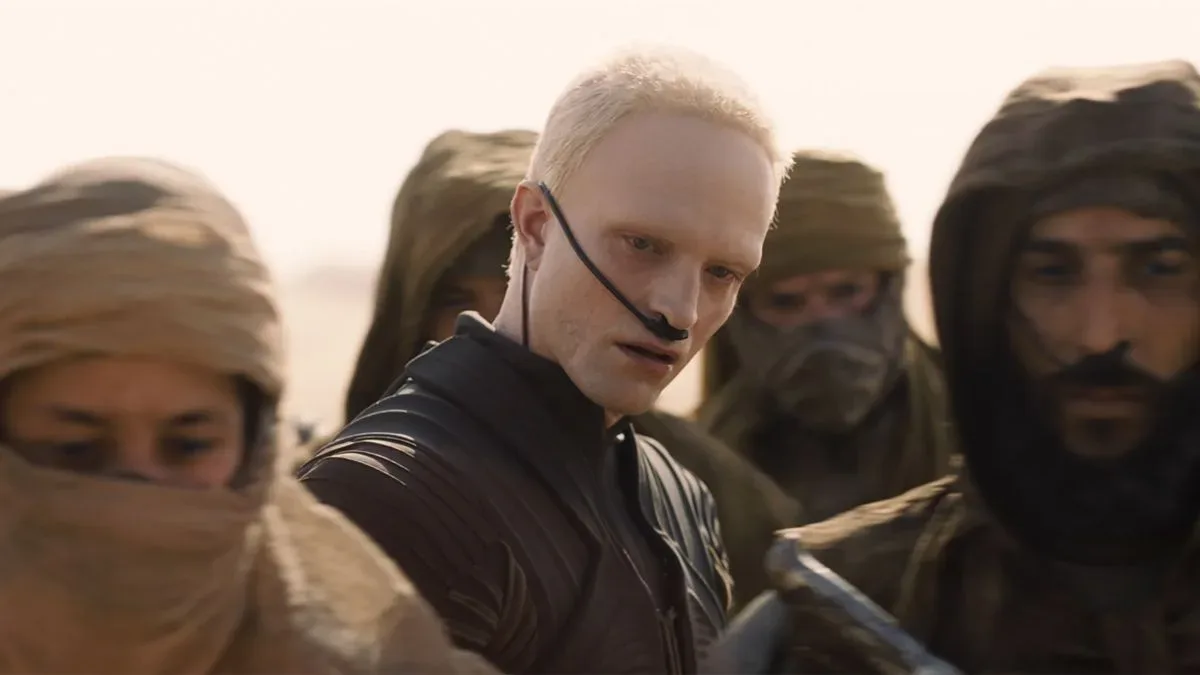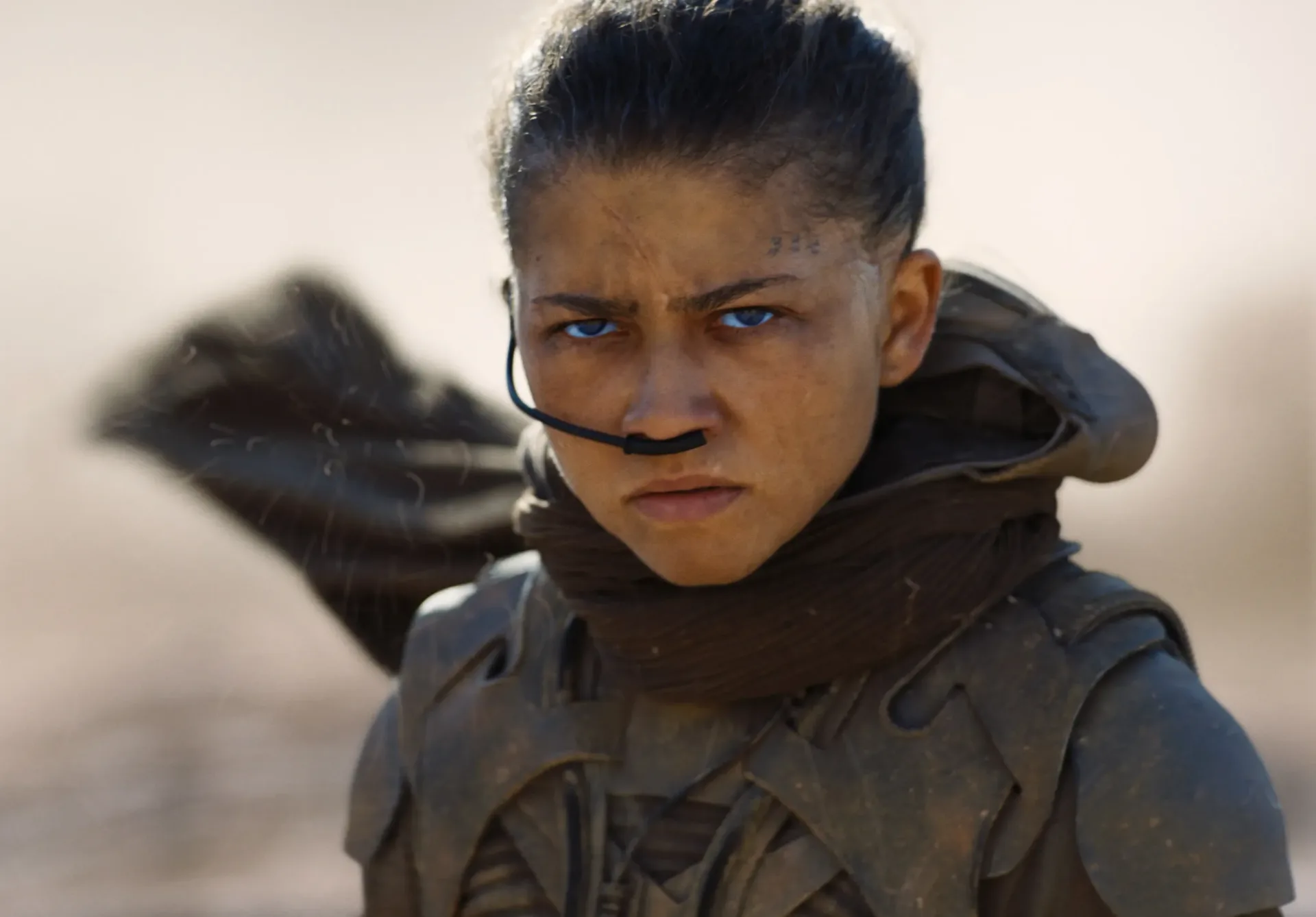
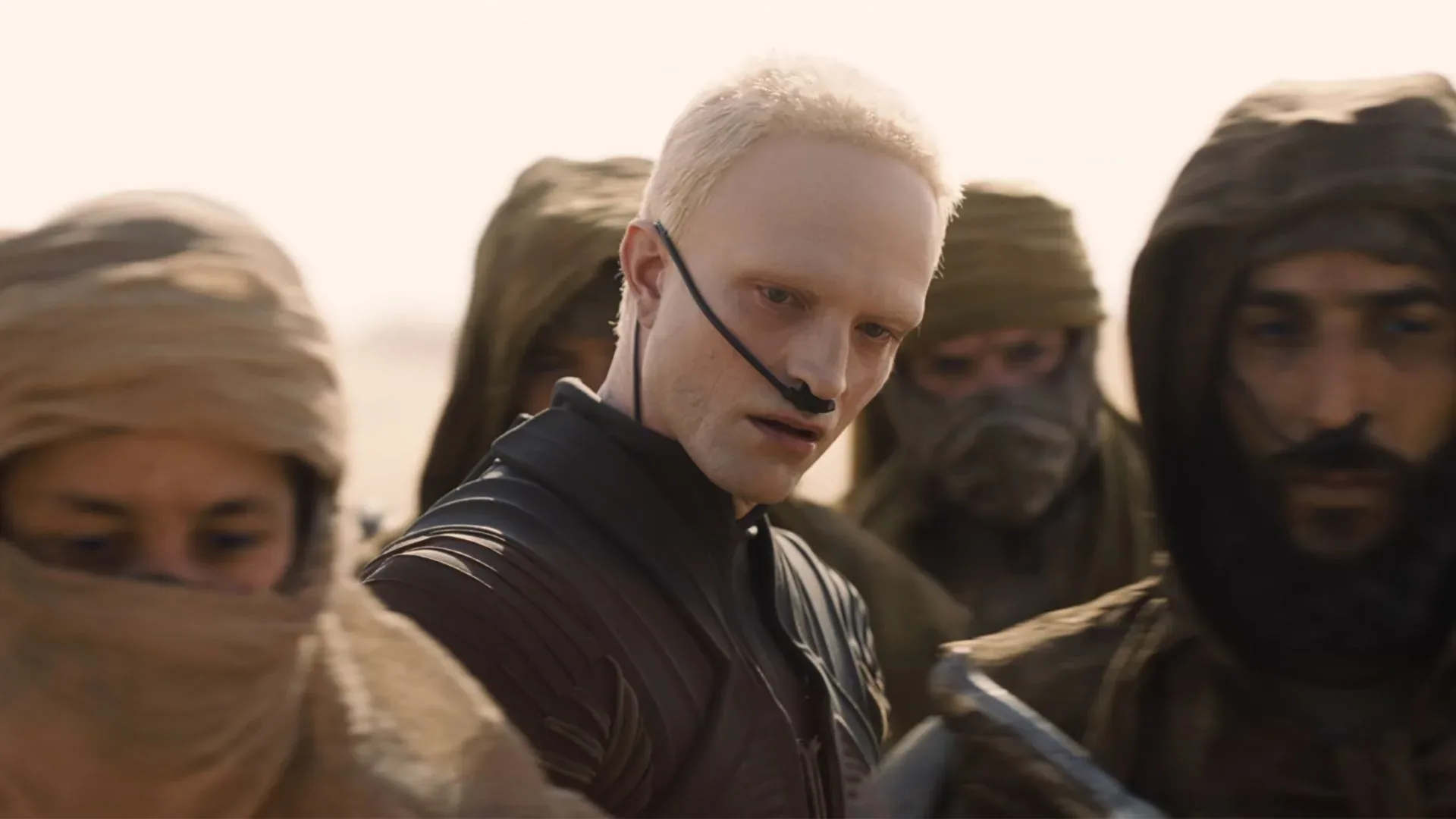
Robert Pattinson’s Scytale has finally spoken in a new Dune: Part Three teaser, and the line is short enough to fit on a meme while carrying the distinctly ominous weight this sequel is chasing.
The clip places Scytale opposite Zendaya’s Chani in what appears to be an interrogation. He raises “rumors of offspring.” Chani dismisses them as “Desert legend. Children’s stories.” Scytale’s response—“I love children’s stories”—is delivered in an unusual, carefully shaped voice that makes the innocuous wording sound anything but innocent.
That is the headline-worthy reveal here: not merely that Pattinson is in Denis Villeneuve’s final Dune film, but a first sample of how he is approaching its new antagonist. The teaser gives audiences a performance clue while withholding the broader circumstances around the exchange. For a franchise built around political pressure, prophecy, private loyalty and public mythmaking, that restraint matters.
A tiny line with a large target
The dialogue makes one point fairly clear: reports concerning Paul Atreides and Chani’s children have reached people who could use that knowledge against them. The teaser does not confirm every detail of Scytale’s plan, so it is worth separating what is on screen from what viewers can reasonably infer.
- Confirmed by the teaser: Scytale questions Chani about rumored offspring, and Chani frames those rumors as legends or stories.
- Suggested by the teaser: Scytale is probing a subject Chani has reason to protect.
- Not established by the clip: precisely what Scytale knows, how he learned it, or what he intends to do next.
An earlier trailer showed Paul, played by Timothée Chalamet, and Chani with a baby. That imagery makes the new conversation feel less like an abstract reference and more like a threat aimed at a vulnerable part of Paul’s life. The teaser’s wider material also depicts Paul becoming increasingly anxious that enemies want him dead.
The family secrecy implied by these moments fits the precarious political situation described for the film. Paul rules from a position of immense power, has accumulated enemies after war ravaged the galaxy in his name, and is married to Irulan, the former Emperor’s daughter, played by Florence Pugh. A hidden family, if it is indeed being kept hidden, would not simply be a private matter. It would be a potential pressure point inside a regime already surrounded by adversaries.
What Scytale’s delivery adds
Voice is doing much of the work in this teaser. Pattinson’s line is not loud, nor is it a conventional villain declaration. Its impact comes from contrast: a phrase ordinarily associated with harmless bedtime entertainment is repurposed as a response to Chani’s attempt to write off the rumors. It lands as if Scytale enjoys the very notion that a comforting story may contain something real.
That makes the line memorable without explaining too much. Audiences are not told the exact stakes of the conversation, but they are given an immediate sense of the character’s manner. Scytale seems composed, interested and intrusive rather than openly explosive. In a teaser, that is a useful form of characterization: one sentence identifies a threat, establishes an unsettling rhythm and hands fans a repeatable quote.
Related coverage includes Dune: Part Three Teaser Reveals Robert Pattinson’s Scytale Voice.
Pattinson has become a frequent online talking point for highly specific vocal performances, including work in The Lighthouse and The Boy and the Heron. This new clip is already getting the same treatment, with social-media viewers quickly turning “I love children’s stories” into the latest example of a Robert Pattinson voice people want to imitate, quote and debate.
That response is more than a throwaway marketing bonus. A line that travels well online can turn an unfamiliar character into a recognizable presence before the audience has seen much of him. Scytale’s name may be new to viewers who have only followed Villeneuve’s two previous films, but the cadence of this brief performance gives them something concrete to attach to it.
The sequel’s pressure is closing in on Paul
Dune: Part Three is based on Frank Herbert’s Dune: Messiah and is intended to complete Villeneuve’s trilogy. The supplied description of the film points to a substantial time jump after the preceding installment, with Paul confronting the consequences of a galaxy-wide war conducted under his rule and the enemies that result from it.
That premise shifts the dramatic emphasis. Paul is no longer simply fighting to secure power or survive the conflict around Arrakis. The teaser frames him as a ruler whose dominance has created new dangers, and whose personal relationships may offer those dangers a way in. Chani’s exchange with Scytale therefore appears to sit at the meeting point of the film’s political and personal stakes.
It also gives Chani an active, guarded role in the material shown so far. Her answer does not confirm the rumor; it denies it by reducing it to folklore. Whether that denial is convincing to Scytale is another matter. His reply strongly implies that he does not accept the dismissal—or that he finds the possibility useful regardless.
For viewers catching up on the series’ shifting alliances and stakes, our look at how a fantasy finale can turn apparent surrender into a larger political danger explores a similarly useful storytelling idea: power struggles often become most dangerous when the obvious conflict seems settled.
Who is returning, and who joins the conflict
Alongside Chalamet, Zendaya, Pugh and Pattinson, the film’s named cast includes Anya Taylor-Joy as Alia, Rebecca Ferguson as Lady Jessica, Javier Bardem as Stilgar and Jason Momoa as Hayt. The teaser itself concentrates tightly on Paul, Chani and Scytale, but the ensemble list suggests that the final chapter will continue to deal with the wider network of relationships surrounding Paul’s rule.
Importantly, audiences should not mistake a teaser’s selective focus for a full plot map. Marketing footage is designed to create questions as much as answer them. The current material supplies three particularly strong ones:
- How much does Scytale know about Paul and Chani’s children?
- Why has Chani chosen to characterize the rumors as a desert story?
- How does the threat against Paul connect to the fears and paranoia shown elsewhere in the teaser?
Those questions are supported by the footage and its described context. Answers beyond them would be speculation. The film has not, in this material, explained the whole conspiracy around Paul or revealed Scytale’s full objective.
Why the meme response makes sense
There is an entertaining contradiction at the heart of the clip’s reception. The dialogue is attached to apparent danger involving children and state-level intrigue, yet Pattinson’s peculiar delivery makes it instantly playful in isolation. That is exactly why it is so easy for audiences to extract from the trailer and repeat.
The joke works because the line can operate in two modes at once. Within Dune: Part Three, it is menacing. Outside the film, repeated without context, it becomes a compact showcase for an actor embracing a strange vocal choice. Neither response cancels the other out. The first helps sell Scytale as a threat; the second helps ensure people remember that he has arrived.
For now, “I love children’s stories” is a teaser-sized piece of evidence rather than a full explanation of Pattinson’s character. But it is effective evidence. It puts Scytale near a guarded secret, sharpens the danger around Chani and Paul, and supplies the trilogy’s final installment with a new vocal texture that is already proving hard to forget.
Dune: Part Three is set to arrive on December 18.