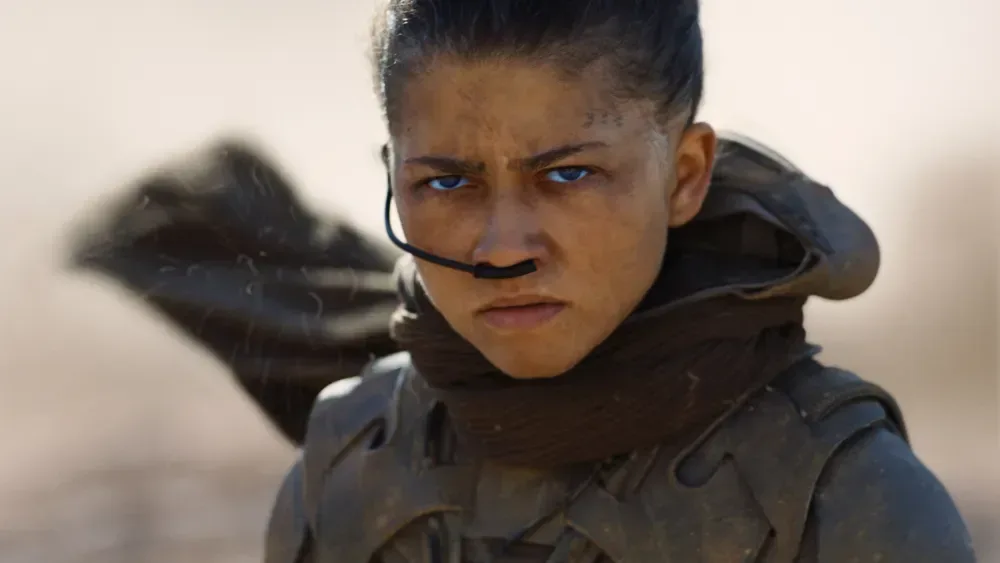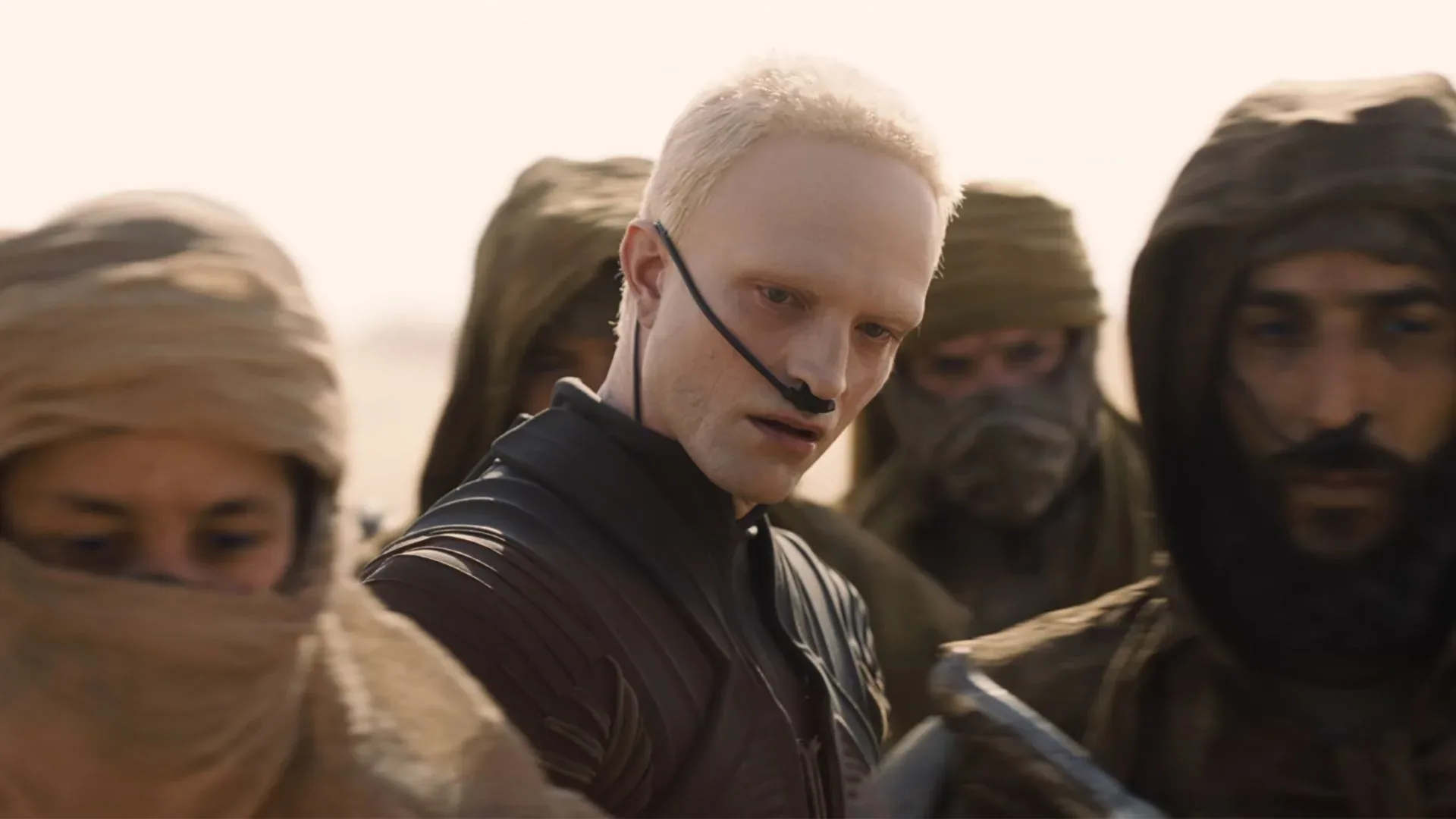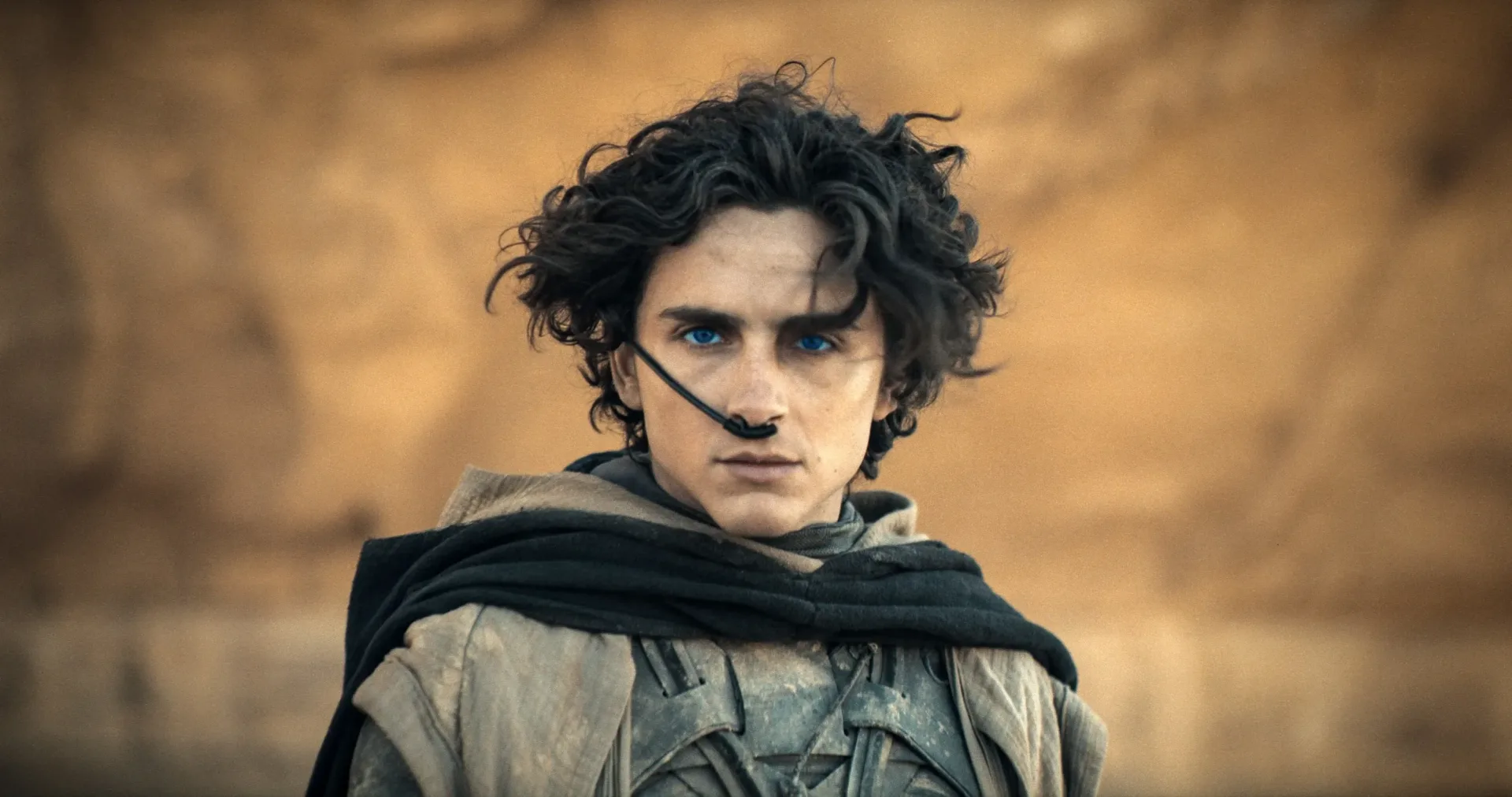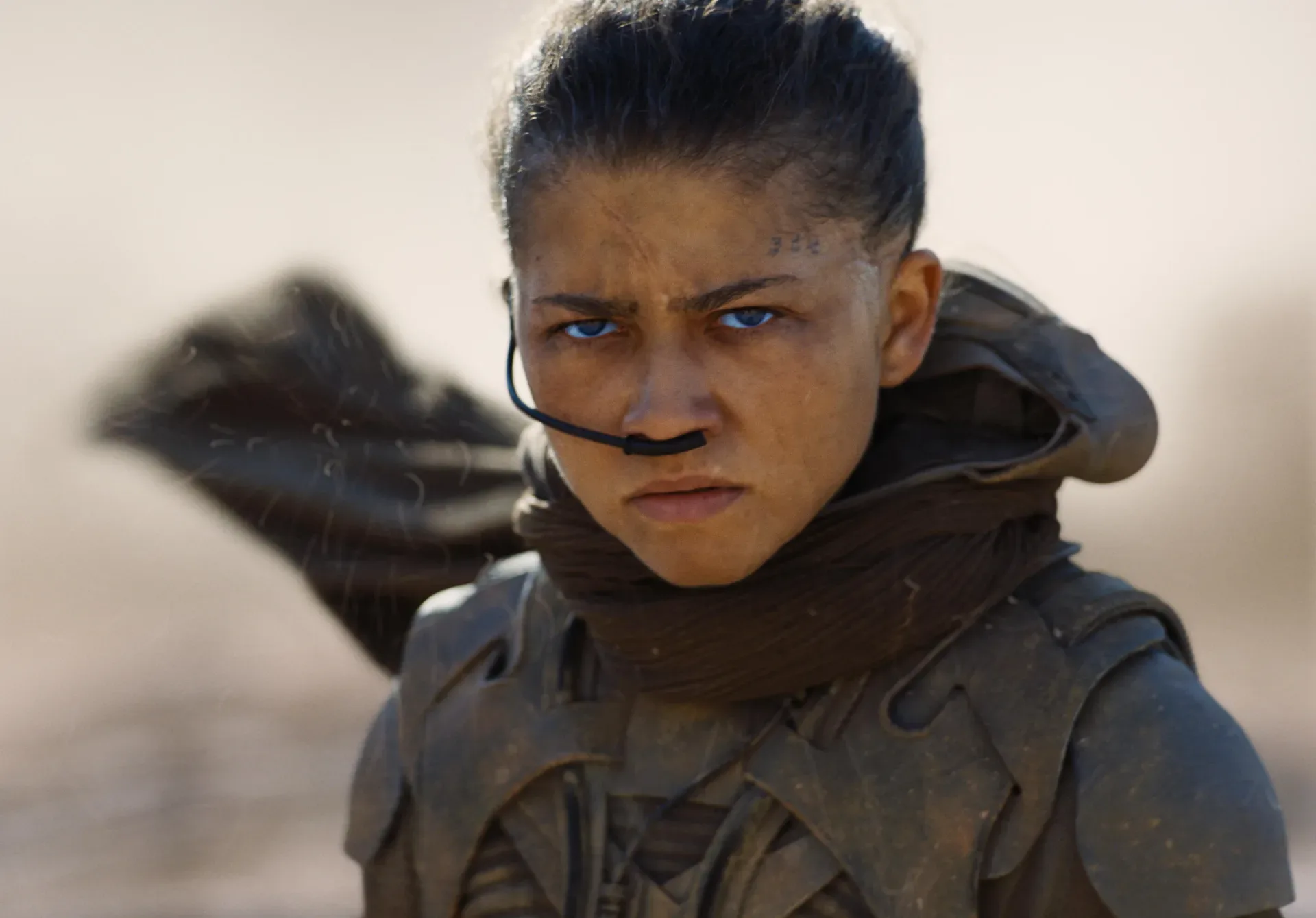
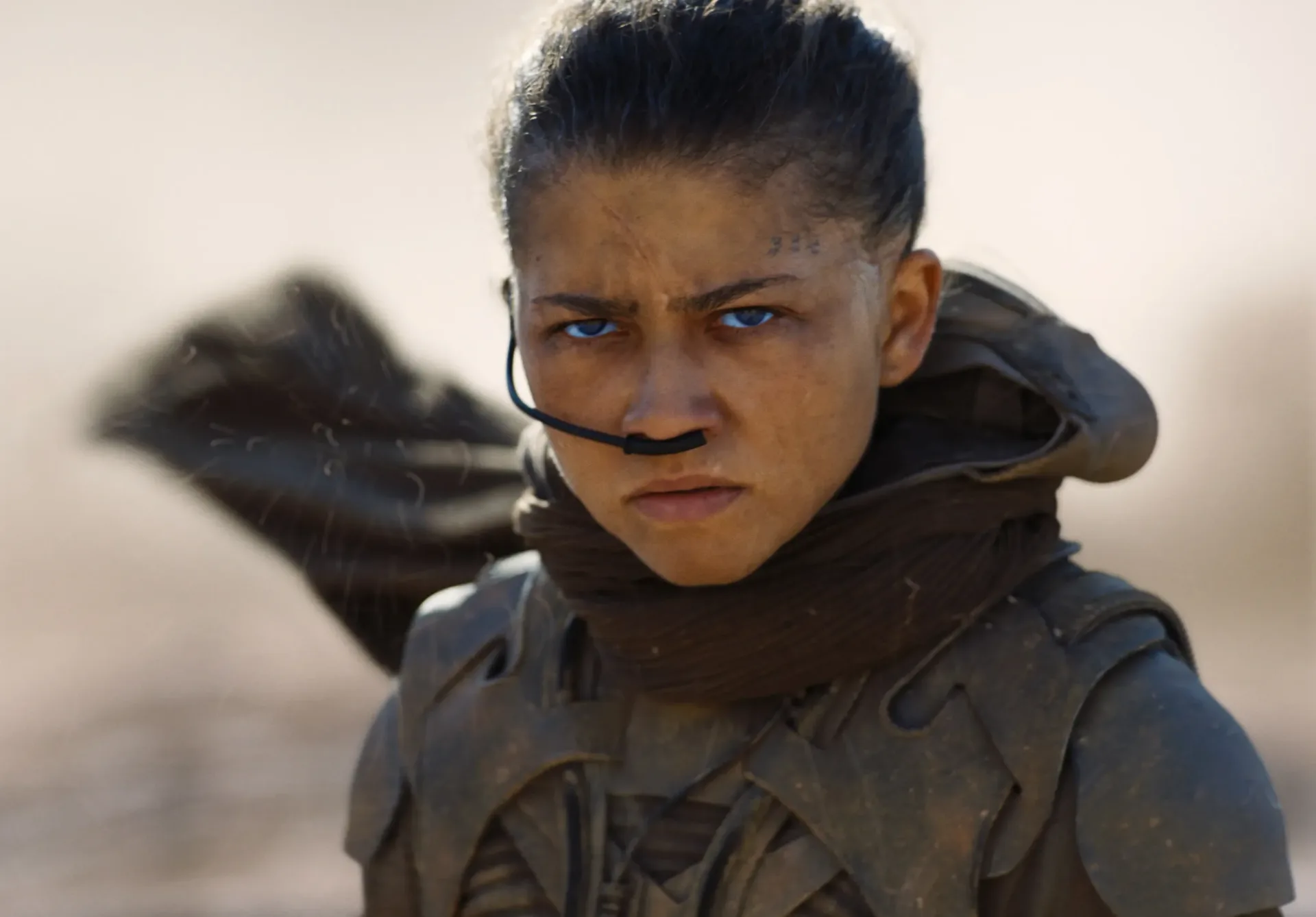
Dune 3 will draw heavily from Frank Herbert’s 1969 novel Dune Messiah, but the people starring in Denis Villeneuve’s third Dune movie are setting expectations that this is not intended to be a page-for-page transfer of the book. Zendaya has said the new film contains material that remains true to Herbert’s work alongside substantial departures, while Robert Pattinson has urged audiences not to approach those changes as an automatic fault.
That framing matters because it points to an adaptation designed as its own movie rather than a strict exercise in replication. Timothée Chalamet, returning to the trilogy, described the result as its “own thing” and said he was fully satisfied with Villeneuve’s ending. Pattinson, joining the series as Scytale, similarly said the finished film’s focus differs from what he initially expected from reading the script.
The third film opens in theaters on Dec. 18 from Warner Bros. and Legendary. It arrives after two commercially significant entries: the first Dune launched simultaneously in theaters and on HBO Max during 2021 and grossed $410 million worldwide, while the 2024 sequel had an exclusive theatrical release and earned $714 million.
What the cast is actually signaling about the adaptation
“Departures” can sound like a warning label to readers who care deeply about the original novel. It does not, by itself, define whether a film has altered one scene, rearranged events, merged ideas, shifted emphasis between characters, or built a new dramatic structure around familiar material. In this case, the useful detail is that Zendaya paired the word with an affirmation that much of the film remains faithful to the source. The message is not that the book has been abandoned; it is that fidelity and change are both part of the plan.
That distinction is especially important for a novel-to-film adaptation. A book has room to linger in internal thought, explanation and parallel story lines. A feature film must convey its priorities through performance, imagery, dialogue and a limited running-time structure. “Adaptation” does not simply mean reproducing plot information in a different medium. It means selecting what becomes central, deciding what can be communicated visually, and shaping a complete emotional arc for viewers who may not know the novel at all.
Nothing in the cast’s comments specifies the individual book changes, so there is no reason to treat speculation as confirmation. What is confirmed is the broader creative position: Villeneuve’s trilogy finale is rooted in Dune Messiah, but it is also making choices intended for this particular screen story.
Pattinson points to politics, morality and parenting
Pattinson’s comments provide the clearest indication of the film’s intended tone. He called the screenplay complicated, then said the completed movie was not about what he had expected. In his view, the result plays as a grand political and moral fable while also landing as a considerably more emotional piece. He specifically identified parenting as a major concern and described the film as moving.
A political fable is a story that uses characters and conflict to explore power, leadership, public consequences or social values. A moral fable puts ethical choices and their costs at the center. Those are broad descriptive terms, not a list of confirmed plot mechanics. Still, they suggest that Dune 3 may be less interested in simply escalating scale than in examining what power does to people and relationships.
Related coverage includes Dune 3 Cast Signals Major Changes in Denis Villeneuve’s Dune Messiah Adaptation.
The emphasis on parenting is equally notable because it gives the reported emotional direction a human scale. Even in a large science-fiction production, a family-centered theme can make questions of duty, legacy and responsibility more immediate. Pattinson’s description does not reveal how that theme is expressed, but it does indicate that viewers should not assume the movie’s emotional objective is limited to spectacle or political maneuvering.
That does not make Dune 3 a separate genre or a retreat from the scale associated with the earlier films. Rather, it suggests Villeneuve’s final chapter may be aiming to pair a broad moral and political canvas with a more intimate set of stakes. The cast’s language consistently emphasizes that combination: consequential ideas, but also an emotional story.
A trilogy ending that is not chasing the same benchmark
Chalamet’s response to the ending is revealing in a different way. He said the bar had not dropped, but that Villeneuve had moved it. Put plainly, he is not presenting the third installment as an attempt to copy the exact impact of its predecessor. He is presenting it as a film with a different target.
That is a meaningful claim for any finale. Sequels often face a familiar pressure: replicate the elements that audiences responded to before, only on a larger scale. But repetition can narrow a series if its story has moved into different territory. Calling the film “its own thing” implies confidence in a change of emphasis, particularly alongside Pattinson’s description of a more emotional work.
For viewers, the practical takeaway is straightforward. The most productive expectation is not that Dune 3 will recreate the second film beat for beat in mood or intent. It is that it will close the trilogy with a perspective shaped by the material it adapts and by Villeneuve’s decisions for the screen. The cast has made clear that those decisions include changes.
The theatrical context is unusually large
Dune 3 is arriving at the end of a successful box-office year, opening on the same weekend as Avengers: Doomsday. The combined weekend is widely expected to set a record for the highest-grossing single weekend in box-office history. That is a sizable backdrop for a film that is also being positioned as an event in its own right.
The franchise’s recent box-office history helps explain that positioning. The first film’s $410 million worldwide total came amid a release strategy that placed it in theaters and on HBO Max at the same time, during an era when COVID disruption was still shaping Hollywood. The follow-up’s $714 million worldwide performance came after it received an exclusive theatrical release. Those figures do not guarantee any particular outcome for Dune 3, but they show that the series has already navigated two notably different theatrical environments.
Florence Pugh, who returns as Irulan, described the second movie as an event and likened the franchise’s place for its audience to a generational Star Wars. Zendaya also stressed the value of the shared moviegoing experience. Their comments are expressions of what the series means to its cast, rather than a forecast of ticket sales, but they match the scale of the release window.
The pairing with Avengers: Doomsday also makes this a particularly conspicuous theatrical moment for franchise filmmaking. For more on that other major release, read Channing Tatum’s Gambit sounds more grounded in Avengers: Doomsday.
What is known, and what remains unknown
There are several firm points from the cast: Dune 3 takes substantial inspiration from Dune Messiah; it will contain notable departures from Herbert’s books; Pattinson plays Scytale; Pugh returns as Irulan; and the film’s stated concerns include politics, morality, emotion and parenting. Chalamet has also offered an unequivocally positive view of the trilogy’s conclusion.
There is also plenty that has not been specified. The cast has not outlined which book material changes, how individual story elements may have been rearranged, or the exact form of the ending. Pattinson’s comments describe his response to the completed film rather than supplying a plot summary. That leaves room for anticipation without turning unconfirmed assumptions into spoilers.
The clearest reading of the early comments is therefore a simple one: Dune 3 is neither disowning Dune Messiah nor pledging literal replication. Villeneuve’s finale is being presented as an adaptation with a strong source foundation, a distinct cinematic identity, and an emotional focus the cast believes viewers may not initially expect.