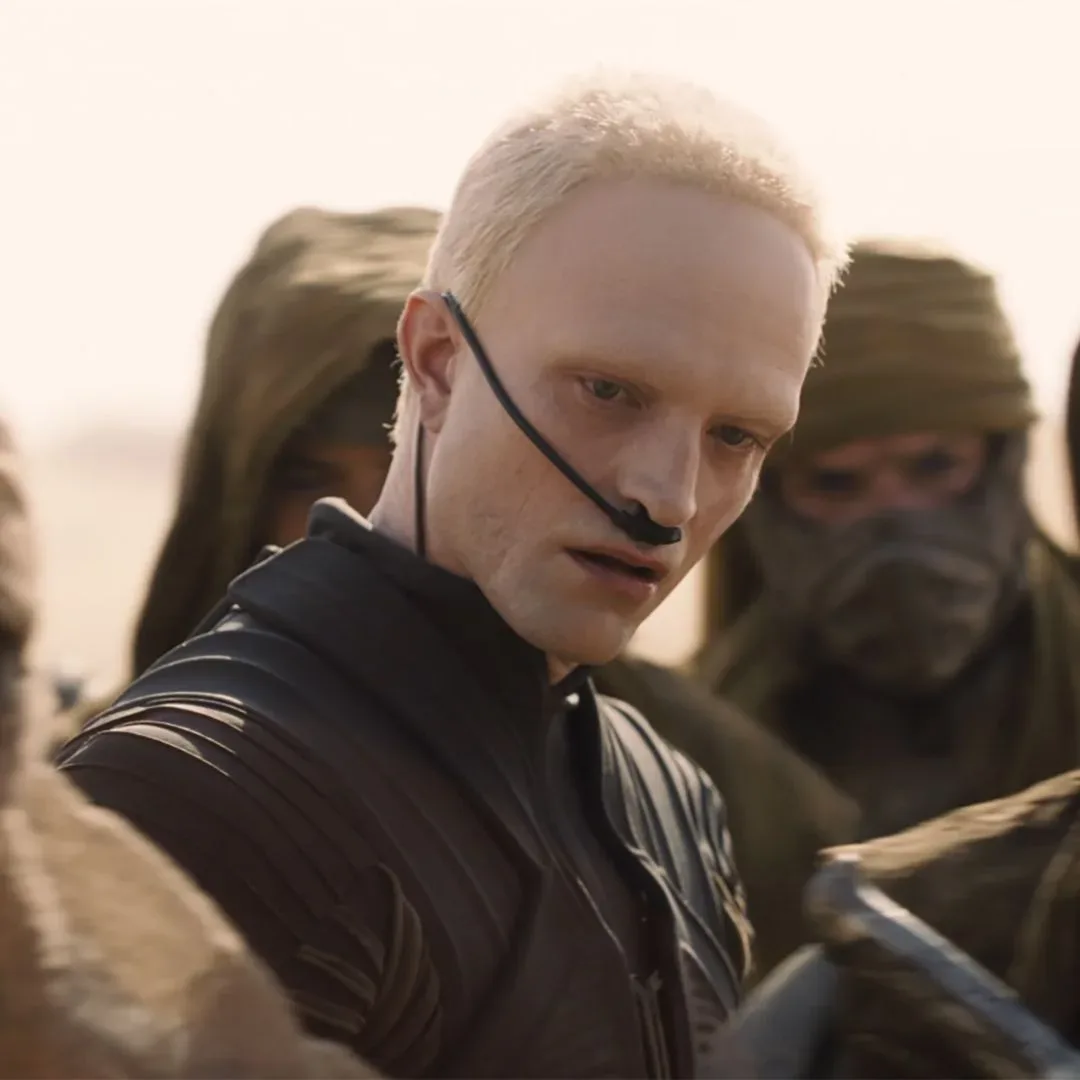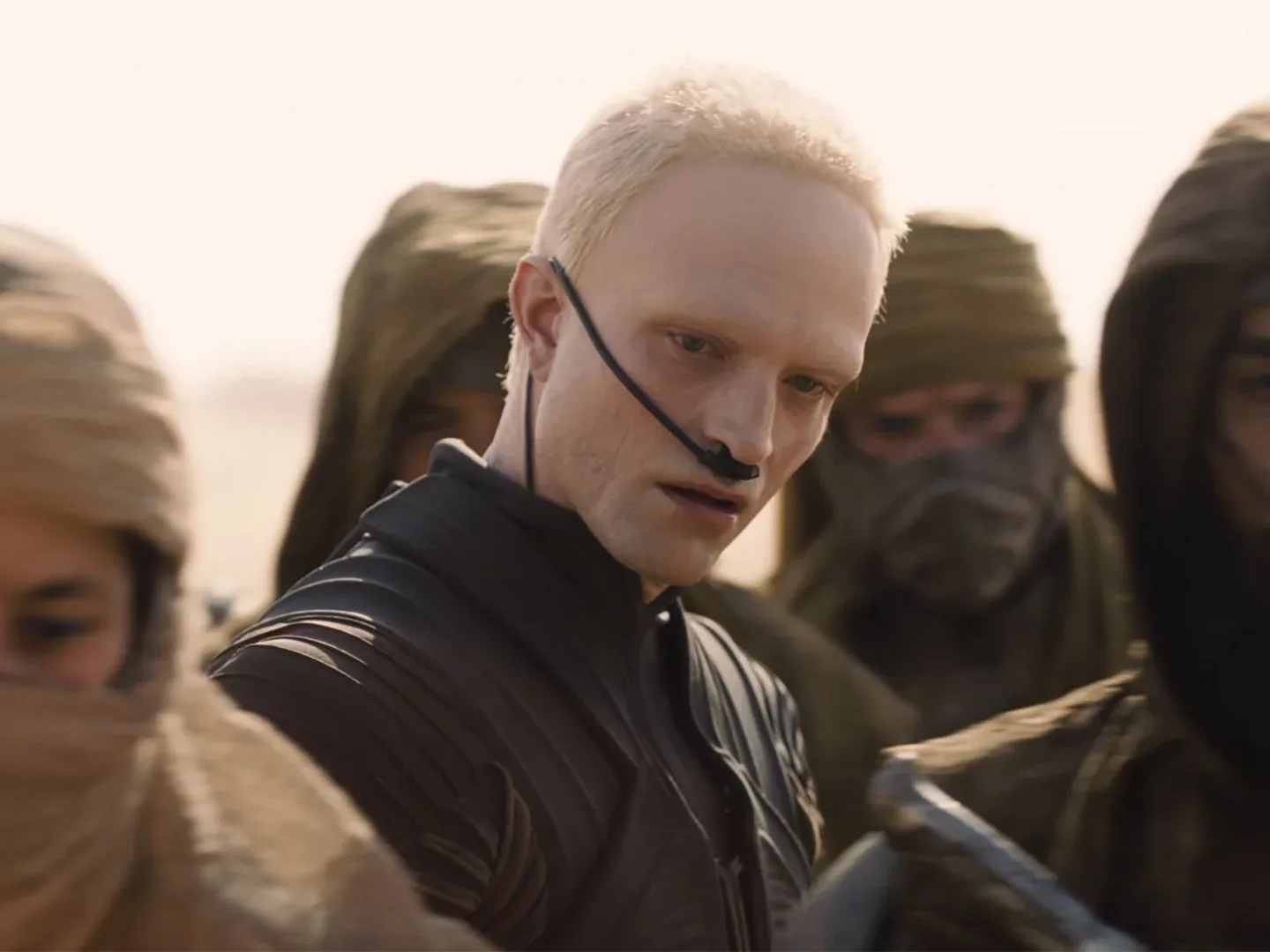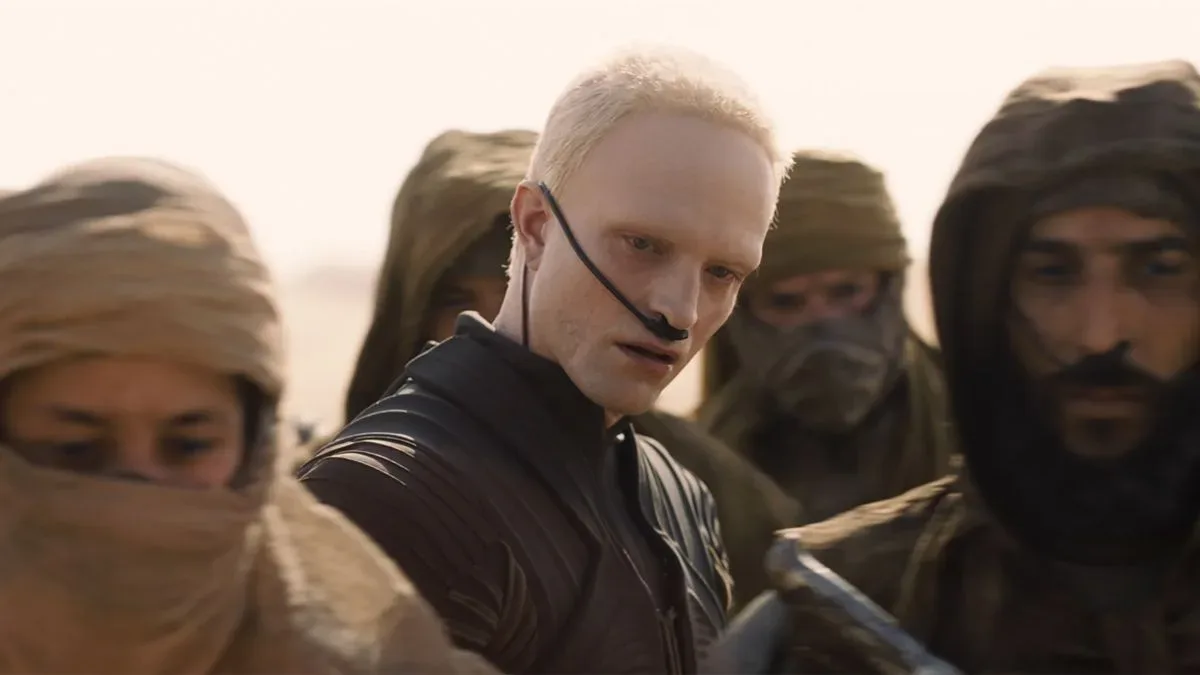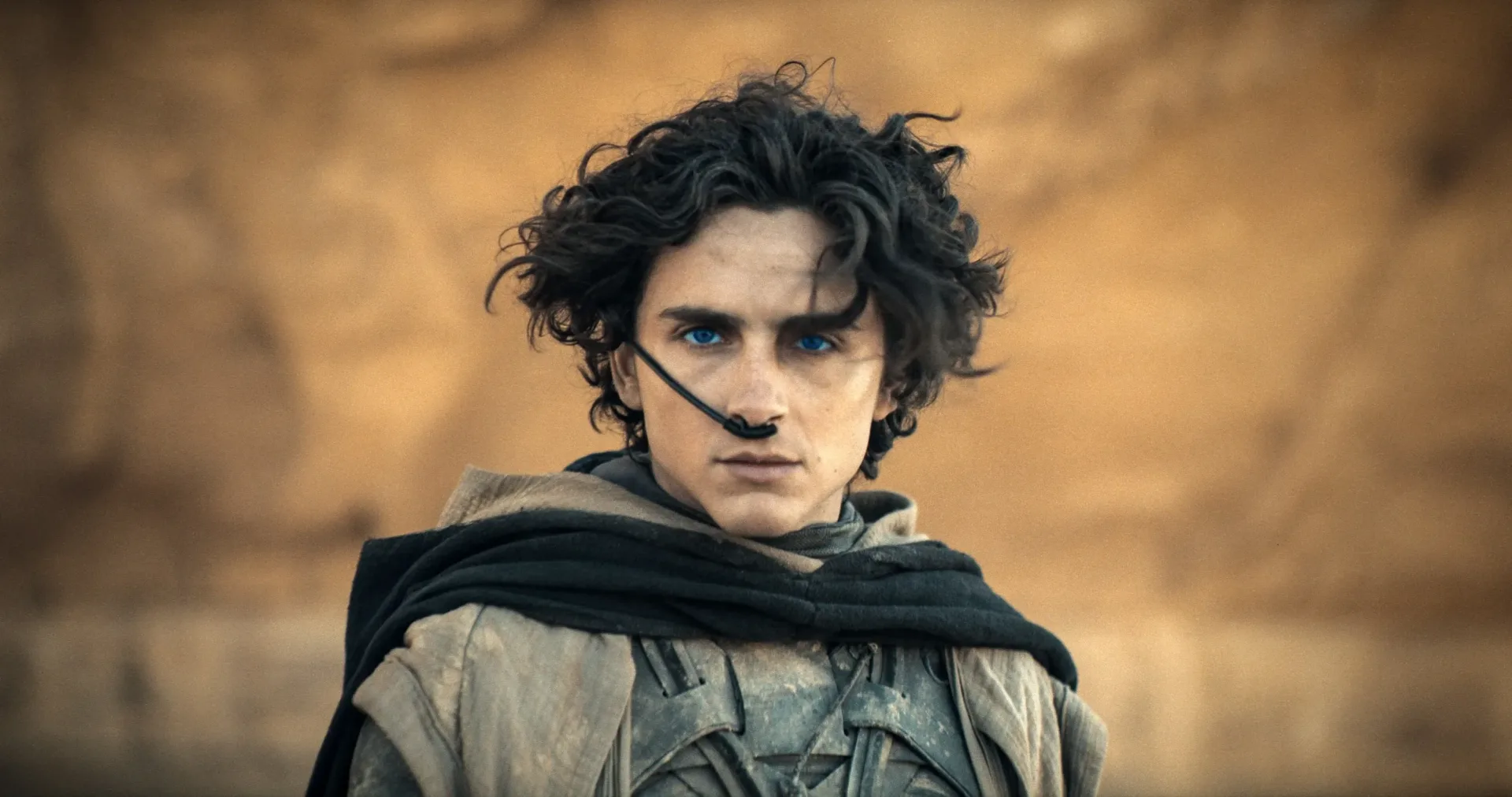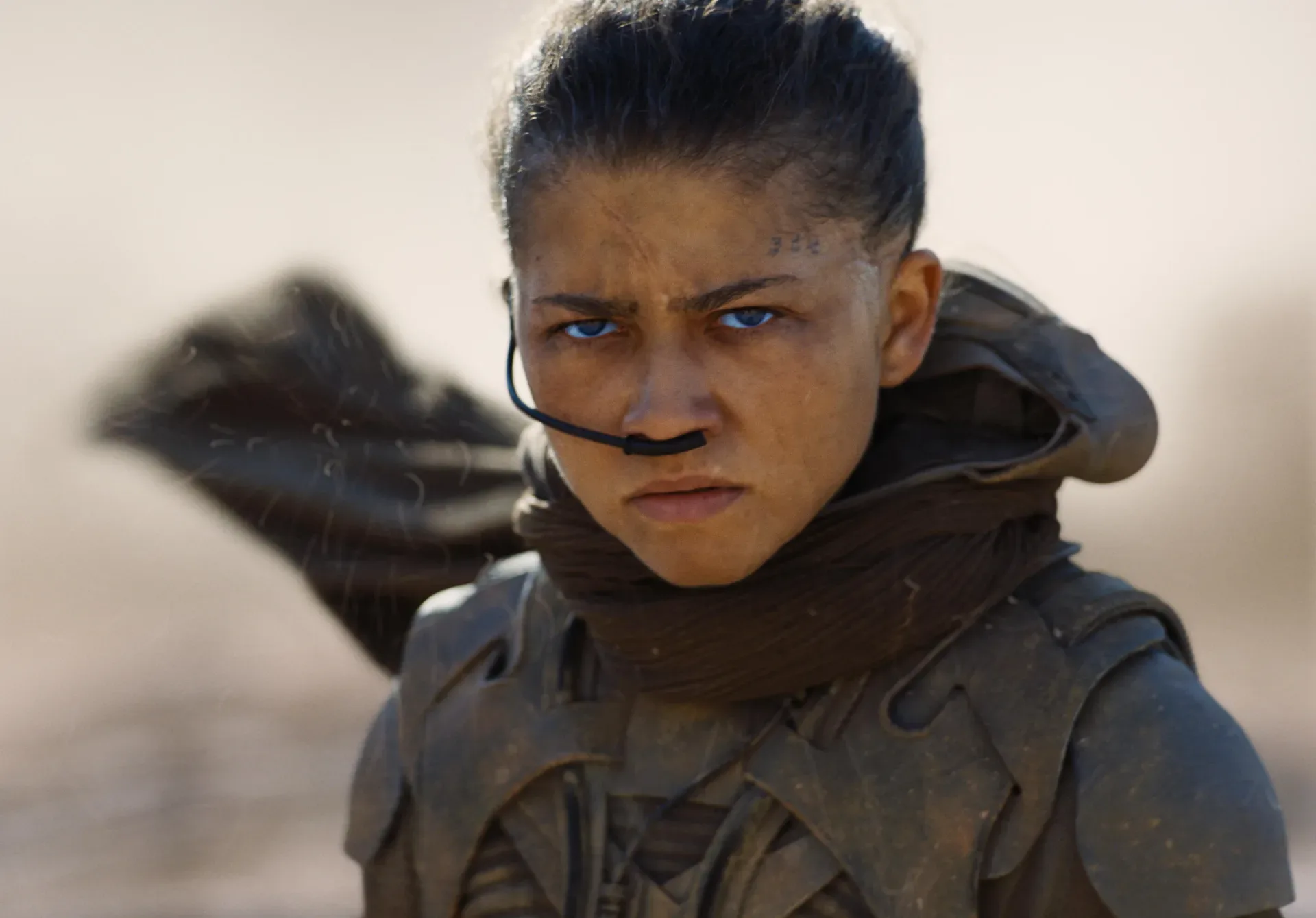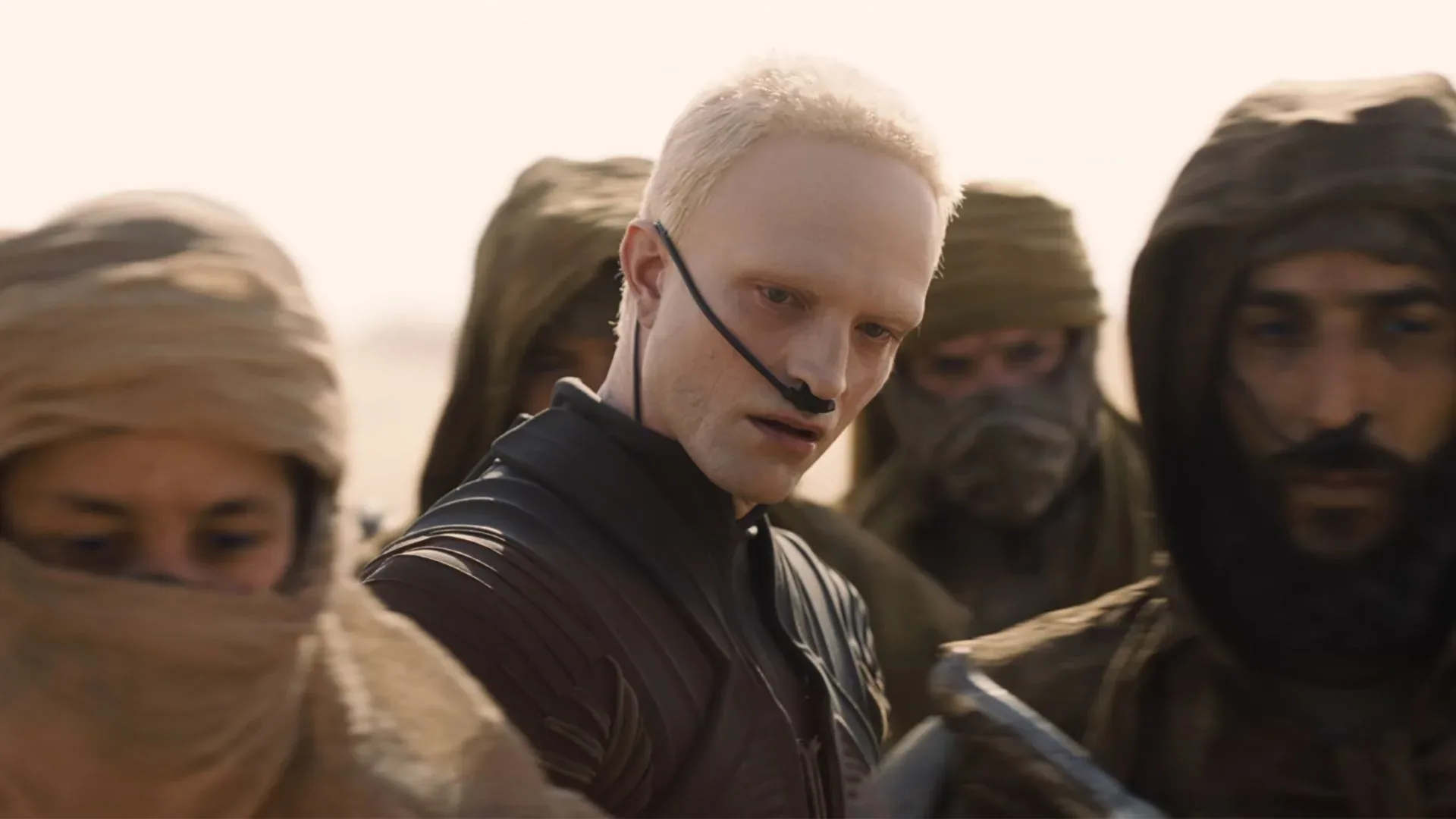
Robert Pattinson’s first trip to Arrakis appears to have involved the kind of movie-set object that makes a green screen look like a very poor substitute: a reported 350-foot-long sandworm model.
Pattinson, who joins Denis Villeneuve’s third Dune film as Scytale, described filming a desert sequence from inside a spaceship mounted on a gimbal at the edge of a dune. The setup included the enormous worm model and a motion rig that could move the craft through dramatic angles. His verdict on the scale was simple: it was “unbelievable.” He compared the experience to having access to a personal Dune theme park.
That is an appropriately enormous image for a series built around the intimidating scale of Arrakis. It also offers a useful glimpse at how physical construction and motion-based filmmaking can remain central even when a finished scene will inevitably involve visual effects work. Pattinson was not merely asked to imagine a sandworm in an empty space; he had a massive reference point nearby, a moving spaceship set beneath him, and the desert itself around the production.
A sandworm that actors can actually play against
A gimbal is a mechanical platform used to tilt, rotate, and otherwise move a set piece in controlled ways. In this case, it allowed the spaceship environment to pitch and move while Pattinson performed. The audience may ultimately see a vehicle flying or tumbling through a highly polished science-fiction sequence, but a gimbal gives the actors genuine motion to react to: shifting balance, changing orientation, and the physical instability that helps sell a dangerous ride.
The 350-foot model serves a related purpose. Even if digital effects expand, enhance, or transform what appears in the final cut, a physical structure can provide an immediate sense of location, direction, distance, and threat. For performers, it is much easier to judge where an immense creature is meant to be when part of that creature exists at a monumental scale on set.
Pattinson’s description also makes clear that the spectacle did not remove the realities of desert production. He mentioned sweat being drained from the top of his head and joked about sweat gathering in bubbles. Yet he said the demands were easy to overlook because of the scene’s scale and because Villeneuve was easy to work with. In his account, the logistical discomfort was outweighed by the unusual opportunity to perform inside such a vast practical setup.
Why the detail matters for Dune 3
The sandworm is not simply a large creature in the background of the Dune world. On Arrakis, it is inseparable from the desert’s danger, mythology, ecology, and power. A giant physical stand-in therefore fits the franchise’s broader visual approach: characters are regularly made to look small against dunes, machinery, religious imagery, and the hostile environment around them.
Pattinson’s comments do not reveal the full context of the spaceship sequence, and they should not be read as confirmation of how long the shot will be or precisely what will appear on screen. A set-built model is one part of filmmaking, not a finished visual-effects breakdown. Still, the size alone indicates that the production is treating at least one sandworm encounter as a major piece of physical staging rather than relying exclusively on actors reacting to marks and visual references.
It is also a reminder that “practical” and “digital” are not opposing camps in a production of this size. Practical effects are tangible materials, sets, props, puppetry, or rigs constructed for filming. Visual effects, often shortened to VFX, are imagery created or altered after photography. A gimbal sequence with a huge creature model can give cast and crew a strong physical foundation, while later work can extend the landscape, remove rigging, alter movement, or add details that would be impossible or unsafe to create on location.
Pattinson enters the story as Scytale
Pattinson plays Scytale, described as a genetically engineered shapeshifter involved in a conspiracy against Paul Atreides. That makes him a significant addition to a story that moves beyond Paul’s rise to power and into the consequences of holding it.
The third film is set roughly 19 years after Paul takes control of the Imperium. Paul is now emperor, and the narrative will confront the results of his reign. The supplied premise frames him in a villainous phase, shifting the dramatic question away from whether he can gain power and toward what that power has done to him and the people around him.
Scytale’s shapeshifting nature carries an obvious dramatic implication: identity and appearance may be unreliable around a character designed for deception. The available information does not spell out which specific scenes Pattinson shares with the returning cast or exactly how the conspiracy unfolds. But a character whose role is tied to a plot against an emperor naturally introduces pressure from within the political order, not just from the open desert.
Pattinson reportedly asked Zendaya how he might get into one of the Dune films while the pair worked together on The Drama. He now joins a returning ensemble that includes Zendaya as Chani, Florence Pugh as Princess Irulan, Anya Taylor-Joy as Alia, Josh Brolin as Gurney Halleck, Rebecca Ferguson as Lady Jessica, Javier Bardem as Stilgar, and Jason Momoa as Duncan Idaho.
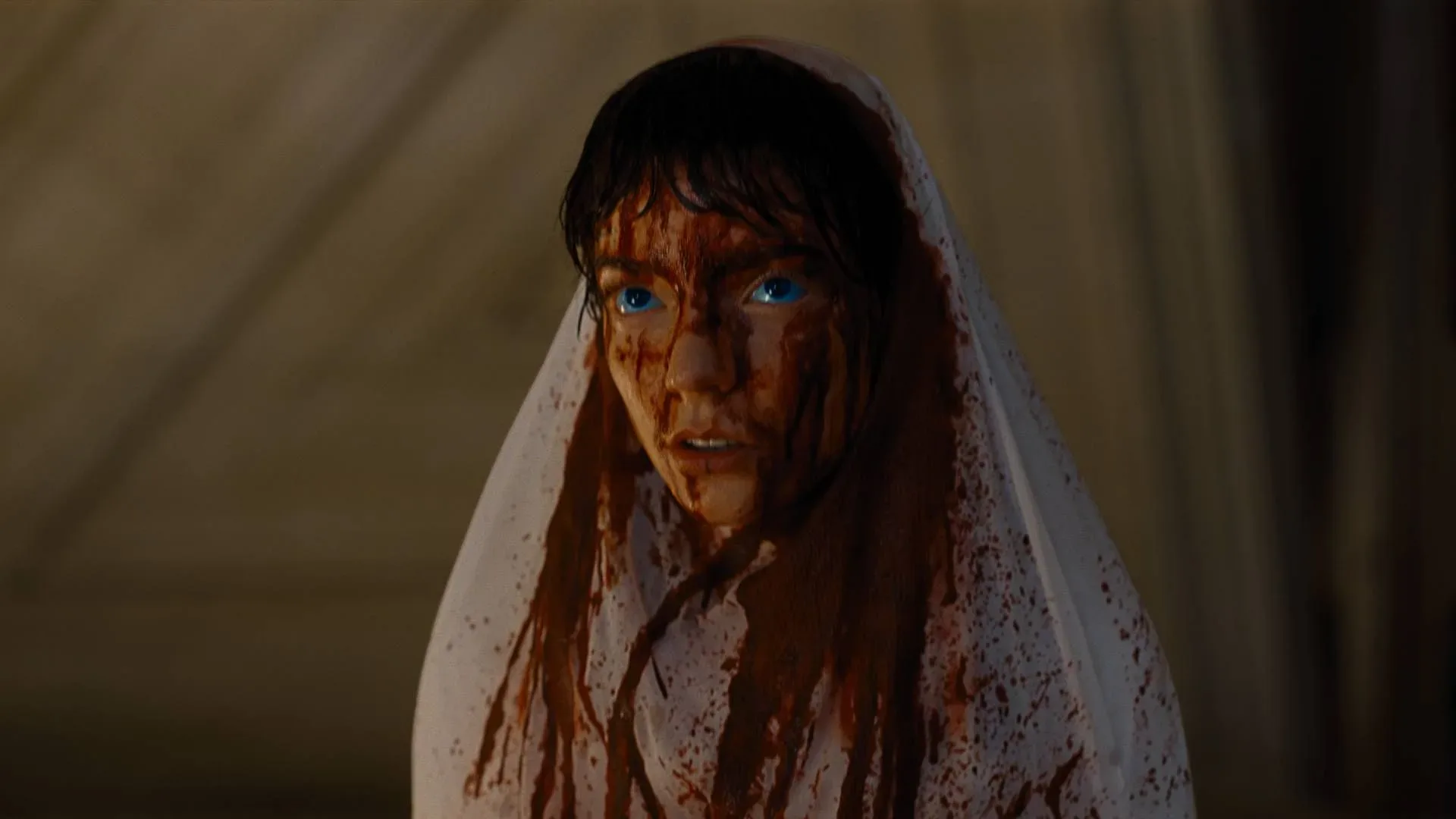
Alia’s place in the upcoming story has already been characterized in unusually blunt terms by Anya Taylor-Joy: she has described the character as a “bad guy.” That description adds another layer of uncertainty to Dune: Part Three’s family and political dynamics, particularly as Paul faces the fallout from his own rule.
The practical challenge behind a desert spectacle
There is a useful distinction between a gigantic prop and a complete practical creature. Pattinson referred to a 350-foot-long model of a sandworm, but the available details do not establish its exact construction, how much of the worm it represented, whether it moved independently, or which portions were later enhanced. Those gaps matter because major productions frequently use partial builds: an object may be created only where the camera and performers need it, while other portions are completed digitally.
What is clear is that its scale was substantial enough to define the working environment. A 350-foot object is not a small cue placed beside a camera lens. It changes sightlines, blocks out space, and gives a scene a physical presence. Combined with a craft on a moving rig at the edge of a dune, it suggests a production intent on giving a high-stakes set piece a concrete, immediate quality for the people performing it.
Pattinson’s enthusiastic language should be understood as an actor’s account of that experience, rather than as a technical inventory of the movie. But it is still a meaningful detail. Big-budget spectacle can be discussed entirely in terms of release dates, casting, franchise connections, or computer-generated imagery. His anecdote returns attention to the work happening at ground level: sets being built, performers being strapped into moving environments, heat becoming a practical issue, and a colossal worm form waiting in the sand.
Release date and box-office company
Dune 3, the third and final film in Villeneuve’s trilogy, is scheduled to reach theaters on December 18. It shares that date with Avengers: Doomsday, positioning two large-scale franchise releases against one another on the same day.
For audiences, the date is the key confirmed point. The sandworm anecdote is a tantalizing indication of the production’s ambition, but it is not a substitute for a trailer, a scene description, or a finished effects shot. The safest takeaway is also the most entertaining one: Pattinson’s first reported Dune experience includes a spaceship on a gimbal, desert heat, and an enormous sandworm model that made the job feel less like a normal day at work and more like a ride built for Arrakis.