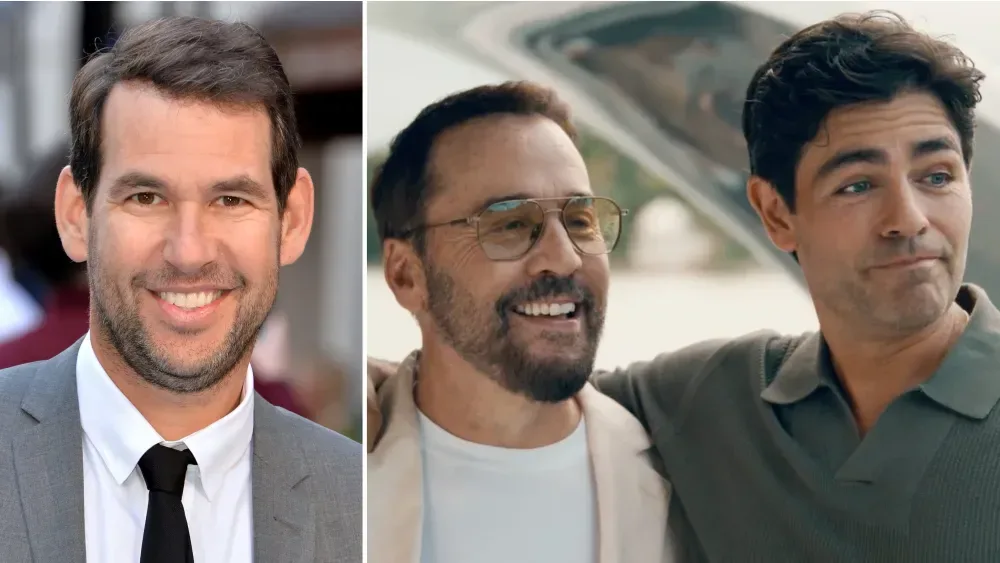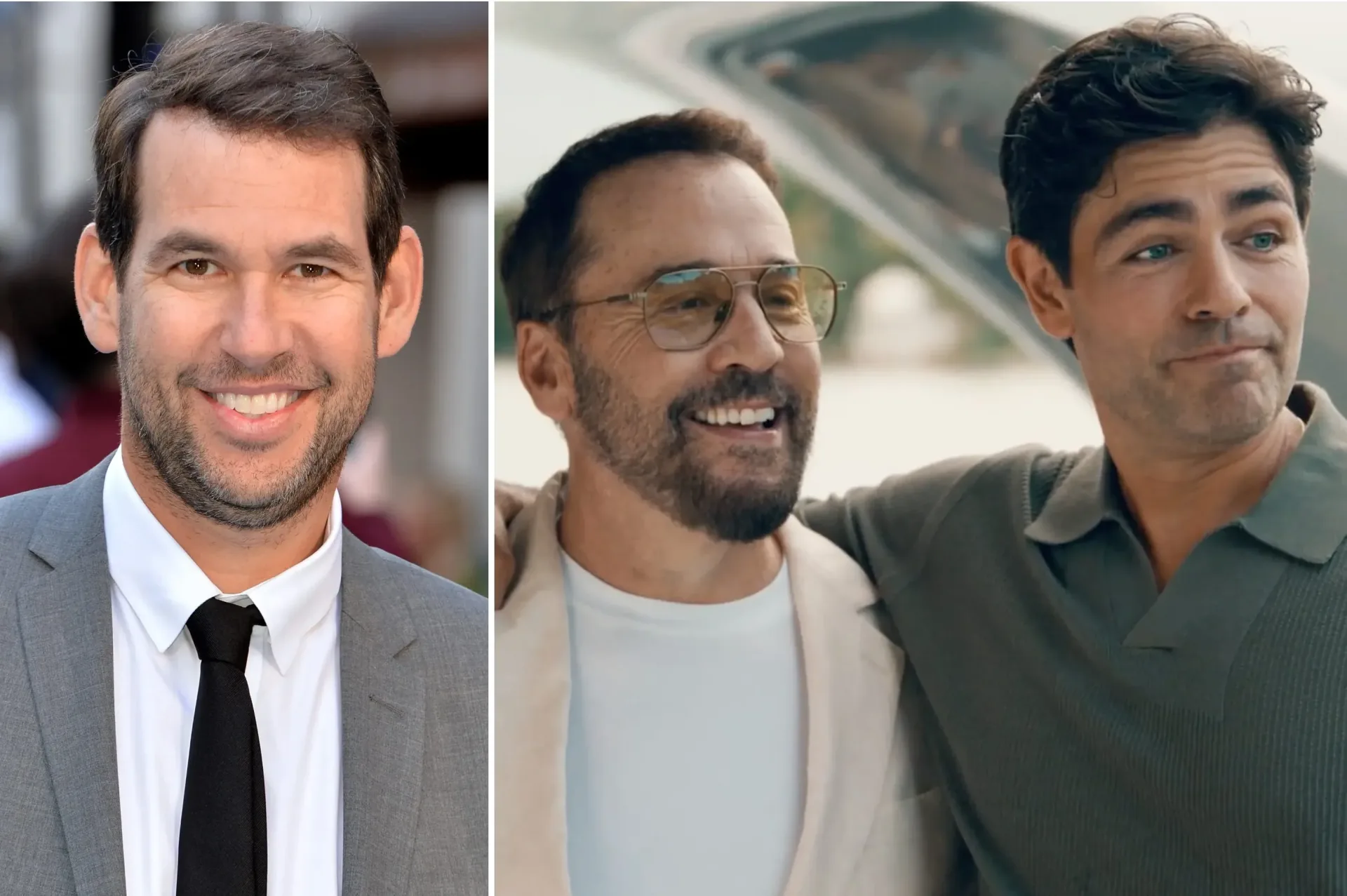
There is a difference between bringing two familiar actors back together and evoking the show that made their shared screen chemistry instantly recognizable. That distinction is at the center of a very public dispute surrounding a new commercial for Betr, the gambling app associated with Jake Paul, starring Jeremy Piven and Adrian Grenier.
The three-minute spot places the actors in a glossy Hollywood-adjacent setup that is plainly designed to spark memories of Entourage. Piven moves through a mansion party in search of Grenier, eventually finding him on a yacht and pitching him on a movie part. The performers are appearing as themselves rather than explicitly returning as Ari Gold and Vincent Chase. Still, the manner of the exchange, the professional pitch and the larger-than-life setting have made the association hard to miss.
Doug Ellin, who created Entourage, made clear that he does not see the resemblance as a harmless wink. In posts and video comments on social media, Ellin strongly criticized the commercial, repeatedly emphasizing that he had no role in writing or producing it. His objection is less about the performers being reunited than the ad drawing on a style and dynamic he believes was built through years of collaborative work on the HBO series.
Why the commercial triggered an ‘Entourage’ debate
Entourage ran through its series finale in 2011 and later returned for a feature film in 2015. Its premise followed a rising actor, Vincent Chase, and the close circle navigating the deals, pressures and absurdities around his career. Piven’s Ari Gold, the high-powered and often combustible agent, became one of the show’s defining creations; Piven won three Emmy Awards for the role.
Grenier and Piven appearing in an ad as celebrity versions of themselves does not automatically mean the production is an official Entourage revival or even a licensed continuation. Nothing about the spot changes that basic fact. But advertisements often trade in fast cultural shorthand: a casting combination, familiar rhythm, luxury locations and a recognizable power dynamic can communicate an idea before a viewer has time to parse the legal or creative distinctions.
That shorthand is what Ellin rejected. He characterized the ad as an inferior imitation and said its resemblance to the series made him feel that the effort invested by writers and other contributors was being reduced to a superficial formula. In his telling, every line and character beat on the show required difficult, detailed work. A commercial that recalls that work without the original creative team, he argued, feels especially frustrating.
Ellin’s core message was simple: artists and businesses should make their own material rather than reproduce the identity of a past hit.
His remarks also addressed a possible assumption behind the backlash: that he was mainly angry about missing a payday. Ellin insisted that was not his concern. He said he wants people to succeed financially, but believes the writers and creators behind a long-running series deserve more recognition when later campaigns use an approximation of what audiences remember.
Ellin says he was not involved
Ellin said he received roughly 400 messages about the commercial, with many people apparently assuming it might be connected to him. He dismissed that idea in pointed terms. The force of his response suggests that, for him, separation from the project matters as much as criticism of its content. A fan encountering Piven and Grenier in a high-end entertainment-industry scenario might naturally wonder whether an Entourage figure had quietly signed off. Ellin says that did not happen.
He also directed frustration toward Piven’s relationship with the franchise. Ellin said he had needed to persuade Piven to join the original show and claimed that Piven later wanted distance from it. Now that Piven has participated in a commercial deliberately built around the audience’s memory of their pairing, Ellin sees an inconsistency. Those are Ellin’s characterizations, not an explanation offered by Piven.
At the time of the dispute, a representative for Piven had not provided a response. That leaves the public record centered on Ellin’s comments and Betr’s defense of its campaign, rather than a detailed account from either actor about what drew them to the project or how closely they intended to echo their old television dynamic.
Betr points to an intentionally unexpected reunion
Betr’s response takes a notably different view of the same creative choices. A company spokesperson said the goal was to reunite Piven and Grenier as themselves and create an unexpected cultural moment built around two accomplished actors. In other words, the campaign does not dispute that their reunion carries cultural recognition; it frames that recognition as the point.
The company also said it was proud of the finished spot and reported nearly 10 million organic social views in less than 24 hours. Betr described the initial response as overwhelmingly positive and said the people involved enjoyed making and watching the ad. Betr 2.0 is available now.
Those statements expose the fundamental disconnect. Ellin regards the commercial’s resemblance to Entourage as creatively derivative. Betr regards the Piven-Grenier pairing as a deliberately effective pop-culture event. Both sides are talking about recognition, nostalgia and the potency of a familiar on-screen relationship; they simply disagree over where tribute or association turns into imitation.
That tension has become increasingly common as advertising leans harder on legacy casts, old aesthetics and internet-ready nostalgia. Viewers may enjoy seeing actors from a beloved show together again even if no character names are used. Creators, meanwhile, may feel protective when a production captures the recognizable outer shell of their work while avoiding an official revival. The underlying questions are not always legal ones. They can be about authorship, credit and the emotional value attached to a show’s identity.
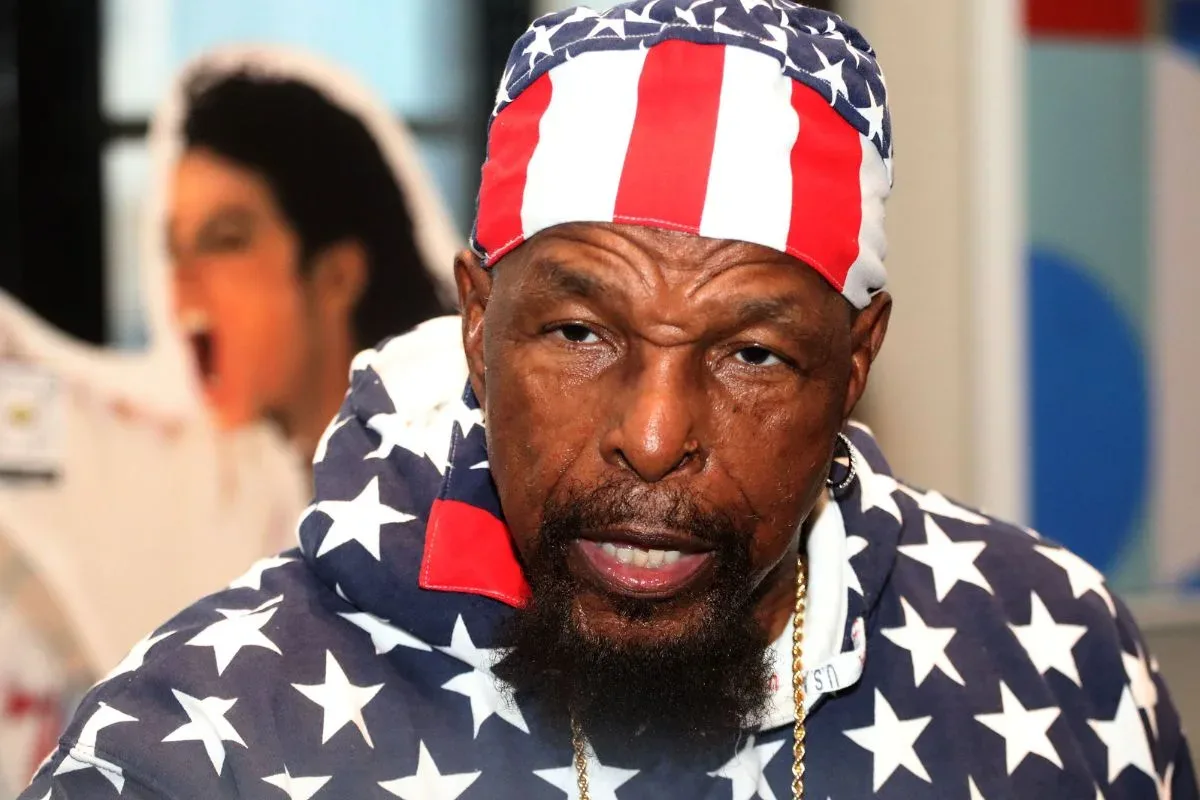
For collectors and fans, legacy television remains powerful precisely because it is more than a set of lines or costumes. It is a web of casting, scripts, timing and character development that becomes part of a shared memory. Similar questions of authorship and public image also surround other entertainment retrospectives, including Mr. T’s concerns about how a documentary handles the person behind a famous persona.
No official revival is on the horizon
The commercial’s arrival has inevitably revived talk of an actual Entourage return. Ellin has long faced questions about a reboot, continuation or spinoff, but no proper revival has entered development. Cast members and, at points, Ellin himself have shown interest in revisiting the world of Vincent Chase. More recently, however, Ellin has sounded far less optimistic.
Earlier in September, speaking on the Joe Vulpis Podcast, Ellin said a reboot or spinoff was unlikely. He also indicated that he does not spend time developing such ideas without someone paying for that work. That stance fits the frustration visible in his reaction to the Betr spot: Ellin is not presenting himself as a gatekeeper who wants nostalgia banned, but as a creator unwilling to donate his own creative labor while others monetize a recognizable version of the formula.
His nearest recent attempt to explore adjacent territory came in 2022 with Ramble On, a pilot about established stars trying to reinvent their careers. The project featured Entourage alumni Kevin Connolly and Kevin Dillon alongside Charlie Sheen. A trailer was released, but the pilot did not secure distribution.
Ellin continues to host the Victory podcast with Dillon. For now, that makes the Betr commercial a reunion of two prominent Entourage faces rather than the beginning of a sanctioned new chapter. It has nevertheless done what nostalgia-focused marketing is built to do: reminded audiences that the show’s cast chemistry still registers immediately, while reopening a thornier argument about who should shape and benefit from that recognition.
Whether viewers treat the ad as a funny celebrity callback or an overly familiar simulation will depend on their tolerance for that kind of branding. Ellin has already made his answer unmistakable. Betr has made its own case in audience numbers and enthusiasm. What is not in dispute is that a short commercial has managed to awaken a much larger conversation about television legacy, creative ownership and the difference between recalling a hit and recreating its feel.