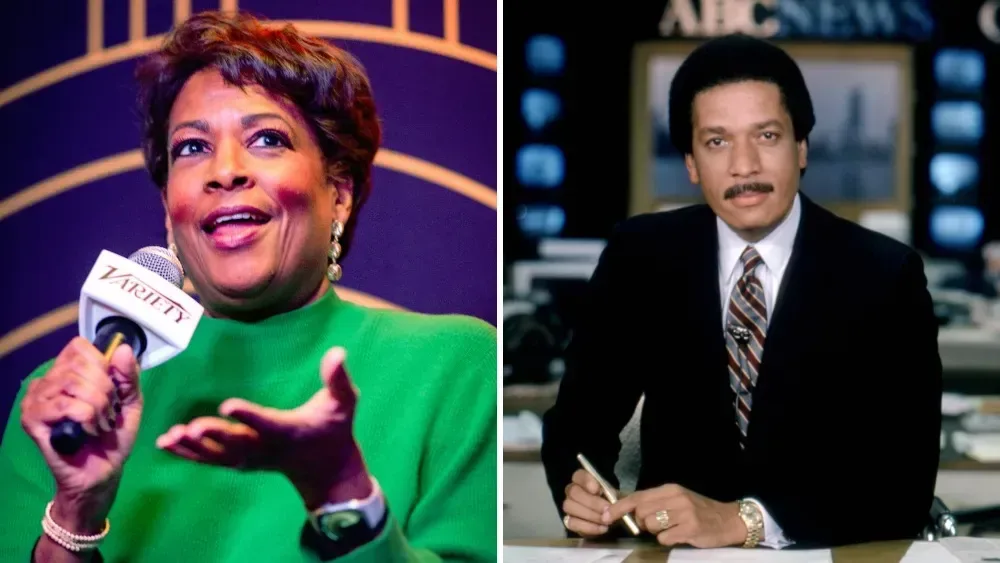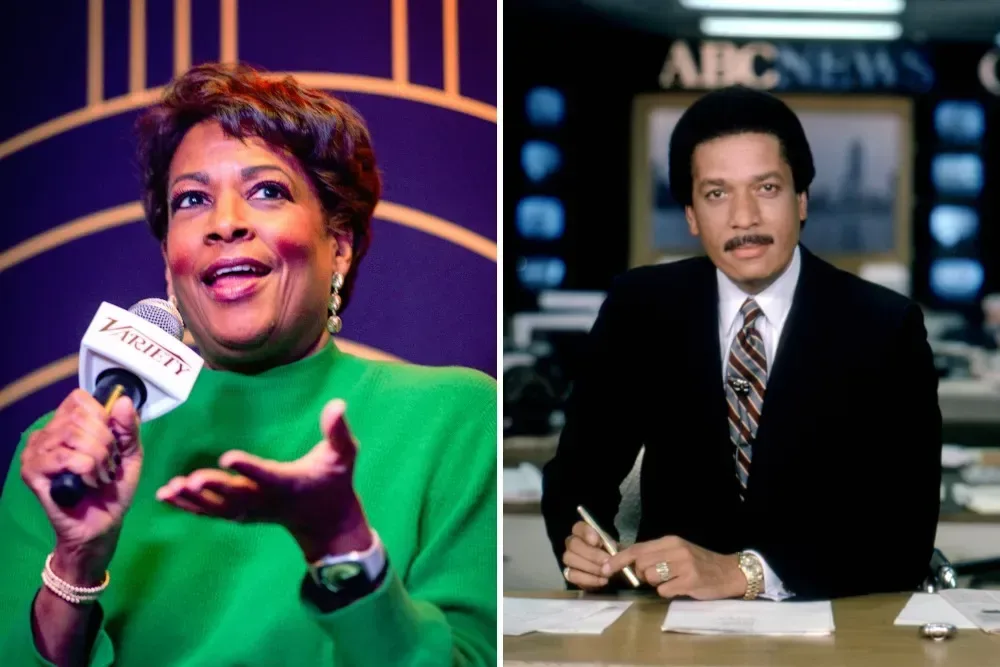
Dawn Porter is set to direct Color Bars: The Story of the Black Journalist Who Broke the TV News Color Barrier, a feature documentary centered on the career, influence and personal struggles of pioneering broadcast journalist Max Robinson.
Wise Child Studios is behind the project. Porter will also produce through Trilogy Films, while CNN anchor Victor Blackwell is producing through Fresh Fruit Films. The film’s announced focus is the rise and fall of Robinson’s career in television news: a story inseparable from the barriers Black journalists faced on national television and the pressure attached to becoming a highly visible first.
There is no release date, distributor, streaming destination or casting information attached to the project so far. What is clear is that the documentary intends to place Robinson’s legacy before a much wider audience, with Porter and Blackwell both framing his impact as urgently relevant to the present conversation around journalism, representation and public trust.
Who was Max Robinson?
Robinson became prominent as an anchor at NBC and CBS affiliate stations in Washington, D.C., before reaching a national audience in the late 1970s. In 1978, he joined ABC News’ national anchor team, making history as a Black anchor on a national television news broadcast.
That accomplishment matters not merely as a résumé line, but because an evening-news anchor is historically among the most visible jobs in American media. Anchors introduce reporting, guide viewers through consequential stories and, in practical terms, become a familiar face associated with a news organization’s authority. Being seen in that role can change who viewers imagine belongs in a newsroom—and who younger journalists can imagine becoming.
Porter recalled seeing Robinson on television when Black people were rarely visible on evening news. She later worked at ABC News and said people there still spoke of his effect on the newsroom. Her framing suggests Color Bars will examine both his work in front of the camera and the legacy he left inside the institution.
Robinson was also a founder of the National Association of Black Journalists in 1975. The organization’s founding is an important part of the documentary’s likely backdrop: representation does not change simply because one person reaches a high-profile position. Professional organizations can offer advocacy, community and a route for journalists to collectively address obstacles within their industry.
A story that cannot be reduced to a breakthrough
The announced film is explicitly described as following Robinson’s “rise and fall,” which means it will not treat his career as a simple, triumph-only account. His time at ABC News was short-lived as he struggled with alcohol abuse. Robinson died in December 1988 from complications related to AIDS. He was 49.
Related coverage includes Dawn Porter to Direct Max Robinson Documentary ‘Color Bars’.
Those facts require care, and Porter’s documentary has the potential to approach them as part of a full human life rather than as an afterword to a history-making job. A biography of a barrier-breaking broadcaster can easily turn a person into a symbol; a stronger documentary can preserve the historic achievement while also recognizing the cost, difficulty and contradictions of the life behind the symbol.
That wider approach is particularly important in stories about media pioneers. Institutions often commemorate milestones in compressed form: a first job, a first broadcast, an award or a photograph. But those snapshots can obscure the reality that an individual still had to perform under exceptional scrutiny, navigate professional relationships and endure the ordinary and extraordinary demands of a public-facing career.
Jason Beekman, founder and CEO of Wise Child Studios, described Robinson as an exceptional journalist who faced the enormous pressure of breaking barriers on national television while also being expected to simply do his job. That distinction gets to the heart of the story. Robinson’s achievement was historic, but journalism’s basic standards—reporting, clarity, credibility and composure—did not disappear because the moment was historic. They became part of the burden he carried.
Why Dawn Porter and Victor Blackwell matter to the project
Porter brings substantial documentary experience to the film. Her prior work includes John Lewis: Good Trouble from 2020 and Bobby Kennedy for President from 2018. Both titles point to an established interest in American public life, political history and consequential figures whose legacies are still debated and interpreted.
For Color Bars, Porter also has a direct personal and professional connection to Robinson’s world. She remembers him as one of the few Black figures on evening news, and she later joined ABC News herself. That does not tell audiences exactly how the final film will be structured, but it gives the project a perspective rooted in firsthand awareness of the professional culture Robinson entered.
Blackwell’s involvement adds another meaningful connection. He anchors CNN This Morning Weekend and hosts the weekly series First of All with Victor Blackwell. He compared Robinson’s impact on his own life to that of Sidney Poitier, Thurgood Marshall and Jackie Robinson—figures associated, respectively, with landmark visibility in film, legal progress and baseball’s racial integration.
The comparison is not an attempt to make these careers identical. Rather, it conveys how Robinson functioned as a model of possibility for Black journalists and television viewers. Blackwell’s role as a producer makes the project more than an outside look at broadcast-news history; it is also being shaped by someone working in contemporary television journalism.
What “color barrier” means in this context
The phrase “color barrier” in the documentary’s title refers to racial exclusion and the limits placed on access, advancement and visibility for Black professionals in television news. In Robinson’s case, the barrier was not simply appearing on TV. It was attaining a national anchor position at a time when Black people were seldom seen delivering the evening news.
Representation is sometimes discussed as though it is a cosmetic change: a different face appearing in an established format. Robinson’s career indicates why the issue is larger than that. News anchors are trusted messengers in American homes, and their presence affects the cultural assumptions surrounding authority, expertise and belonging. A national Black anchor challenged an industry norm in a setting where millions of viewers could see the change unfold.
That makes the project relevant beyond traditional journalism-history audiences. Documentaries about media institutions often clarify how images on screens shape public expectations. The story is adjacent to broader pop-culture discussions about whose voices receive authority and whose histories are preserved, including the ways familiar screen legacies can gain new resonance for modern audiences, as explored in our look at the original X-Men’s potential role in a major modern film.
What remains unknown
Many central production details have not been made public. There is no stated release window, no announced platform and no indication of whether the documentary will use archival interviews, newly recorded testimony, news footage or a combination of methods. The film’s eventual scope—how much time it spends on Robinson’s Washington career, his work at ABC, his role in founding the National Association of Black Journalists and his personal life—also remains to be seen.
Those unanswered questions make it too early to define Color Bars as a complete account of Robinson’s legacy. Still, its premise is unusually direct: return a major American broadcast journalist to a central place in the public history of television news. For viewers who know Robinson only as a historic first, the film could provide essential context. For journalists who have long understood his significance, it represents an opportunity to bring that significance to audiences who did not see him on the evening news.
Wise Child Studios, formed in 2023 to develop and package original content, previously released the investigative docuseries Reality Check: Inside America’s Next Top Model on Netflix and has also worked on the feature documentary Asco: Without Permission. With Porter directing and Blackwell producing, Color Bars has a team whose stated aim is to treat Max Robinson not as a footnote, but as a defining figure in the story of American television journalism.