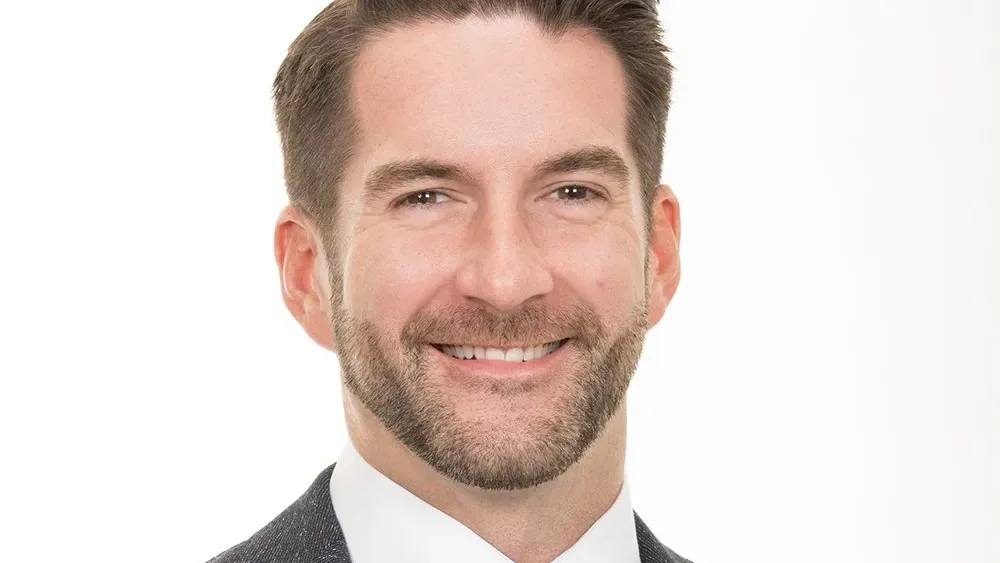
CBS News has added Steven Baker, a former executive producer of Nightline, as a consultant and adviser for its daily news programming. The move places an executive associated with experimentation in a newsroom trying to improve the competitive position of both CBS Mornings and CBS Evening News.
The appointment was reported by people familiar with the matter rather than announced through a formal public statement. CBS News president Tom Cibrowski told staff that Baker would work directly with him and collaborate with the leaders of the two programs: Jon Tower at CBS Mornings and Kim Harvey at CBS Evening News. Cibrowski’s stated aim was straightforward: bring fresh energy and ideas to the daily shows.
That description matters because Baker’s past work suggests that his role may extend beyond the familiar task of shaping a single broadcast rundown. At ABC News, he worked on efforts to treat Nightline as a storytelling brand that could travel beyond its traditional late-night home. Those projects included an hour-long special for Freeform aimed at younger viewers and the 2020 Turning Point takeover of the Nightline slot, a month-long examination of race relations in the United States.
The immediate assignment at CBS, however, is not publicly defined in detail. It is therefore too early to characterize Baker’s arrival as a programming overhaul, a new format launch, or a change in editorial direction. What is clear is that CBS is seeking advice from a producer whose background combines traditional television-news production with attempts to rethink where and how a news program can reach its audience.
Why a consultant with a format background fits the current problem
Daily news television has two overlapping challenges. One is journalistic: assembling accurate reporting, interviews, field pieces, breaking-news coverage and explanatory segments under intense deadline pressure. The other is audience behavior: persuading viewers to choose a particular program in an established time slot while also making material useful after the broadcast on phones and other digital platforms.
Format, in this context, does not merely mean a show’s opening music or studio design. It covers the repeatable editorial structure that helps an audience understand what a program offers: recurring segment types, a dependable tone, how interviews are framed, the mix of hard news and lighter material, and whether individual pieces can circulate independently outside the full telecast.
That latter point is already visible in recent work at CBS Evening News. The program has been trying segments called The Big Question and The Good Stuff. These are intended to function as recurring broadcast features, but they can also be separated from the larger newscast for short-form digital use. In industry terms, that is a form of modularity: making a larger program out of components that still retain value when viewed alone.
Modularity does not automatically create a hit, nor does it solve a ratings gap by itself. A recognizable recurring feature still needs a clear purpose and enough viewer interest to stand out in a crowded feed. But it can make a newscast easier to market and easier for viewers to sample without committing to the entire program. Baker’s experience taking Nightline beyond one late-night slot makes him a logical fit for discussions around that kind of multi-platform use.
Related coverage includes CBS News Brings in Former ‘Nightline’ Producer Steven Baker as Consultant.
For a broader look at how legacy television properties are still being adapted for current audiences, see the renewal of the A Different World revival.
The ratings hill remains steep
The case for trying new ideas is visible in the available audience figures. CBS Mornings averaged 1.6 million viewers in the third quarter, including 256,000 adults ages 25 to 54. That age group is commonly called the 25–54 demographic, and it remains particularly important in TV news because advertisers have traditionally placed high value on reaching it.
Those figures place the morning program behind its comparable ABC and NBC rivals. The gap is not just a matter of prestige. Morning shows are large daily franchises built around a mixture of news, interviews, lifestyle coverage and personalities. Small changes in viewer habits can become consequential when they repeat weekday after weekday.
CBS Evening News has increased its audience slightly compared with the same period a year earlier, but its overall audience remains substantially lower than the level associated with former anchor Norah O’Donnell in early 2025. It also trails the competing ABC and NBC evening newscasts.
The ratings data should be read carefully. They identify an audience challenge, not a complete diagnosis of why viewers are choosing competing broadcasts. The available information does not establish which specific types of stories, anchors, segments or distribution decisions are responsible for the rankings. Nor does it establish that Baker’s involvement will change them. Still, the numbers help explain why CBS would want an adviser experienced in testing how a news brand is presented.
A growing ABC News connection at CBS
Baker is the latest figure with ABC News experience to join CBS News. Cibrowski previously held a senior ABC News role and played a significant part in helping Good Morning America move ahead of Today after years of competition. Matt Guttman, formerly an ABC News journalist, has appeared prominently at CBS News since joining in 2026. Wendy Fisher, another former ABC News executive, oversees broader newsgathering and weather coverage across CBS News and CBS-owned stations.
That does not mean CBS is simply importing an ABC blueprint. The businesses, schedules and existing teams are different, and nothing in the available reporting indicates that CBS plans to duplicate another network’s programs. It does show that the network sees practical value in executives who have worked within the rhythms of network TV news, especially at a time when the most visible pressure is audience performance.
The staffing pattern also adds context to CBS News’ wider leadership mix. Bari Weiss, editor in chief of CBS News, has recruited experienced journalists from major newspaper organizations, people whose careers have centered more on print-news management processes. Baker brings a different set of skills: television production, daily program construction and efforts to adapt a legacy broadcast brand for other outlets and audiences.
Neither expertise is inherently a replacement for the other. Print-oriented editorial leadership can bring reporting systems, standards and newsroom management experience. Veteran television producers bring familiarity with visual storytelling, time-slot competition and the operational demands of putting a live or near-live show on air every day. A news organization that wants to improve both its journalism and its reach may need both perspectives, though the effectiveness of that mix will depend on the decisions that follow.
What Baker’s ‘Nightline’ history actually signals
Baker’s record at Nightline is notable less because it supplies a ready-made template for a morning or evening show, and more because it reflects a particular approach to a long-running news property. Instead of treating the late-night program solely as a fixed post-comedy slot, the work around it explored other homes and forms.
The Freeform special aimed at younger viewers is one example. It indicates an attempt to meet a different audience on a different network rather than expecting that audience to find the established broadcast by default. The Turning Point project is another: a defined editorial initiative that used an existing time slot for a month-long focus on one major subject.
These examples do not prove what will happen at CBS. There is no public indication that CBS Mornings or CBS Evening News will receive a comparable takeover, a cable special or a youth-targeted spinoff. But they support a narrower, more defensible expectation: Baker has worked on efforts to see a news show as more than one linear telecast.
That perspective is particularly relevant to the newer CBS Evening News segments. A feature that works at 6:30 p.m. can serve the broadcast’s pace and identity. If it also works as a self-contained digital clip, it can introduce the show to people who do not watch the full evening-news appointment. The difficult part is making those two goals reinforce each other rather than turning a broadcast into a loose collection of clips.
What viewers should watch for next
For viewers, the most meaningful evidence of Baker’s influence will be on screen, not in the title attached to his consulting role. Possible signals could include more clearly defined recurring franchises, changes in the way stories are packaged, or a more deliberate relationship between broadcast segments and the clips that live beyond the scheduled show. At present, however, those are analytical possibilities rather than confirmed plans.
The confirmed pieces are more limited: Baker has joined as a consultant and adviser; he is working with Cibrowski on daily programming; he will partner with the leaders of the morning and evening broadcasts; and CBS is continuing to test segment concepts that can travel to digital platforms.
That is a meaningful but measured move. Network news changes rarely turn on one hire, especially when the challenge is not merely producing a strong broadcast but rebuilding a regular viewing habit against two entrenched competitors. CBS has identified an executive with experience in treating news programming as a flexible brand. The next question is whether that experience produces changes viewers can recognize—and whether those changes give them a reason to return.