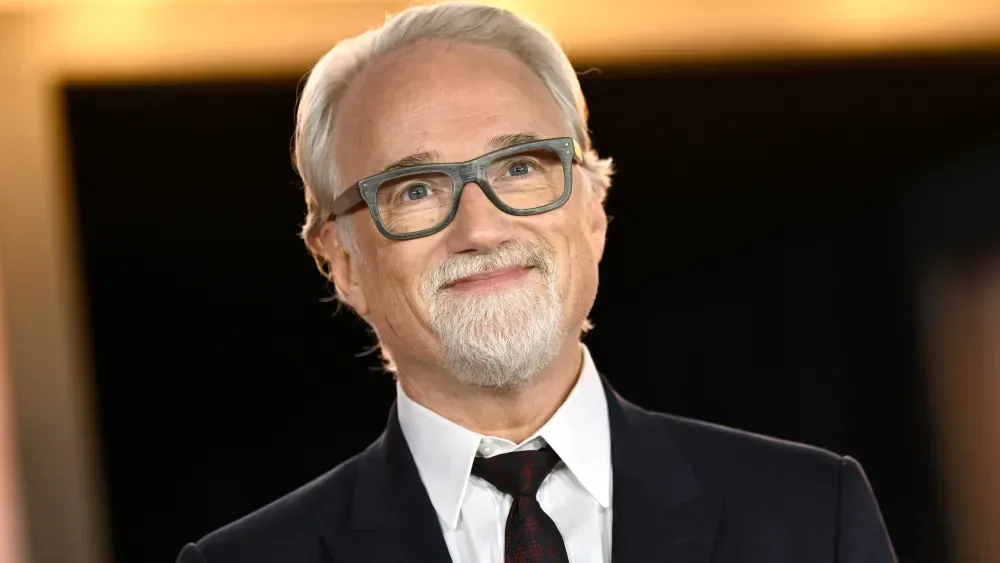
David Fincher has said The Further Mis-Adventures of Cliff Booth could be the last feature film he directs. The filmmaker framed that possibility not as a reaction to the reception of the movie or dissatisfaction with the work, but as an honest reassessment of time, stamina and what he wants from the years ahead.
Fincher, 64, said he has been directing since he was 20. In discussing the potential endpoint, he described priorities that have already broadened and a reduced appetite for the punishing schedules that can accompany a major production. The comment is deliberately conditional rather than a formal retirement announcement: he said he could see the Cliff Booth film being his last movie. That distinction matters. It identifies a possibility and a mindset, not a confirmed final credit.
The remarks also came with a wider critique of treating filmmaking as an industrialized process. For Fincher, storytelling is fundamentally intimate, and the work should stay focused on what reaches the viewer: actors on screen, images, sound and the choices that shape a scene. His position creates a useful lens for the technical conversation around the new film, where he also acknowledged using AI during post-production.
A possible farewell, not a declared retirement
Fincher’s comments have a personal core. He contrasted the energy and technical authority he had earlier in his career with his current limits, saying he no longer has the patience he once did. He also addressed the length of a working day plainly: a preference not to work beyond 10 hours, set against 12-hour days on this production.
That is not a small issue hidden behind the glamour of a feature release. A film set runs through coordinated work from performers and crews across many departments, while post-production adds its own layers of image, sound and editorial decisions. Fincher’s argument is that a system built around maximizing output can pull attention away from the immediate creative task—photographing actors and refining the story audiences actually experience.
“I could see this being my last movie,” Fincher said, explaining that changing priorities, rather than dislike of the film or its response, were behind the thought.
It is also notable that he did not present the project as a bitter capstone. His concerns are about process and workload, not an assertion that films should stop being made or that technical tools are inherently unwelcome. In fact, his account of the post-production workflow suggests the opposite: he is interested in tools that make it easier to pursue the best version of a moment, provided the work remains anchored in artistic judgment.
What the Cliff Booth film is
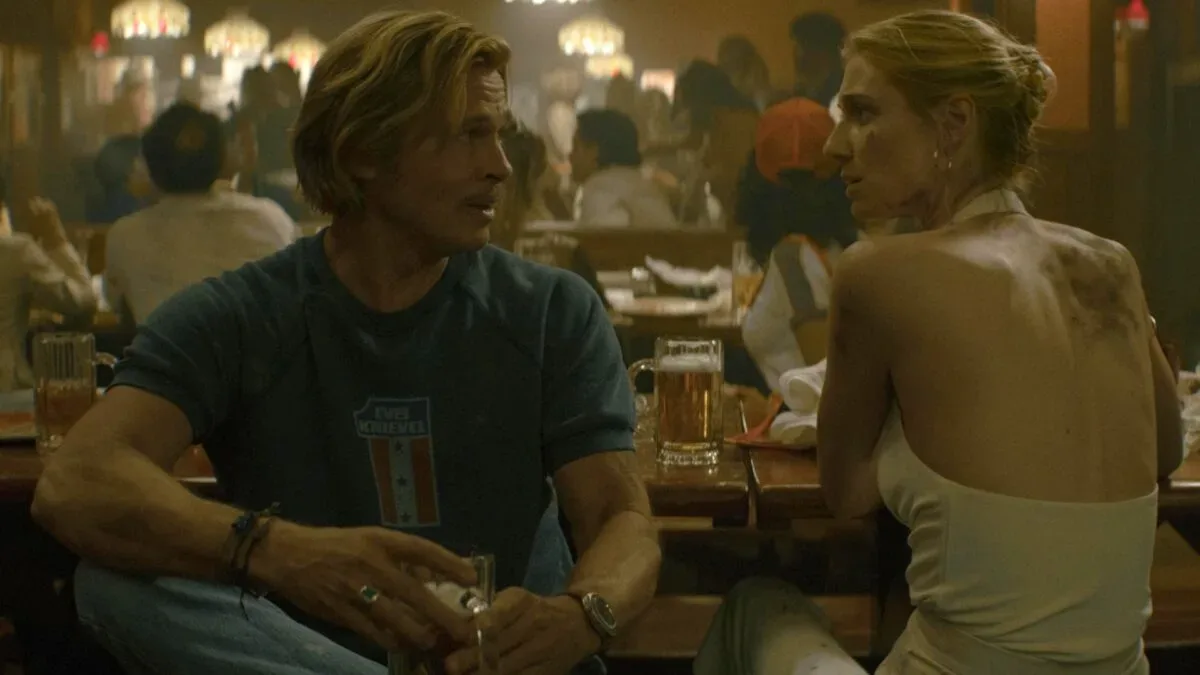
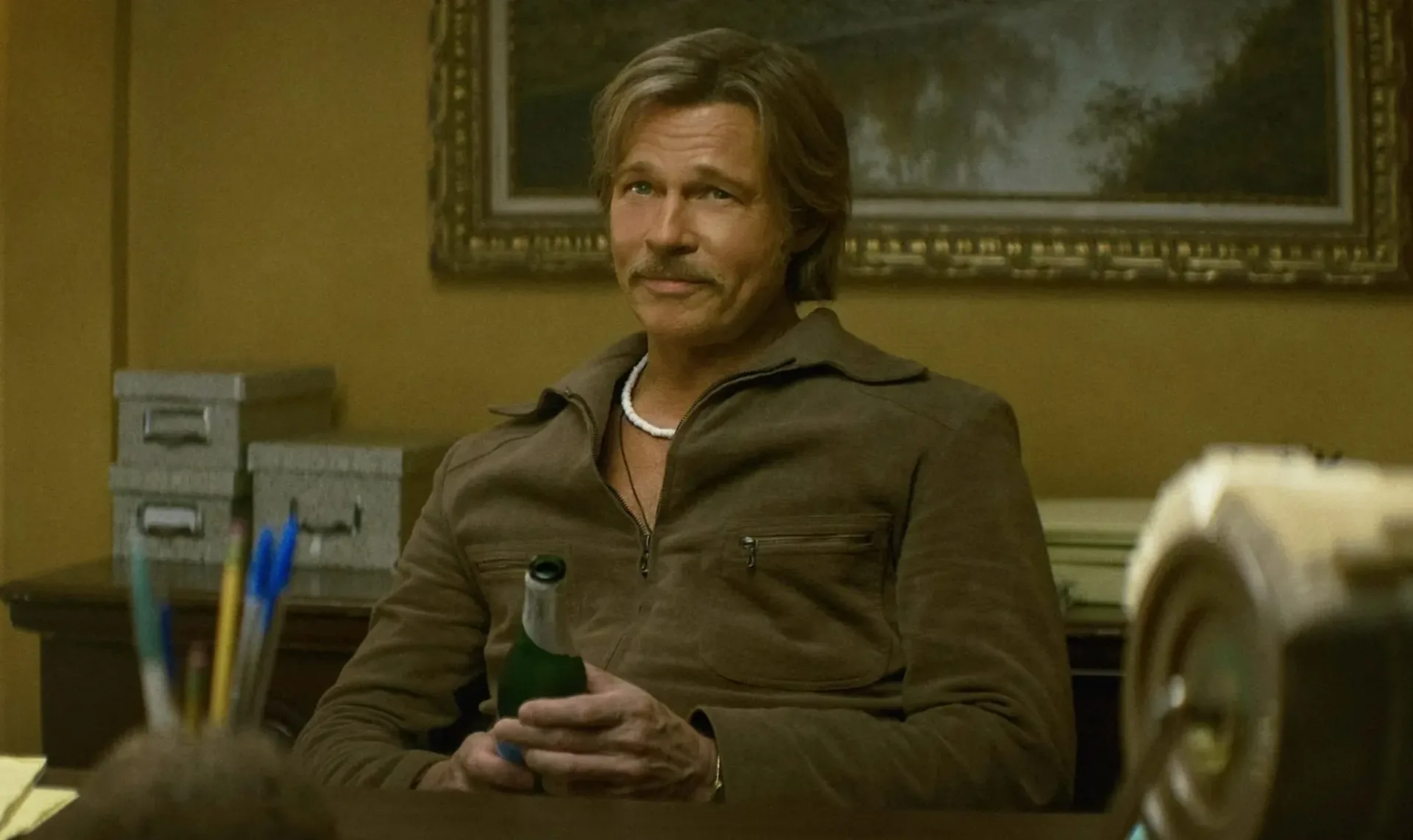
The Further Mis-Adventures of Cliff Booth continues the world of Quentin Tarantino’s Once Upon a Time in Hollywood. Set in 1977, it brings Brad Pitt back as Cliff Booth, the stuntman at the center of the earlier film. This time, Cliff is working as a Hollywood studio fixer and gets in over his head while handling a problem for a popular movie actor.
Related coverage includes David Fincher Says ‘Cliff Booth’ Could Be His Last Film.
The supporting cast includes Elizabeth Debicki, Scott Caan, Yahya Abdul-Mateen II, Carla Gugino and Peter Weller. Pitt is both the returning star and one of the film’s key points of continuity with the prior story, while the change in Cliff’s job gives this follow-up a new professional setting within Hollywood itself.
The film opened exclusively in Imax theaters on Wednesday and is scheduled to arrive on Netflix on Dec. 23. That two-stage path gives the movie an initial large-format theatrical window before its streaming release. It also makes Fincher’s remarks about finishing the work especially relevant: he indicated some shots were still progressing toward the version that would ultimately be available on the service.
Fincher’s AI comments: post-production, not a replacement for performers
The other major part of Fincher’s discussion concerns artificial intelligence in post-production. He said AI was used to enhance work already performed by people. His example involved the ability to alter lip movements—what he called “re-lip”—so that the image and audio could be adjusted toward the strongest final combination.
Post-production is the broad stage after footage is captured in which a film is assembled and refined. It can include editing, color work, visual effects, dialogue work, music and sound mixing. Fincher’s description places the AI use here, after human performers and craftspeople have done foundational work, rather than describing an AI-created replacement for the cast or the filmmaking crew.
He referenced automated dialogue replacement, commonly shortened to ADR. In practical terms, ADR is dialogue recorded or rerecorded after filming so the sound can be clearer, altered or better matched to the needs of the finished scene. Fincher said 5% of the film involved ADR, while describing the remainder in terms of AI use. The wording does not provide a full technical accounting of every workflow, model or shot, so it should not be read as a detailed breakdown of precisely how the technology was applied throughout the picture.
What is clear from his explanation is the creative goal: separating the question of what looks best from the question of what sounds best, then using available tools to bring those two elements together. He compared the process to working with plasticine rather than chiseling marble—an image of filmmaking as material that can still be shaped rather than an object locked into its first form.
Why lip adjustment matters
Lip movement and spoken dialogue are tightly linked in a close-up or any scene where the audience can clearly see a performer’s face. If the shape and timing of a mouth do not align convincingly with the voice, the mismatch can distract from the scene. A tool that helps adjust the image to support a chosen line reading could therefore be valuable in a filmmaker’s workflow.
But Fincher did not suggest a frictionless or perfect result. He said a couple of shots had not worked completely, while also saying the technology was improving. That admission is important amid broad discussions of AI: the practical result is still dependent on judgment, selective use and the limits of a particular shot. A technical option is not automatically a seamless final image.
His comments draw a boundary that is easy to miss in polarized debates. The question is not merely whether AI appears somewhere in a credits pipeline. It is what task it is being used to solve, what human work it is building upon, and whether its use serves the scene rather than becoming the scene’s entire reason for existing.
That distinction resonates beyond film. Creative software increasingly promises speed, flexibility and automated fixes, but the meaningful standard remains the outcome. In Fincher’s formulation, the desired result is the best image for the eye and the best sound for the ear. The tool is secondary to that goal. A separate recent story about an AI-made game project likewise illustrates how quickly AI has moved from abstract industry debate to concrete creative work: Ginuwine’s AI-made beat-’em-up turns a masters dispute into a surreal Sony heist.
The tension between flexibility and industrialization
There is a productive tension in Fincher’s comments. He objected to the industrialization of cinema, yet he described using advanced digital tools to make the post-production process more flexible. Those positions are not necessarily opposed.
Industrialization, in the concern he expressed, means organizing filmmaking in ways that risk treating it primarily as a standardized system of production. The potential value of a flexible post-production tool is different: it can offer a filmmaker more routes to a particular artistic decision. One approach prioritizes volume and process; the other, at least in Fincher’s account, prioritizes control over a specific image-and-sound result.
Of course, the difference comes down to application. A tool that saves time or permits a subtle correction can be an aid. A production culture that simply uses technology to demand longer schedules, more output or fewer human creative choices would raise the exact concerns Fincher voiced about the work becoming less intimate. His discussion does not settle the industry-wide issue, but it makes the competing pressures visible.
Two high-profile filmmakers considering the end of features
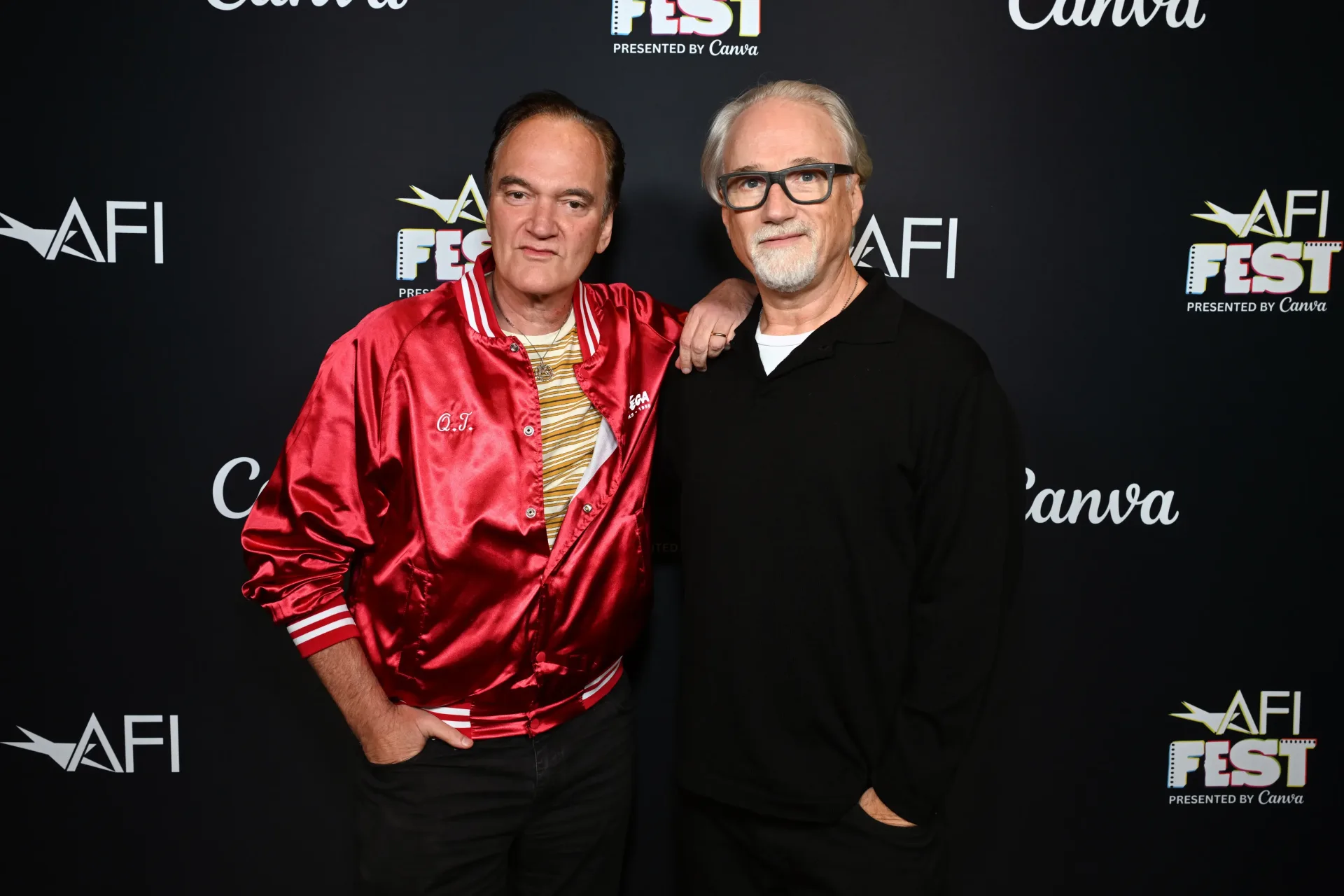
The Cliff Booth project also arrives alongside Tarantino’s own long-stated plan to step away after his 10th feature. Tarantino said in October that he had completed a script, but he is not moving forward with it yet. He intends to wait until his play, The Popinjay Cavalier, closes, citing a desire to spend time with his family and “live a little.”
There is no indication that Fincher and Tarantino are making the same decision for the same reasons. Tarantino’s comments concern his 10-feature plan and the timing of a script he has finished; Fincher is reflecting on decades of directing, evolving priorities and the demands of the job. Still, the parallel is striking. Both directors’ recent remarks put attention on a basic truth often obscured by sequel plans and release calendars: a filmmaker’s career path is also a personal decision about labor, family, time and creative energy.
For now, the firm facts are limited. The Further Mis-Adventures of Cliff Booth is in theaters, it will stream on Netflix starting Dec. 23, and Fincher has said it may be his final movie. Whether it actually becomes that final film remains unresolved. His comments are less a tidy goodbye than a candid view of a director weighing what the work asks of him against what he wants the rest of his life to hold.