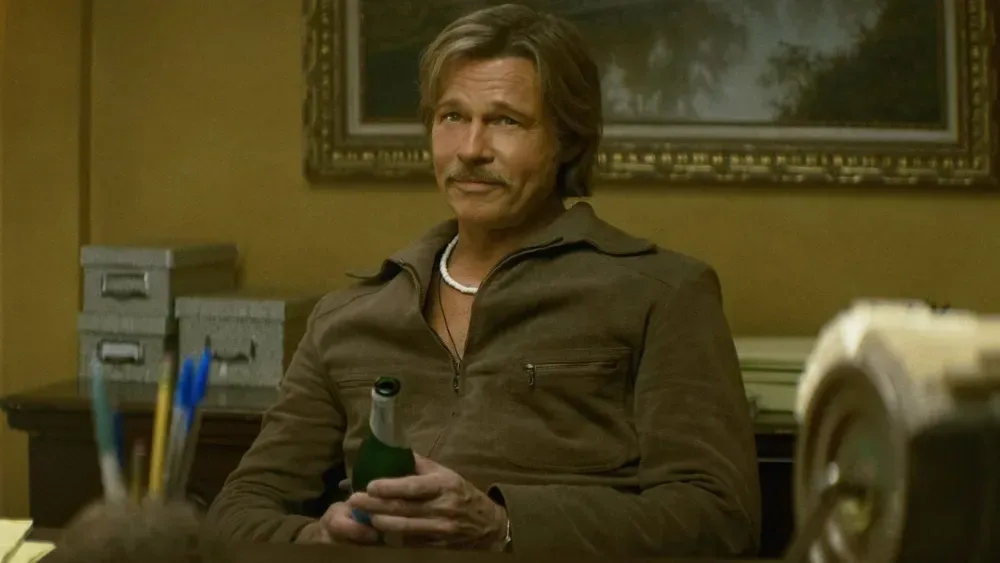
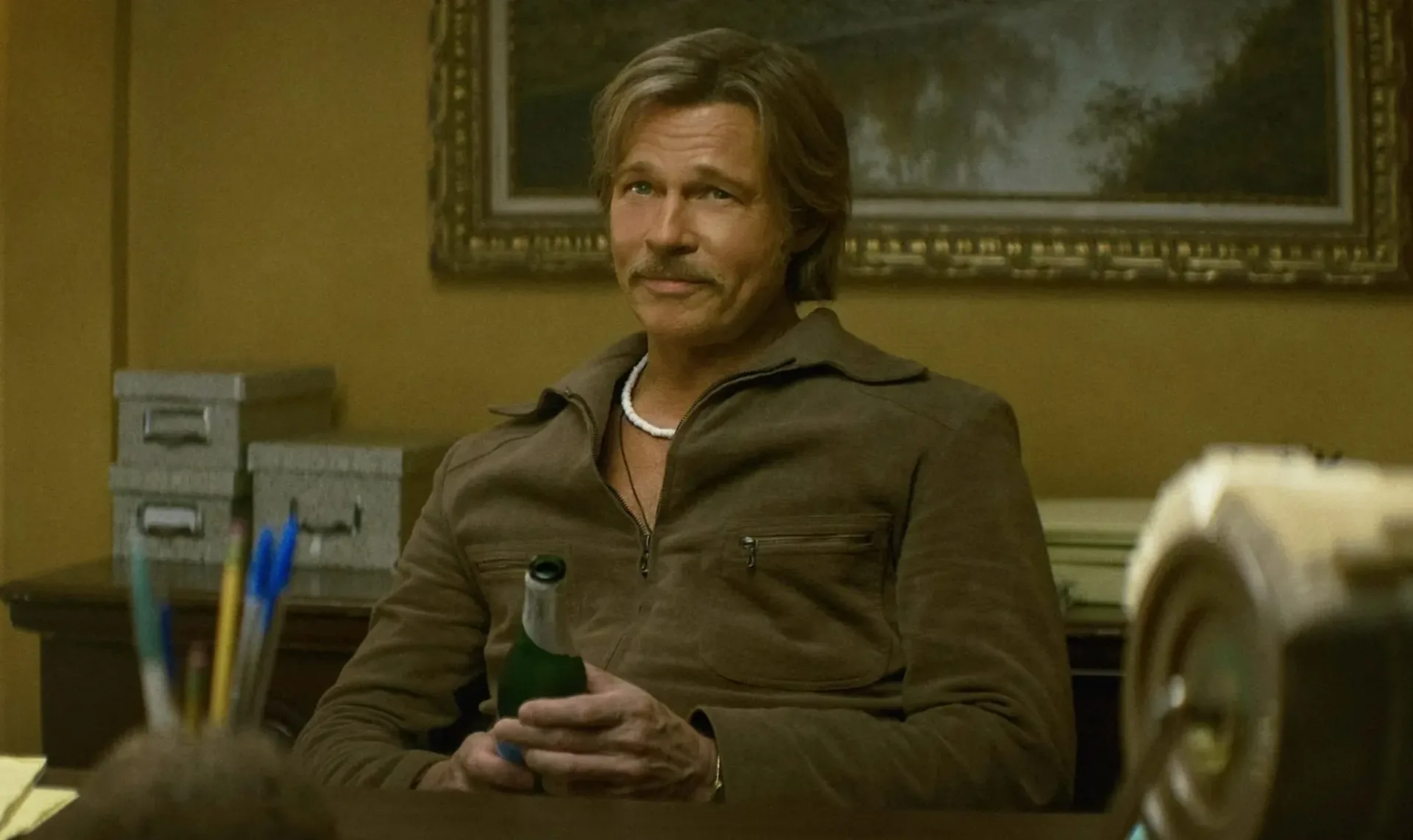
The Further Mis-Adventures of Cliff Booth has the appealingly unhurried confidence of a movie that would rather spend time with its hero than force him through a conventional sequence of plot checkpoints. Set across a week in Los Angeles in the latter part of 1977, the R-rated, 140-minute film brings Brad Pitt’s Cliff Booth out from the margins and makes him the center of a violent, funny, deliberately shaggy story.
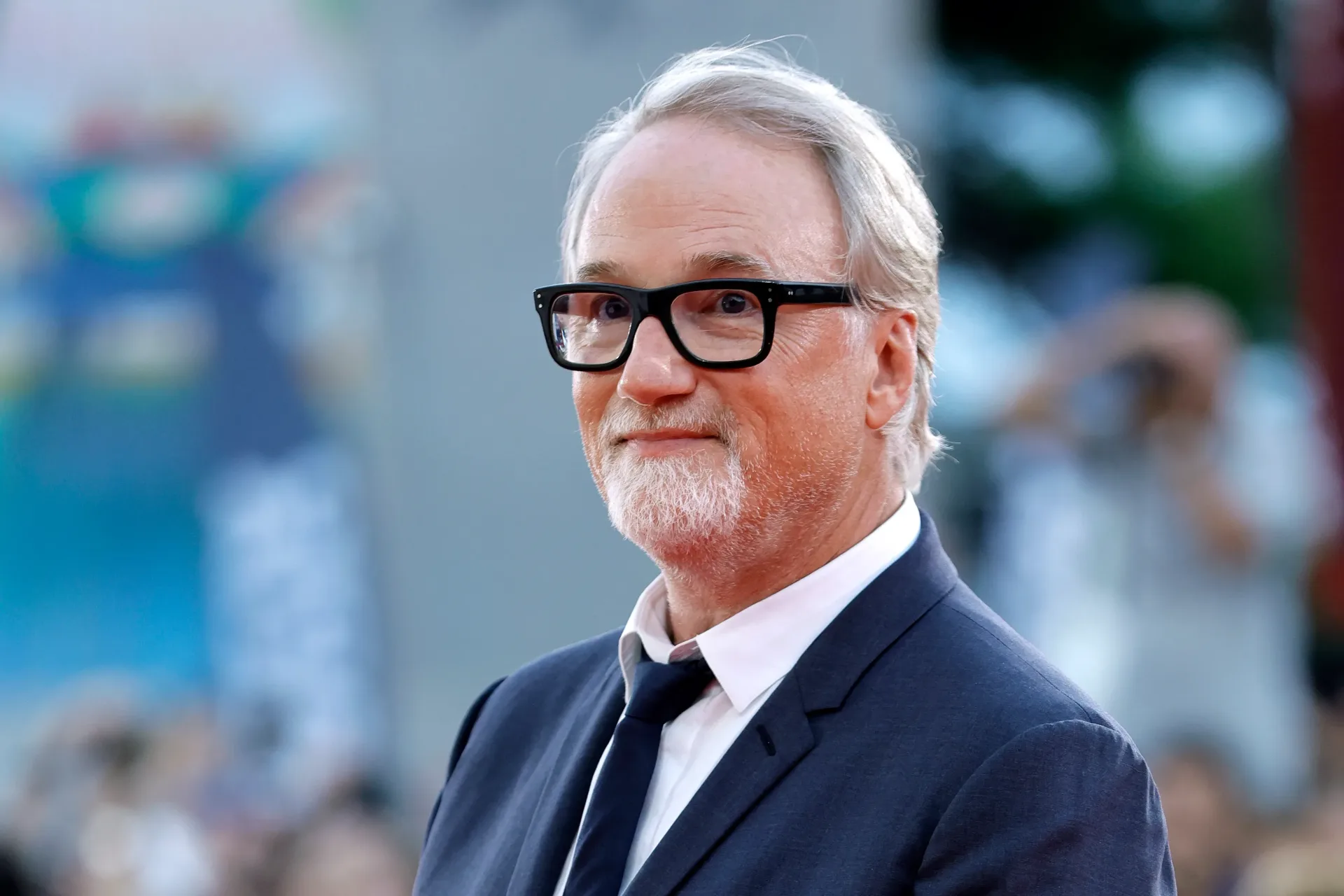
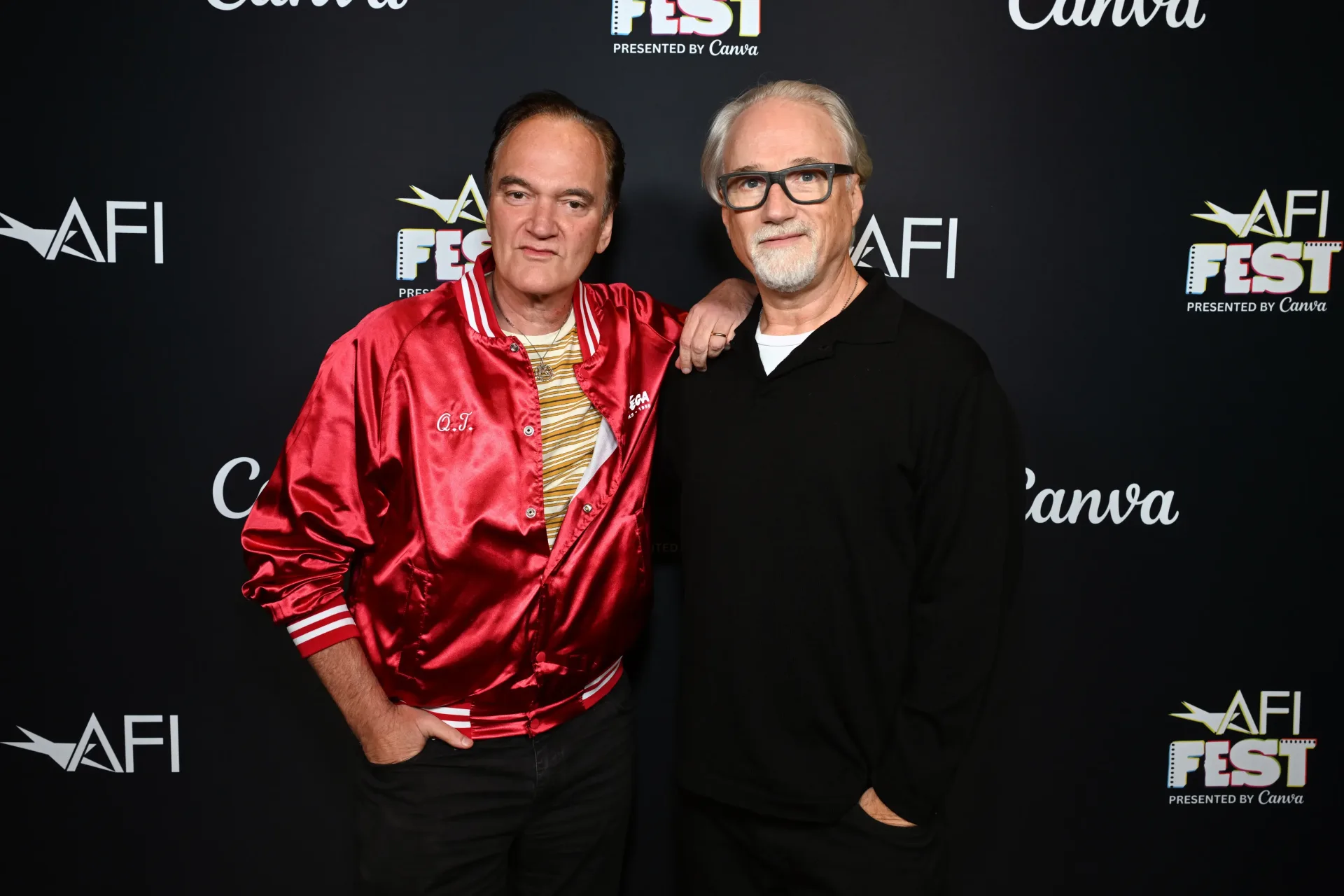
That premise alone creates a curious creative combination. Quentin Tarantino wrote the screenplay, while David Fincher directs. Tarantino’s taste for detours, pop-cultural debris, heightened characters and sudden brutality remains visible in the material. Fincher, meanwhile, gives the film a composed, polished surface. The result is neither an ordinary crime story nor a simple nostalgia trip. It is a hangout movie—meaning a film whose pleasure comes substantially from atmosphere, character company and digression—made with unusual formal control.
That tension is the movie’s primary hook. Cliff wanders through a world that often seems unconcerned with getting anywhere quickly, but the filmmaking reportedly gives those wanderings an exacting sheen. Instead of canceling one another out, the loose narrative and measured presentation make the film feel like a carefully curated stretch of time: casual in attitude, deliberate in execution.
Cliff Booth moves from supporting cool to the main event
Cliff is no longer the working stunt double with Rick Dalton regularly supplying a professional orbit. Rick has moved to Australia to star in a television series called Dingo Dan, leaving Cliff close to 50, limping slightly, feeling his aging joints and taking whatever work comes along. He lives in Marina del Rey with his pawn-shop-owning father, played by Peter Weller, drives a worn muscle car and picks up odd jobs. None of that shakes his remarkably settled sense of self.
The movie’s version of Cliff is a man who has slipped out of the conventional Hollywood hierarchy without seeming especially bothered by it. He can work as a projectionist, tend bar or handle a problem that other people are afraid to touch. His calm is not presented as simple virtue. It is bound up with an unnerving ease around violence. Cliff can be courteous, observant and protective; he can also kill with the same lack of fuss he brings to a routine job.
Pitt appears to be the essential reason that paradox holds together. The performance leans into the weathered, charismatic qualities that made Cliff memorable before, while giving him far more room to dominate scenes. The character wears loud bartender shirts, keeps his buttons open, carries a Redford-like mustache and has the kind of smile that can disarm a room. Yet he is not merely a retro fantasy of effortless masculinity. Cliff reads people well, has sharp instincts and leaves the audience unsure where his line is—if he has one at all.
That uncertainty makes the movie’s relaxed pace useful rather than inert. Every new encounter can play as a chance to watch Cliff assess a person or a threat. He lives in an “eternal present,” while the city around him seems stranded between cultural eras. The counterculture energy associated with the earlier 1969-set story has faded. In its place is a more listless Los Angeles, full of diversion, television and people looking for something to do after the old myths have worn down.
A 1977 Los Angeles built from screens, songs and detours
The setting is not just a period backdrop. The latter half of 1977 is framed as a moment when Star Wars has already altered the movie business, while the film’s characters inhabit a city still cluttered with older modes of pop entertainment. Disco, ELO’s “Tightrope,” tacky nightlife and a margarita bar with mud-wrestling all contribute to the texture. Boz Scaggs’ “Lowdown” plays over the closing credits, closing the picture on a fittingly of-the-moment note.
The film repeatedly draws viewers into entertainment that exists inside its own world. It opens around a fictional blaxploitation-era feature, Soul Brothers Die Hard!, and later presents television and advertising as more than incidental scenery. This is a useful technical distinction: a diegetic film or song is one that exists for the characters within the story, rather than functioning only as music or imagery for the audience. By lingering on fictional movies, shows and commercials, the film turns the media environment of 1977 into part of the action.
That device also gives Tarantino and Fincher space to make the city feel saturated with entertainment. Cliff works at the New Beverly Cinema, changing reels while talking along with dialogue from the movie being screened. A Red Apple cigarettes commercial features Margot Robbie’s Sharon Tate. A stolen best-director Oscar becomes an artifact passed through a lowlife transaction. The details are playful, but they suggest a Hollywood that is always watching, selling, replaying and repackaging itself.
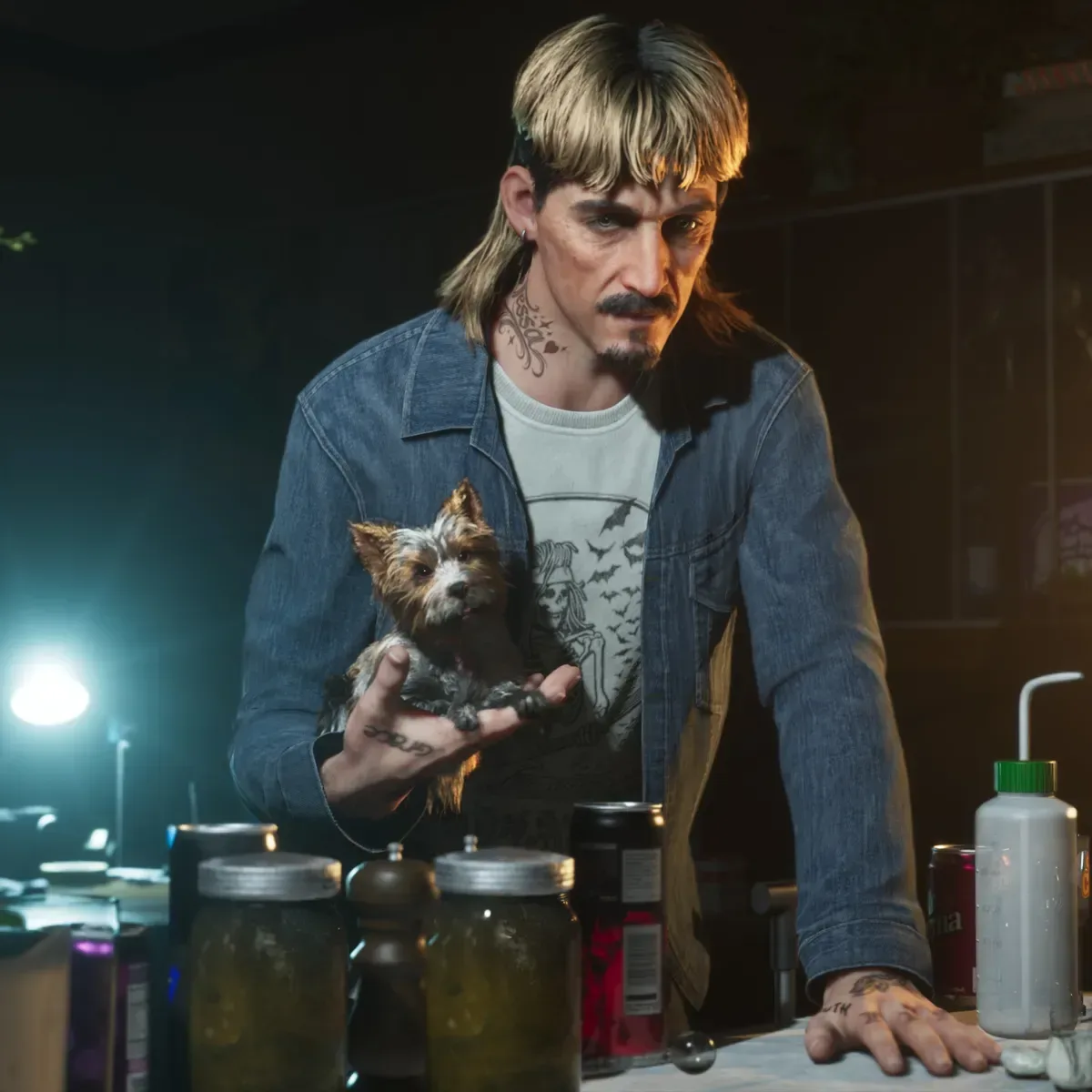
Viewers who enjoy cataloguing fictional-world clues and recurring brands will likely find plenty to study in those touches. That kind of attentive decoding has a close cousin in game communities, including players investigating the strange markings around Leonida’s monument in GTA 6’s possible Mount Chiliad-style mystery. Here, though, the references serve a broader mood: Hollywood is presented as the geographical and imaginative center of everything.
Onscreen location cards reportedly measure places in relation to Hollywood—Beverly Hills is identified as 4.3 miles west, for example. It is a joke with a serious implication. The city’s map is less important than its relationship to the dream factory. Even as the movie ranges across different neighborhoods and low-rent encounters, it keeps circling the industry’s gravitational pull.
The opening establishes Cliff’s unnerving rules
The early projectionist sequence gives a clean sense of what the movie means by a “Cliff Booth” adventure. After the theater closes, Cliff meets a thief, played by Karren Karagulian, who wants to fence property taken from a Hollywood Hills home. The thief has brought along a young hustler, played by Corey Fogelmanis. The stolen goods belong to one of Cliff’s former director acquaintances, changing what might have been a simple black-market exchange into a personal problem.
Cliff resolves it quickly. The thief is killed, while the hustler is sent on a bus back to Ohio. The contrast is the point: the film treats Cliff’s lethal response with a startling degree of casualness. The moment is both an early jolt and an explanation of the character’s moral weather. Cliff does not spiral into guilt or anguish. He acts, tidies the immediate consequences and continues moving through the week.
That approach will not be for every viewer. The film is described as ultraviolent, and its violence is not always tied to emotional release or a grand historical revision. One reported sequence sees Roderick “Hot Rod” Harrison, a football player turned actor played by Yahya Abdul-Mateen II, severely beaten. The Verdusco brothers, Filipino hitmen played by Matt Groove and JB Tadena, bring further menace to the story; one carries a hatchet called Esmerelda. The climax is said to be spectacularly brutal, and Cliff endures an outcome that would seemingly eliminate an ordinary person from the story.
But “ordinary” is not the operating mode here. Cliff’s durability becomes part of the gag and part of the pulp logic. He is the man who takes damage, shrugs and remains in the frame. That makes the finale less about realism than about sustaining a specific kind of screen presence.
Television shapes the plot as much as movies do
The title may signal a film continuation, but the structure reportedly carries an episodic feel. It moves from incident to incident, emphasizing the pleasure of returning to an unusually watchable character. Rather than building exclusively toward a tightly escalating central conflict, it uses Cliff’s movement through Los Angeles as connective tissue. That is why the comparison to a television series makes sense: viewers are invited to settle into a character’s company, with each episode-like encounter providing a new complication.
The story itself is deeply embedded in television. Scott Caan plays Charlie Peters, an obnoxious television star known for Westerns and combat programs. Charlie performs his own stunts and behaves as if that makes him invincible, but he calls on Cliff when he needs to escape trouble with the underworld. The detail matters because it flips the old stuntman relationship. Cliff is not needed to make Charlie look heroic on-camera; he is needed because Charlie lacks Cliff’s capacity to navigate danger off-camera.
Caan’s character has the broad, abrasive quality of a man made to fill a television screen. A scene involving a live round of ammunition and Timothy Olyphant’s actor playing a Nazi pushes that volatility into explicitly dangerous territory. Charlie may help set events in motion, but Cliff is the one whose unflappable response defines the movie’s temperature.
Elizabeth Debicki’s Kate Crosby, Charlie’s British agent, introduces another strand. She and Cliff develop a cool, openly competitive flirtation. Their attraction is present, but it is filtered through status, suspicion and a strain of casual kink. Kate is important not just as a romantic foil but as a person able to match Cliff conversationally. Their key exchange concerns movies and whether art has any place in how they should be valued.
The film’s argument about movies stays deliberately unsettled
Kate once worked as a film critic and knew Pauline Kael. In conversation with Cliff, she argues that movies should be treated as entertainment rather than art, dismissing even The Godfather as a gangster picture putting on artistic airs. Cliff objects in his own way, including over Kael’s dislike of Butch Cassidy.
The scene matters because the movie does not appear to offer a neat rebuttal. It lets Kate’s cynical view hang in the air. Is it a provocation? A reflection of the cultural shift that the post-Star Wars setting represents? Or an intentionally unresolved contradiction from a screenplay full of affection for popular forms—television, exploitation movies, commercials, genre pictures and radio hits?
The best reading may be that the film is interested in the border dispute without wanting to settle it. It plainly takes craft seriously: Fincher’s direction, Erik Messerschmidt’s cinematography, Kirk Baxter’s editing, and music by Trent Reznor and Atticus Ross are part of a production designed with precision. Yet it also delights in the messy immediacy of entertainment that is cheap, loud, tacky or disreputable. The movie can make a fictional movie theater, a TV actor’s ego and an underworld errand feel equally worthy of attention.
The Further Mis-Adventures of Cliff Booth therefore sounds like a sequel that expands its world by narrowing its focus. Rick Dalton’s absence leaves room for Cliff to become not just an icon of cool but a full narrative engine: funny, dangerous, increasingly battered and apparently impossible to remove from the board. For audiences willing to accept a wandering plot and sharp bursts of brutality, its greatest promise is straightforward: spending more time with Cliff Booth remains the point.
Key film details
- Director: David Fincher
- Screenplay: Quentin Tarantino
- Lead: Brad Pitt as Cliff Booth
- Also starring: Elizabeth Debicki, Scott Caan, Carla Gugino, Yahya Abdul-Mateen II, Peter Weller, Matt Groove, JB Tadena, Timothy Olyphant and Corey Fogelmanis
- Running time: 140 minutes
- Rating: R
- Release: Netflix release; Plan B Entertainment production