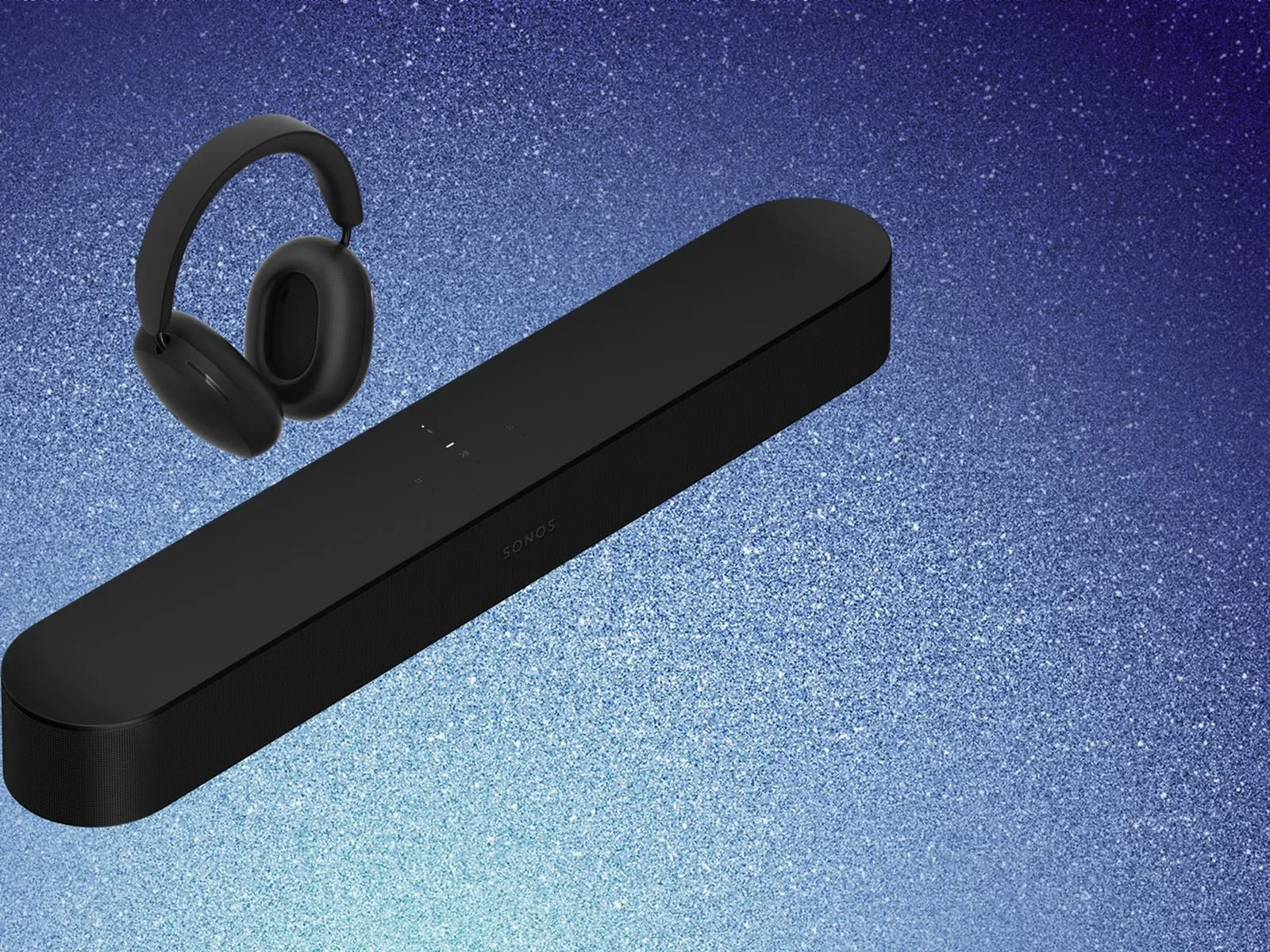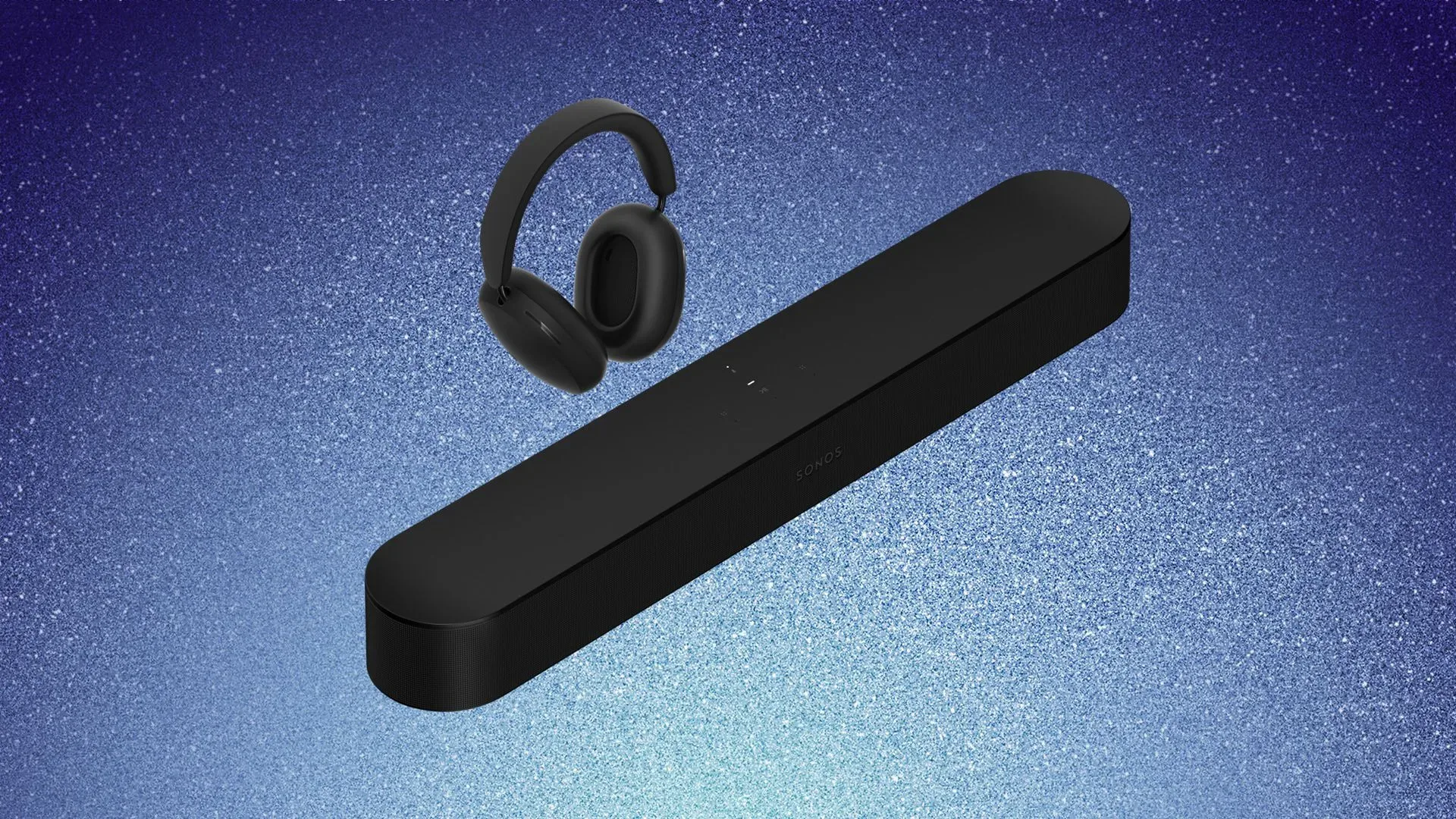
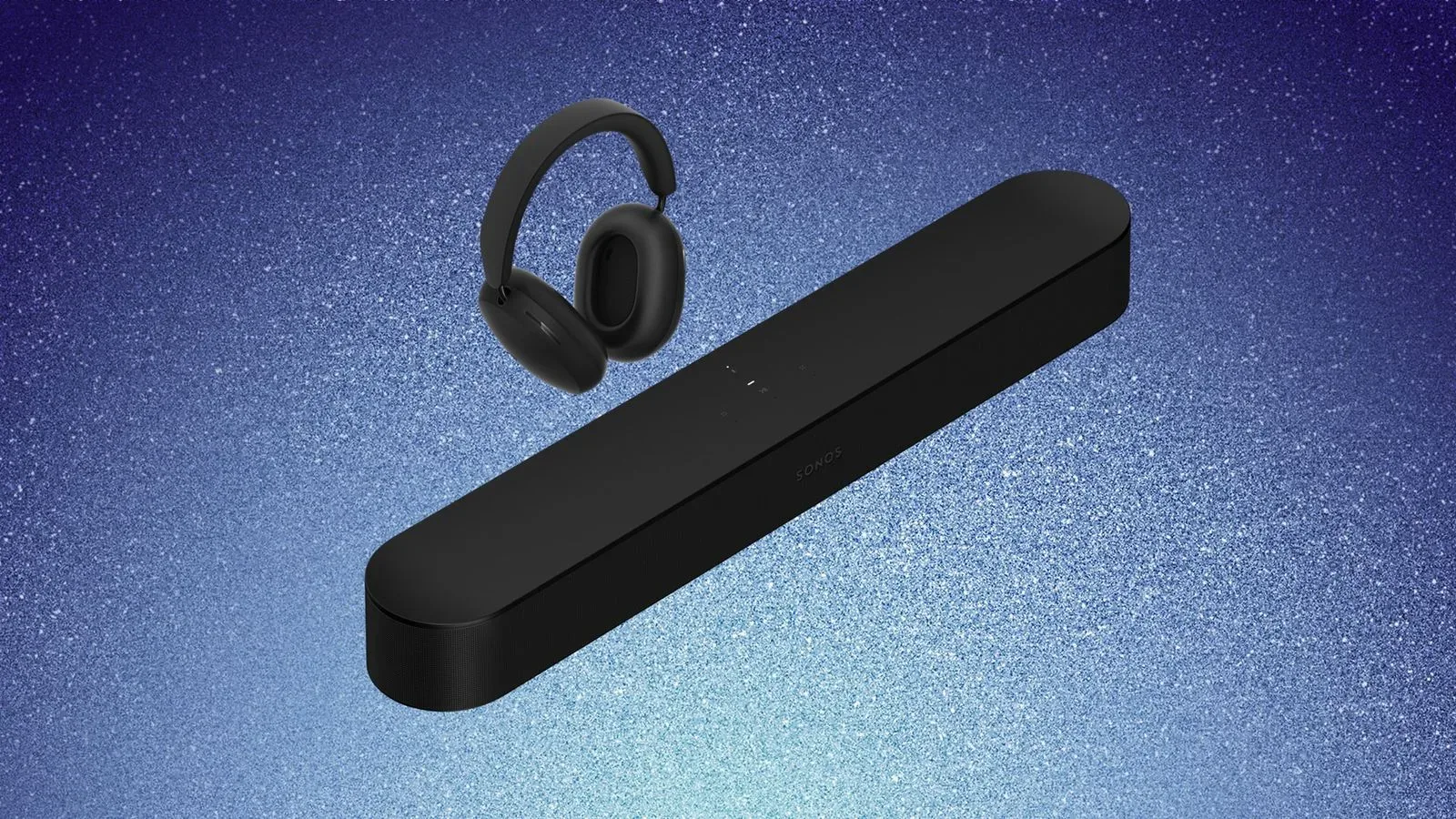
Sonos has opened its Black Friday sale with discounts of up to 25% across selected speakers, soundbars, headphones, subwoofers and bundled sets. The promotion is scheduled to run through November 30, making it a defined seasonal window rather than a permanent change to the company’s pricing.
The headline individual deal is the Sonos Ace at $229, a reduction of $120. For TV-focused setups, the reduced range starts with the Ray at $169 and extends to the Arc Ultra at $849. Buyers considering a broader setup can also find discounts on Era 100 combinations, Beam and Arc Ultra immersive sets, and two different subwoofer models.
For people shopping around the holiday period, it is worth separating a discount from a recommendation. The figures below establish what is included in this particular sale, but they do not by themselves say which model suits a room, television, listening habits or existing equipment. A lower entry price can be useful, but a package only makes sense when every component has a purpose in the buyer’s planned setup.
Sonos Black Friday sale: the listed prices
Speakers and speaker sets
- Roam 2: $139, down $40.
- Era 100 Speaker: $179, down $40.
- Roam 2 Charging Set: $188, down $40.
- 2 Room Set with Era 100 SL: $298, down $80.
- 2 Room Set with Era 100: $358, down $80.
- Move 2 Speaker: $399, down $100.
- Adventure Set with Sonos Play: $478, down $120.
Headphones
- Sonos Ace: $229, down $120.
- Sonos Ace (Pair): $458, down $240.
Soundbars and home-theater sets
- Ray: $169, down $50.
- Beam (Gen 2): $339, down $160.
- Arc Ultra: $849, down $250.
- Immersive Set with Beam: $1,096, down $340.
- Ultimate Immersive Set with Arc Ultra: $2,199, down $797.
Subwoofers
- Sub Mini: $399, down $100.
- Sub 4: $719, down $180.
The standout reductions, in plain numbers
The sale’s “up to 25%” language describes the upper end of the promotion, not necessarily every item in it. The supplied prices and reductions make the individual math clear enough to put several offers into context.
The Ace falls from $349 to $229, which is roughly a 34% reduction based on the stated $120 saving. The pair is listed at $458, exactly twice the single-unit sale price, and its $240 discount is likewise twice the individual discount. That means the pair listing is best understood as a two-unit purchase at the same current per-unit price, rather than evidence of an additional bundle-only reduction.
Among soundbars, Ray moves from $219 to $169, Beam (Gen 2) from $499 to $339, and Arc Ultra from $1,099 to $849. In cash terms, Arc Ultra’s $250 reduction is the largest of the three individual soundbar discounts. In percentage terms, Beam’s $160 reduction is the steepest of that group at about 32%. Those are two different ways to assess a deal: dollar savings show how much money remains unspent, while percentage savings show how far an item has moved from its stated regular price.
The two listed subwoofers differ by $320 at the discounted prices: Sub Mini is $399, while Sub 4 is $719. Their stated reductions are $100 and $180 respectively. That does not establish that one is a substitute for the other; it simply makes the budget gap visible for anyone deciding whether to add a subwoofer at all.
What “immersive set” means here—and what the listings do not establish
“Immersive” is used in the names of two discounted home-theater bundles: the Immersive Set with Beam at $1,096 and the Ultimate Immersive Set with Arc Ultra at $2,199. In this sale context, it is a product-set label. The available information confirms the names, prices and stated savings—$340 and $797—but does not provide a component-by-component inventory, compatibility details, room requirements or setup instructions.
That distinction matters when comparing bundle purchases with individual components. A package can look compelling because its total stated reduction is larger, but it also demands a much larger upfront spend. The Arc Ultra set’s $797 reduction is the biggest cash discount on the list, yet its $2,199 sale price remains the highest price in the promotion. It is a larger transaction, not automatically a better fit.
Likewise, the two-room Era 100 offers should be read as named sets rather than assumed to be interchangeable. The Era 100 SL set is listed at $298, while the Era 100 set is $358; both carry an $80 reduction. The $60 difference is explicit, but the supplied sale details do not explain the distinction between those two configurations. Shoppers should verify the included hardware and the current product specifications before treating the lower price as an equivalent alternative.
A practical way to compare the sale
There are several reasonable starting points, depending on what someone actually needs. A buyer who needs one standalone audio product has a clearer comparison between the individual speaker, headphone, soundbar and subwoofer listings. Someone building a TV setup should compare the price of the soundbar they want with the price of the named set, then check what that set includes. And a buyer looking to add audio to more than one room should focus first on the two-room offers instead of assuming that separate purchases will match the package pricing.
- Start with the use case. Is the purchase for private listening, a television, a single room, multiple rooms or a broader home-theater arrangement? The list spans all of those categories.
- Set a total budget before focusing on the stated saving. A $797 reduction sounds substantial because it is substantial, but it belongs to a $2,199 set. The final price is the amount that affects the budget.
- Compare like with like. A soundbar and a speaker serve different buying goals; a standalone component and a set should only be compared after confirming the contents of the set.
- Check the exact product name. “Beam (Gen 2),” “Arc Ultra,” “Sub Mini,” “Sub 4,” and the Era 100 set names are distinct listings. Do not assume a similarly named item is covered by the same deal.
- Confirm terms before checkout. The reported end date is November 30, and product promotions can have conditions or change. Verify the sale price and what is included at the point of purchase.
How the soundbar prices line up
The soundbar selection provides the cleanest three-tier price spread in the promotion. Ray is the lowest-cost entry at $169. Beam (Gen 2) sits at $339, exactly $170 higher than Ray after discounts. Arc Ultra is listed at $849, which is $510 above Beam (Gen 2) and $680 above Ray.
Those differences are more useful than an unqualified “best deal” label. Someone with a firm ceiling below $200 has one listed soundbar option in Ray. A shopper whose budget reaches $339 has Ray and Beam (Gen 2) to weigh. Arc Ultra enters the decision only when the buyer is prepared to spend $849. Sale coverage often emphasizes the amount knocked off, but the appropriate comparison is between the products that remain within a buyer’s realistic final-price range.
The same thinking applies to the subwoofer category. Sub Mini at $399 and Sub 4 at $719 may both be discounted, but they are not positioned at the same final price. The best practical question is not “which has the larger dollar reduction?” It is whether a $399 or $719 purchase fits the intended system and budget, after confirming the relevant specifications independently.
Holiday deal context
Black Friday sales put a premium on clarity because they present many product types and price points together. This Sonos event ranges from the $139 Roam 2 to the $2,199 Ultimate Immersive Set with Arc Ultra. The 16-fold gap between those sale prices illustrates why a single percentage headline is only the beginning of the shopping decision.
There is also a useful distinction between a reduced price and a deadline. The reductions listed here are available through November 30 as part of the sale period. That makes comparison shopping more urgent than it would be with ordinary pricing, but it does not make every item an automatic purchase. A purchaser who already knows they want a particular product can use the named discount to assess timing; a purchaser still choosing between categories should first avoid being pulled into a higher-cost bundle merely because its displayed saving is larger.
For additional seasonal-shopping context, see our coverage of Apple’s Black Friday 2026 promotion and its gift-card approach. The comparison is a reminder that holiday offers are structured differently: some reduce checkout prices directly, while others provide value in a later form. This Sonos promotion is straightforward in that respect, with current sale prices and stated dollar reductions attached to each listed item.
At the smallest end of the Sonos list, Roam 2 is $139, Era 100 is $179, and the Roam 2 Charging Set is $188. At the higher end, Move 2 is $399, the Adventure Set with Sonos Play is $478, and the named home-theater sets move past $1,000. That breadth makes the sale relevant to several kinds of shopper, but it also reinforces the importance of making a category decision before making a model decision.
In short: the Ace’s $229 price, Ray’s $169 entry point, Beam (Gen 2)’s $339 price and Arc Ultra’s $849 price are the major individual audio deals to compare, while the Era, immersive and subwoofer listings give existing or prospective Sonos buyers several package and expansion paths to evaluate. The promotion is set to end November 30, so confirm the exact listing, included products and current price before committing.