Apple’s 2026 Black Friday shopping event runs from Friday, November 27 through Monday, November 30, covering the traditional Black Friday-to-Cyber Monday stretch. In the United States, the promotion opens at 12:00 a.m. Pacific Time on November 27 and closes at 11:59 p.m. Pacific Time on November 30.
The headline number is a potentially hefty Apple Gift Card: up to $300 with a qualifying purchase. But this is not a straightforward price cut at checkout. The card is issued for a later purchase, which makes the promotion most useful for shoppers who already expect to buy something else from Apple’s ecosystem—whether that means hardware, apps, media, cloud storage, or a subscription service.
That distinction is the important one. A $300 gift card alongside an eligible MacBook Pro can be valuable to someone planning a second purchase anyway. For someone who only wants the one machine and would rather keep more cash in their account immediately, a reseller’s direct price reduction could be the stronger deal. Apple products regularly receive larger immediate discounts through third-party retailers, so the Apple Store offer is best viewed as a credit-with-purchase promotion, rather than automatically assuming it is the lowest effective price.
Where and when the offer applies
The event is available in many countries, including the United States, Canada, Australia, New Zealand, France, Germany, Italy, Spain, the United Kingdom, Belgium, the Netherlands, Sweden and Thailand. Product eligibility and gift-card values below are the U.S. details, so shoppers outside the country should not assume the same list or value applies in their region.
For more context, explore Downing Street Calls GTA 6 a British Success Story as PM Andy Burnham Skips Vice City.
Eligible purchases can be made at an Apple Store, through the Apple Store app, or on Apple.com. The advertised credit is an Apple Gift Card, Apple’s all-purpose store balance. It can later be spent on Apple products and accessories, Apple Music and Apple TV subscriptions, App Store apps, TV shows and films to buy or rent, iCloud+ storage, and other supported Apple purchases.
In other words, the credit has breadth inside Apple’s storefront, but it is not cash back, and it does not lower the initial amount paid for the qualifying product. Planning the second purchase is the sensible way to evaluate the offer.
The biggest U.S. gift cards: MacBook Pro leads the board
The maximum $300 card accompanies the 16-inch MacBook Pro with either the M5 Pro or M5 Max chip. Buyers of the 14-inch MacBook Pro with M5 Pro or M5 Max receive a $250 card instead.
- $300: 16-inch MacBook Pro with M5 Pro; 16-inch MacBook Pro with M5 Max.
- $250: 14-inch MacBook Pro with M5 Pro; 14-inch MacBook Pro with M5 Max.
- $200: 13-inch MacBook Air with M5; 15-inch MacBook Air with M5.
- $125: 11-inch iPad Pro with M5; 13-inch iPad Pro with M5.
This tiering is useful beyond the obvious dollar amounts. It separates a shopper whose budget is tied to an individual model from one choosing between categories. A buyer who already knows they need a 16-inch M5 Pro or M5 Max MacBook Pro has a clear $300 future-credit figure to compare against retailer pricing. Conversely, the gift card alone should not be treated as a reason to move to a more expensive configuration. The relevant comparison is always the complete upfront cost, the value of the future credit to the individual buyer, and any immediate reseller discount available on the same model.
The M5-branded MacBook Pro and MacBook Air entries are explicitly named in the offer, as are the M5 iPad Pro models. That specificity matters: similar-looking Apple product names can have different eligibility, particularly when newer hardware is excluded.
$100 offers cover iPad Air, Mac mini and select mobile gear
Apple’s $100 tier includes a varied collection of products:
- iPhone Air
- Mac mini
- 11-inch iPad Air with M4
- 13-inch iPad Air with M4
- Apple Watch Ultra 4
For gaming-adjacent buyers, the Mac mini and iPad Air are the products here most likely to invite a broader spending-plan question: is the gift-card balance intended for an accessory, software, storage, or a recurring service? The promotion does not turn the gift card into an instant discount, but it may help consolidate a purchase plan that was already headed toward Apple’s storefront.
It is also worth keeping categories straight. Apple lists a Mac mini in the $100 group, while the current iMac and Mac Studio are among the excluded products. “Mac” alone is therefore not enough to establish eligibility; the exact model is what counts.
iPhones, watches and headphones in the middle tiers
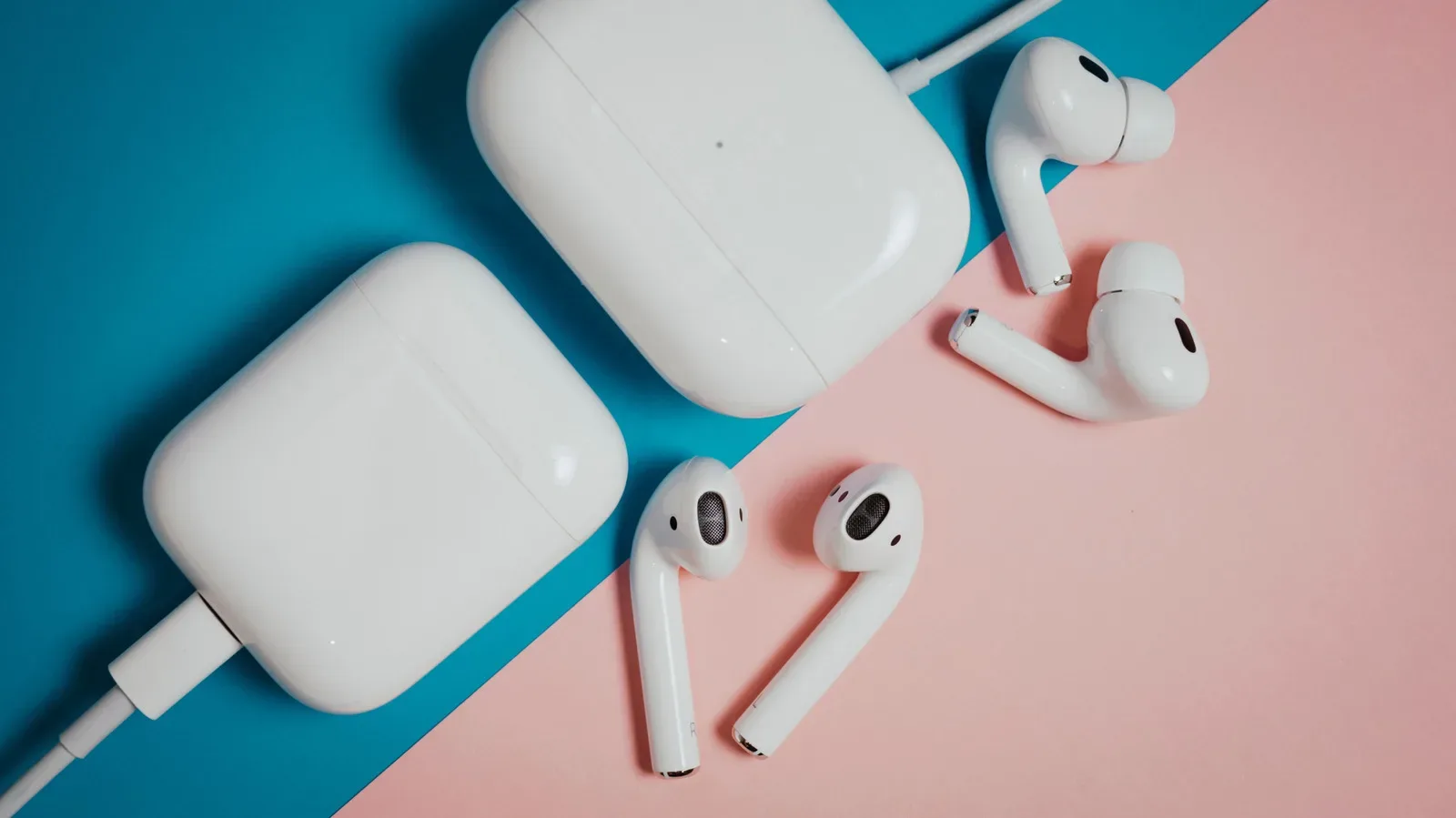
Apple assigns $75 cards to iPhone 16, iPhone 17, AirPods Max 2 and Beats 360. The $50 group includes iPhone 17e, Apple Watch SE 3, Apple Watch Series 12, AirPods Pro 3, HomePod, Beats Studio Buds +, Beats Solo 4, Powerbeats Fit, Powerbeats Pro 2 and Beats Studio Pro.
- $75: iPhone 16; iPhone 17; AirPods Max 2; Beats 360.
- $50: iPhone 17e; Apple Watch SE 3; Apple Watch Series 12; AirPods Pro 3; HomePod; Beats Studio Buds +; Beats Solo 4; Powerbeats Fit; Powerbeats Pro 2; Beats Studio Pro.
The presence of multiple iPhone generations and price bands is a reminder not to use the card value as shorthand for which phone is “better.” It is an offer structure, not a scoring system. In practical terms, shoppers deciding between models should start with their device needs and total cost, then regard the included credit as a secondary benefit they can realistically use.
Audio products dominate the $50 tier, while the $25 group covers entry-level audio products and accessories. That creates a more modest but potentially tidy deal for someone who planned to buy an Apple Pencil Pro, compatible Magic Keyboard, AirPods, or a small speaker and also has a defined later use for the credit.
The $25 list—and a new third-party accessory angle
The smallest gift card amount is $25. Eligible Apple-branded products include AirPods 5, AirPods 5 with Wireless Charging Case, HomePod mini 2, Beats Pill, Apple Pencil Pro, plus Magic Keyboard models for the 11-inch and 13-inch iPad Air and the 11-inch and 13-inch iPad Pro.
For the first time in this promotion, selected third-party accessories are also eligible for a $25 Apple Gift Card. The eligible selection includes charging hardware and protective covers or sleeves from Anker, Belkin, Mophie, Nimble, Rains and Twelve South:
- Anker 3-in-1 Cube with Qi2
- Belkin UltraCharge Pro 2-in-1 Convertible Magnetic Charger
- Belkin UltraCharge Pro 3-in-1 Magnetic Charging Dock
- Mophie 3-in-1 Wireless Charge Stand
- Mophie 4-in-1 Wireless Charge Stand
- Mophie Roam 3-in-1 Travel Charger
- Twelve South ButterFly SE 2-in-1 USB-C Qi 2.2 Travel Charger
- Nimble Podium 3-in-1 Wireless Charger
- Rains 14-inch Puffer Laptop Cover for iPad and MacBook
- Rains 16-inch Puffer Laptop Cover for MacBook
- Rains Utility 14-inch MacBook Sleeve
- Rains Utility 16-inch MacBook Sleeve
“Qi” refers to the wireless-charging standard; the eligible accessory names specify Qi2 or Qi 2.2 on certain chargers. The supplied promotion details identify these products as eligible, but they do not establish which device combinations or charging speeds are appropriate for every buyer. Shoppers choosing multi-device chargers should verify their own hardware needs from the product listing before treating the promotion as the deciding factor.
What is excluded, and why it can change the plan
A substantial set of newer Apple products does not qualify. The listed exclusions include iPhone 18 Pro, iPhone 18 Pro Max, iPhone Duo, MacBook Neo, the latest iPad mini models, Apple TV 4K, iMac and Mac Studio. Refurbished products are also excluded. The offer cannot be combined with educational pricing.
Those restrictions create a few easy checkout traps. First, a shopper should make sure the precise product—not merely a related product family—is in the eligible column. Second, refurbished inventory is not a route to the Black Friday card. Third, buyers eligible for education pricing should compare their education-price total against the standard-price-plus-gift-card promotion rather than presume the two benefits stack.
The event rewards a planned follow-up purchase, not just the first product in the cart.
That principle also applies to shoppers weighing Apple’s promotion against other retailers. A direct discount reduces the price now. A gift card has its full stated value only if the buyer will actually spend it later on eligible Apple purchases they would otherwise make. If the answer is yes—perhaps a known accessory, iCloud+ plan, app purchase, entertainment rental or another Apple device—the calculation can be straightforward. If not, an upfront reduction from another seller may be more useful even when its headline figure is smaller than Apple’s gift-card amount.
A quick pre-checkout checklist
- Confirm the exact model. Check chip, size and generation where those details are part of the eligible product name.
- Check the purchase channel. The offer covers Apple Store locations, the Apple Store app and Apple.com.
- Calculate the later spend. Identify what the gift card would pay for before factoring it into the product’s effective value.
- Compare immediate discounts. Resellers may offer a larger reduction on the same Apple hardware, which changes the actual cost calculation.
- Account for exclusions. Newer listed models, refurbished products and education pricing combinations are not eligible under this offer.
- Mind the deadline. In the U.S., the window ends at 11:59 p.m. Pacific Time on November 30.
Apple’s event is one of the company’s relatively rare direct deal periods, but it is selective by design. For shoppers who want an eligible device and have a clear future use for Apple credit, the card can meaningfully offset a second purchase. For everyone else, the better strategy is less glamorous and more reliable: compare the same exact model across sellers, distinguish a future store balance from money off today, and let the total cost—not the biggest promotional number—make the decision.