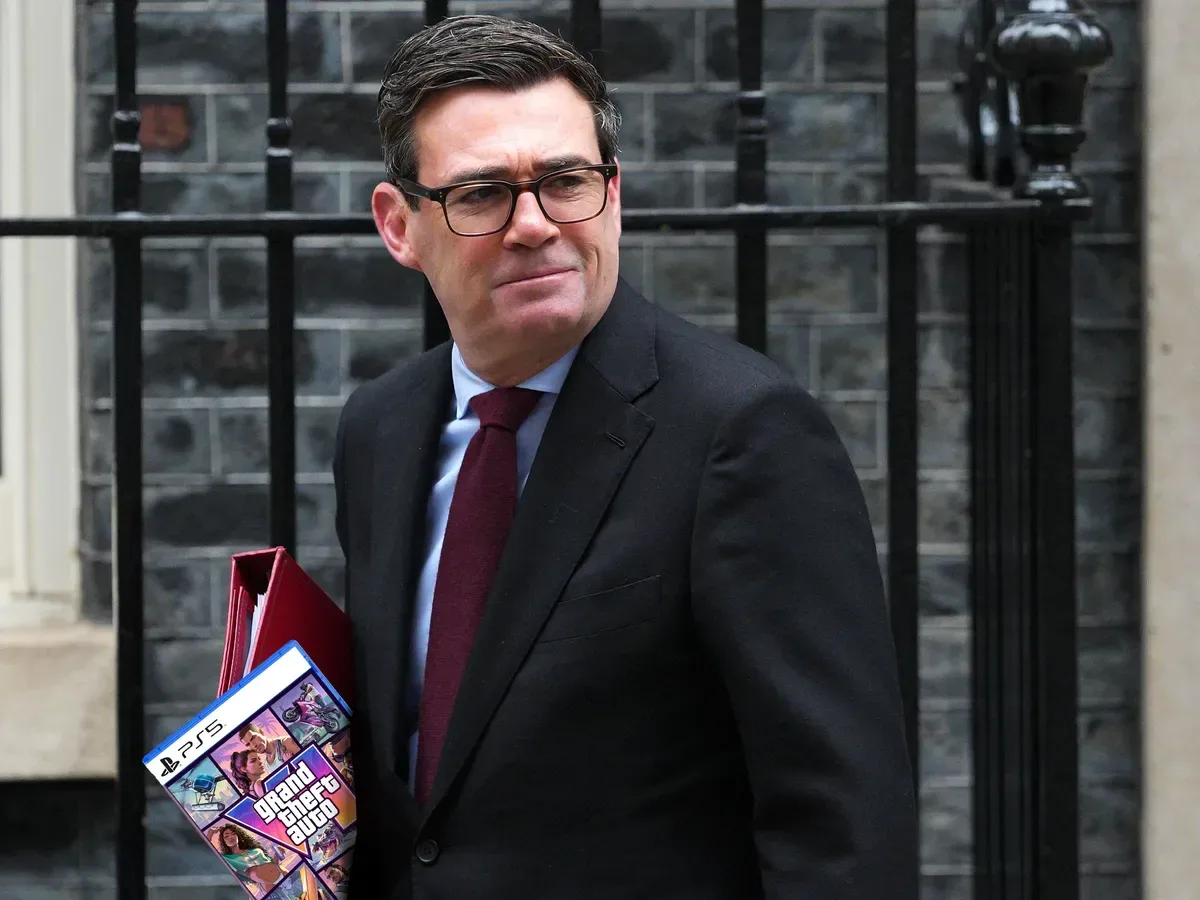
Grand Theft Auto 6 has received an unusual kind of launch-week recognition: praise from Downing Street. A spokesperson described Rockstar Games as a British success story made in Edinburgh, highlighting the role of Rockstar North in the creation of the newly released blockbuster.
There is one clear boundary to the government’s enthusiasm, however. Prime Minister Andy Burnham will not be setting aside official business for a trip to Leonida. Asked whether he would play GTA 6, the spokesperson’s answer was blunt: his diary is very full.
It is a small, lightly comic exchange around an enormous entertainment release, but it also puts a useful spotlight on what it means when a game becomes big enough to enter the national conversation. GTA 6 is not being discussed solely as a game for existing fans. Its launch has become a workplace, school and cultural talking point, complete with the online phrase “GTA flu” for people supposedly taking time off to play.
Why Edinburgh is central to the “British success” claim
The government’s framing rests on Rockstar North’s Edinburgh base. Rockstar Games is a wider organization with studios in multiple places, and GTA 6 involved contributions beyond Scotland. Still, Rockstar North’s role makes Edinburgh a meaningful part of the story rather than a convenient label applied after the fact.
That distinction matters. Major games are rarely the product of one office, one city or one isolated team. Modern blockbuster development can involve specialists and production support spread across several studios. Calling GTA 6 wholly the work of a single location would flatten that reality. But recognizing Rockstar North’s Edinburgh contribution is compatible with recognizing the broader collaboration behind the release.
Downing Street’s wording is therefore best read as a statement about British creative and technical capacity, not a claim that every part of the game was produced in the UK. The attention landing on a studio associated with Edinburgh is significant in itself: it treats game development as an accomplishment worth placing alongside more traditionally celebrated cultural industries.
For players, the political language does not change GTA 6’s missions, systems or setting. For the industry, it signals that a game launch can be understood as more than a consumer event. It can be discussed in terms of skilled work, international reach and the ability of a locally based studio to help make a globally prominent release.
The Prime Minister is not taking a GTA sickie
The spokesperson also used the moment to draw a line between excitement and responsibility. Burnham will not be playing because of the demands of his schedule, and the wider message discouraged people from taking a “GTA sickie.”
Related coverage includes Downing Street Calls GTA 6 a British Success as Prime Minister Skips Vice City.
“GTA sickie” is informal shorthand for calling in sick in order to spend the day playing. It is not a technical term, a policy category or evidence that everyone discussing it has actually missed work. In this case, it became a social-media label for the release-day temptation surrounding a highly anticipated game.
The term has traction because it compresses a familiar launch-day feeling into two words. Big releases can create a shared sense of urgency: players want to start before spoilers circulate, join friends immediately, and take part while discussion is at its loudest. With an open-world game set in Leonida and featuring Vice City, that urge is amplified by the scale of the place players expect to explore and the prospect of discovering its details in real time with millions of others.
But the joke has a real practical edge. A person’s leave arrangements, workload and employer policies do not disappear because a game launches. If someone wants uninterrupted time with GTA 6, planned time off is the straightforward option. Calling in sick when not sick risks consequences at work and shifts pressure onto colleagues. The spokesperson’s message is ultimately an uncontroversial one: enthusiasm for a major game does not make ordinary responsibilities optional.
Launch-day hype versus a game’s longer life
There is also a useful difference between the rush of launch day and the reality of playing a large game over time. “GTA flu” captures immediate excitement, but it can make GTA 6 sound like a one-day event. A game of this scale is likely to be approached at different speeds. Some players may begin immediately, others may wait for a free evening, and many may choose to avoid the loudest early conversations altogether.
That slower approach has obvious advantages. Players who want to limit unwanted plot details can mute related terms, avoid feeds where clips are being widely shared, and be careful with video thumbnails and comment sections. Those who would rather savor the game can simply treat the first days as the beginning of a longer experience rather than a race to keep up.
The government’s comments acknowledge the scale of the public excitement without endorsing the idea that everyone must participate instantly. Burnham’s crowded diary is an especially visible version of a situation plenty of people will recognize: interest in a game does not automatically create time to play it.
Schools are part of the conversation, too
The spokesperson’s comments specifically addressed younger fans, saying they should be in classrooms and stressing that every day in school matters. That message arrived amid reports of schools warning pupils not to stay home to play GTA 6. Some pupils were reportedly even offered gift cards as an incentive to attend.
The school angle shows how launch hype can move beyond the usual gaming spaces. A release becomes culturally prominent when it is discussed not just on storefronts and social platforms, but also in attendance reminders and workplace planning. That does not mean every player is skipping commitments, nor does it establish that the jokes have produced a measurable disruption everywhere. It does show that schools and employers anticipated the possibility and decided to address it.
For families, the practical issue is less about treating the launch as a moral panic and more about managing the same basics that apply to any new entertainment obsession: school comes first, sleep still matters, and playing time works best when it is planned around existing obligations. A game can be exciting and still wait until the end of the day.
That is particularly relevant when online conversation around a release becomes intense. Social pressure can make it feel as if everybody else has already started, uncovered everything and formed definitive opinions. In reality, players enter at different moments. There is no prize mentioned here for rushing through Leonida before friends, classmates or colleagues do.
A cultural milestone, with a little perspective
The most notable part of the exchange may be the combination of praise and restraint. Downing Street called GTA 6 a British success story while also saying the Prime Minister will not play it and urging pupils to be in class. The two ideas are not contradictory. A country can celebrate a high-profile creative achievement without suggesting that normal life should halt around its release.
For Rockstar North, the attention underlines the visibility that comes with helping make one of the world’s most talked-about games. For GTA 6 players, it is another reminder of how far beyond dedicated gaming circles the release has travelled. And for everyone caught in the “GTA flu” chatter, the sensible reading is simple: enjoy the trip to Vice City when there is actually time to take it.
Players looking at the game’s broader presentation can also see how regional differences may affect the experience. GTA VI’s Japanese version has separate content and language limitations, illustrating that even a worldwide release is not necessarily identical in every market.