Grand Theft Auto 6’s strange sightings are not simply leftovers around the edge of a very large map. Rockstar North head of production Rob Nelson has described the studio’s cryptids, paranormal hints and unresolved oddities as a deliberate part of how it builds open worlds—and as material the team plainly enjoys making.
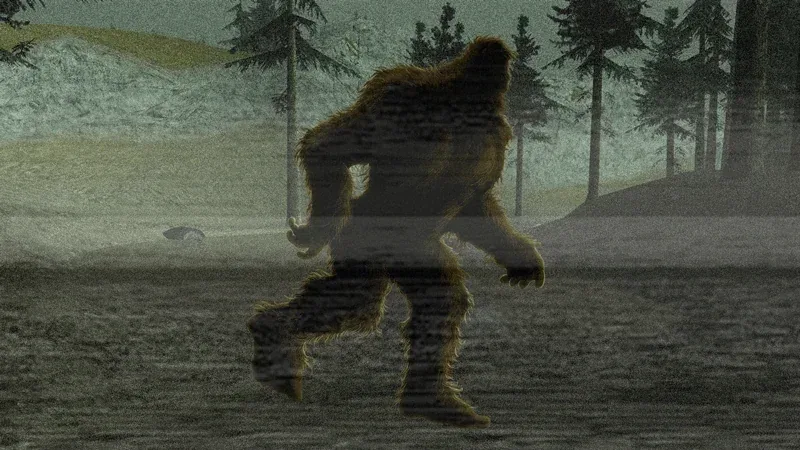
That approach is already visible in Leonida. Players have found a Skunk Ape in the state’s swamps, adding a creature associated with Florida folklore to a Rockstar tradition that has previously included Bigfoot-style mysteries, ghosts and a vampire. Nelson’s explanation is straightforward: the studio has the scale to devote people to these smaller details now, the team likes playing with the boundary between a genuine supernatural event and an elaborate fake, and GTA 6’s wilderness should feel as worth exploring as its urban areas.
“We love it,” Nelson said of the unusual material, while pointing to the strange reputation of Florida as particularly fertile territory for that sort of fiction. His larger goal for the game’s map is that it feels densely inhabited by things to see and do, and that it keeps surprising players.
Why ambiguity is the point
Nelson’s comments frame these encounters less as a promise that every mystery will receive a clean answer and more as a design tool. In this context, a cryptid is a creature from folklore or supposed sightings whose existence is unproven. Bigfoot and the Skunk Ape fit the term. Rockstar’s version of a cryptid can therefore work in more than one way: it may be a creature to spot, a staged hoax inside the fiction, a clue that leads nowhere, or an event designed to keep the player debating what was actually seen.
That uncertainty is especially useful in an open-world game. A mission generally has a defined beginning, objective and conclusion. A distant shape in swamp vegetation, an unexplained sound or a fleeting encounter can instead remain a player-led question. The discovery does not need to interrupt the main story to make the world feel less predictable.
“You never know whether it’s real paranormal stuff or it’s phony paranormal stuff,” Nelson said, describing the team’s interest in the question of whether a Bigfoot-like figure is a real creature or simply someone in a costume.
That distinction matters. Rockstar is not saying that every odd detail in GTA 6 confirms a supernatural explanation. The appeal, by Nelson’s account, is the uncertainty itself. Players may be looking at something extraordinary, an in-world prank, or evidence that has been intentionally arranged to invite speculation. The game’s mysteries are therefore part of its atmosphere as much as a checklist of definitive answers.
A fuller map means more than city activity
Nelson also connected the weirdness to a practical open-world challenge: making wilderness meaningful. Cities naturally supply visible activity through streets, buildings, pedestrians, traffic and mission locations. More remote spaces need different reasons for players to stop, look around and travel off the obvious path.
GTA 6 has substantial wilderness, and Nelson said the team wanted those regions to contain as much to do and see as the urban portions of Leonida. A Skunk Ape sighting is one example of how the game can give swamps and other less developed terrain a personality beyond scenery. It turns empty-looking distance into a place where an unexpected event may be waiting.
This is not the same thing as claiming every stretch of wild land contains a secret, nor did Nelson outline a guide to specific encounters. Instead, he described a broader intention: players should feel that there might be something strange out there. That feeling encourages exploration without requiring the game to point directly at every unusual detail.
For players making a long trip into the state’s backcountry, that has a practical implication. The most interesting moments may not always arrive through a marked mission chain. Paying attention to the environment—and making sure progress is protected before wandering far afield—can be sensible. Our GTA 6 saving guide explains how autosave and manual safeguards affect progress.
More focused teams can build smaller surprises
Nelson attributed some of Rockstar’s ability to create this type of optional detail to team size and experience. He said the studio has groups whose members previously would have carried much broader responsibilities. With a larger, long-established team, those groups can concentrate on more specific elements of a massive game.
That is an important production detail behind an easy-to-miss feature. An open-world secret might look like a small flourish from the player’s perspective, but it still needs people to conceive it, place it in the world and make it fit the game’s larger design. Nelson’s point was not that every mystery is simple to produce; it was that the studio can allocate attention to details that might not have been feasible earlier.
He cited ghosts in GTA V and a vampire in Red Dead Redemption 2 as examples of the kind of focused oddity that has appeared in Rockstar games. The common thread is not a single shared supernatural canon. It is the use of memorable, offbeat encounters to give players something beyond the primary narrative and standard open-world activity.
That also helps explain why the studio’s stranger details have remained such a durable part of the conversation around its games. Optional mysteries invite players to compare sightings, test theories and return to areas they might otherwise leave behind. Even when a mystery is deliberately inconclusive, it can create a shared investigation around the game.
Florida folklore gives Leonida a fitting framework
Nelson specifically highlighted Florida’s reputation for being “weird and crazy” as part of the creative appeal. Leonida is GTA 6’s fictional setting, but its swamps provide an especially natural setting for the Skunk Ape. The creature lets the game draw on a regional-style legend while maintaining the heightened, satirical tone that Rockstar favors.
The setting also gives the team room to vary the kinds of questions it puts in front of players. A city can deliver conspicuous spectacle. A swamp can make uncertainty do more of the work. Restricted visibility, isolation and unfamiliar surroundings can make even a brief encounter feel significant. The source material confirms the Skunk Ape has been found in Leonida’s swamps, but it does not establish the creature’s wider role, the conditions for seeing it, or whether it is connected to any larger chain of secrets.
That lack of detail is worth preserving. Nelson said he hopes GTA 6 contains things people will continue finding for a long time, which is an aspiration rather than a list of confirmed future discoveries. It signals a game designed to support sustained curiosity, not a guarantee about the number, structure or solutions of its mysteries.
What players should take from Rockstar’s explanation
There are three clear takeaways from Nelson’s comments. First, the Skunk Ape is not an accidental oddity: it belongs to an intentional tradition of strange, sometimes paranormal or apparently paranormal content. Second, uncertainty is fundamental to the experience. Rockstar enjoys the possibility that players may not know whether an encounter is supernatural or staged. Third, the wilderness is being treated as a destination in its own right, not merely the space between cities.
- Explore beyond mission routes: Nelson’s comments suggest remote regions are meant to reward attention as well as travel.
- Do not assume every mystery has one literal reading: The studio is explicitly interested in hoaxes, ambiguity and player uncertainty.
- Expect details rather than only major set pieces: Dedicated groups can focus on the small world-building elements that make a map feel surprising.
- Keep expectations measured: A discovered Skunk Ape and the team’s design philosophy are confirmed here; unannounced creatures, mechanics and solutions are not.
For a series whose worlds are often approached as playgrounds for stories both authored and self-made, that philosophy is a natural fit. Rockstar can place a question in the landscape without turning it into a required task, then let the community decide how much attention it deserves. In GTA 6, Nelson indicates, that question may be waiting just past the city limits.