Grand Theft Auto VI is aiming for more mission-level flexibility without giving up tightly controlled storytelling. Rockstar North co-studio lead Rob Nelson has described a design approach that opens objectives up where the game can do so while still preserving the narrative moments its creators consider necessary.
That distinction matters. “Open” does not necessarily mean every mission will have unlimited solutions, interchangeable outcomes, or a fully improvised story. Rather, Nelson’s comments point to missions that can accommodate more than one route, and that allow the wider game’s systems—particularly pursuits, robberies and wanted levels—to behave more naturally once a player is given room to act.
For a series built around a huge open world but also known for highly authored set pieces, that is a meaningful ambition. GTA 6 appears to be trying to reduce the friction players sometimes feel when a mission suddenly expects one precise route or response despite the surrounding city offering a broad set of possibilities.
Freedom is being framed as a balance, not an all-access pass
Nelson characterized the central challenge as a balance between player freedom and storytelling. In Rockstar’s view, some narrative beats must take priority in order to move the plot forward convincingly. Those are the moments where a mission may need to guide the player closely.
That is an important expectation to set for anyone interpreting “multiple routes” as a promise of limitless mission design. A story-driven game often needs particular characters to be present, a conversation to happen, a getaway to begin, or a specific escalation to occur. If every part of an objective can be bypassed, the game may struggle to maintain cause and effect in its narrative.
Rockstar’s stated goal is therefore more measured: make room for different approaches where possible, while avoiding a drop in the quality or clarity of the experience. In practical terms, players may encounter a mixture of guided sequences and more systemic situations, rather than a single rule applied to the entire campaign.
Guided or on-rails gameplay refers to a sequence where the player’s role, path or immediate objective is heavily directed. It does not always mean there is no interaction—shooting from a moving vehicle can still demand player input—but it does mean the game is controlling much of the scenario’s structure. Nelson’s examples suggest GTA 6 will shift between those authored passages and sections where players regain greater agency.
Two shown missions illustrate the approach
Nelson pointed to material already seen in the GTA 6 Extended Look. One example involves escaping from a tower block. Rather than presenting one mandatory exit, that mission has multiple routes out of the building.
Related coverage includes GTA 6 Missions Aim for More Player Freedom Without Losing Story Focus.
The significance is less about the building itself than the design principle it represents. Multiple exits can change how a player reads a space: instead of merely following a highlighted path, they may need to assess stairwells, doors, streets or other available ways to break away. The destination may still be narratively fixed, but the journey there need not be identical for every player or every replay.
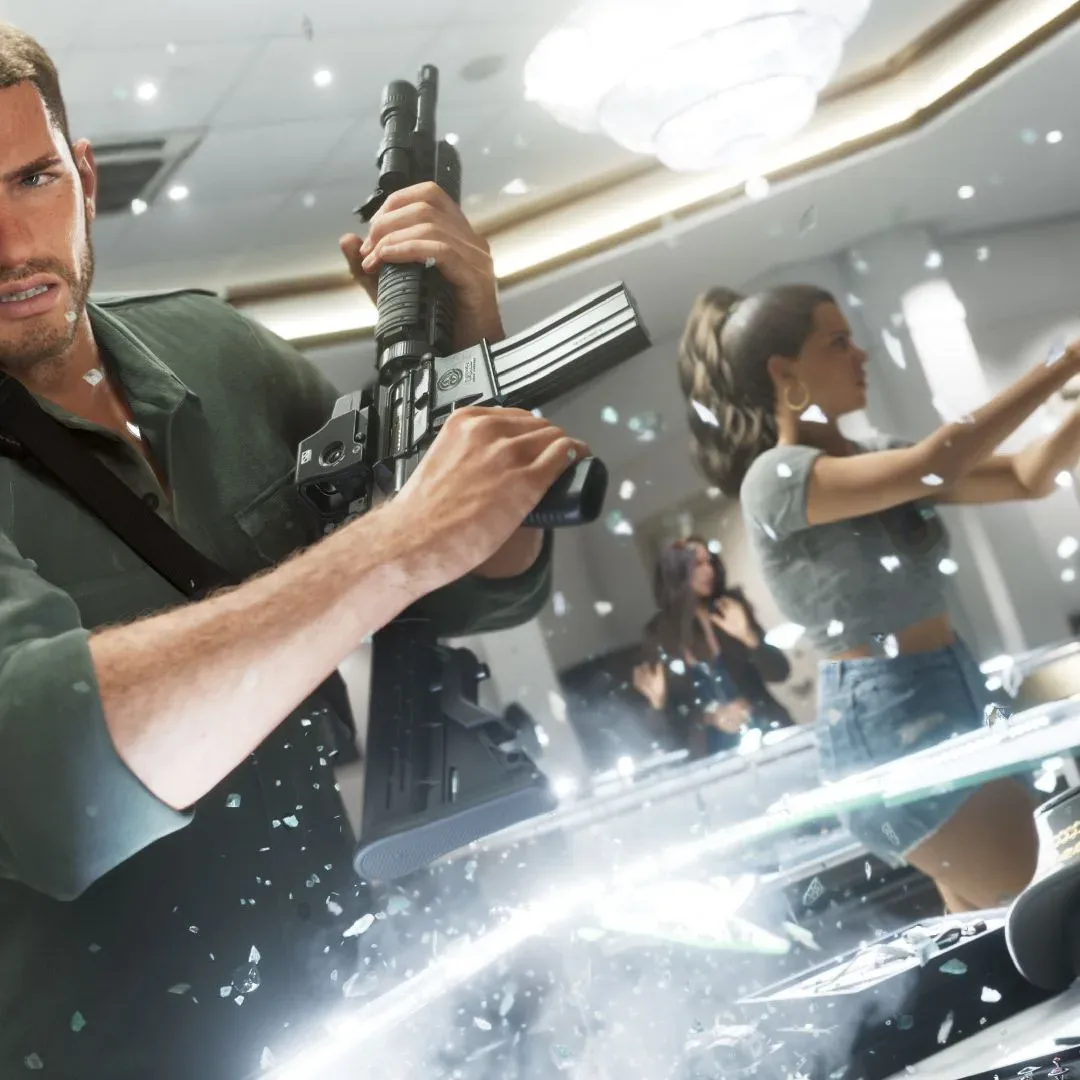
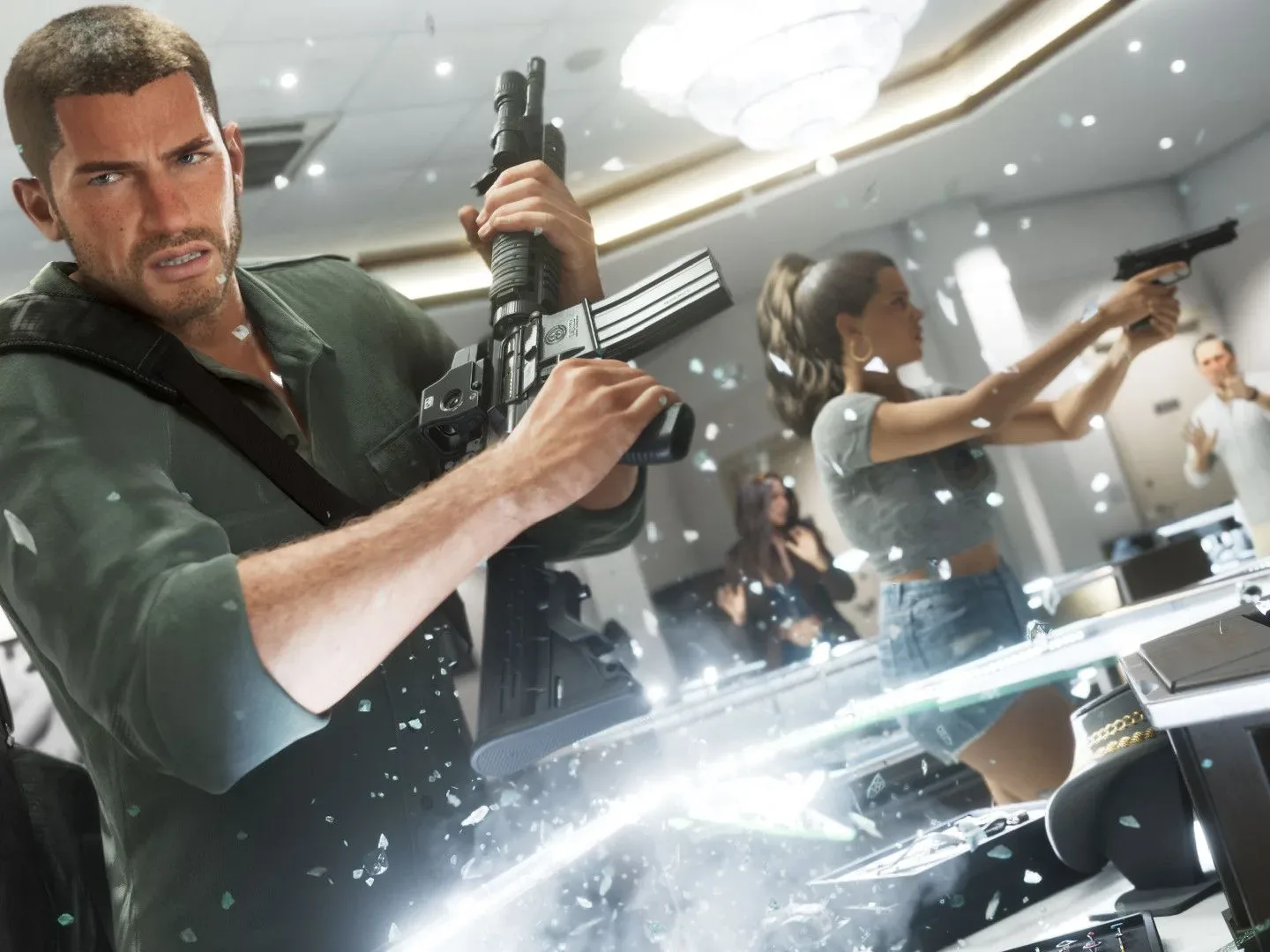
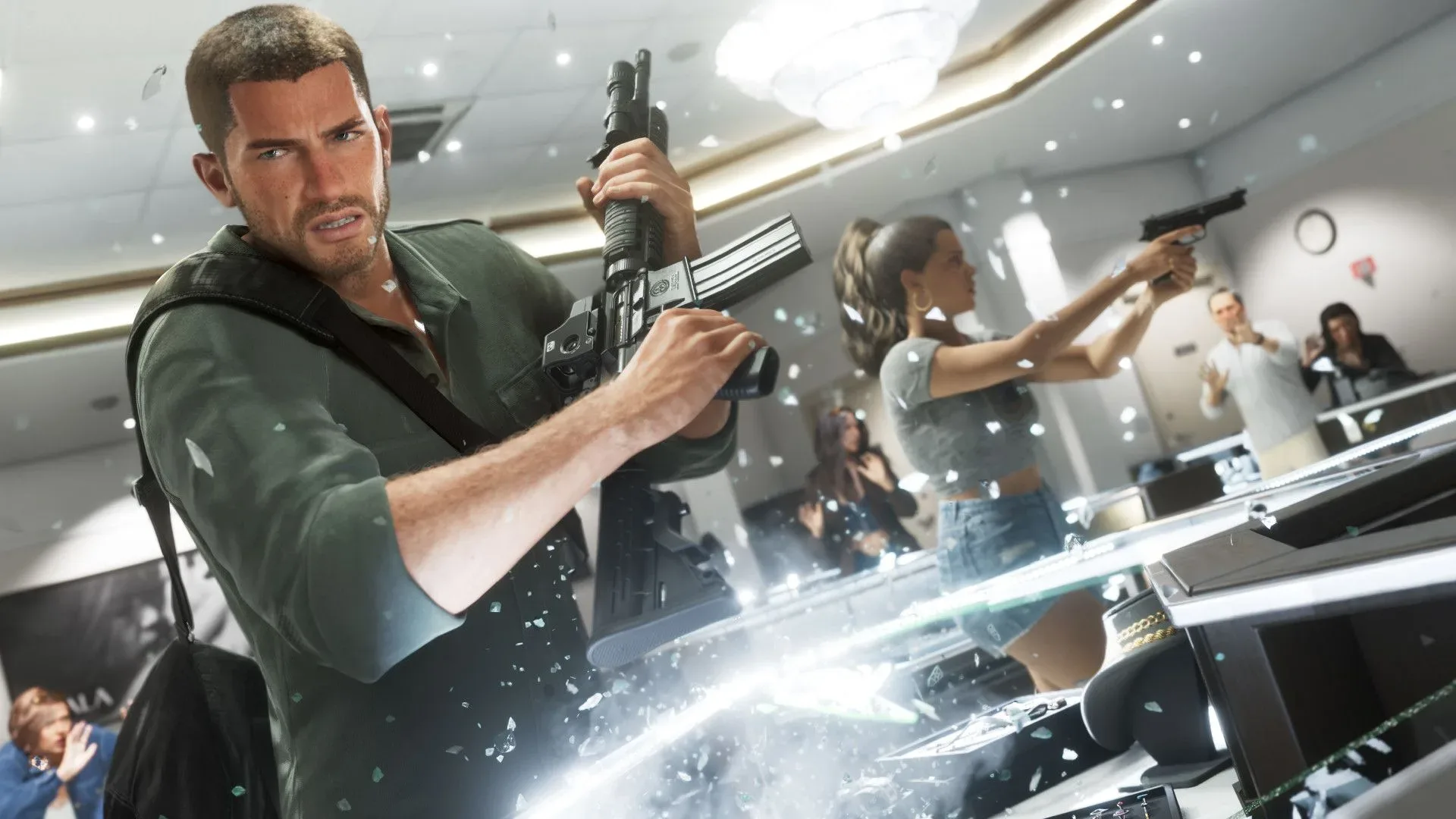
A second example concerns a mission in which Raul enters the back of a car. Its opening is deliberately constrained: Jason is shooting while Lucia drives. The sequence then switches control so that the player drives. An optimal escape route is provided, but Nelson says a player can still get away without following it exactly because the scenario is fundamentally a police chase.
That detail is arguably the clearest indicator of the intended change. A suggested route is not necessarily an invisible tunnel. The game can communicate an efficient option without treating deviation as automatic failure, provided the player can still satisfy the core condition of escaping law enforcement.
It is also a sensible use of a city-scale setting. A chase is one of the situations most naturally suited to player choice: streets branch, vehicles behave differently, traffic creates unpredictable obstacles, and a route that looks best on a map may not be the route a player ultimately takes. Giving the player latitude in such a mission could make the objective feel more connected to the broader world rather than like a separate, rule-bound activity.
Systemic missions are the larger promise
Nelson’s broader comments go beyond alternate doors and different driving routes. Rockstar wants missions that draw on systems such as the wanted level or robbery mechanics to avoid feeling inconsistent with the way those same systems function while exploring Leonida.
Systemic gameplay describes interactions produced by a game’s interconnected rules instead of a wholly pre-scripted chain of events. In this case, a police pursuit or robbery scenario may use rules that players already understand from open-world play. If it works as intended, the mission asks players to navigate a situation rather than simply execute a fixed sequence of triggers.
Consistency is the key term. Open-world games can feel artificial when a system behaves one way during free exploration but suddenly follows entirely different logic in a mission. A player who has learned how attention from the authorities works in the city expects that knowledge to remain valuable when an objective turns into a pursuit. Likewise, a robbery system is more convincing when it does not become unrecognizable merely because a cutscene or mission marker is active.
Nelson did not claim every GTA 6 mission will be fully systemic. In fact, his emphasis on narrative requirements makes clear that some sequences will continue to be closely authored. But the stated objective is to make a mission systemic when it reasonably can be, particularly when its premise already overlaps with an open-world mechanic.
That could have practical benefits beyond novelty. Players may be able to apply familiar skills rather than learn a special one-off ruleset for each mission. It could also make mistakes less punishing when the game can recognize a different but valid response. Missing an “optimal” road during an escape, for example, should not necessarily invalidate an escape if the player can still lose the police.
What players should and should not infer
The available examples support a specific, restrained reading of Rockstar’s plans. GTA 6 missions may provide alternate traversal routes, allow players to depart from prescribed navigation in certain chases, and lean into wanted-level or robbery systems without discarding the logic established in the open world.
They do not establish that every major objective will support radically different endings, that every mission can be approached stealthily or violently at will, or that player choices will necessarily create branching storylines. Those features have not been detailed here. The studio’s language repeatedly places player latitude alongside the need to hit narrative beats.
That limitation need not be disappointing. Choice is most convincing when it belongs to the situation at hand. A tower-block escape benefits from several ways out. A police chase benefits from permitting detours. A character-led scene may benefit more from direction and pacing. The challenge for GTA 6 will be making those transitions feel intentional rather than making the player feel that freedom has disappeared the moment a mission begins.
The comments also make replayability an especially interesting possibility. Nelson has said he believes GTA 6, like Red Dead Redemption 2, is built for people who return to it multiple times. Alternate routes and less rigid systemic encounters would give repeat players a reason to revisit familiar objectives, even if the larger story beats remain the same.
Replay value in this sense does not require dozens of wholly separate campaigns. It can come from trying a different exit, handling a chase less conventionally, or learning how a simulation responds when the preferred route is ignored. The resulting stories may be player-generated rather than formally written, but they can still make a second playthrough feel distinct.
A more seamless Leonida would be the real test
The most encouraging part of Nelson’s explanation is Rockstar’s focus on continuity between missions and free roam. A massive map is only as persuasive as the rules that govern it. If the wanted system, robbery systems and driving-based escapes retain coherent behavior whether or not a mission marker is active, Leonida could feel less like a backdrop for scripted levels and more like the place where those stories happen.
There is still plenty that remains unknown, including how widely this approach will extend across the campaign and which mission types will receive the greatest flexibility. For now, the tower-block and Raul-car sequences are examples, not a complete feature list.
Still, Rockstar has offered a useful standard by which players can judge GTA 6 when it arrives: freedom should not just mean an open city between missions. It should mean that, when a mission’s logic allows it, the game trusts players to use that city’s routes and systems in ways that still make sense. Anyone avoiding discussion of the game before playing can also keep an eye on the wider GTA 6 spoiler situation online.