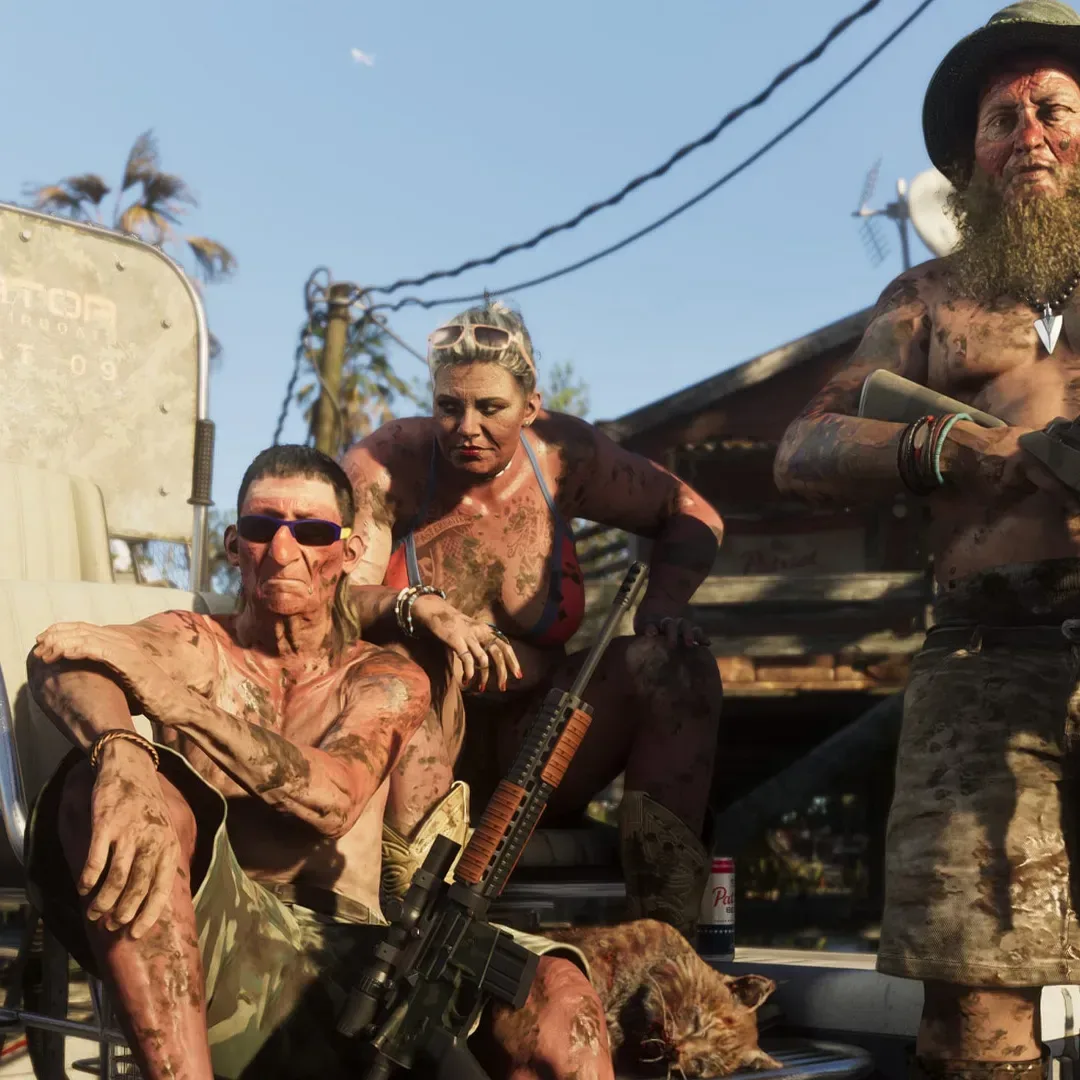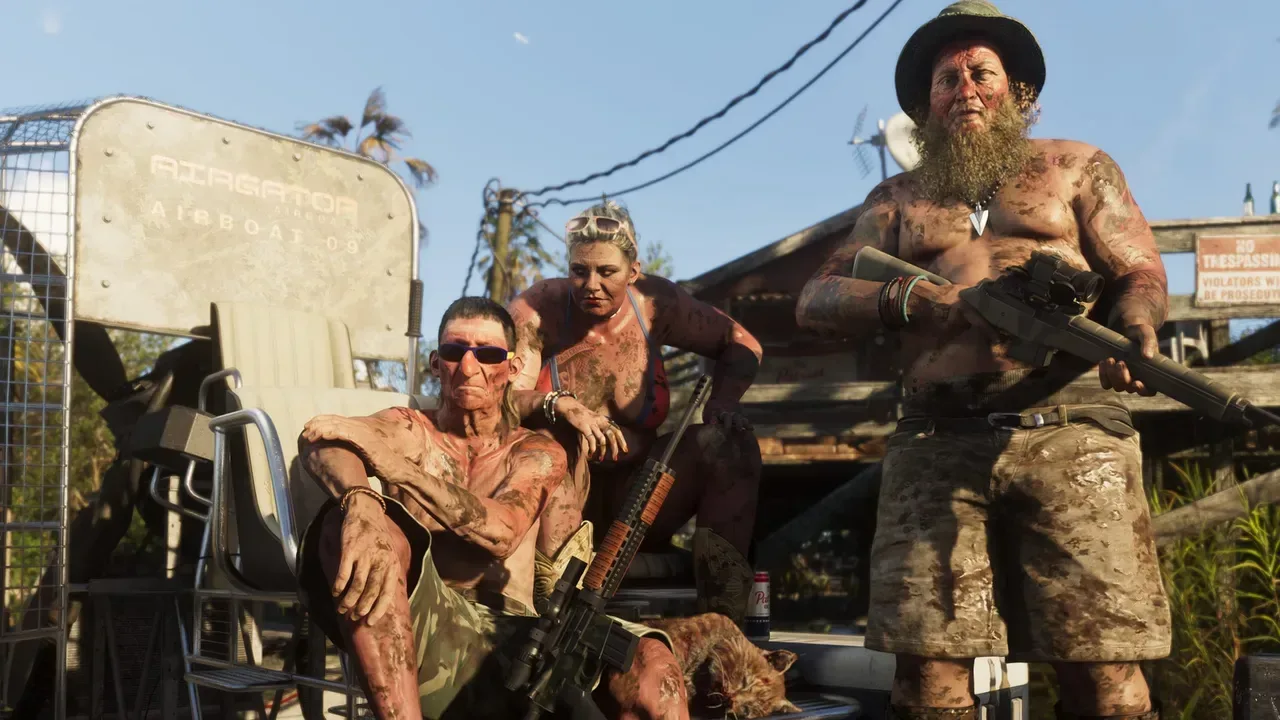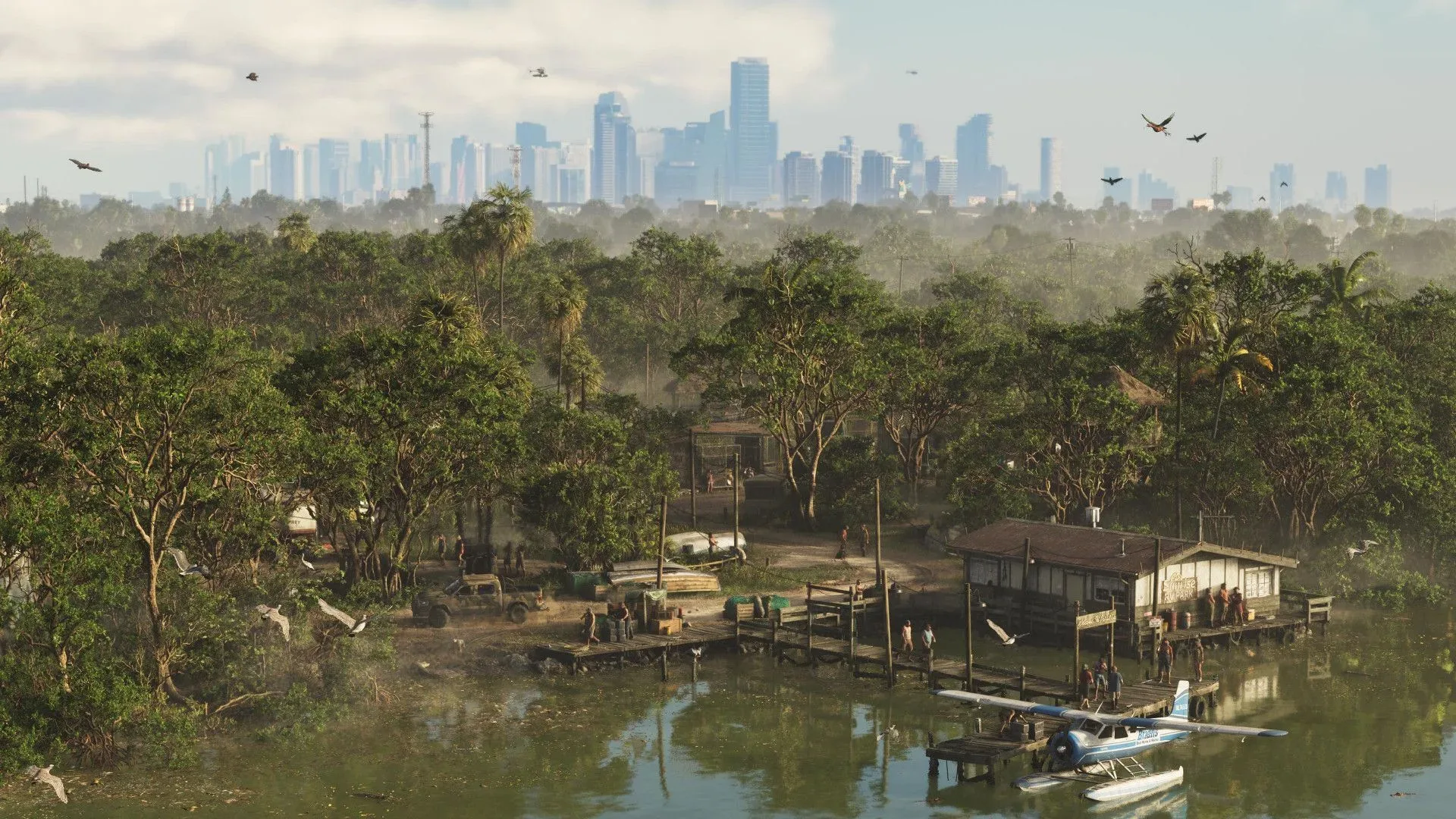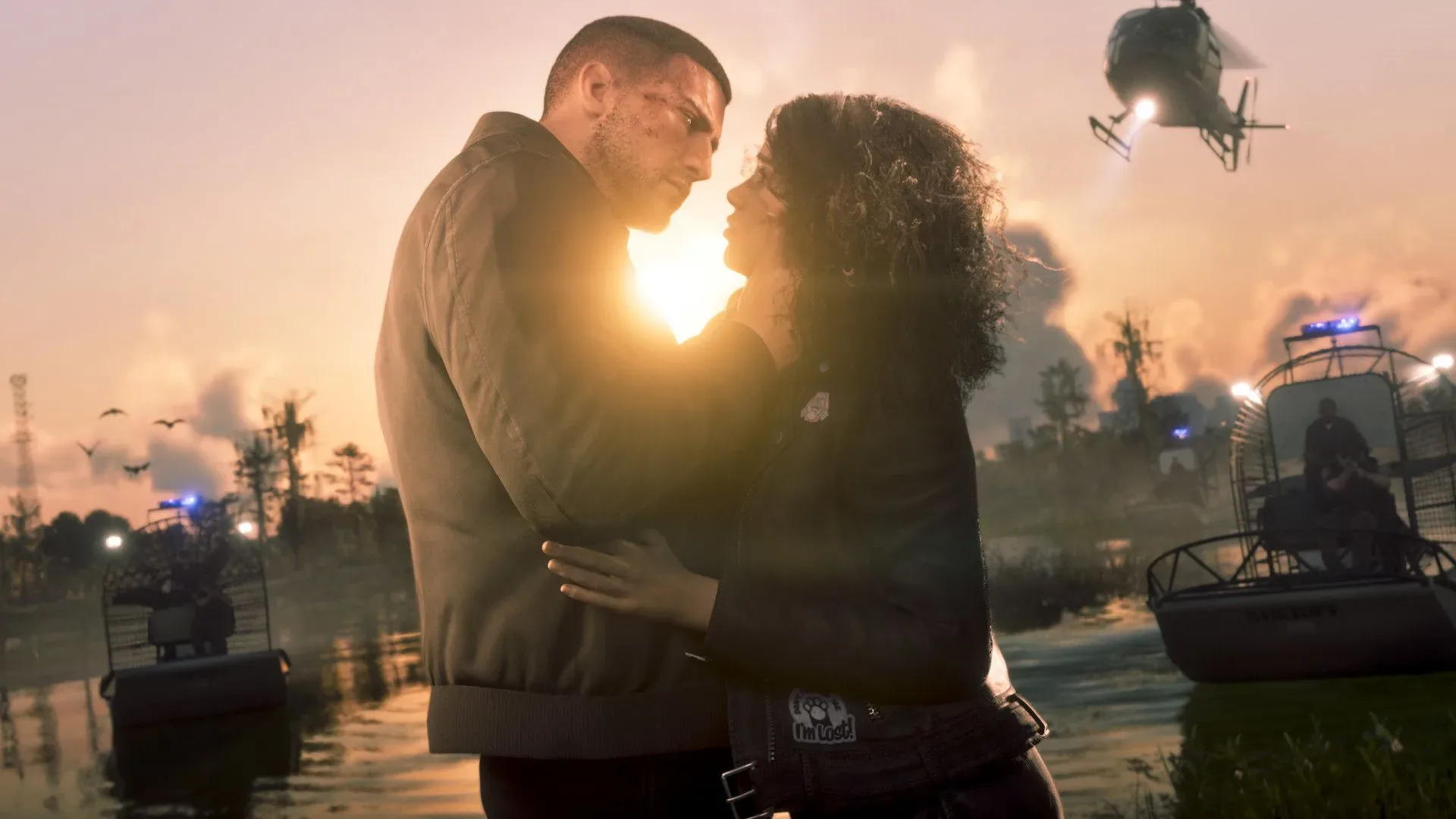
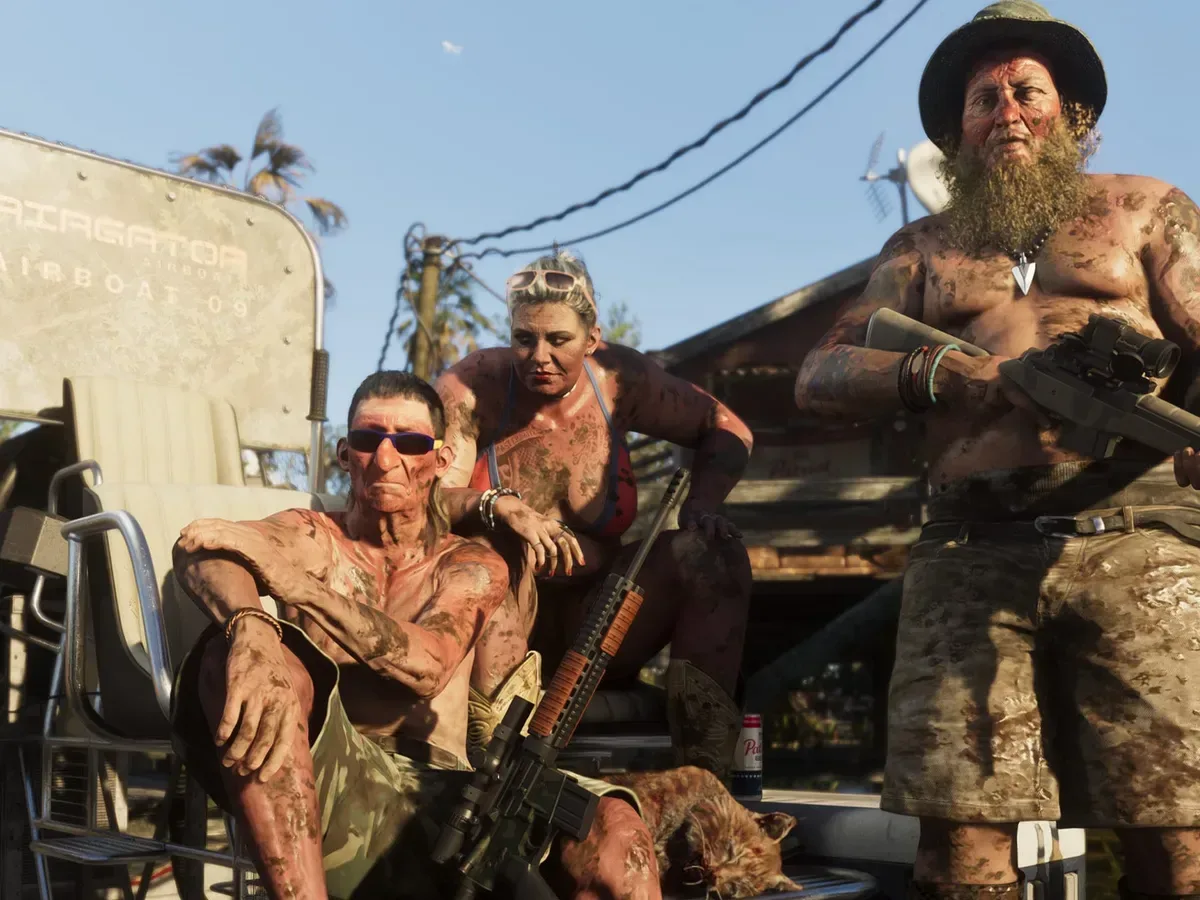
Grand Theft Auto 6’s version of Leonida is designed to sell a difficult illusion: that its residents have reasons to exist beyond the player’s arrival. The familiar open-world ingredients are present—dense streets, beaches, homes, police activity, gangs and strange side encounters—but Rockstar’s developers have described a broader effort to make the people occupying those places feel like characters rather than interchangeable traffic.
That ambition reaches from visible details, including varied hair, clothing, physique and facial features, to behavior that can change from one person to the next. A confrontation may not produce one stock response. One bystander might leave, another could join in, and someone else might provoke the situation with a slap, a tossed cigarette, or a drink deliberately tipped over the player character. The intended result is not merely crowd density. It is unpredictability with a sense of personality.
It also provides useful context for reports of unusually reactive encounters in the game, including the way a routine carjacking can become a far more complicated situation. NPC reactions can turn a simple GTA 6 carjacking into a bad idea, and Rockstar’s explanation of its wider population systems suggests that kind of escalation is central to the world’s design.
NPCs are being treated as individuals, not a single crowd system
An NPC, or non-player character, is any character controlled by the game rather than by a person holding a controller. In an open-world city, NPCs include pedestrians, drivers, police, criminals, shop occupants and participants in ambient events. Traditionally, many of these figures serve a limited role: populate the streets, react in a basic way, then disappear once the player moves on.
Rockstar’s stated goal for GTA 6 is more expansive. Valmor Garcia, the game’s senior technical art director, said the team moved beyond broadly uniform civilian characters with lower visual standards than the main cast in GTA 5 and Red Dead Redemption 2. GTA 6’s population, he said, is intended to have individual awareness and visual identity, shaped by moods, personalities, anatomy, facial features and dialogue at a level comparable to protagonists Jason and Lucia.
That does not mean every passerby is a hand-authored quest giver with a full narrative arc. It means the game is trying to make many smaller signals work together: a person’s build, style of dress, gait, companions, spoken lines and response to trouble. The individual components may be modest in isolation, but they can make players infer a life beyond the interaction they happen to witness.
John Macpherson, senior design director for world and population, described this as a focus on small stories that emerge everywhere in the environment. Who someone is with, what they are listening to, how they walk and even apparent fitness are all details used to give the population texture. On Vice Beach, the game is said to include tourists sunbathing, beachgoers playing volleyball, people walking pets and couples that immediately communicate a particular social dynamic.
The practical payoff is that a player may slow down and observe rather than treating every civilian as background that exists to be driven past. That observation is especially important in a game famous for fast cars and chaos. Rockstar is building detail for scenes players might see only briefly at speed, as well as for the quieter moments where they choose to linger.
Related coverage includes GTA 6's Leonida Is Built on NPCs With Lives Beyond the Player.
Invisible backstory can support visible behavior
One of the more revealing details is Rockstar’s use of extensive background logic that may never be directly explained. Steven Messinger, senior design director for the open world, said the team established deep backstories for many elements of the game and aimed to remain consistent with them, including a mapped drug network connecting supply, transport, distribution through gang compounds and eventual street-level sales.
This is less about turning the game into a logistics simulator than about giving designers a stable internal answer to questions such as who belongs in a location, why an event is happening there and how separate encounters relate to the wider setting. Players may only encounter fragments. A reference in street dialogue, an occupied compound or a particular confrontation can feel more coherent if the team creating it is working from a shared underlying structure.
That approach is a form of worldbuilding rather than a promise that every system will be exposed or controllable. The distinction matters. A detailed fiction behind a location can improve consistency even when players never receive a complete explanation. It prevents individual missions, crowd scenes and environmental details from feeling as though they were made in isolation.
Rockstar also drew on in-person research for its fictionalized Florida-inspired setting. Developers took reference trips involving time with local people, photography and note-taking, along with helicopter trips over the Florida Keys and police ride-alongs. Such research does not make Leonida a literal recreation of Florida; it gives artists, writers and designers reference points for the region’s visual character, social energy and specific everyday details.
The useful creative lesson is that authenticity in an open world is not only about copying landmarks. It is also about how people dress for the weather, travel together, fill public spaces, talk, argue and draw attention to themselves. Rockstar’s games are exaggerated and satirical, so the goal is not documentary realism. The developers’ comments instead point to a world meant to be grounded enough that its larger-than-life comedy has something recognizable to push against.
Reactivity creates the hardest design problems
The most technically demanding part of a reactive population is not making one response work. It is deciding what happens when several systems collide. Rockstar’s vice president of design, Stephen Donkin, used the example of a police officer searching another criminal when the player commits a crime nearby. The officer might keep focusing on the original suspect, decide the player’s offence is more serious, or change target. Each choice then produces further questions: does the first criminal flee, and what occurs if the player follows?
This is the core challenge of systemic design. A systemic interaction is one created by rules responding to conditions, rather than a single fixed scene that always plays exactly the same way. Scripted moments still matter, and GTA 6 includes numerous strange encounters distributed across Leonida. But when the player can interrupt those scenes, the design needs to account for the interruption without the world appearing to break character.
Every additional mechanic expands the number of possible combinations. More crimes, more witnesses, more law-enforcement states, more crowd reactions and more ways to interfere can make the game feel rich, but they also multiply the cases developers need to consider. Donkin’s description makes clear why seemingly simple emergent moments require substantial planning: the game has to decide not only how the player is treated, but how every involved NPC reassesses its own goals.
That is why a believable population cannot be measured only by how many characters appear on screen. A packed street whose inhabitants all react identically is still easy to read as a game system. Different thresholds for fear, aggression, curiosity and persistence can make a smaller moment feel less predictable. One person may quit after a single punch; another may continue fighting until incapacitated; surrounding witnesses may cheer, run or participate.
The design also makes room for events where the player is not the original center of attention. Rockstar has described scenarios involving NPCs with opposing goals, with the player sometimes beginning as an observer. Moving action away from the protagonist is a meaningful choice: it suggests that a city has its own momentum, and the player can disrupt it rather than automatically generating it.
Why body diversity changes animation work
Greater character variety has consequences far beyond visual representation. When models vary substantially in height and build, physical interactions become harder to animate convincingly. A combat move, grapple, vehicle entry or close conversation that looks acceptable between two similarly sized characters can look wrong when the participants have sharply different proportions.
Mark Tennant, Rockstar’s vice president of animation, said the team wanted wide variation in body size and type, and therefore needed a robust way to share animations while resolving multiple contact points. In plain terms, animation sharing means that the game can reuse a movement across many characters instead of manually creating a wholly separate version for every possible body combination. Resolving contact points means ensuring hands, feet, bodies and vehicles meet where they should rather than visibly clipping through each other or hovering nearby.
This is especially relevant to GTA 6 because Jason and Lucia can change size through diet and exercise. The issue is not restricted to ambient crowds; the protagonists themselves may need to interact naturally with a population that is deliberately diverse. Tennant said the effort required new techniques for animators and close coordination between animation, art and rigging teams. Rigging is the construction of a digital control structure that allows artists and the game to pose and move a character model.
Garcia also said Rockstar created new technology to simulate hair, clothing and muscle movement beneath skin across the character population. Hair and cloth simulation refers to the way those materials respond to motion rather than staying rigid. Muscle simulation aims to give a body more natural deformation as it moves. Used well, these details reduce the gap between a featured character and a random pedestrian viewed up close.
There is an important practical reason for putting that technology across the wider population rather than reserving it for leads. Open-world games frequently bring players within inches of strangers during fights, collisions, vehicle interactions and camera mode experimentation. The closer the camera gets, the easier it is to notice generic faces, stiff hair or body movement that does not match the character’s proportions. A more consistently detailed population helps prevent those close-range moments from puncturing the illusion.
Interiors, dialogue and optional observation
Rockstar has said GTA 6 includes more than 100 explorable interiors, with houses designed to communicate something about their occupants. An interior can function as environmental storytelling: room layout, possessions, clutter and decoration can imply routines, wealth, taste or tension without an explanatory cutscene. Paired with overheard conversations and distinct residents, these spaces are intended to make Leonida feel inhabited at both city scale and household scale.
One mission around the game’s midpoint reportedly has Jason and Lucia watching hotel guests from sunbeds and inventing stories about them. It is a neat encapsulation of what the NPC work appears to be trying to encourage. Instead of players only asking what an NPC can give them—money, a fight, a mission or a vehicle—the design hopes they might ask who this person seems to be.
That is a high bar for ambient game characters. It cannot be achieved by visual detail alone, nor by dialogue alone. It depends on those systems agreeing with one another: a character’s appearance should fit the setting, their animation should fit their body, their behavior should fit the immediate circumstances, and the wider environment should make their presence seem plausible.
Whether every encounter sustains that illusion will naturally depend on the situation and the player’s choices. But the developers’ accounts outline a clear priority for GTA 6: Leonida is meant to retain a sense of activity and internal logic when the player is not actively directing the scene. For a series built around player freedom, that may be the most consequential form of freedom the world can offer—letting its inhabitants occasionally feel as though they are busy without you.