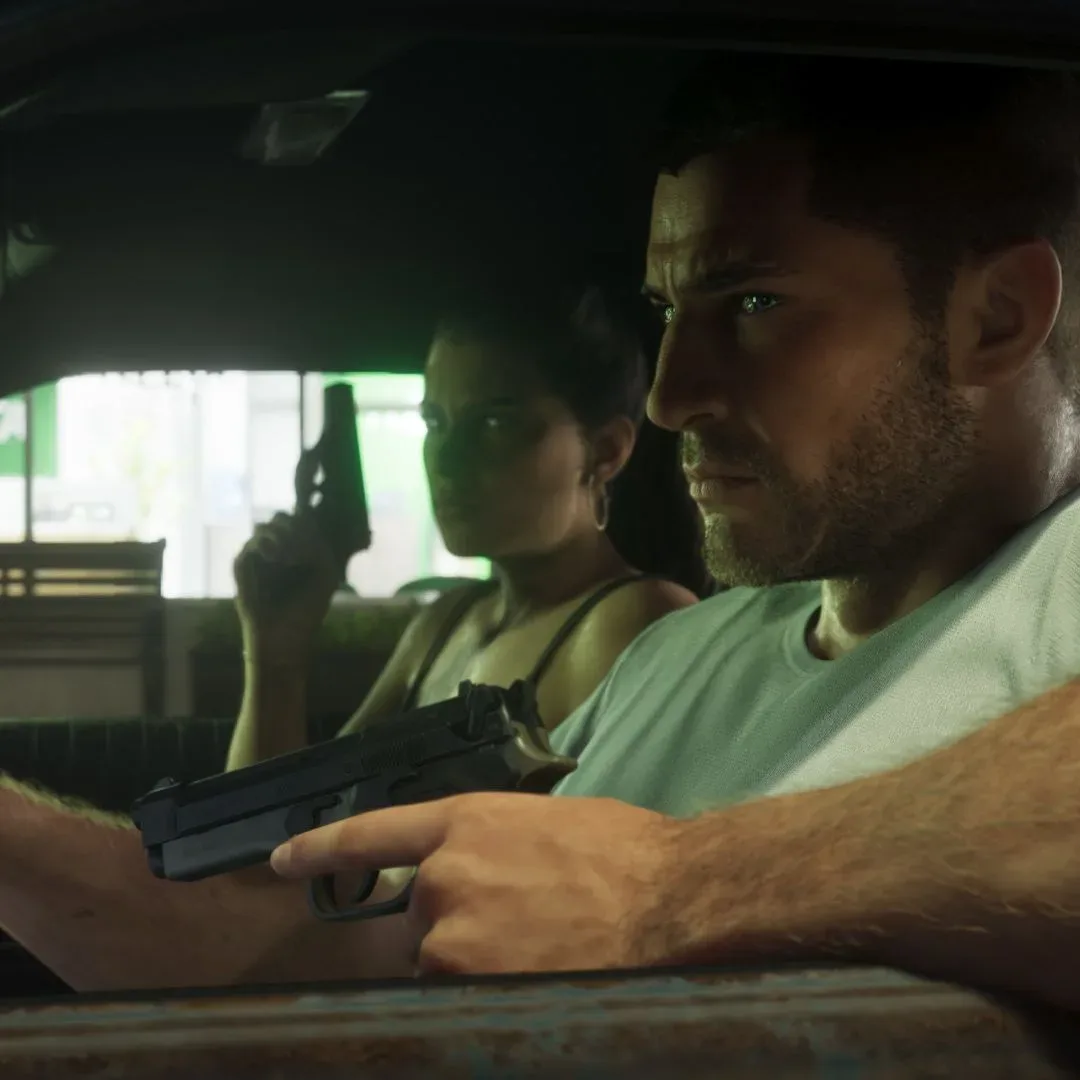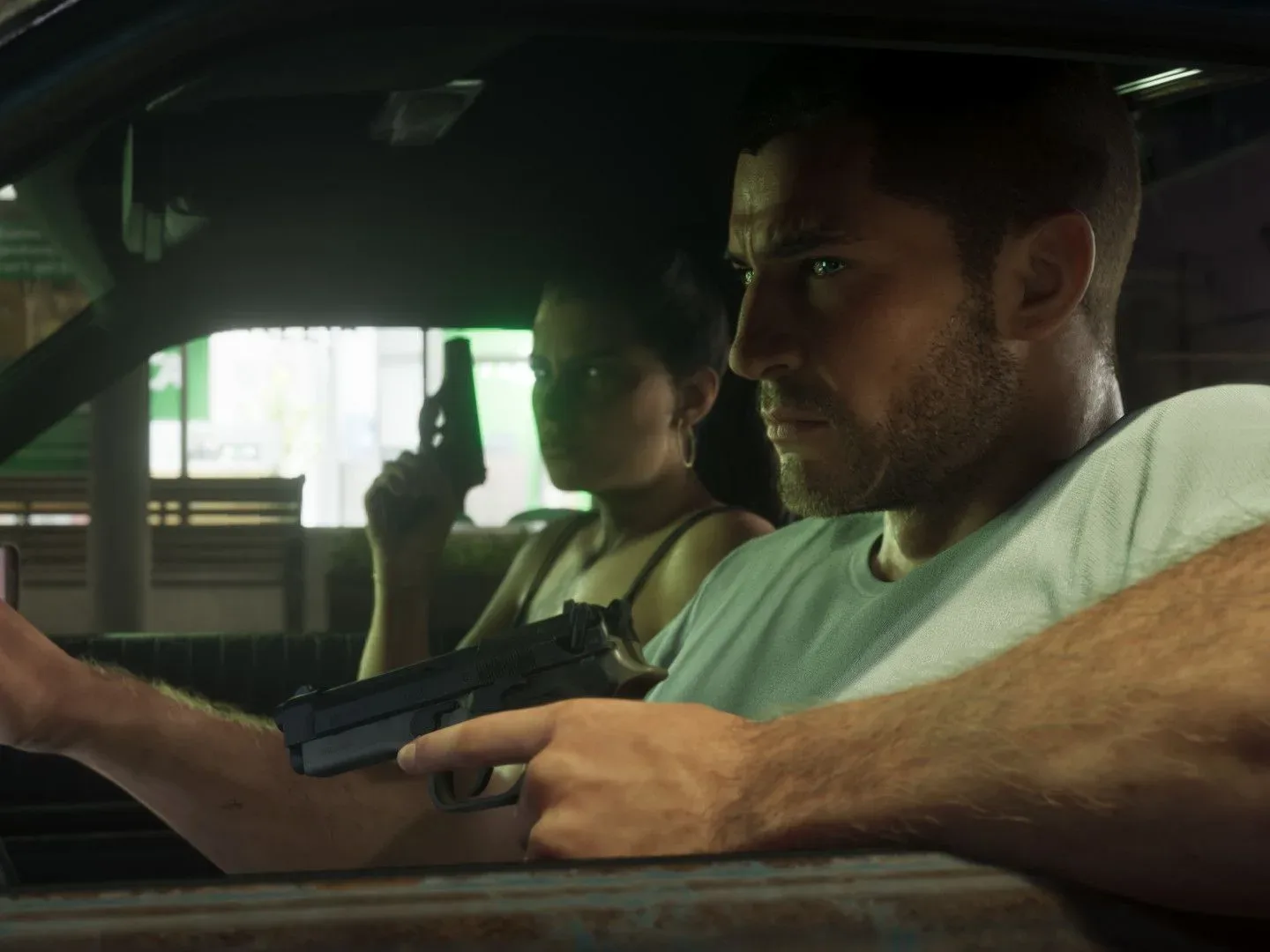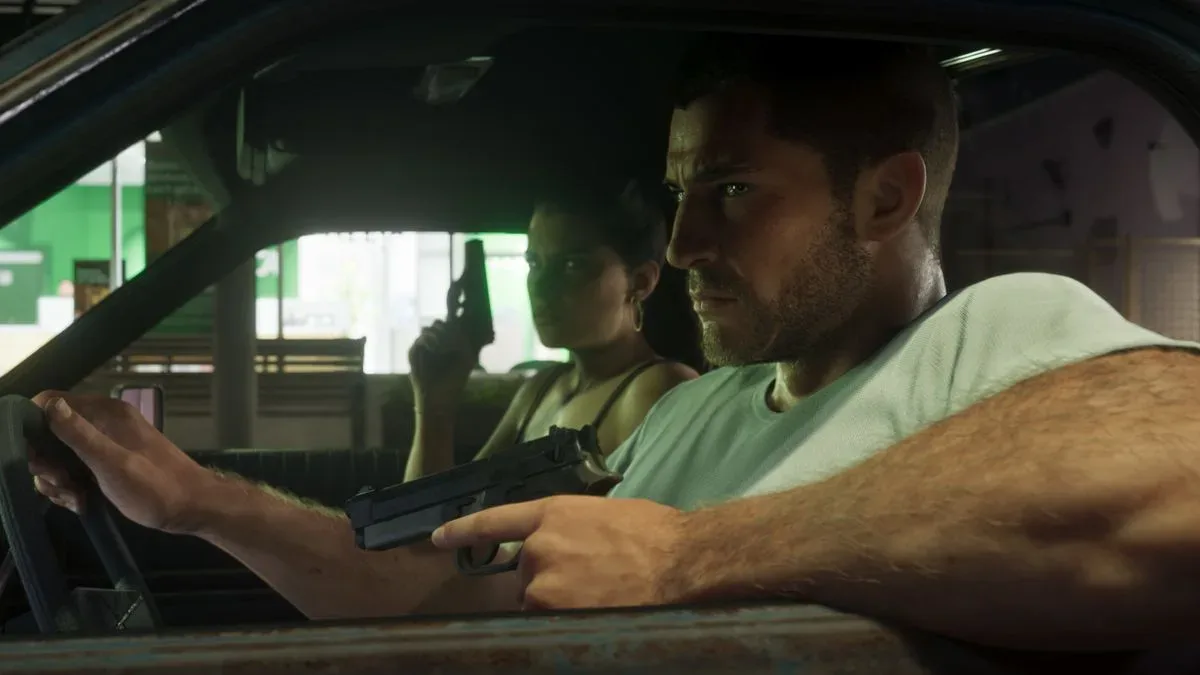
GTA 6 appears to make one of its sharpest satirical targets a manufactured moral panic inside fictional Leonida. Phone headlines, in-game statements and a television advertisement describe a state crackdown on furries, with Governor Mike Jimenez declaring Leonida “furry-free” before the game’s main story. The same material points to an underground community called the “Furverts,” while a reported optional activity lets players help a furry escape police pursuit, meet others from the group and travel to a secure compound.
That combination is important. The gag is not simply that Grand Theft Auto has found another unusual subculture to put in its vast parody machine. The material described so far positions the joke around the rhetoric, media ecosystem and state violence of the crackdown itself. It takes an exaggerated political argument—one built around conspiratorial claims of a “woke plague”—and turns it into background texture, propaganda and an apparent player-facing situation.
As with many details found through a large open-world game’s feeds and broadcasts, the available information leaves major questions unanswered. It is not yet clear how frequently the Furverts appear, whether the escape sequence is a named mission or a more freeform encounter, whether it can be missed, or whether helping the group changes later events. Players should therefore treat the described rescue as an encounter with limited confirmed specifics, rather than a complete mission guide.
A fictional ban built from absurd propaganda
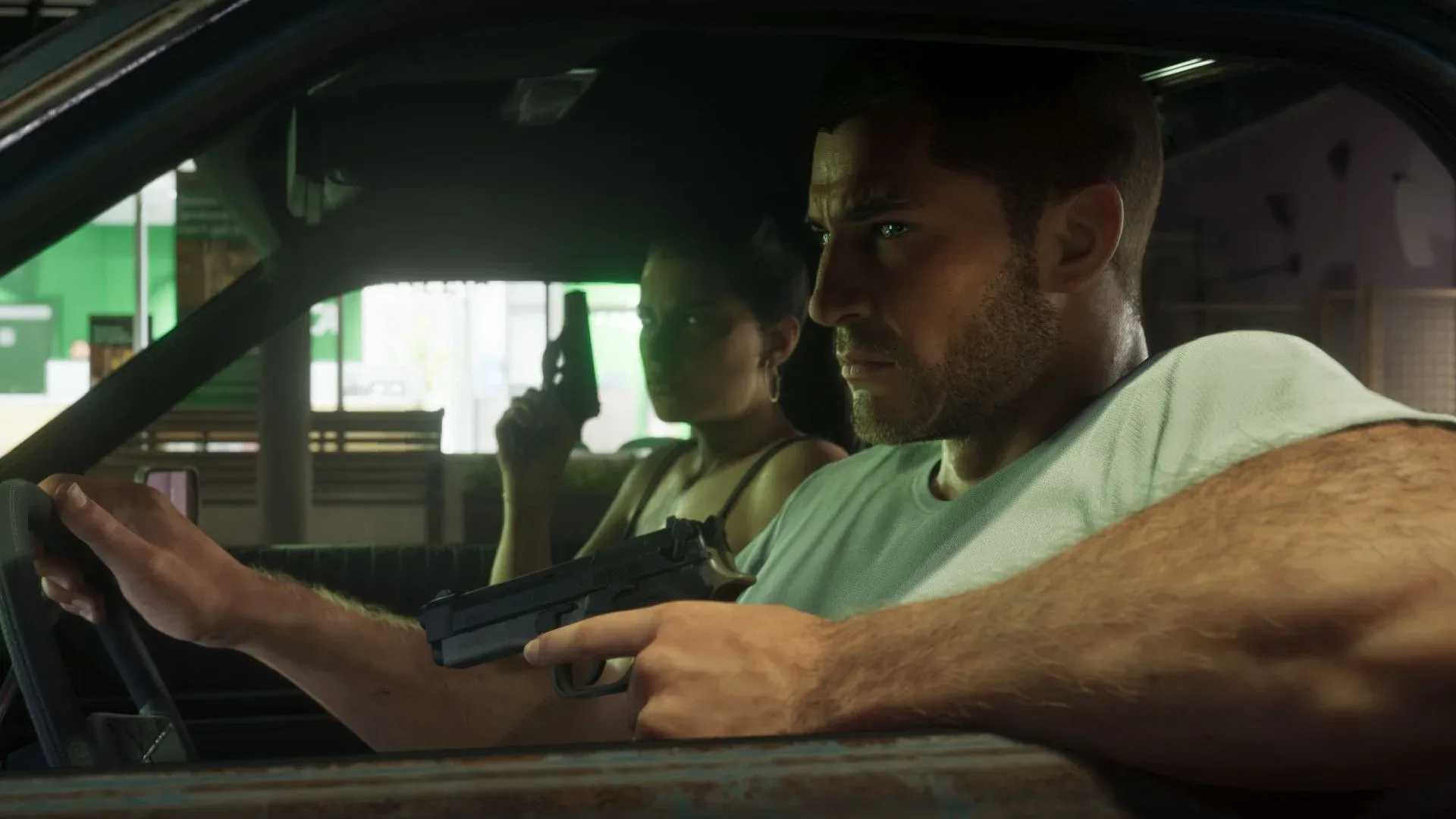
Leonida’s anti-furry policy is conveyed through the kind of media clutter Grand Theft Auto uses to make its setting feel busy: news-style headlines on Lucia and Jason’s phones, political statements and paid advertising. One headline announces that the governor has declared the state “furry-free.” The framing suggests the ban predates the central events involving the two protagonists, meaning it is part of the political atmosphere they inhabit rather than a policy created solely for one plot beat.
Jimenez’s in-game justification is deliberately outlandish. He blames alleged online pornography algorithms for transforming “honest working men” into furries and presents the ban as protection against a supposed social contagion. The claim combines technological anxiety, sexual panic and culture-war language into a transparently irrational rationale for discrimination.
In practical narrative terms, this is environmental storytelling. That phrase describes story information delivered through the world around the player instead of a conventional cutscene or a direct exposition dump. A headline seen while scrolling a phone may be optional, but it can still explain why a group is underground, why police attention matters and why a later encounter carries more weight than a random chase.
The Anti-Furry Association advertisement pushes the satire further. It urges the public to report suspected furry activity, invokes words such as “Uwu,” “Rawr” and “Hewwo” as purported warning signs, and claims licensed hunters can shoot people in fursuits. The ad’s extremity is the point: it portrays a campaign willing to turn paranoia into permission for harm, all while presenting itself as civic protection.
It is worth drawing a firm line between depiction and endorsement here. These statements belong to GTA 6’s fictional institutions and propaganda, not a confirmed account of the game’s rules or a real-world argument. The apparent target is the ease with which a fringe group can be recast as a public threat when political messaging, media spectacle and fear feed one another.
Related coverage includes GTA 6 Satirizes Leonida's Anti-Furry Crackdown With Underground 'Furverts' Encounters.
What players can reportedly do
The reported encounter gives the satire a gameplay consequence. Rather than merely reading that the Furverts are persecuted, players can reportedly assist one individual fleeing the police, connect with a larger group, and help them reach a secure location. In a series defined by player choice inside a criminal sandbox, that creates a pointed reversal: assisting people targeted by the state itself becomes an act that puts the player on the wrong side of the law.
A sandbox is an open-ended game structure where players can move through a world and choose among activities rather than follow a single uninterrupted route. GTA’s sandbox format is particularly useful for satire because it can place a serious or politically charged premise beside mundane errands, chaotic pursuits, broadcasts and absurd local advertisements. The player is not simply told that Leonida has a discriminatory law; they may be invited to navigate the immediate consequences of it.
That does not confirm the precise mechanics of the sequence. There is no supplied evidence about objectives, pursuit conditions, rewards, branching endings or whether violence is required or avoidable. There is also no basis to say that the secure compound becomes a recurring hub, that all players will encounter it, or that the Furverts have a larger questline. Those are plausible possibilities in a game of GTA 6’s scale, but possibilities are not confirmed facts.
For players who want to preserve the surprise of side content, the useful takeaway is straightforward: watch the in-game phone feed and television-style broadcasts, and be alert for encounters involving a fleeing furry and police. The available description supports the existence of a route to help, but not a step-by-step solution. If the activity is optional, it may also be exactly the sort of world detail that can be missed by players who focus only on core missions.
The joke extends beyond one fictional governor
The anti-furry material is part of a broader pattern of political satire suggested by Leonida’s media. Other in-game headlines reportedly show governors dismissing climate-change concerns with glib comparisons and portraying a warming climate as a benefit because office workers could dress “hotter.” These are not presented as careful political arguments; they are caricatures of messaging that treats a public problem as a branding opportunity or a punchline.
Placed together, the stories point to a Leonida where power speaks in slogans, attention-seeking provocation and self-serving nonsense. The furry crackdown is therefore not isolated weirdness. It appears to be one expression of a wider world in which officials can exploit anxieties, declare cultural enemies and expect supportive media to circulate the message.
That is a familiar Grand Theft Auto approach, but the method matters as much as the target. The games often turn radio, advertisements, talk shows, websites and incidental conversations into parallel channels for worldbuilding. A player can learn about the place without receiving a clean, authoritative briefing. Instead, they sort through distorted messaging, commercial interruptions and public arguments—much like people do outside a game.
The strength of the Furverts setup, based on the details currently available, is that it gives those background broadcasts an apparent human consequence. A ridiculous headline becomes a reason someone is running. A grossly overblown advertisement becomes part of the danger surrounding a community. And an optional act of assistance allows the player to reject the state’s framing without requiring GTA 6 to pause for a lecture.
Why uncertainty matters with big open worlds
GTA 6 has been described as a highly detailed sandbox, and densely built games invite speculation. A single visible headline can make players wonder whether it foreshadows a large faction system; a brief side encounter can be treated as proof of a major branching storyline. But detail and scope do not automatically answer those questions.
At present, the supported picture is narrower and still interesting: Leonida’s media includes a fictional anti-furry ban; the ban is justified by intentionally absurd culture-war rhetoric; the resulting underground group is called the Furverts; and players can reportedly choose to assist a member of that group in reaching safety. That is enough to identify a distinctive piece of GTA 6’s social satire without inflating it into a fully mapped feature.
It also illustrates why seemingly disposable in-game feeds deserve attention. A phone headline or an ad can be more than flavor text. In this case, they establish the logic behind an encounter and turn a local joke into commentary on scapegoating. Players looking for more of that kind of connective tissue may also want to keep an eye on GTA 6’s other fictional media, including its “Drunk Kings” podcast parody.
A satire that lets the player answer back
Grand Theft Auto’s criminal premise has always allowed players to violate rules, but the context here changes what breaking a rule means. The reported Furverts encounter is not merely another invitation to cause disorder. It puts players in a position to assist people endangered by a ludicrous and openly prejudicial policy, turning the usual GTA friction with police into a response to the world’s institutional absurdity.
Whether that thread grows beyond the reported encounter remains to be seen. Still, the confirmed setup already offers a clear example of how GTA 6 uses multiple layers of its world—phones, broadcasts, politics and optional action—to build a joke that is more pointed than a throwaway headline. Leonida’s official line may be “furry-free,” but the game apparently leaves room for players to decide whose side they are on when the sirens arrive.