Grand Theft Auto has never treated its cities as museum pieces. Its locations borrow the visual language, social texture and popular associations of real places, then reshape all of that around the needs of an open-world game. A past explanation from Rockstar co-studio head and longtime art director Aaron Garbutt makes that design philosophy unusually clear: the goal is not to rebuild a real city street by street. It is to make a fictional city that delivers the feeling players expect from that place—and that is a useful lens for thinking about GTA 6, Vice City and the broader state of Leonida.
Garbutt described Rockstar’s approach as beginning with real-world cities at the macro level. In practical terms, that means first deciding which broad districts, environments and contrasts matter to the game world, before moving toward individual buildings and finer details. The amount of real-world landmark material used at that smaller scale can vary, but reality is a starting point rather than a blueprint.
“I’d never want to rebuild a city,” Garbutt said. “I think that would be a lot less satisfying, both for us to build and for the player to play.”
That distinction may sound minor until one considers what an open-world city has to accomplish. A real metropolis is shaped by history, zoning, private property, infrastructure and the ordinary inefficiencies of daily life. A game city has different obligations. It must support driving, traversal, mission staging, readable neighborhoods, memorable routes and a steady supply of places worth visiting. A literal copy could be impressive as cartography while still being a less effective setting for play.
Compression is not necessarily a compromise
Garbutt’s description uses several important ideas: Rockstar can compress, edit and emphasize a city. In an open-world context, compression means bringing selected types of places closer together than they may be in reality, reducing stretches that would not add much to the experience, or making distinct environments easier to reach. Editing means choosing which recognizable ingredients belong in the fictional version and which do not. Emphasis means making particular visual or cultural cues more prominent so an area is legible quickly.
None of that means a world is intended to be shallow. It describes a selective form of worldbuilding. A player does not need a one-to-one road network to understand that one district is built around glamour, another feels industrial, and another leads toward more remote countryside. In fact, a city’s identity can become clearer when those contrasts are organized for the player rather than inherited exactly from a map.
Garbutt argued that a strict reconstruction could be less convincing, not more. His reasoning was based on how many people encounter cities in the first place. Only a limited group will know Los Angeles or New York in exhaustive detail. For much of the audience, those places are understood through movies, television, media and brief visits—already selective, staged versions of the real thing.
Rockstar’s task, then, is not merely geographic imitation. It is to build from a shared popular perception: the version of a city people think they know. That perception can be a potent tool in satire, atmosphere and navigation. A fictionalized location can evoke a recognizable place while gaining the freedom to rearrange neighborhoods, alter distances or create stronger transitions between environments.
Related coverage includes GTA 6 Studio Head Explains Why Rockstar Avoids Rebuilding Cities Street by Street.
Los Santos and Liberty City show the model
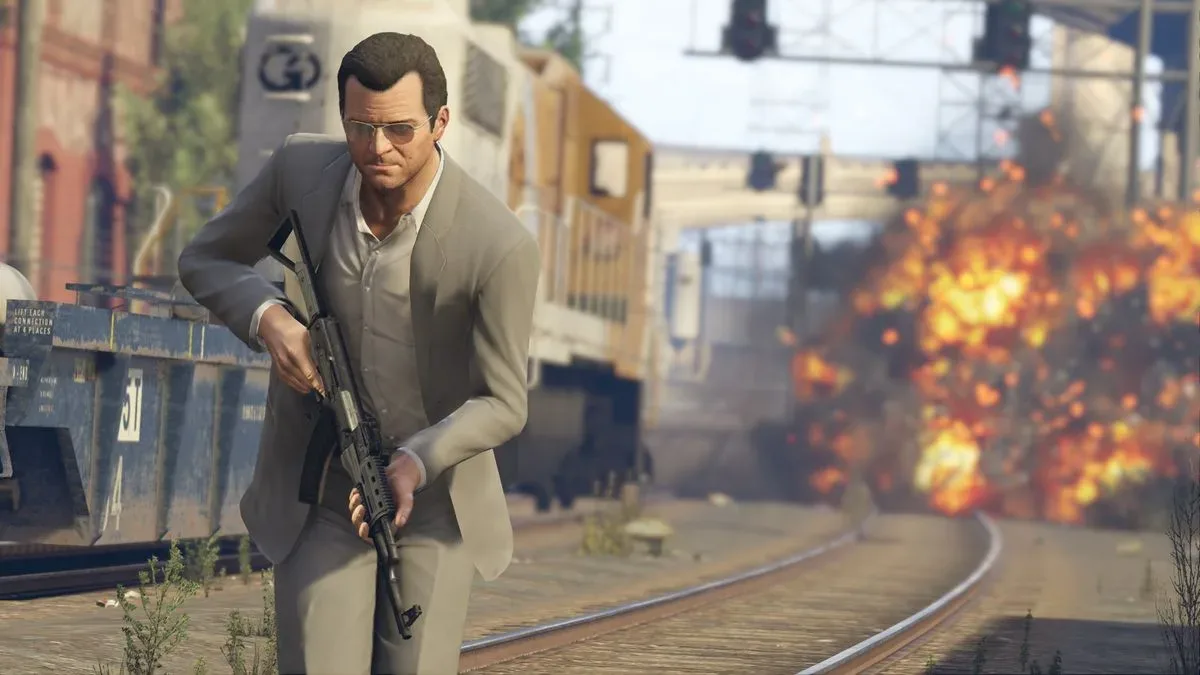
The series has used that freedom repeatedly. Los Santos in Grand Theft Auto V is a clear example of the approach: it is a Los Angeles-inspired space, not Los Angeles itself. The game uses the city and surrounding territory to create a specific playable rhythm, where urban spaces and the broader rural environment work together as parts of one map.
Grand Theft Auto IV took a different route with Liberty City, Rockstar’s interpretation of New York. Its version of New Jersey was held back for later portions of the game. Earlier Grand Theft Auto: San Andreas also sought to represent Los Santos and surrounding territory that would later be associated with Blaine County, but hardware constraints limited how fully that ambition could be realized compared with GTA V.
Those examples matter less as a checklist of returning locations than as evidence of a pattern. Rockstar’s fictional places are designed to capture an idea of their real-world inspiration while serving the game being made at that moment. The choices made for Liberty City do not have to be the choices made for Los Santos, and neither one dictates precisely how Vice City and Leonida will function.
That is also why individual landmarks should not be the only measure of authenticity. Recognizable buildings can help establish a reference point, but Garbutt stressed that Rockstar is still building its own world at the individual-building level. A city’s credibility can come from the relationship between districts, roads, density, scenery and mood—not simply from a scoreboard of accurately placed structures.
What the approach could mean for Vice City and Leonida
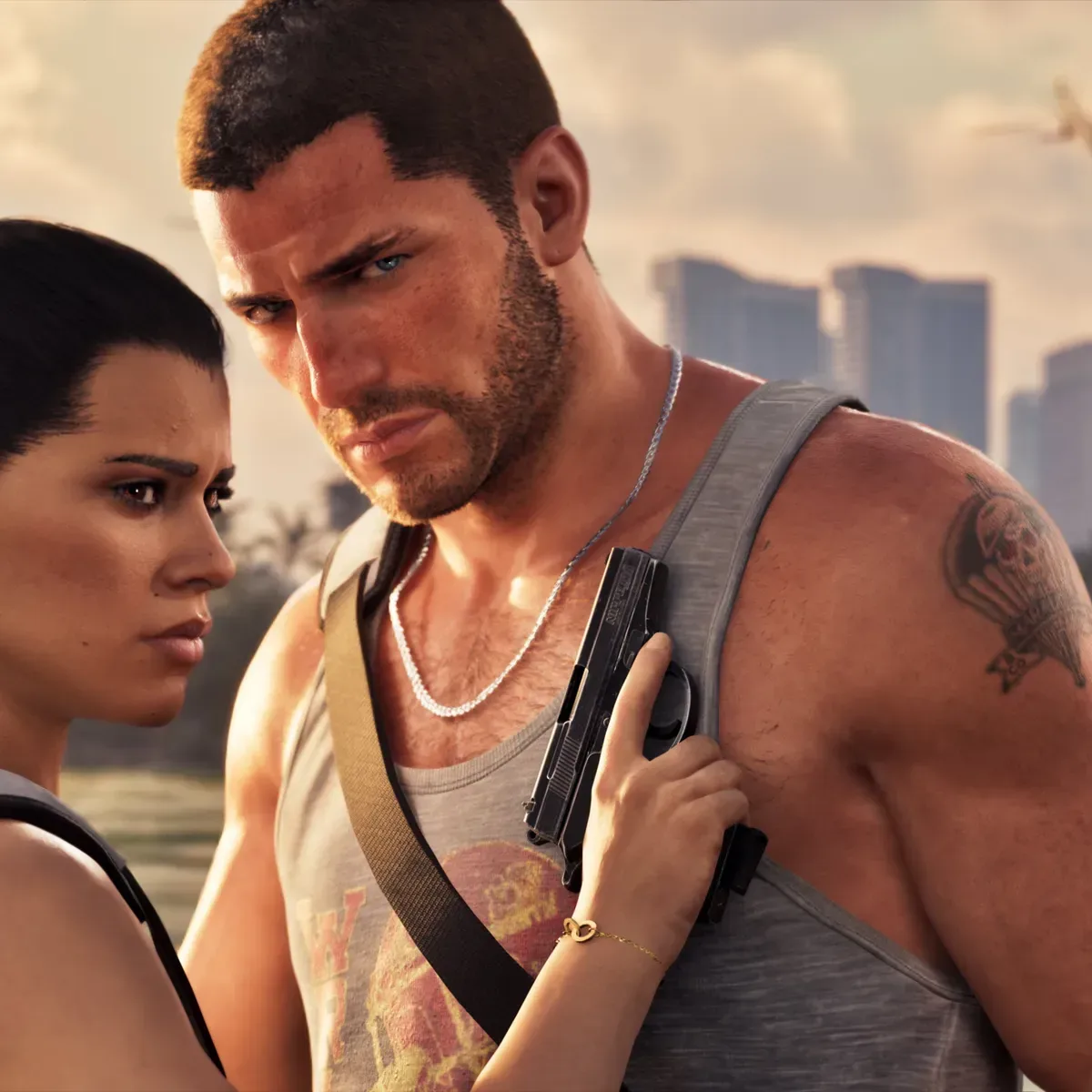
For GTA 6, the interesting opportunity is not limited to a new interpretation of Vice City. The larger question is what Leonida allows Rockstar to do around it. Miami is an iconic reference point, but Florida also carries a wider popular identity. Building a fictional state gives the studio room to assemble different types of environments into a coherent game space, rather than treating one real urban area as an unalterable template.
That flexibility is central to Garbutt’s argument. A developer can move entire neighborhoods when the ideal game world calls for it. Such changes can make a city more useful mechanically: district boundaries can be clearer, a mission can move players through contrasting terrain, and an off-the-beaten-path area can be positioned to reward exploration without requiring a real-world commute between two points.
It can also make a world more expressive. A fictional Florida-inspired setting can foreground whatever elements best support its tone, whether the designers want to center the tension between dense city spaces and their surroundings or simply make every portion of the map feel distinct. The supplied information does not establish the final geography, activities or systems of GTA 6, so those specifics remain unknown. But Garbutt’s comments give a strong explanation of the principle likely to guide the map: recognizable inspiration, deliberately transformed.
That should help set expectations in the right place. Players hoping to identify references to real Miami may find them, just as previous games have invited comparisons with Los Angeles and New York. But a faithful experience of GTA 6 should not depend on whether every route matches real life. The stronger test is whether Vice City and the rest of Leonida feel connected, evocative and rewarding to move through on their own terms.
“More convincing” means convincing as a game world
Garbutt’s claim that a non-literal version can be more convincing is worth unpacking. He is not arguing that factual accuracy is worthless. Rather, he is separating geographic accuracy from experiential accuracy. Geographic accuracy concerns whether a road, building or district sits where it does in the real city. Experiential accuracy is whether the fictional place communicates the sensations and associations players bring to it.
For a game, the second kind may be more durable. A realistic city can contain long journeys, repetitive streets and confusing connections because real residents have practical reasons to navigate them. A game needs those spaces to carry dramatic, navigational or exploratory value. Selective geography can therefore feel more believable inside the rules of the game, even when it would fail as a real travel guide.
The phrase “popular perception” is especially important here. It recognizes that audiences often approach famous cities with pre-existing images. Those images may be incomplete or mediated, but they are still part of the experience. Rockstar can build on them while adding its own fictional logic, humor and priorities. The result is not a claim to replace the real location; it is a designed interpretation that must work for a huge range of players, including people who have never been there.
That philosophy also offers a better way to assess future GTA 6 footage and details. A shot that looks familiar but does not align perfectly with reality is not automatically a sign of a lesser recreation. It may be doing the job Garbutt outlined: using reality as material, then reshaping it to make a world that is clearer, denser in possibility and more satisfying to inhabit.
High expectations, with useful limits
The expectations around GTA 6 are naturally high. The source material points to the depth of Red Dead Redemption 2 and roughly 13 years of hardware progress as reasons audiences may expect a substantial step forward. Those are reasonable context points, but they should not be turned into promises of unconfirmed features. More capable hardware and a long interval do not, by themselves, confirm map size, simulation systems, roleplaying options or the exact degree of interactivity in Leonida.
What the available evidence does support is a more grounded expectation: Rockstar’s city-making philosophy prizes purposeful alteration over strict replication. If GTA 6 builds on that tradition, the most important details may be the ones that make Leonida feel like a unified fictional place—how the urban core relates to the wider setting, how the game distinguishes one area from another, and how readily players can turn their cultural expectations of Florida into their own stories.
For more on the soundscape expected around the return to Vice City, see our coverage of GTA VI’s confirmed hip-hop music and Vice City radio connections.
Garbutt’s old explanation remains timely because it defines a creative priority that can be easy to overlook when real-world comparisons dominate discussion. The objective is not to let a real map dictate the game. It is to turn the strongest elements of a place—its image, contrast and atmosphere—into an open world that feels persuasive when players are behind the wheel.