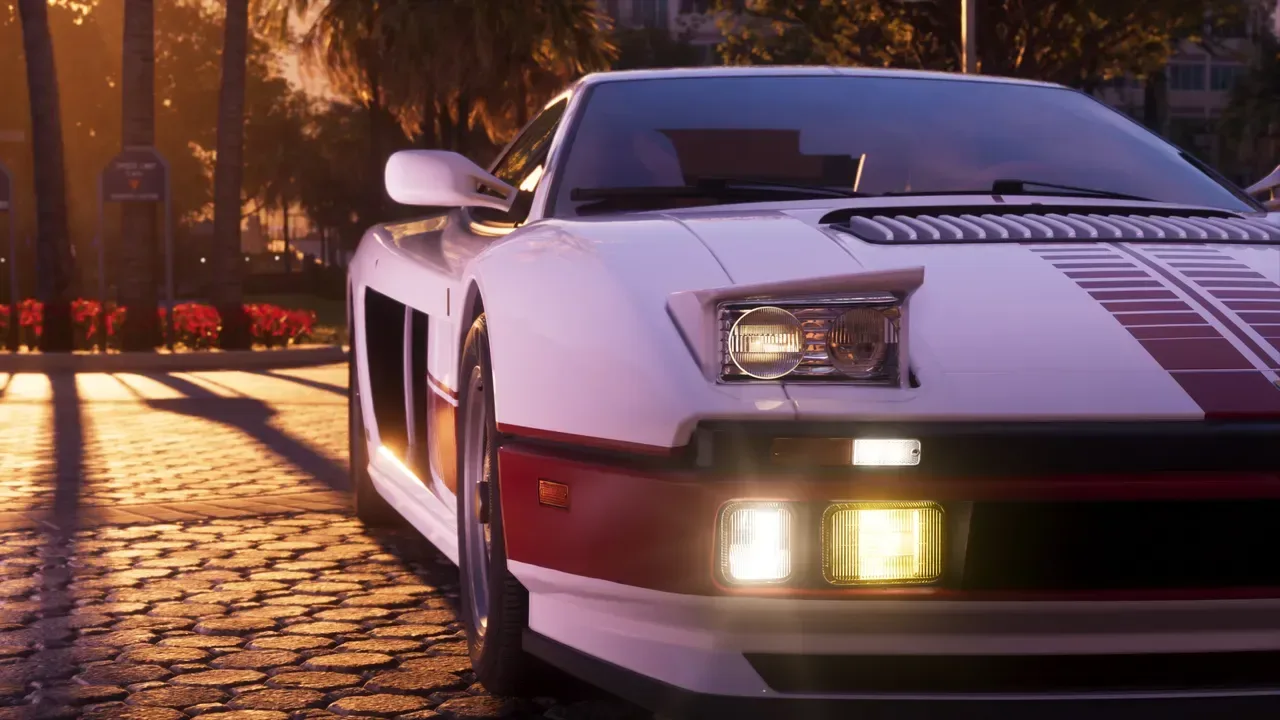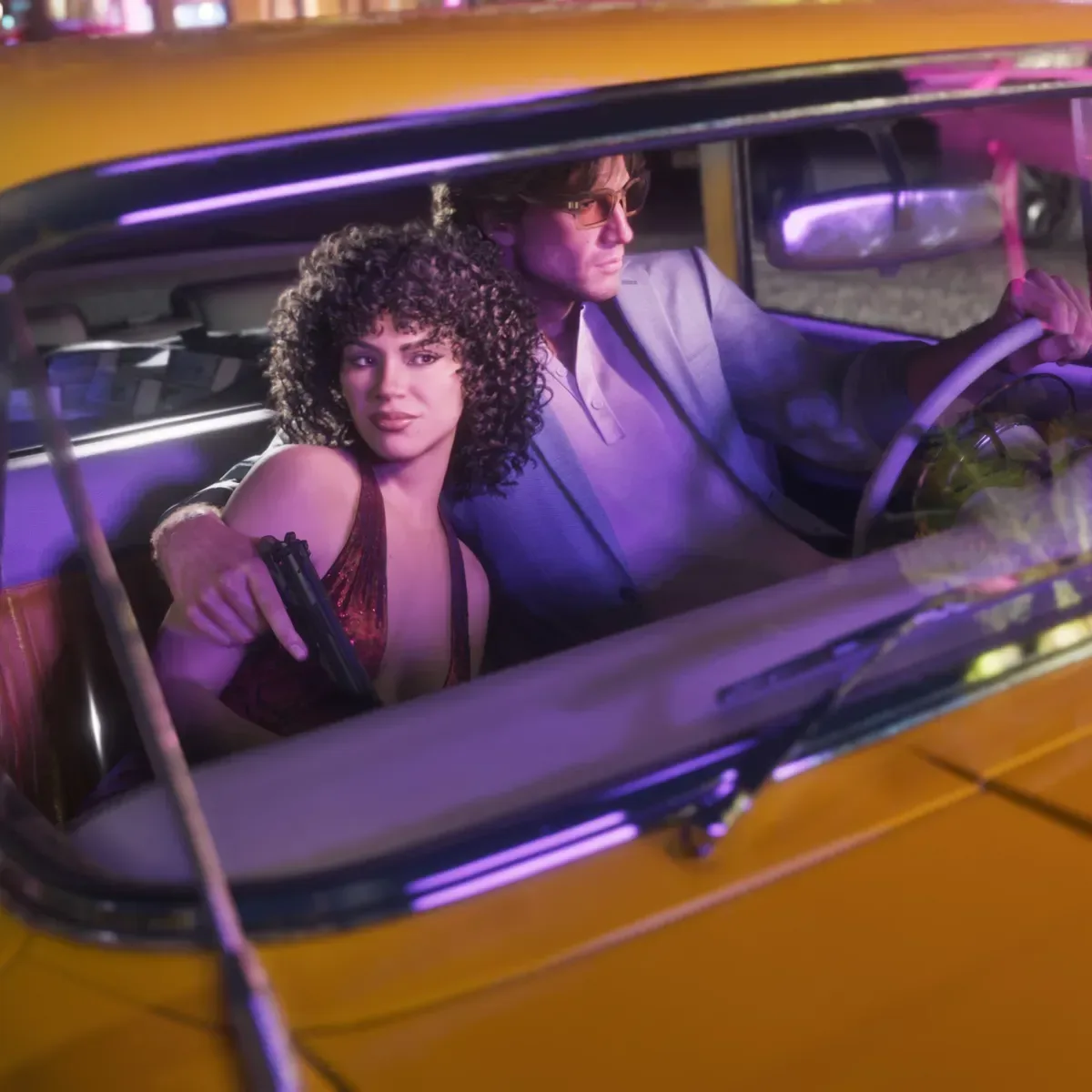

A brief new Grand Theft Auto VI video has sparked the sort of double-take most publishers would dearly love: viewers initially thought a convoy of flashy cars moving through a Miami-like street was real-world footage. It was not. The clip is in-game GTA 6 footage, shared by the Miami-focused Instagram account Only in Dade and subsequently amplified by Rockstar on Instagram.
The video is deliberately modest in scope. It does not outline a mission, introduce a character, or explain a new system. It shows cars driving through the game’s Florida-inspired setting. Yet that narrow focus is exactly why it has landed so effectively. Without a cinematic cut, a title card, or an obvious gameplay prompt to tell viewers what they are looking at, attention shifts toward the surfaces and motion that make an urban scene feel convincing: car paint, reflections, road texture, lighting, traffic movement, and the lived-in density of a street.
It follows another clip featuring the cars parked on GTA 6’s version of Ocean Drive while non-player characters watched. That earlier video recreated a real clip posted in October as part of Rockstar’s real-world marketing activity in Miami. The newest footage appears to continue that approach, with the in-game cars likely mirroring a real Miami drive-through video.
Why a short car video is getting so much attention
The immediate confusion is the story. Some viewers initially suspected artificial intelligence or a rendered promotional sequence rather than gameplay. Rockstar’s repost of the earlier clip established that the material is authentic in-game footage, turning the debate from “is this real?” into “how close is the game trying to get to reality?”
That reaction is understandable, but it is worth separating a few ideas that can easily blur together online. Graphical fidelity is the broad term for how detailed and convincing a game’s image appears. It can include geometry, texture work, animation, lighting, materials, shadows, reflections, weather effects, and the way all of those elements respond while the camera moves. A high-fidelity moment can be visually remarkable without proving every part of the game will look identical in every time of day, location, weather condition, or gameplay scenario.
Likewise, a clip that looks unusually lifelike does not automatically tell us its exact technical settings. It does not identify resolution, frame-rate target, image reconstruction technique, or platform-specific differences. The footage supports the straightforward conclusion that Rockstar is presenting GTA 6 with striking visual detail. It does not provide enough information to settle the broader technical questions that usually surround a major open-world release.
Still, the format itself matters. A carefully edited trailer invites audiences to expect camera choreography and curated highlights. A casual, social-media-style street clip asks a different question: could this game briefly pass for a phone video of a real place? The answer, for many viewers, was close enough to produce genuine uncertainty. That is a potent demonstration of visual ambition even when the total amount of footage is small.
A real-world video language, recreated in game
Only in Dade is known for videos from around Miami, making it a particularly fitting account through which to present a GTA 6 clip. The game’s setting is built around Leonida, Rockstar’s fictional state, including a version of Miami-inspired Vice City. Posting the footage in a context normally associated with local real-life videos makes the parallel between the two worlds part of the presentation rather than merely a background detail.
Related coverage includes GTA 6's Latest In-Game Car Clip Has Fans Questioning Whether It's Real.
The earlier Ocean Drive recreation made that tactic especially clear: real cars and a real Miami setting were echoed in GTA 6, complete with onlookers represented by NPCs. NPC means non-player character—an inhabitant of the game world controlled by the game rather than another human participant. In a dense city scene, NPCs do important visual work. They help sell scale, social activity, and the feeling that a location exists beyond the player’s immediate actions.
Cars are also an unusually effective subject for this kind of comparison. They offer shiny, curved surfaces that expose flaws in lighting or reflections quickly. They move fast enough to test how a scene holds together in motion. And because viewers see vehicles, roadways, storefronts, and city streets constantly in everyday life, they have an intuitive baseline for what looks plausible. A fantasy creature can be artistically impressive; a few cars cruising through a familiar-looking downtown street can be judged almost instinctively.
That does not make the footage a comprehensive benchmark. It is a focused showcase. But it is a savvy one, because it places the game against an immediate visual reference point: contemporary social-media footage of Miami.
What the clips do—and do not—say about performance
Fans have joked that they would accept 30 frames per second if the finished game looks this good. Frames per second, commonly shortened to fps, describes how many individual images a game displays each second. Higher frame rates can make camera movement and input response appear smoother, while sophisticated lighting, detail, and world simulation can be demanding on hardware.
Those trade-offs are real in game development, especially in a large open-world game where the system must render and simulate more than a tightly controlled corridor. However, no definitive performance mode, frame-rate target, or detailed platform comparison is established by these clips. The preference debate is valid—some players prioritize smoother motion, while others will gladly choose richer visual presentation—but it remains premature to treat a fan response to a short video as a confirmed specification.
For now, the practical takeaway is simpler: the clips make a compelling case for the game’s visual presentation while leaving technical testing for the actual release. Players who care most about responsiveness, consistent frame pacing, image quality, or differences between versions will need fuller information than a social video can offer.
One week from release, the stakes are enormous
The latest clip arrives exactly one week before GTA 6’s stated release, with preloading already available. The launch is expected to be exceptionally large: Xbox and PlayStation have each said it is their most-preordered game in the history of their respective stores, while analyst estimates place pre-launch sales above $1 billion.
That scale explains why even a few seconds of footage can command an outsized response. GTA 6 is not only a high-profile game release; it is an event with attention reaching far beyond its regular audience. The excitement has reportedly become conspicuous enough that some developers are even making space for staff to play it during launch week. Pocketpair is among the studios offering extra holiday time around the release.
It also means expectations are exceptionally high. Rockstar’s decision to spotlight relatively ordinary street moments may be a confident one: when the most persuasive visual pitch is simply cars driving around a recognizable city, the studio is betting that ambient detail will carry the message. The clips invite viewers to look past explosions and scripted spectacle and instead scrutinize the everyday fabric of the world.
Whether GTA 6 ultimately meets every expectation will be determined after people can play it, not from a pair of Instagram posts. But these videos have already accomplished something important for the final stretch: they have made routine city traffic look like a magic trick. For more on the changing place of physical media around major releases, see our report on why game discs could become gaming’s vinyl as digital distribution grows.