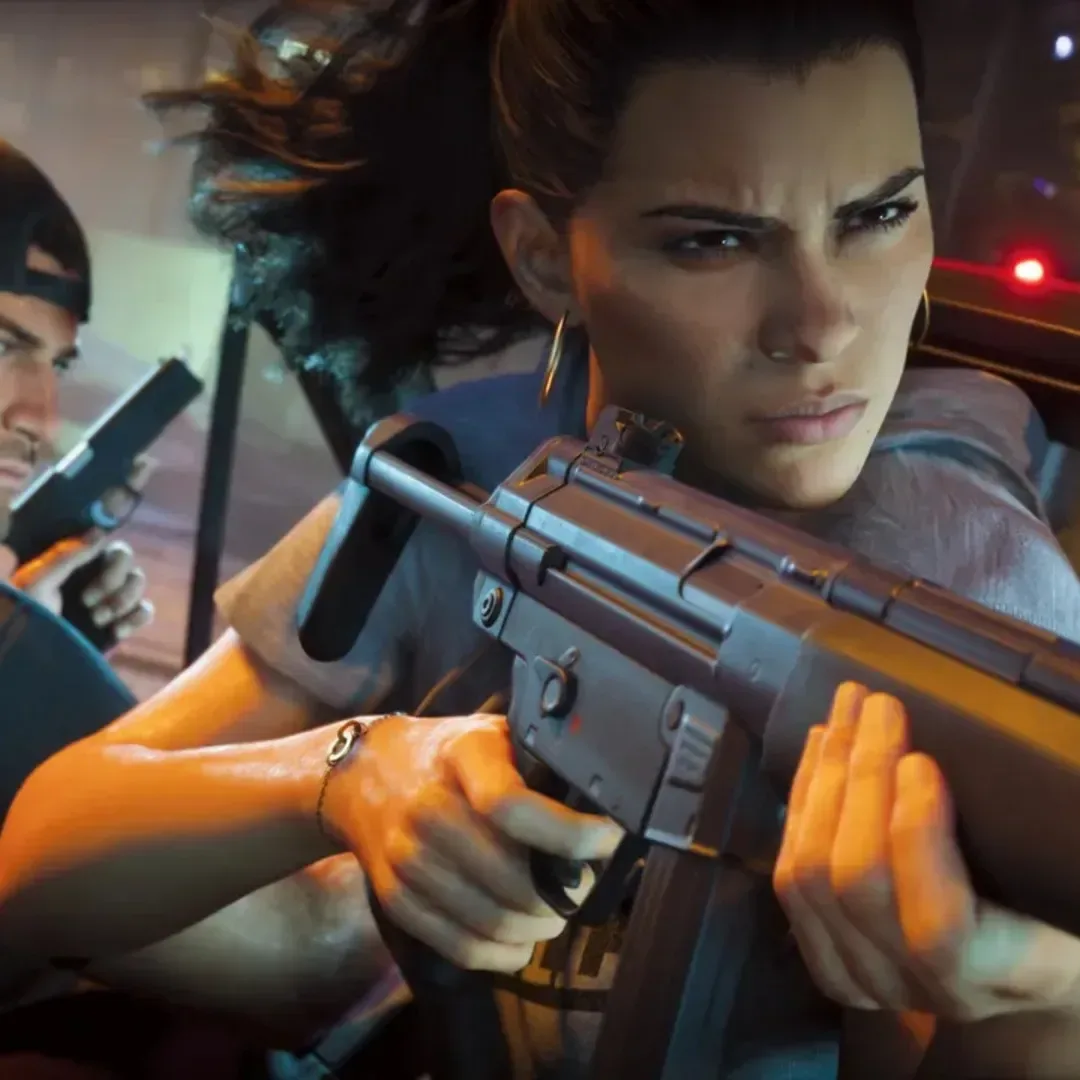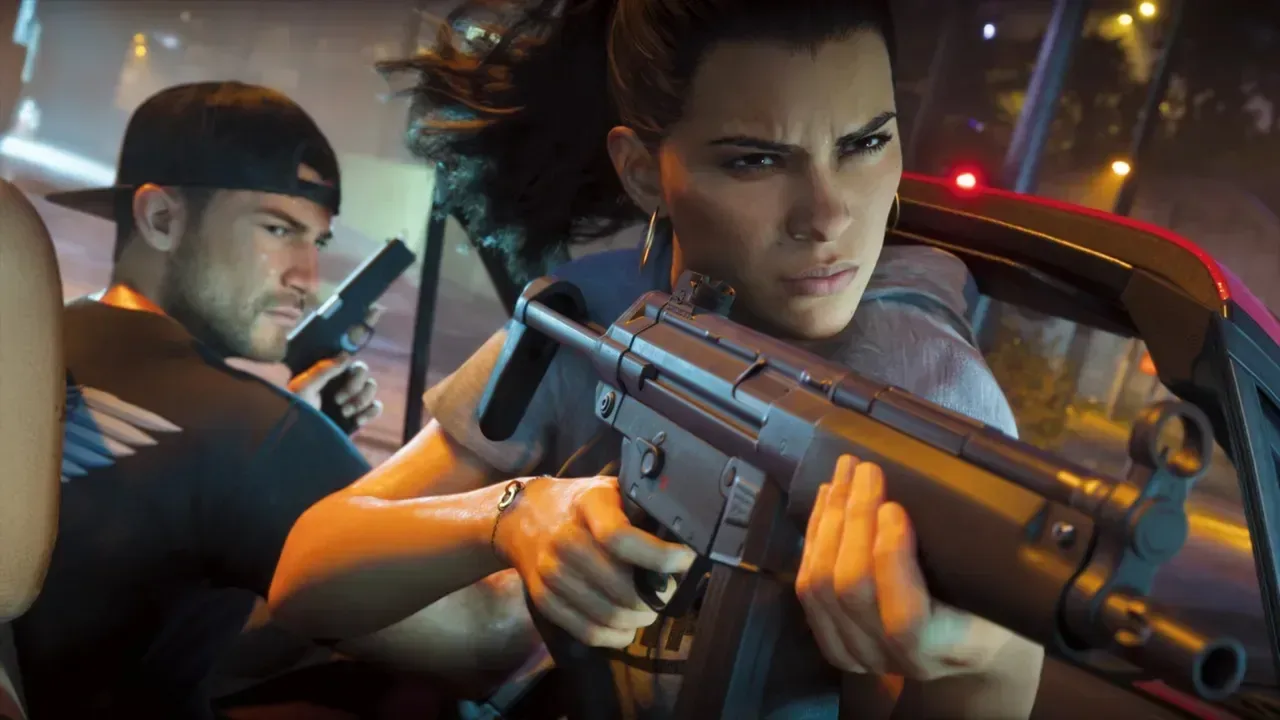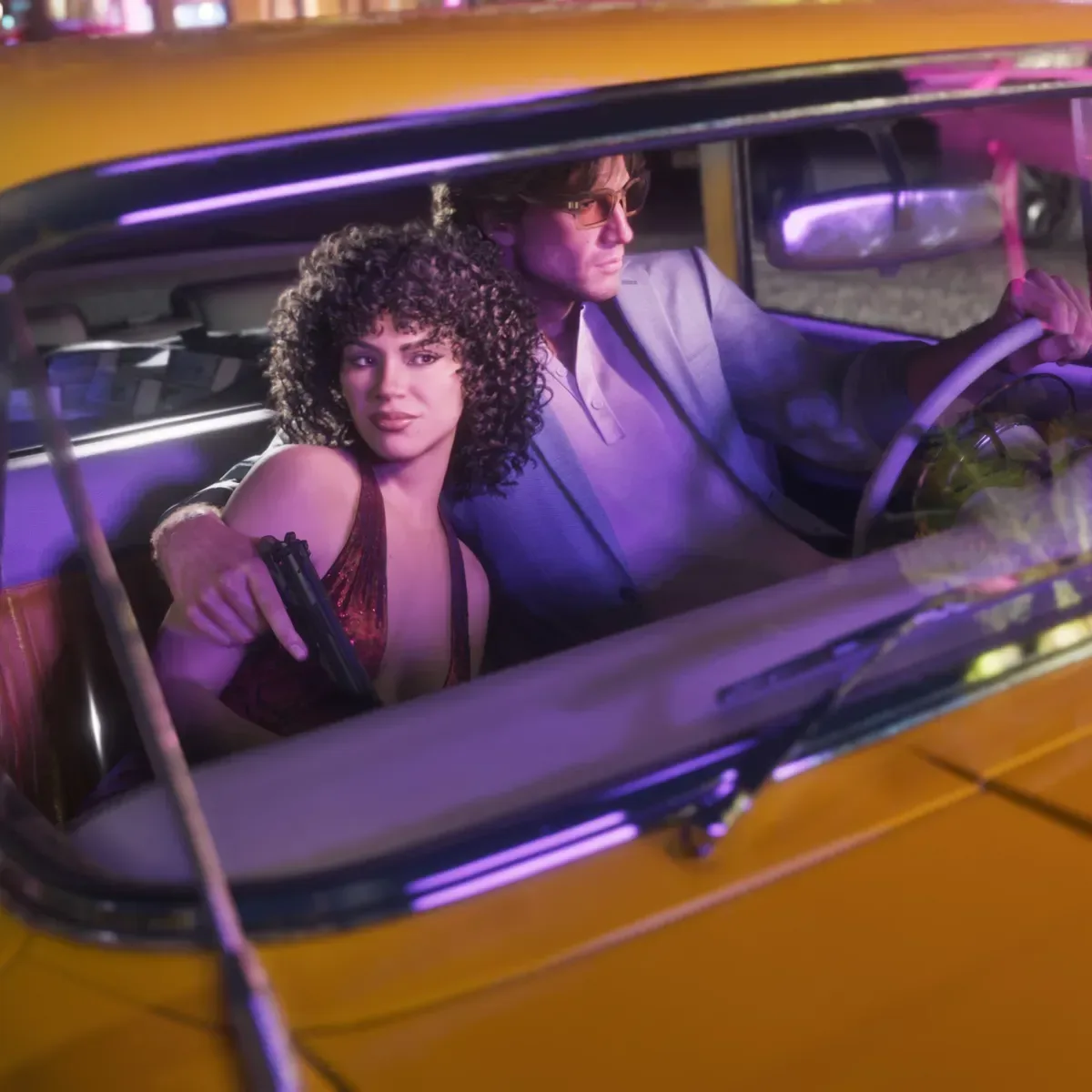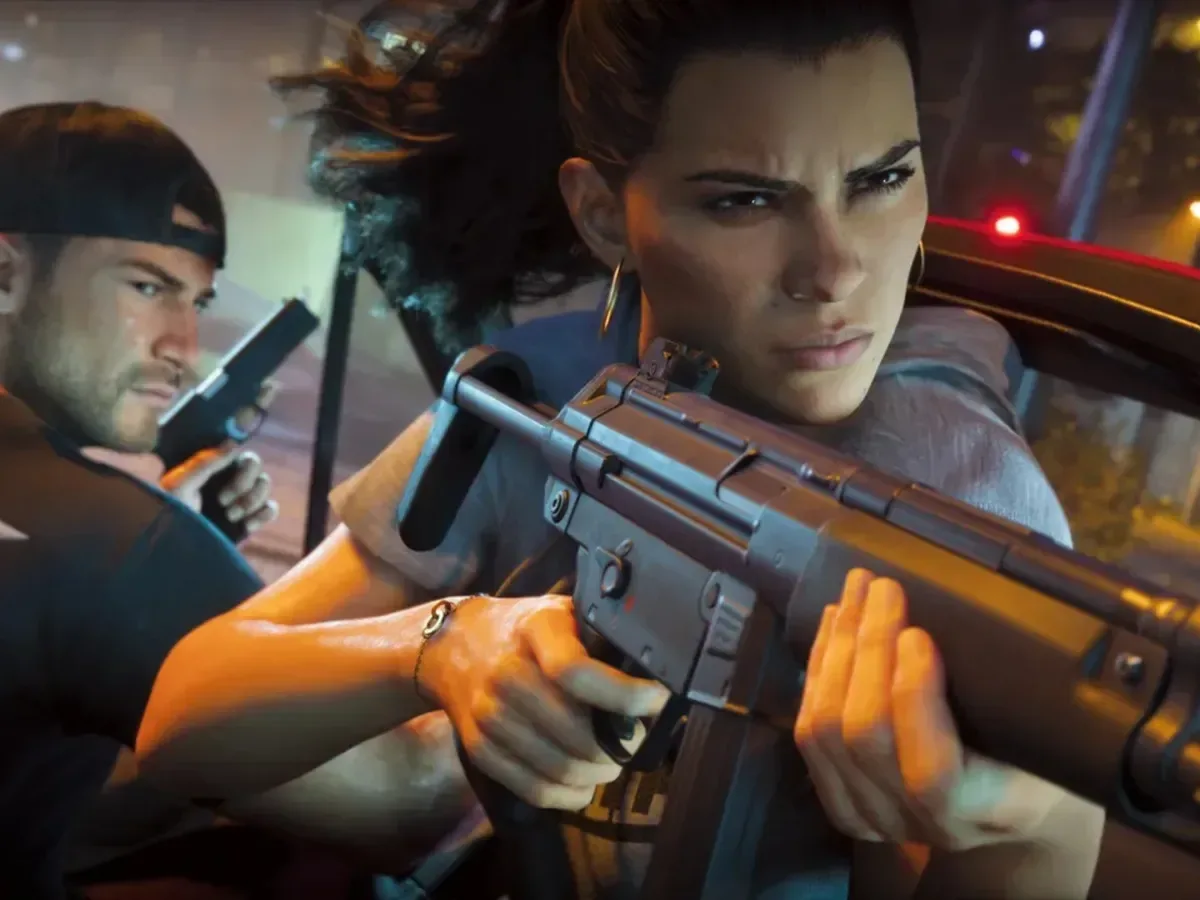
A brief social-media video that appears to show Grand Theft Auto VI has prompted a familiar pre-release question with an unusually modern wrinkle: is it real game footage, a polished render, or AI-made imitation? Rockstar Games’ apparent engagement with the post—reposting it to an Instagram Story and liking it—makes the first answer substantially more likely. But the more revealing part of the clip is not simply its image quality. It seems to recreate a real-world Miami vehicle promotion inside the game’s Vice City setting.
The video was shared by an account called Only in Dade and depicts a drive along Ocean Drive past a line of conspicuous cars as pedestrians gather nearby. A separate sidewalk perspective records the same moment. The scenario closely matches footage from an October event in which Rockstar and West Coast Customs brought GTA 6-inspired cars onto Miami streets. Details said to recur in the game clip include a person using a motorized scooter and a man photographing one of the vehicles.
That makes the apparent reveal more than another isolated promotional snippet. It is a loop: real Miami becomes a marketing event, social video documents the event, and an apparent in-game scene recreates the social video. The campaign’s gag is that each layer reinforces the others until viewers have to stop and ask where the promotional material ends and the fictional world begins.
What the video can and cannot confirm
Rockstar’s Story repost and like are meaningful signals, particularly because they connect the company’s official account to a post that is being treated as GTA 6 material. They are not, however, a detailed technical breakdown of the clip. The available information supports describing the footage as apparently legitimate or likely in-game, rather than treating every visible element as formally confirmed game information.
That distinction matters in the final week before a major release. A clip can demonstrate the look and mood of a scene without confirming a specific mission, open-world activity, camera mode, playable character, or gameplay system. The footage shows people filming from two viewpoints; it does not establish that players can freely create that exact type of video, that the sequence is representative of ordinary free-roam play, or that the moment is not staged for marketing.
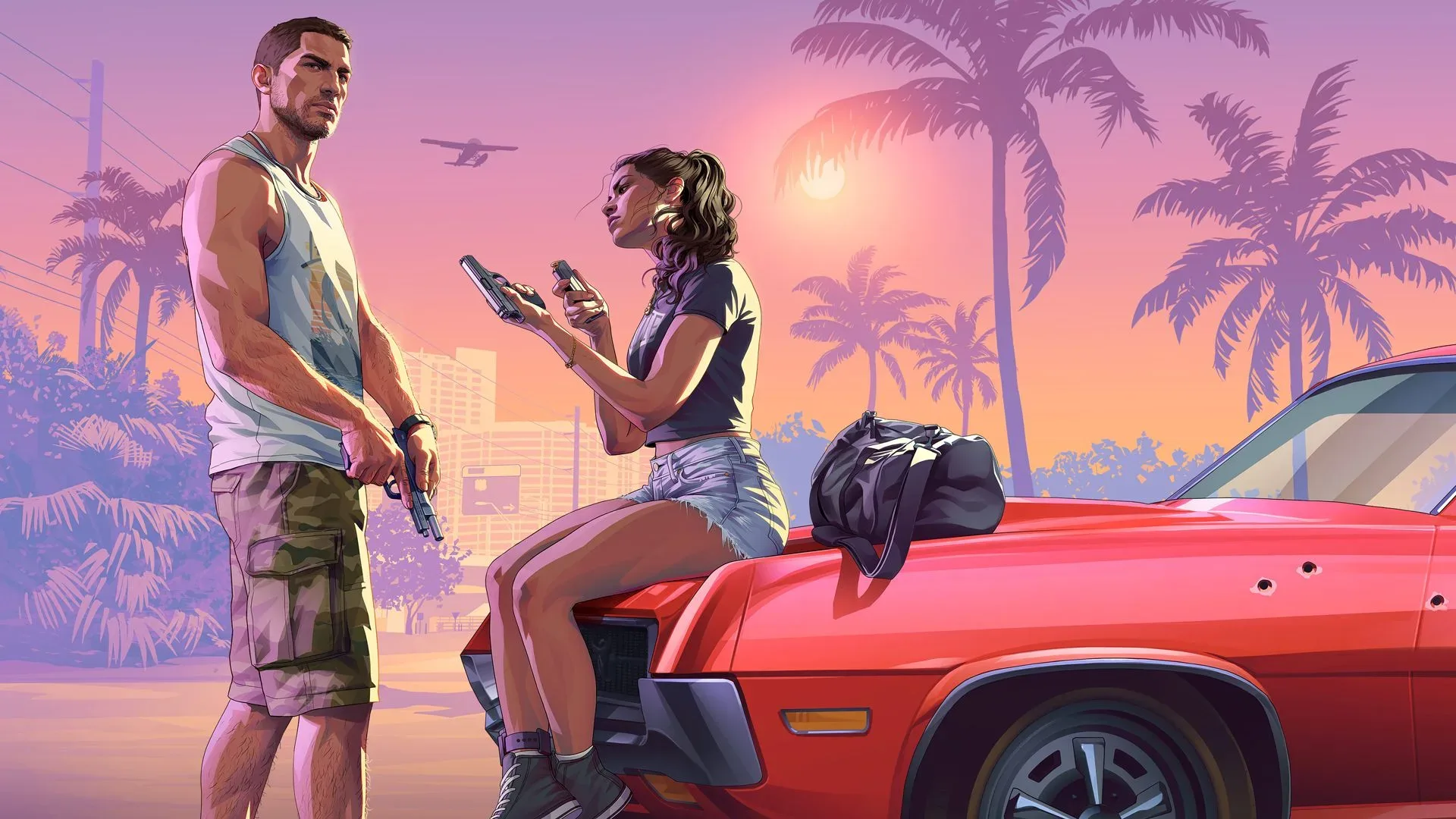
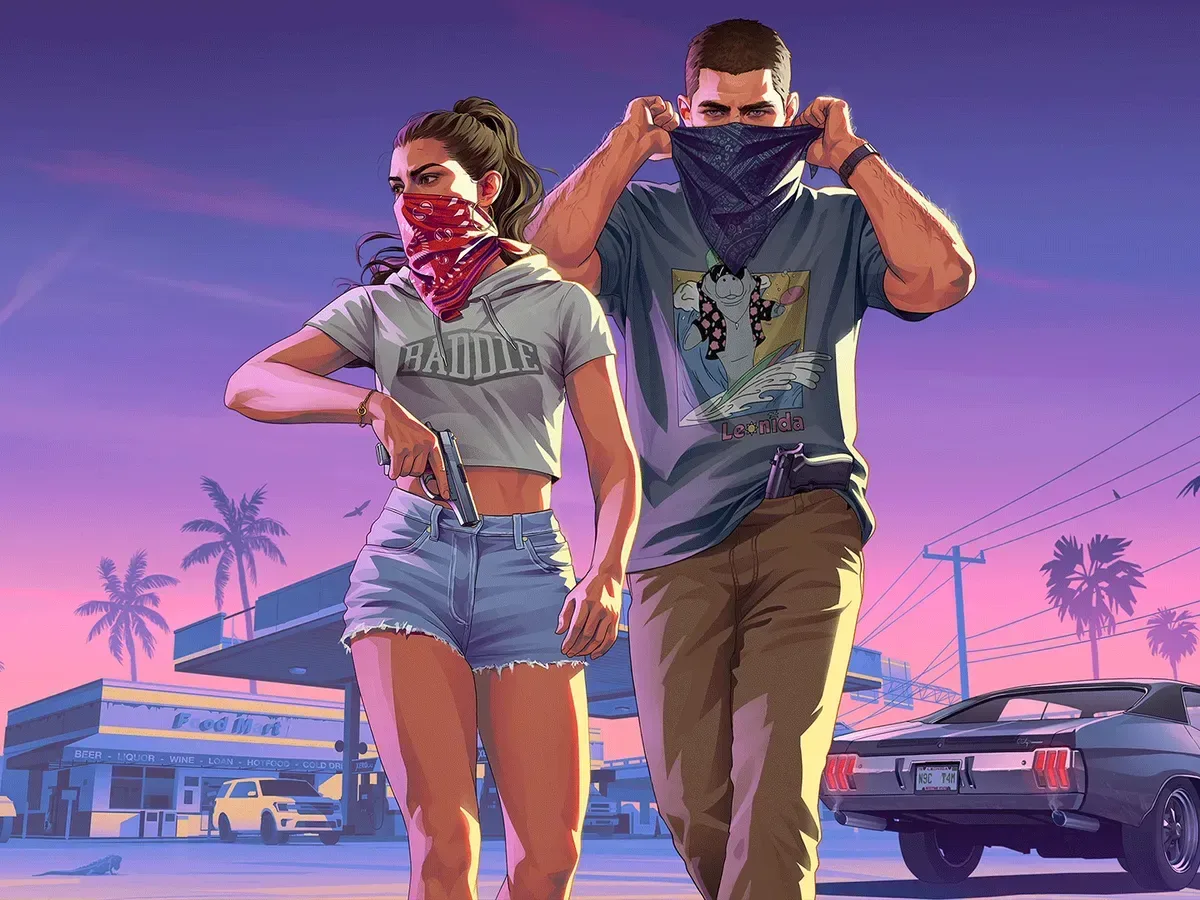
Fans have speculated that the two people filming could be Jason and Lucia. The clip is not clear enough to make that identification with confidence. Their presence, the relationship of the viewpoints, and the context of the scene therefore remain interpretation rather than fact. It is a useful example of why a high-resolution viral clip can produce more speculation than answers: visual plausibility is not the same as a complete explanation.
Why AI questions surfaced so quickly
AI-generated video has become a routine possibility whenever a short, unannounced game clip looks unusually detailed. In this case, the uncertainty was amplified by the format. It was not introduced as a conventional trailer, a labeled gameplay upload, or a developer presentation. It appeared in an everyday social-media setting, where authentic footage, edits, renders and synthetic creations often arrive with similar framing.
AI-generated footage refers here to video synthesized or heavily constructed with generative tools rather than captured directly from a working version of the game. A render, by contrast, generally means a deliberately produced computer-generated visual, which may use game assets but does not necessarily represent live gameplay. Neither label is established by a clip’s sharpness alone. Rockstar’s visible interaction changes the evidentiary picture because it links the company to this particular post, rather than asking audiences to judge pixels in isolation.
Related coverage includes GTA 6 Footage Appears in Miami-Inspired Viral Campaign as Rockstar Blurs Reality and Vice City.
Even so, Rockstar’s apparent confirmation of the post’s authenticity should not be stretched into broader claims about every circulating GTA 6 video. It validates a reason to take this clip seriously; it is not a blanket authentication system for every upload that borrows Vice City imagery, an Ocean Drive aesthetic, or the language of viral marketing.
A promotion designed to travel in both directions
The Miami car activation supplies the key context. Rockstar and West Coast Customs reportedly paraded GTA 6-related vehicles around the city in October, producing exactly the kind of bystander recordings that spread naturally across social platforms. Recreating one of those moments in the game turns a conventional tie-in into something more elaborate: the advertising becomes part of the fictional setting it was originally meant to advertise.
Miami has obvious importance to GTA 6 because the game returns players to Vice City, Rockstar’s fictional counterpart to the region. Rebuilding a recognizable street-side moment near Ocean Drive uses that relationship to make the setting feel less like a distant backdrop and more like a place that can reflect real behavior. The point is not merely that there are expensive cars and pedestrians; it is that people are watching, recording and posing around them, just as they did at the physical promotion.
That is also why the small recurring details are more interesting than a broad skyline match. A scooter rider and a person taking photos are mundane enough to be believable, yet specific enough to suggest intentional re-creation when they line up with the earlier real-world video. It is an effective way to make an in-game environment look observed rather than simply decorated.
The campaign’s central trick is not simply putting Vice City into Miami. It is making Miami’s response to that promotion appear to echo back into Vice City.
There is a practical marketing benefit as well. A typical trailer tells audiences what they are seeing. This approach lets viewers discover the connection, compare clips and circulate their own explanations. That conversation is especially valuable when a game has been anticipated for years: the material becomes a puzzle without requiring Rockstar to disclose a large new feature list.
An unannounced gameplay appearance fits the same approach
The apparent Ocean Drive clip was not the only recent instance of GTA 6 material being noticed rather than broadly announced. A small piece of footage had also appeared during an episode of South Park, with Rockstar’s name found in the credits afterward. That appearance similarly led some viewers to question whether what they had seen was generated or genuine.
Together, the examples point to a promotional strategy built around placement and recognition instead of only scheduled, high-profile drops. In both cases, the uncertainty is part of the public reaction. Viewers are not merely consuming a trailer; they are evaluating context, searching for corroboration and debating what a short image can prove.
That does not mean every ambiguity is a game feature or a calculated mystery. The available material only supports a narrower conclusion: Rockstar has recently used less traditional routes for small GTA 6 glimpses, and the routes have encouraged audiences to scrutinize their authenticity. The company’s own social-media activity is what gives the new clip unusual weight.
What this suggests about the world, and what it does not
If the clip is representative of the finished game’s presentation, it suggests an emphasis on densely staged public spaces: traffic, parked show cars, walkers, spectators and multiple people holding phones all share a compact stretch of road. That is an observation about the composition of the footage, not proof of a specific simulation system.
Players should be cautious about turning that composition into promises. Crowds visible in a crafted promotional scene do not, by themselves, confirm crowd behavior, emergent events, traffic rules, social-media mechanics, mission outcomes or character-switching functionality. Nor does the second camera angle prove a co-op mode or a replay editor. Those are the kinds of conclusions that can easily grow around a clip designed to resemble organic phone footage.
Still, the scene offers a useful read on Rockstar’s priorities for this marketing moment. The cars, the passersby and the act of recording are all part of the spectacle. Rather than isolate a vehicle model or action sequence, the video sells the feeling of arriving at a busy, image-conscious location where the audience inside the world behaves a little like the audience outside it.
One week before the reported launch window
The clip emerged with GTA 6 described as one week from release, with pre-loading already underway and Rockstar’s broader campaign including trailers, screenshots and other promotional material. The timing explains the intensity around a fragment of video that might otherwise have stayed a curiosity. For many players, this is the first new mainline GTA release since 2013. Rockstar did release Red Dead Redemption 2 in 2018, but that does not change the long interval since the previous GTA installment.
In that environment, a tiny piece of apparently official footage carries outsized attention. It can be examined for characters, locations, vehicle design, animation, lighting and background behavior, even when it is too brief to settle any of those subjects. The sensible takeaway is modest: Rockstar appears to have folded an October Miami car promotion and its resulting viral imagery into a GTA 6 clip, while leaving plenty of game-specific questions unanswered.
For readers tracking the final stretch, Joking Joystick has also covered why GTA 6 was absent from the 2026 Golden Joystick Awards. Until the game is in players’ hands, the best approach to short-form footage remains the same: separate official signals from fan inference, and separate an impressive scene from a confirmed feature list.