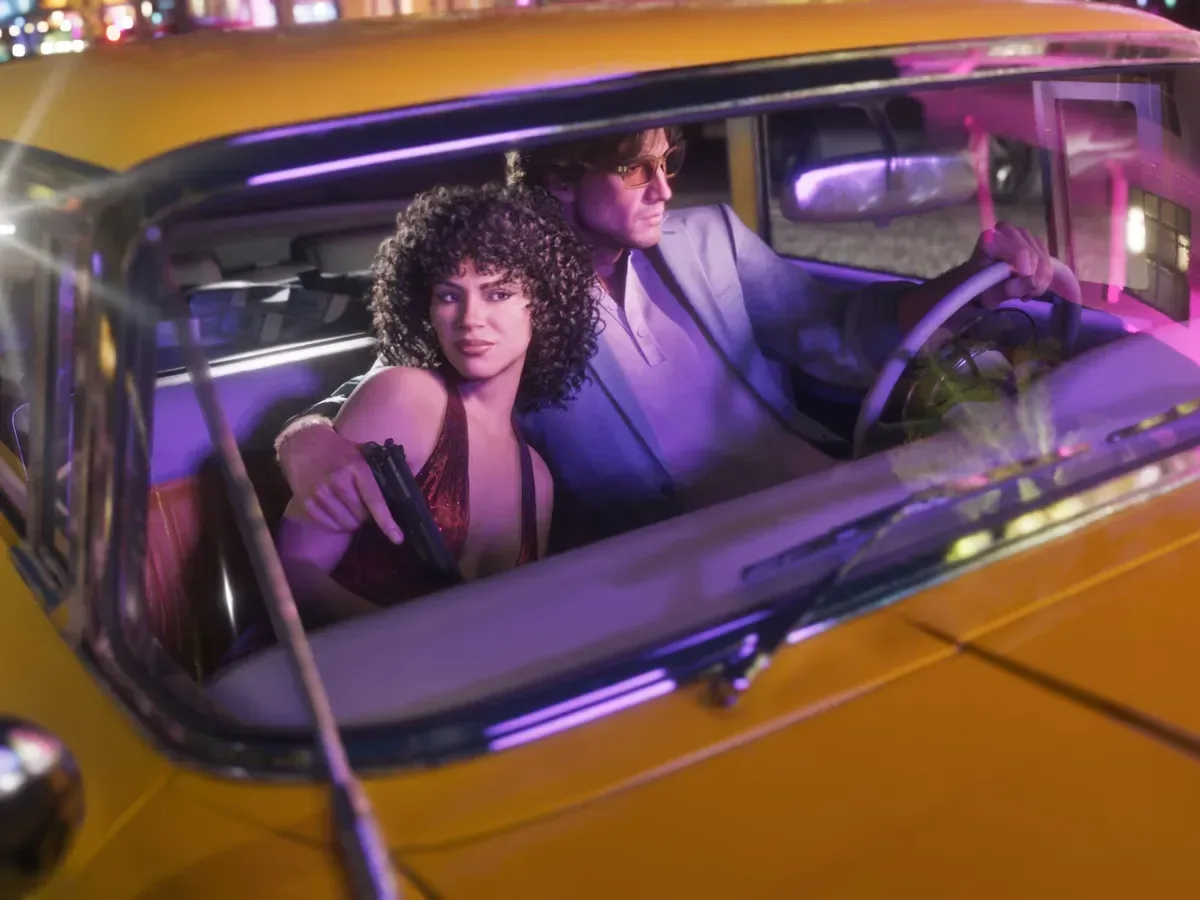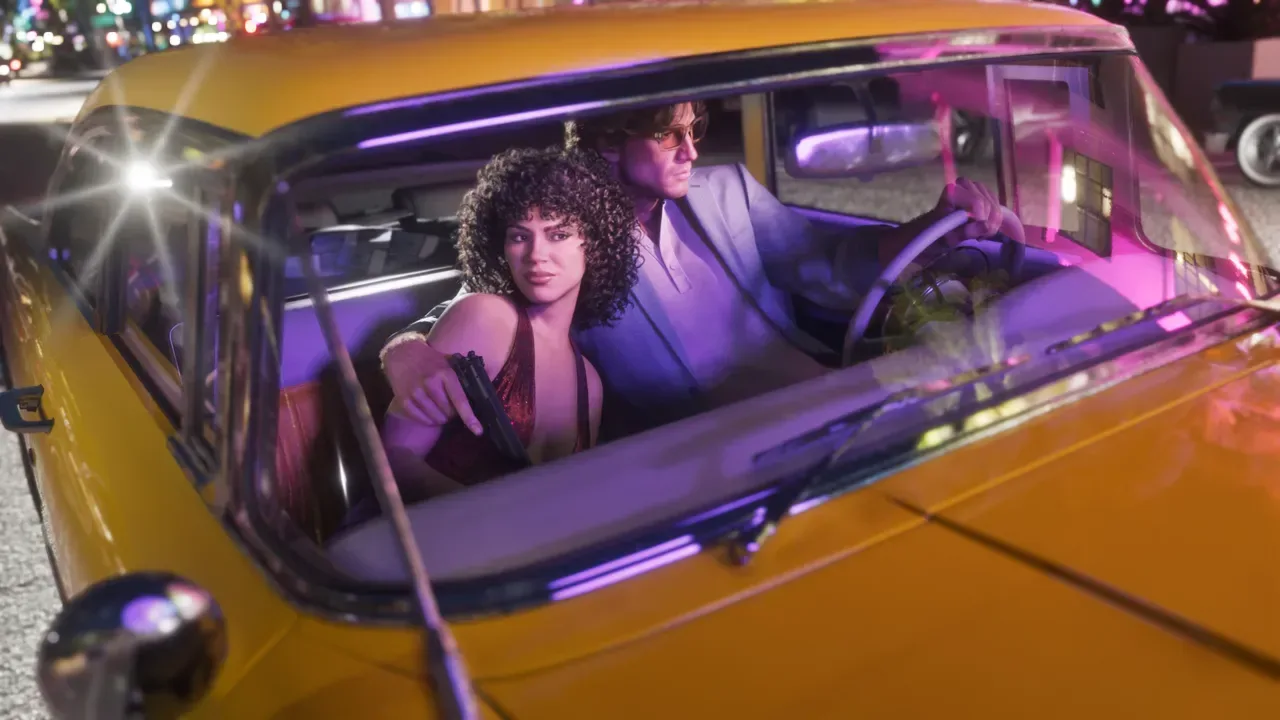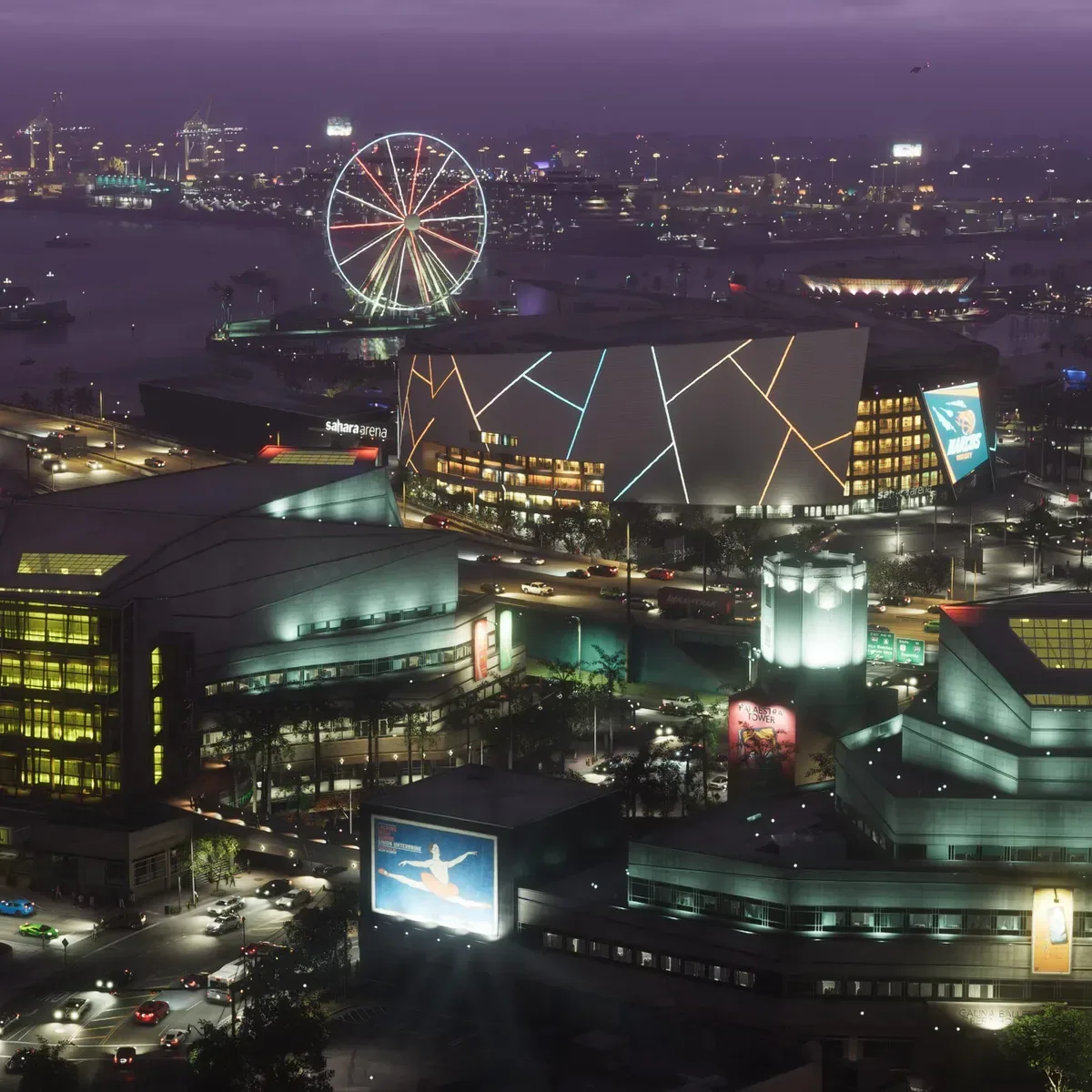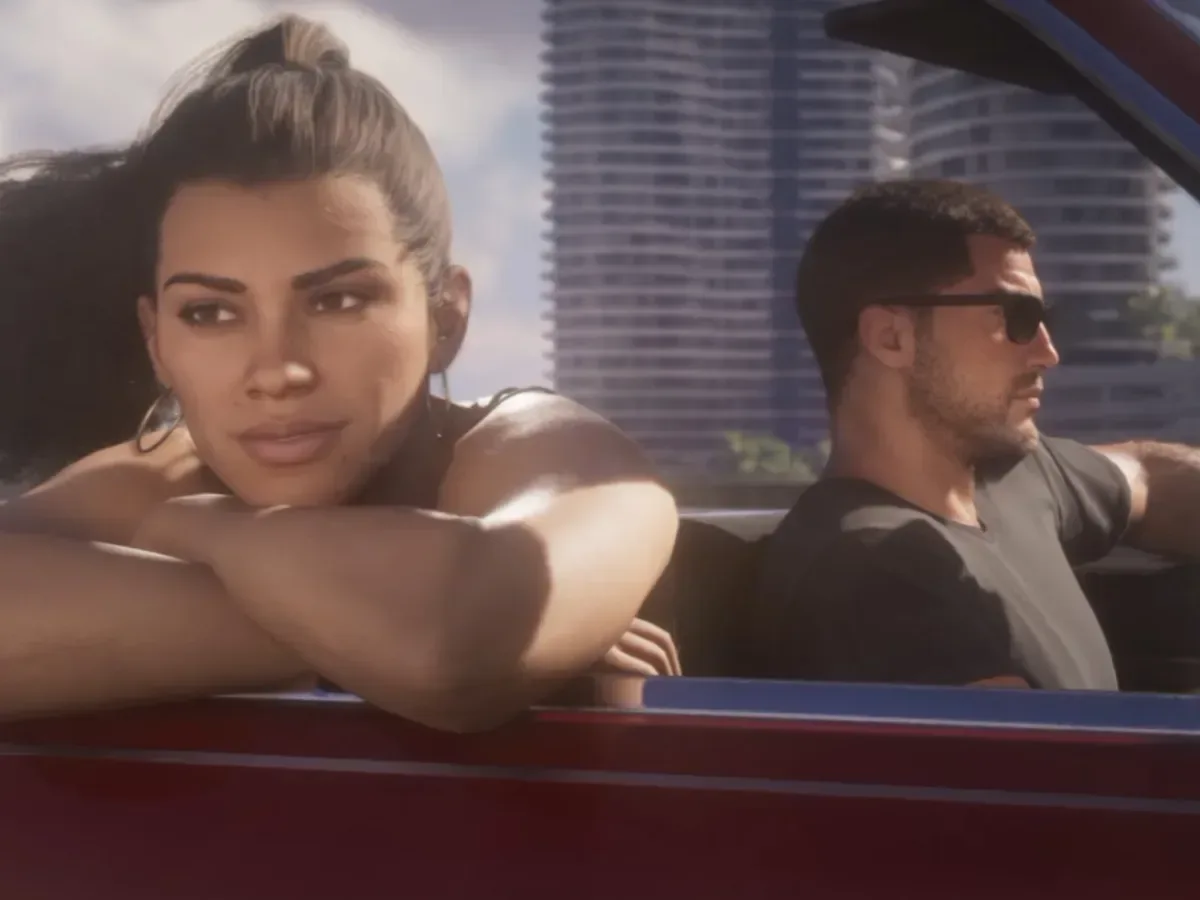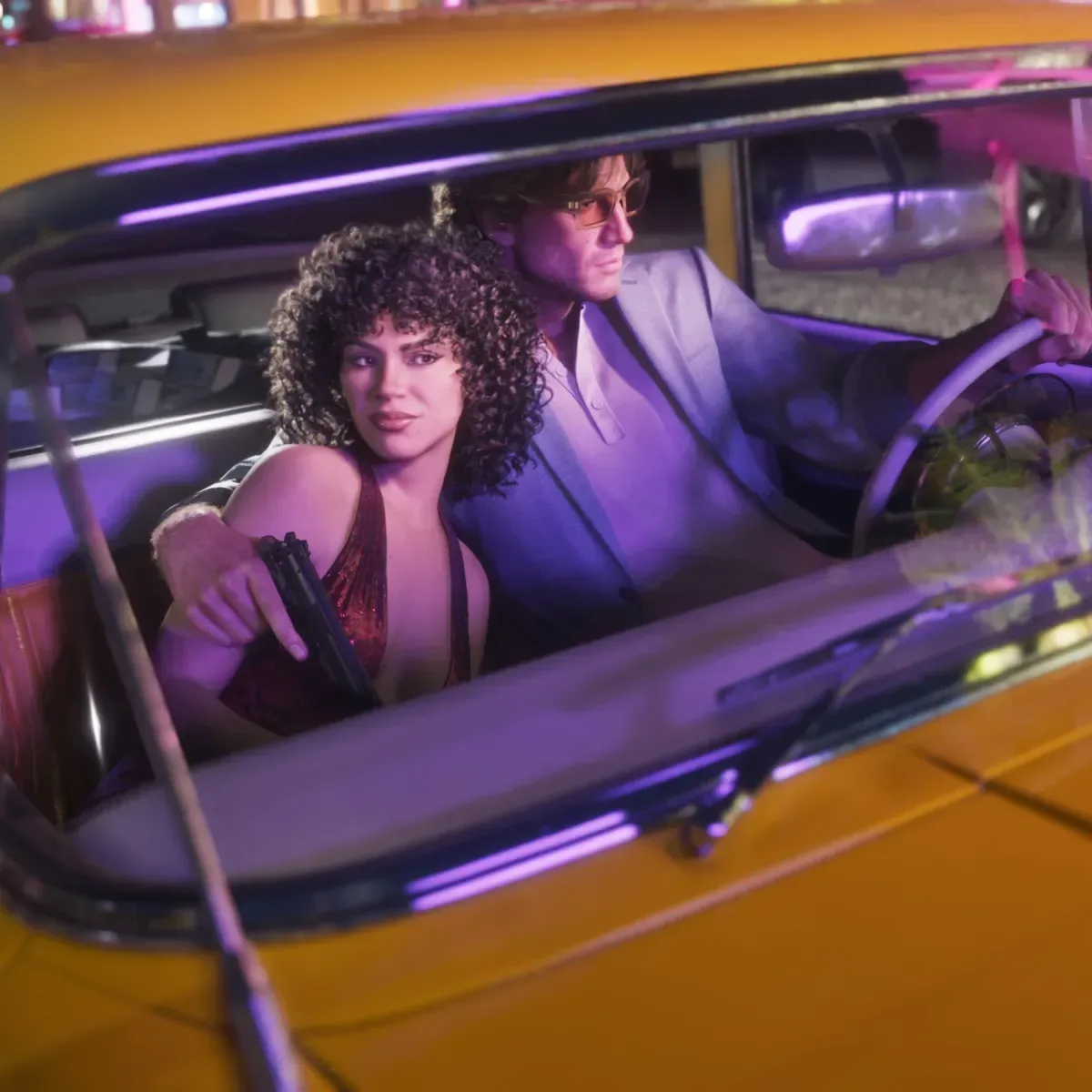
Miami has become part of the Grand Theft Auto VI launch campaign in a remarkably literal way: real vehicles styled to resemble cars from the upcoming game have been seen driving through the city in convoy. The display ties Rockstar’s fictional Leonida setting to the Florida city that helped inspire its satirical take on Vice City and the surrounding region.
The reported line-up included a Lamborghini police vehicle in Vice City Police Department-style livery, a McLaren presented as a real-world version of the Progen Emerus, and builds evoking the Cheetah, Coquette D10, Tempesta and Manana. Each was fitted with Leonida licence plates, a small but important piece of fictional world-building: Leonida is GTA 6’s Florida-inspired state, while the plates help the cars read as props from that setting rather than simply modified supercars.
The vehicles were also reportedly spotted stationary at a petrol station while a Goodyear blimp carrying GTA 6 advertising appeared in the distance. It is an unusually physical extension of a game campaign, putting recognizable in-game names, visual cues and fictional law-enforcement branding into the same real-world environment that informs the game.
Why the car choices matter
Grand Theft Auto has long used fictional vehicle brands and models rather than presenting its automotive world as a catalogue of officially named real cars. The Miami convoy leans into that convention. A McLaren does not need to become an exact in-game asset to communicate the idea of the Progen Emerus; the modified look, accompanying branding and Leonida plate do the work of translating the game’s visual language onto a recognizable road car.
That distinction matters because this is not evidence that GTA 6 will include officially licensed Lamborghini or McLaren vehicles. It is a promotional installation using real-world vehicles as a visual approximation of GTA counterparts. Players should treat the display as marketing rather than a confirmation of vehicle licensing, final car lists, customization options or in-game police systems.
The same caution applies to the VCPD Lamborghini. VCPD refers to Vice City Police Department, a fictional police identity associated with the series’ Vice City setting. The livery is a strong shorthand for GTA’s world, especially in Miami, but it does not reveal how police pursuit mechanics will work in GTA 6.
A campaign built around place, not just platforms
GTA 6 is due to launch on PlayStation 5 and Xbox Series consoles on November 19. With the game nearing release, the Miami activation shows a marketing approach focused on making Leonida appear to spill into the real place that shaped it.
That approach has a natural fit with Rockstar’s reported Florida research trips. GTA 6 is expected to present a satire-led recreation of Miami and its wider surroundings rather than a one-to-one copy. Bringing game-themed cars into Miami emphasizes the overlap while preserving the difference: Leonida is fictional, and the campaign plays on the audience recognizing familiar Florida and Miami signals through Rockstar’s exaggerated lens.
Related coverage includes GTA 6's Miami Marketing Goes Full Throttle With Real Cars Styled After Leonida Vehicles.
It also gives the campaign a format that travels easily across social platforms. A trailer is watched in a fixed frame. A branded convoy can be encountered unexpectedly, photographed from multiple angles, circulated in short clips and discussed by people who were not actively seeking out game news. Social reaction to the vehicles has been broadly enthusiastic, with much of the attention centered on the VCPD-styled Lamborghini and the sheer scale of turning a game launch into a visible city event.
What the stunt says—and what it does not
There is a practical reason vehicle-based promotion works especially well for Grand Theft Auto. Cars are not peripheral decoration in the series; they are among its most recognizable symbols. A convoy can communicate speed, spectacle, crime-fiction imagery and open-world fantasy before anyone reads a logo. The Leonida plates give the display an extra layer of specificity, grounding it in GTA 6 rather than GTA generally.
But the campaign should not be read as a substitute for game information. The reported Miami appearances do not establish new story details, gameplay systems, character information, performance targets or a complete vehicle roster. Their value is atmospheric. They are a way to make the game’s fictional geography feel momentarily tangible ahead of release.
That matters for players trying to separate launch excitement from confirmed features. The safe takeaway is straightforward: Rockstar is using real cars, fictional Leonida registration and VCPD imagery to promote GTA 6 in Miami. Claims that go further—such as precise in-game vehicle confirmation based solely on these builds—would exceed what the activation itself demonstrates.
Miami as the campaign’s biggest prop
The reported displays sit alongside other GTA 6 promotional efforts connected to the city, including activity on beaches and a collaboration involving the Miami Heat. Some Miami officials have reportedly raised concerns about the scale of Rockstar’s presence. That tension is understandable: a campaign designed to be conspicuous can generate excitement and attention, but it also occupies public-facing spaces and turns a major city into part of a commercial launch event.
For Rockstar, Miami is more than a convenient backdrop. It is the real-world reference point audiences immediately associate with Vice City, so the location makes the visual joke land quickly. A convoy of similarly modified vehicles in another city could still advertise GTA 6; doing it in Miami turns the distinction between the city and its game-world echo into the central idea.
The move is also notably more localized than conventional game advertising. Billboards, digital trailers and platform storefronts can appear almost anywhere with the same messaging. A Miami car convoy depends on local recognition: people need to understand that these Leonida-themed cars are driving through the cultural reference point for Vice City. That gives the stunt a sense of occasion while ensuring its online images can carry the joke far beyond Florida.
The broader launch picture
The Miami activity arrives during a busy period for GTA 6 coverage. Recent discussion has included a report suggesting the apparent end of the “Cyberleek” situation, details concerning a sweat system, and confirmation that the game is eligible for The Game Awards 2026. Those are separate strands of the pre-release conversation; the convoy itself is primarily a statement about visibility and brand scale.
It is also a reminder that game promotion increasingly extends beyond trailers and ads, even when the game remains exclusive to a defined set of launch platforms. GTA 6’s November release is confirmed for PS5 and Xbox Series consoles, while the cars on Miami streets reach people regardless of which hardware they own—or whether they play games at all.
That kind of crossover is particularly useful for a series with a broad cultural profile. There are other ways games can move beyond their original formats, including projects that tell new stories rather than retread a game’s protagonist, as discussed in Cyberpunk 2077’s live-action film plans. GTA 6’s approach is different: rather than adapting Leonida into another medium, it temporarily overlays the game’s symbols onto the city that helped inspire it.
For now, the clearest result is visual. Leonida plates, VCPD markings and GTA-style supercar identities have been brought into Miami in a campaign designed to be seen in person and shared online. With GTA 6 approaching its November 19 launch, Rockstar’s message is not subtle: Vice City’s next visit is close enough that its traffic has started appearing in the real world.