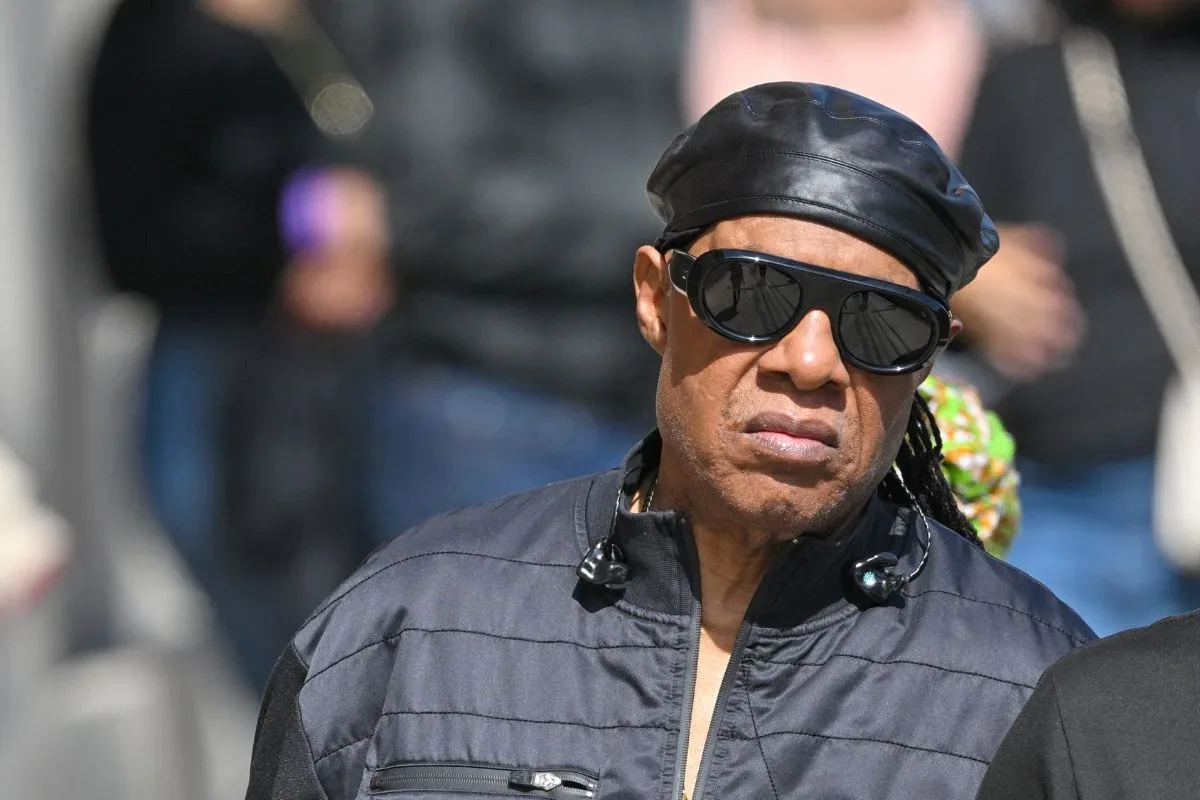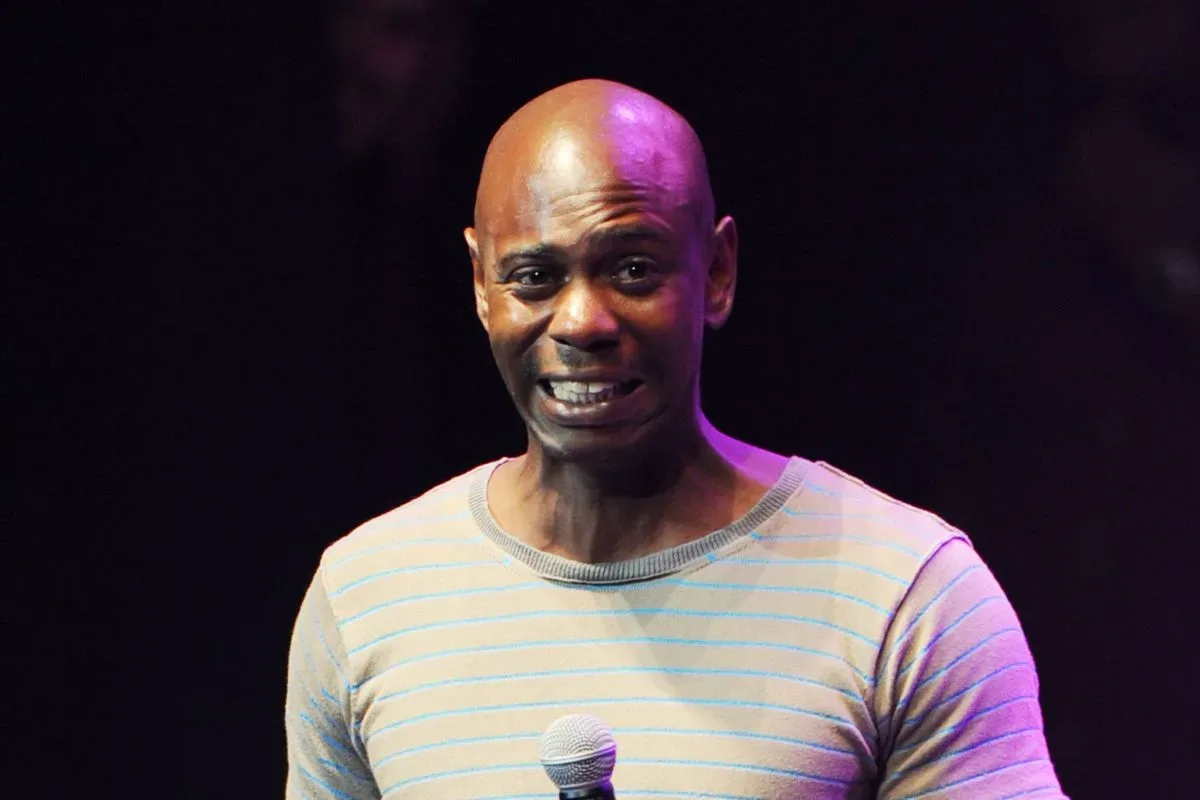
Dave Chappelle made an unusually public personal pledge during Stevie Wonder’s November 23 concert at Washington’s Capital One Arena: he said he would quit smoking.
The comedian, appearing in his hometown during a sold-out stop on Wonder’s tour celebrating 50 years of Songs in the Key of Life, came onstage as Wonder finished “Another Star.” Chappelle hugged Wonder at the keyboards, danced, and then took a seat beside the musician for a brief exchange that turned a private promise into an arena-wide commitment.
Wonder noticed the smell of smoke. Chappelle initially joked that it was weed, but Wonder redirected the moment to cigarettes and reminded him that he had already promised to give them up. Chappelle replied, “I’m gonna quit, Stevie.” Wonder made sure the audience heard it, then teased that, if he caught Chappelle smoking again, he would ask the comedian to drive him.
It was a compact piece of stage banter, but it worked because neither performer treated it like a formal statement. Wonder’s joke kept the moment light; Chappelle’s answer nevertheless made the pledge unmistakable. The capacity crowd became, in effect, a room full of witnesses.
For more context, explore GTA 6 PC Recompilation Push Meets Takedowns After Alleged Xbox Executable Leak.
A guest appearance built around the room, not a routine
Chappelle held the microphone long enough to describe the view from the stage. He pointed to the audience’s mix of ages, races, and backgrounds, and spoke about music’s ability to settle people who may have arrived carrying worries about the world.
“The hardest thing about being Stevie Wonder is you forget what it’s like to see Stevie Wonder,” Chappelle said.
The line puts the emphasis where it belonged: on the shared experience of an audience watching an artist whose catalogue has crossed generations. It also explains why Chappelle’s appearance did not need the structure of a comedy set. His role was closer to that of an appreciative local host, giving voice to the scale and variety of the room before returning the focus to Wonder’s music.
Related coverage includes Dave Chappelle Promises Stevie Wonder He’ll Quit Smoking at D.C. Concert.
Wonder then asked his daughter, Zaiya, to sing John Lennon’s “Imagine.” Chappelle remained onstage through “Superstition,” the closing number. “Superstition” originally appeared on Wonder’s 1972 album Talking Book, while the tour itself commemorates the 1976 double album Songs in the Key of Life, Wonder’s third Grammy winner for Album of the Year.
Why the set’s song choices matter
The Washington performance moved through very different sides of Wonder’s work. “Sir Duke” brought horn-driven celebration, while “Village Ghetto Land” addressed poverty. That range matters to the concert’s larger atmosphere: the show could make room for exuberance, social observation, family participation, and an unscripted conversation about quitting cigarettes without forcing those elements into the same tone.
Songs in the Key of Life is a double album, meaning it was released across two records rather than a single standard-length LP. In this context, the anniversary is not just a numerical milestone. It gives the tour a wide body of music and ideas to revisit, from songs rooted in joy and movement to material confronting inequality and hardship.
Chappelle’s comments about people coming to the arena concerned about the world fit that breadth. They were not a claim that a concert erases those concerns. Instead, they framed the gathering as a temporary shared space in which a diverse crowd could be calmed by the same music. That is a more modest and more meaningful observation than treating entertainment as a solution to the problems named by songs such as “Village Ghetto Land.”
A friendship with several public intersections
The Capital One Arena exchange was not the first time Chappelle and Wonder had appeared together. In 2019, Wonder performed at Chappelle’s Gem City Shine benefit in Dayton, Ohio. The free event supported victims and families after a mass shooting in Dayton’s Oregon District that killed nine people.
That earlier appearance gives the Washington moment some context. Their onstage rapport was not presented as a chance meeting between two famous people. It followed a prior public gathering tied to community support in a difficult moment.
Chappelle has also spoken previously about Wonder in a 2018 NPR Tiny Desk appearance. He recalled harmonica player Frédéric Yonnet approaching Wonder backstage at the 2006 Grammy Awards before later touring with him. And both Chappelle and Wonder appeared separately in spoken interludes on Big Sean’s 2020 album Detroit 2.
Those connections span benefit work, music-industry recollection, and album appearances, but the Washington stop had its own character. It was primarily a Wonder concert, and Chappelle’s contribution was brief. Rather than redirecting the night toward himself, he described the audience, made his promise, and stayed for the final music.
The practical meaning of a public promise
There is a difference between saying something in a backstage conversation and repeating it into a microphone in front of thousands of people. A public pledge creates social accountability: other people have heard the commitment and may remember it. Wonder playfully underlined that accountability with his driving joke.
That does not make the exchange proof that Chappelle has quit smoking. The moment establishes only what he said onstage: that he intended to quit. It would be premature to turn a promise, even one made in a sold-out arena, into a confirmed outcome.
Still, the specificity of Wonder’s reminder is what made the interaction land. It suggested an existing conversation rather than an improvised lecture. Chappelle’s joke about weed, Wonder’s clarification about cigarettes, and the audience’s reaction all preserved the sense of two longtime acquaintances speaking candidly in an extraordinary setting.
The best part of the episode may be its lack of grand packaging. There was no announced campaign, no new project attached to it, and no reason to mistake the exchange for a performance announcement. It was a human-scale aside inside a major concert: one friend calling another friend out, a comedian answering directly, and Stevie Wonder ensuring nobody in the building missed the promise.
What Washington’s crowd saw
For those present, the memory of the show will likely extend beyond the smoking pledge. They saw Wonder move from “Another Star” to a set that included “Sir Duke,” “Village Ghetto Land,” Zaiya’s rendition of “Imagine,” and a closing “Superstition.” They also saw Chappelle articulate what was visible from the stage: an audience assembled across differences, listening together.
That observation is especially fitting for an artist whose work has long occupied multiple emotional and musical registers. The concert’s celebration of Songs in the Key of Life did not reduce the album to a nostalgia object. Its songs, and the Washington audience’s response, supported a wider point about how a live performance can hold both pleasure and reflection.
Chappelle’s pledge may have supplied the night’s most headline-ready exchange, but Wonder’s response supplied its shape: affectionate, funny, and impossible to mishear. Whether the comedian follows through is a matter for him. What is certain is that Wonder gave him a memorable way to say it out loud.