A Utah court has scheduled jury selection for June 21, 2028, in the criminal case against Tyler Robinson, who has pleaded not guilty to aggravated murder and six additional charges in the death of Charlie Kirk. Prosecutors are seeking the death penalty if Robinson is convicted.
The date set by Judge Tony Graf follows disagreement over how much time the case requires before a jury can be selected. It also arrives amid a separate public dispute over comedy, mourning and the response to a politically divisive public figure’s death: Erika Kirk condemned jokes about her husband’s killing after a clip of Dave Chappelle discussing the matter circulated online.
Those are distinct developments, and it is important not to blur them. The court’s calendar is part of an ongoing criminal prosecution. Chappelle’s remarks and Erika Kirk’s response are part of a broader cultural argument over how public figures, audiences and commentators speak about violence when politics has already made the deceased a source of intense disagreement.
The case schedule: what has been set, and what has not
Judge Graf ruled on November 9 that jury selection will begin on June 21, 2028. The court has reserved 105 court days for the matter, a figure that signals the anticipated scale of the proceedings without predicting an exact end date.
Jury selection, sometimes called voir dire, is the process used to choose the people who will hear evidence and decide the case. It is not the beginning of witness testimony, and it is not a verdict. In a case involving extensive publicity, serious charges and a potential capital sentence, selecting a jury can be a consequential and time-consuming stage on its own.
The court will revisit readiness in April 2028. At that point, both sides are expected to address whether they have completed the work necessary to move forward with selecting jurors. That checkpoint matters because the scheduled June 2028 date is a court-set target within a larger process, not a guarantee that every preparatory dispute will already be resolved.
The defense had argued for a start in late 2029, saying it needed more time to prepare. Prosecutors said they could be ready by the following October and requested an earlier 2028 date, in part to avoid the year-end holiday period. Erika Kirk had asked for a trial start no later than October 4, 2027. Judge Graf selected a later date than she sought and an earlier date than the defense proposed.
Robinson has entered not-guilty pleas. A charge is an accusation, and the scheduled trial exists precisely because the state must attempt to prove its allegations in court while the defense has the opportunity to challenge that case.
Background to the charges and the capital-case question
Charlie Kirk was shot while speaking to a crowd at Utah Valley University on September 10, 2025. He was a co-founder of Turning Point USA, a right-wing political organization.
In September, Judge Graf found there were sufficient grounds for the case to proceed to trial. The judge also ruled that the alleged risk of death to other people at the scene allowed prosecutors to pursue a death sentence.
A death-penalty case is not simply an ordinary criminal case with a more severe possible punishment. The possibility of a capital sentence raises the stakes for both sides’ preparation and for the court’s management of proceedings. Here, the state’s decision to seek death is contingent on a conviction; it is not an outcome that has been decided. Robinson’s not-guilty plea remains in place.
The 105 days reserved by the court should likewise be understood as planning rather than a forecast of any legal result. Court scheduling reflects the expected needs of the proceeding, including jury selection and the presentation of a complex case. It does not establish guilt, nor does it indicate how a jury will assess evidence that has not yet been presented at trial.
Erika Kirk’s response to public jokes
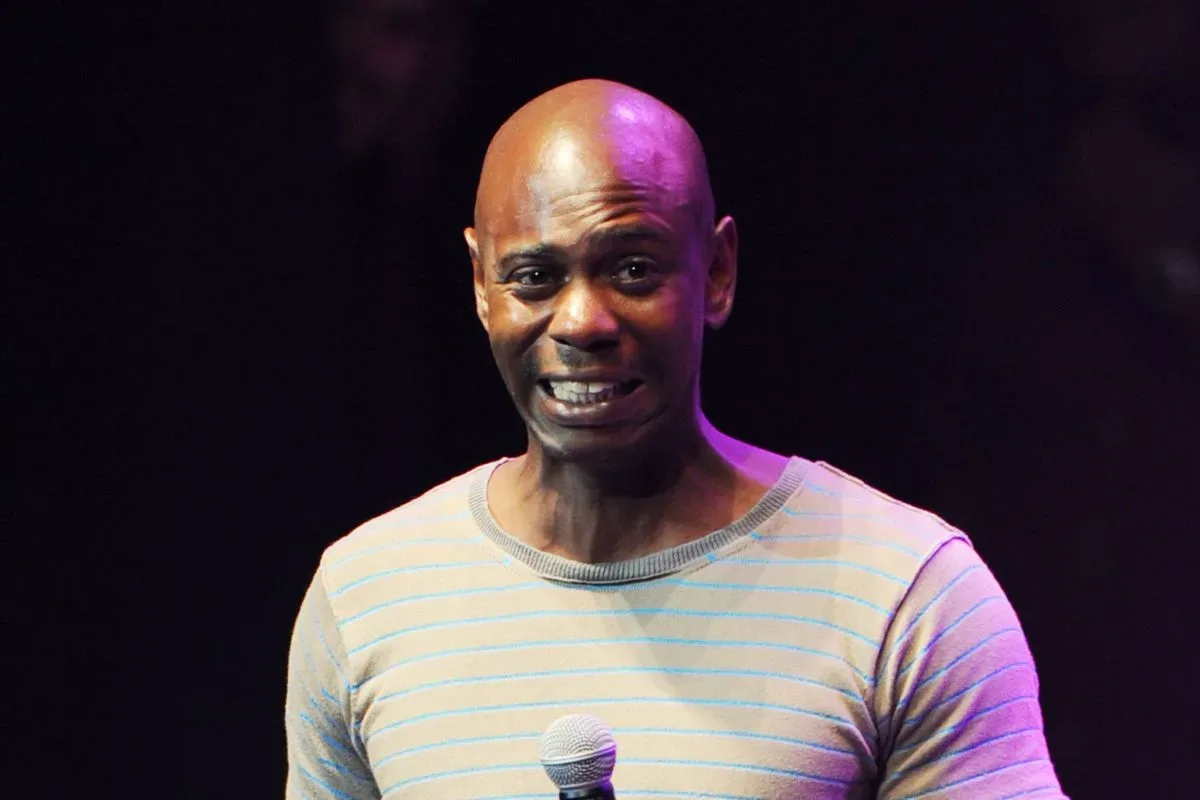
The latest court action came one day after Erika Kirk posted on X criticizing comedians and pundits who make light of deaths involving people whose beliefs they oppose. She did not name Chappelle in the post, but the timing coincided with the online circulation of a clip from his Madison Square Garden show.
In the clip, Chappelle said that, since Kirk was murdered, he felt better, while adding that it was simply a feeling. Erika Kirk called jokes about the killing “beyond disgusting” and argued that a person’s life should be valued even by people who reject that person’s politics.
That objection centers less on a demand for ideological agreement than on a boundary around public responses to killing. Kirk’s political role meant he was widely debated in life. Her statement argues that sharp political disagreement does not make celebration, amusement or rhetorical detachment from a death acceptable.
Chappelle has previously incorporated Kirk’s death into his stage work. In a Netflix special released last year, he framed the subject through his own concern about being shot and connected early reporting about writing on ammunition to backlash over his material concerning transgender people.
Why the comedy dispute is larger than one viral clip
Comedy often operates through discomfort, exaggeration, provocation and the violation of expectations. A comedian’s statement on stage may be designed to produce tension or reveal a contradiction rather than deliver a conventional political argument. But audiences are not required to accept that framing, especially when the topic is an actual killing and the comments reach people outside the room where the routine was performed.
The disagreement in this instance is not resolved merely by labeling the remarks “comedy.” That label explains the setting, but it does not settle whether viewers regard the joke as insightful, cruel, cathartic, callous or some combination of those things. Erika Kirk’s response makes clear that, for the family of the victim, the distinction between a stage premise and a public expression of relief can feel inadequate.
There is also an unavoidable difference between commenting on a public figure’s ideas and commenting on the fact of that person’s death. The first is a familiar feature of political culture. The second can make grief, fear and the real-world consequences of violence central to the exchange. That is why the reaction has extended beyond a dispute over whether people agreed with Charlie Kirk’s politics.
Public figures frequently become symbols in online debate. The danger is that symbolic arguments can flatten the human event underneath them. Erika Kirk’s post pushes against that flattening by asking critics to recognize the value of a life even in cases of profound political opposition.
Speech, criticism and consequence
Chappelle’s ability to make provocative remarks and Erika Kirk’s ability to condemn them can both exist at the same time. Public speech regularly produces public criticism; neither fact requires treating criticism as censorship or treating a joke as beyond moral evaluation.
That distinction is especially useful in a moment when clips travel quickly and are often stripped from a full performance context. Context may affect interpretation, but it does not erase the impact a particular line has on viewers, survivors or relatives. Conversely, a viral reaction does not decide what a comedian intended. Responsible discussion can hold both ideas together: a routine can have a performative context, and people can still find its treatment of a killing offensive.
Entertainment culture has long wrestled with the line between artistic provocation and public responsibility, including disputes that are less grave but still involve questions of what creative work uses and who is affected by it. For another example of how cultural work can become the subject of public disagreement, see this report on an alleged unauthorized sample connected to Ye and Ty Dolla $ign.
What to watch before June 2028
The next key date identified by the court is April 2028, when the parties’ preparedness will be reviewed. Until then, the most concrete procedural fact is the June 21, 2028 jury-selection date and the court’s allocation of 105 days.
Readers should be careful about language surrounding the case. Robinson is charged and has pleaded not guilty; prosecutors seek the death penalty, but no conviction or sentence has been determined. The trial will be the venue for testing the state’s allegations.
Outside the courtroom, the Chappelle clip and Erika Kirk’s rebuke illustrate a different kind of unresolved question: whether political and artistic speech can confront a controversial person’s legacy without appearing to trivialize violence. There is no procedural ruling that can answer that cultural dispute. It will continue to be shaped by the words chosen by comics, commentators, grieving families and the audiences deciding how those words land.