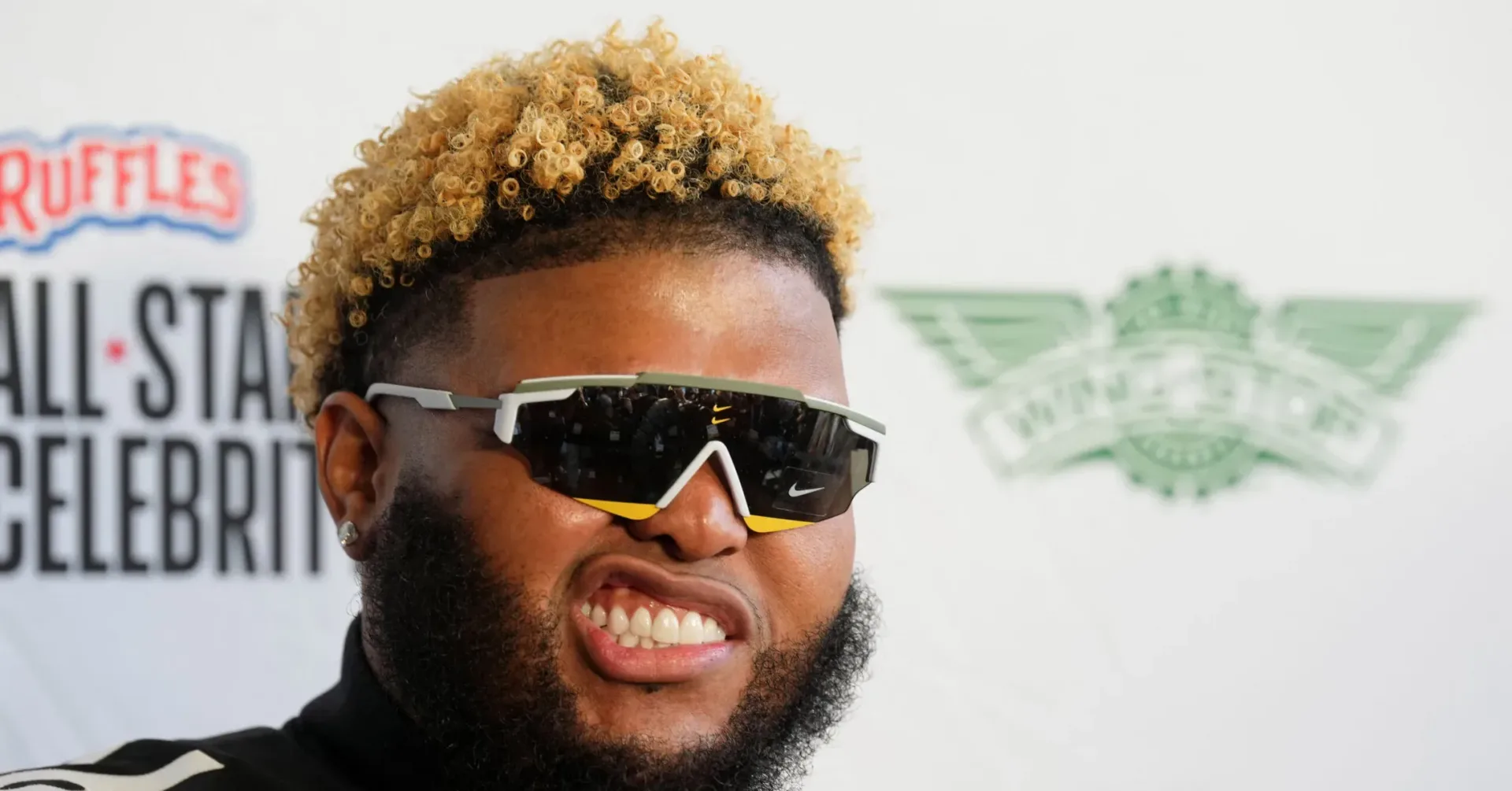
Druski’s turn as Saturday Night Live host arrived with an unusual distinction: he has been described as the program’s first host whose career was built exclusively as a digital creator before taking the Studio 8H stage. Rather than sidestep that framing, the comedian made it the engine of his monologue, turning the increasingly long list of labels for online entertainers into a joke about the way audiences attempt to categorize internet fame.
He opened by calling the hosting gig a dream, then rattled through the kinds of descriptors attached to his path: internet content creator, social-media influencer, and a performer known for making people laugh on TikTok, YouTube, and Instagram. The deliberately overstuffed terminology was the point. A comedian who reaches an audience through several platforms is often reduced to a single catch-all label, even though the work itself may involve characters, short sketches, writing, editing, and a continuing relationship with viewers.
That distinction matters for a show such as SNL. The live sketch institution has a long history of hosts arriving from film, television, music, sports, and stand-up. Druski’s appearance places a creator whose public profile grew through digital video into that same hosting tradition. His monologue treated the crossover not as a résumé defense, but as material: if the labels sound awkward when read aloud, that awkwardness becomes part of the laugh.
A monologue about being seen—and misseen
Druski broadened the premise beyond career terminology, joking about some of the things people say about his appearance and identity online. The material’s structure was less about settling any of those claims than it was about demonstrating how quickly a highly visible performer becomes an object of constant public commentary. He also said he would not be “watered down” by the show, teasing that he might or might not do whiteface.
In comedy terms, this is a form of expectation management: the performer acknowledges the concern an audience may have before it can dominate the room. The question beneath the joke is whether a comic known for a particular digital voice will alter it when moving to broadcast television. By stating the concern himself, Druski positioned the appearance as an extension of the persona viewers already know rather than a clean break from it.
There is also a practical reason this kind of framing suits a live monologue. The monologue has to establish a host quickly for viewers who may know them deeply, vaguely, or not at all. A concise account of how he is discussed online gives existing followers a familiar reference point while giving newcomers a clear explanation of why the booking feels notable.
Emma Stone enters the setup
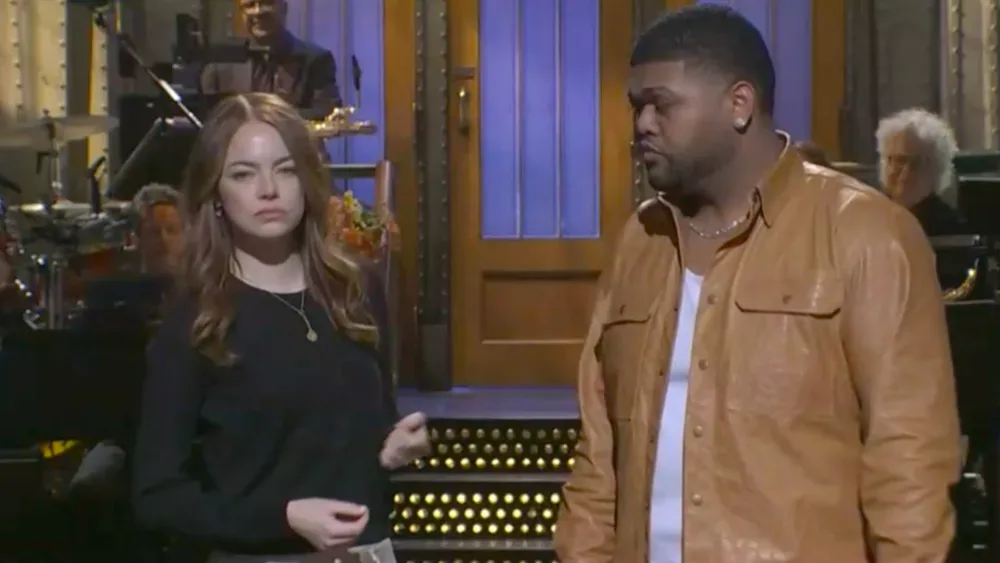
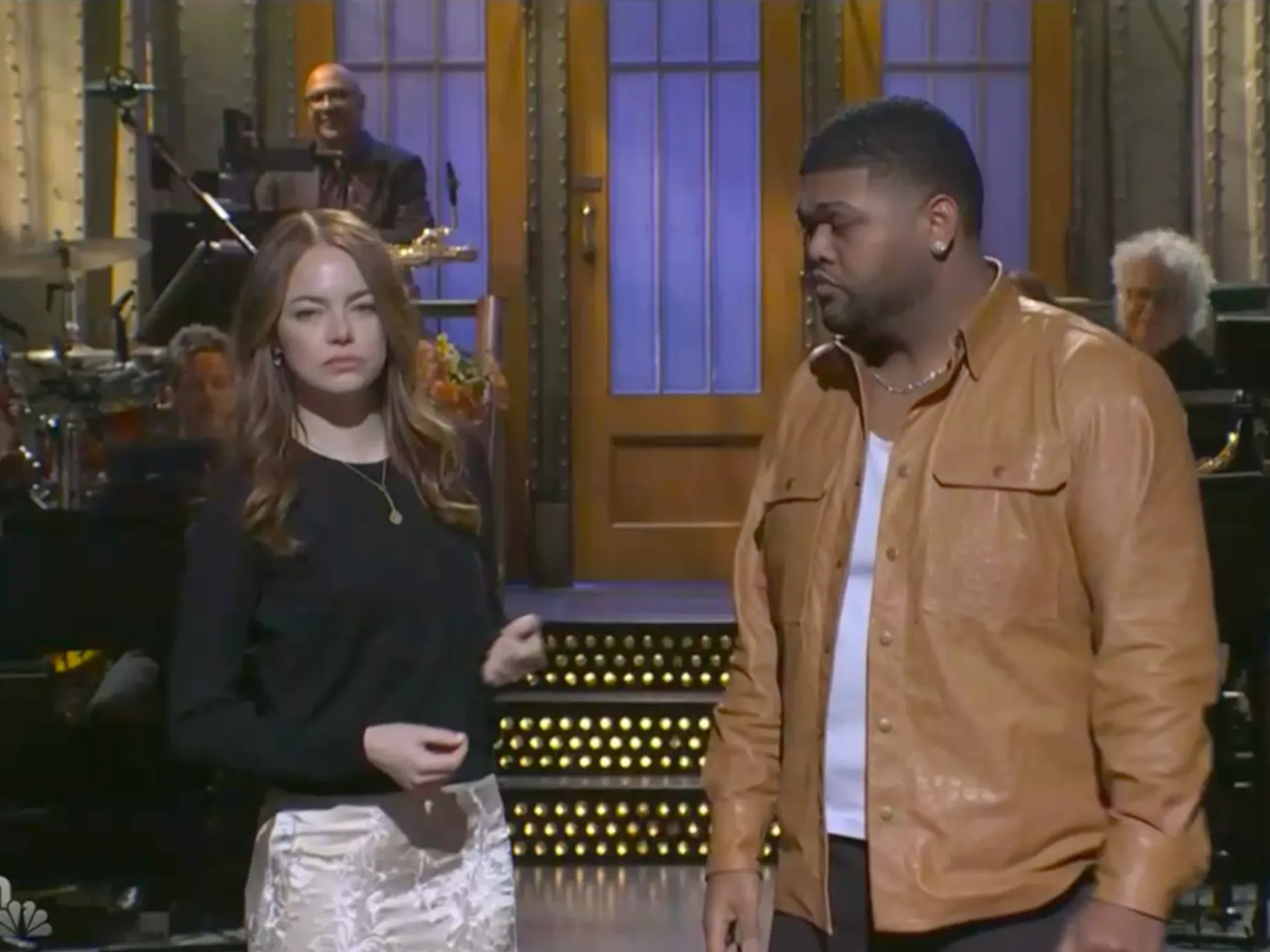
The monologue then pivoted from digital fame to Druski’s next screen project. He told the crowd that he had finished filming his first movie with Emma Stone, then introduced Stone as she came onstage. Stone is a two-time Oscar winner and Druski’s co-star in the forthcoming Universal Pictures comedy The Catch.
The film is directed by Dave McCary, Stone’s husband, who previously worked at SNL as a segment director and writer. That connection gave the cameo an extra layer of show-specific context, but the exchange itself relied on a much simpler comic device: conflicting interpretations of a relationship.
Related coverage includes Druski’s ‘SNL’ Monologue Brings Emma Stone Into the Joke.
Druski declared that he played Stone’s love interest in the movie. Stone immediately undercut the claim, saying he appeared to have misread the scenes because their characters were not love interests. Her reply reframed his boast as a misunderstanding carried from the set into the live show, with Stone suggesting that his looks during filming now made more sense to her.
The joke works through status reversal. Druski begins by introducing a major film credit as proof of his ascent and confidently defining his role opposite Stone. Stone then takes control of the premise by correcting the detail that gives the boast its glamour. The correction does not need any information about the plot of The Catch; in fact, keeping the film’s actual story outside the bit lets the exchange stand alone as a character joke.
Stone’s appearance also helps translate a future movie credit into an immediate television moment. Announcing an upcoming project can be a routine promotional beat. Giving the alleged co-star a chance to dispute the host’s version transforms it into a miniature sketch with a clear beginning, reversal, and punchline.
The last joke stays on Druski’s terms
After the exchange about The Catch, Druski told Stone that he loved her in Bugonia. When Stone reacted with pleased surprise, he revealed that he had not meant it as a sincere appraisal; he wanted to be the first Black man to say it.
It is a sharp closing turn because it deliberately refuses the expected compliment. Stone’s reaction briefly invites the audience to assume the joke will become a straightforward appreciation of her work. Druski instead redirects attention to the social meaning he attaches to saying it. As with the opening, the monologue returns to the topic of public identity—but now in a compact interaction rather than a direct address.
The Stone cameo thus did more than add a recognizable guest to a host’s opening minutes. It supplied a partner who could puncture Druski’s confidence without derailing his persona, then help land a final misdirection. The rhythm is closer to a two-person sketch than a conventional celebrity introduction, which makes sense for a monologue built around a comedian’s ability to turn a premise on himself.
Why the hosting moment is notable
“Digital creator” is a broad label, and it can obscure the difference between someone who simply has a large online audience and someone whose primary work is comedy performance. Druski’s monologue makes the overlap clearer. His online rise may have given the moment its novelty, but the material onstage still depends on familiar live-comedy skills: setting up an audience’s assumptions, finding a specific point of view, working with a guest, and adjusting the tension between a claim and a correction.
His hosting appearance is therefore not only a milestone in the way a major comedy program selects hosts. It is also a test of how well an internet-born comic persona can be compressed into the old-fashioned format of a live opening monologue. On this occasion, Druski’s answer was to make the transition itself the punchline.
For more on the show’s recent habit of using topical technology as sketch fuel, see this look at an Elon Musk sketch built around Grok.