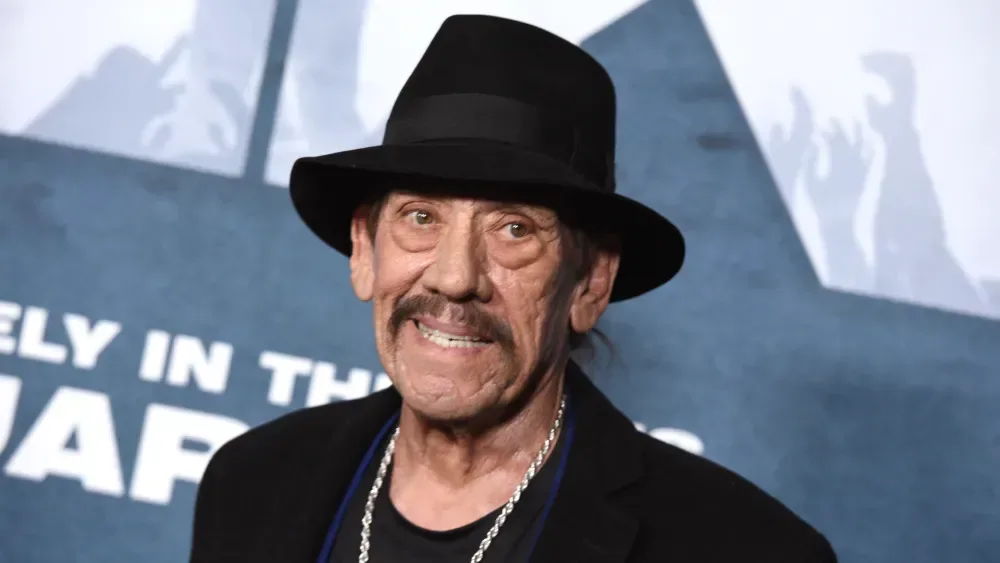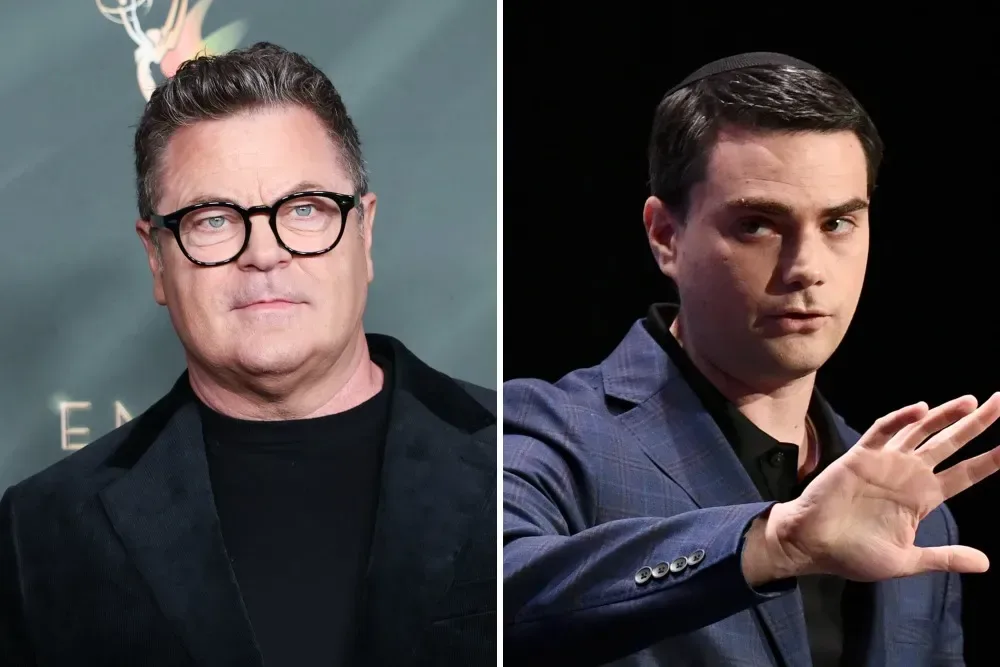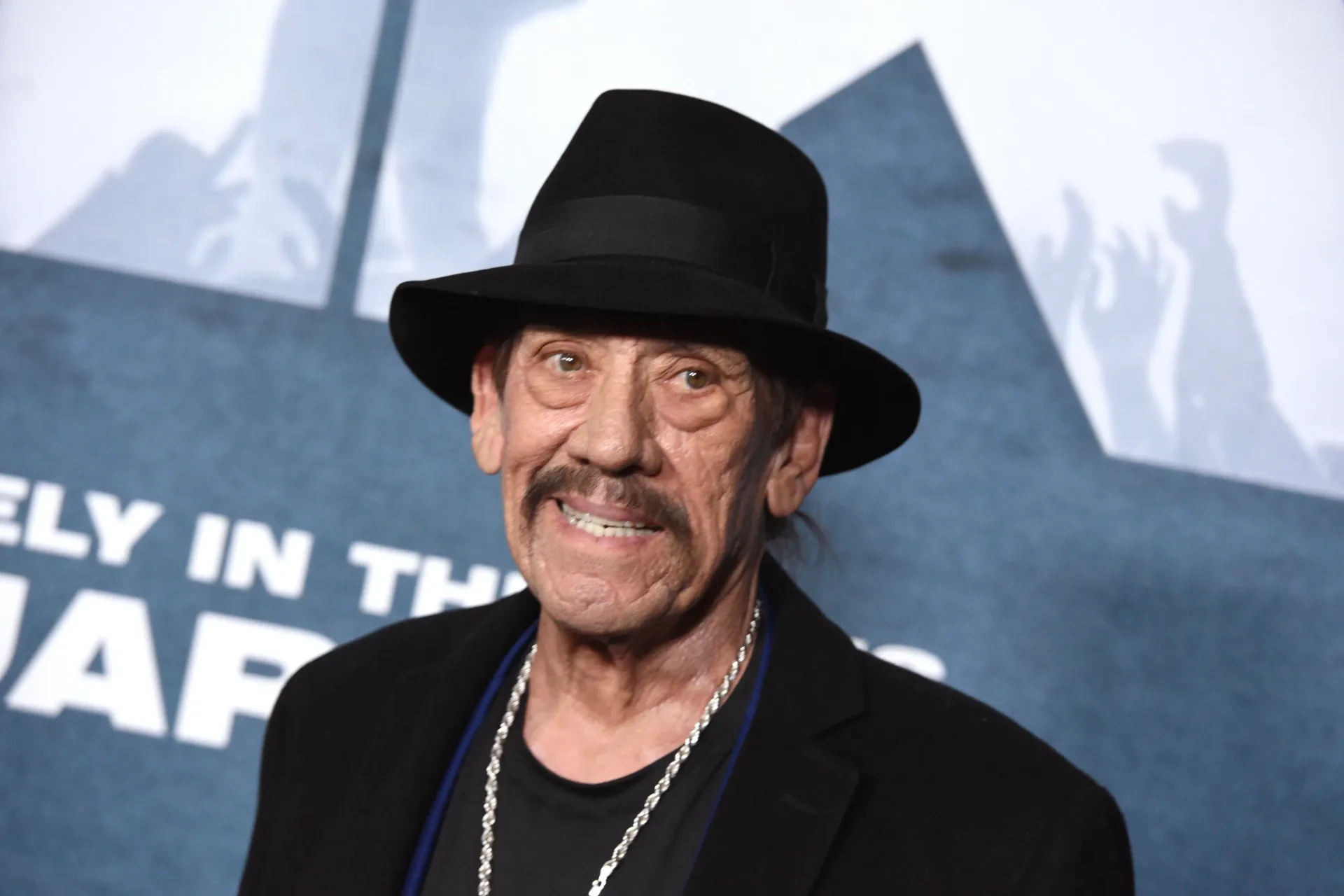
Danny Trejo’s involvement in the film Pawn Shop has prompted backlash from some fans, but his son Gilbert Trejo says the actor accepted the role without knowing conservative commentator Ben Shapiro was involved with the production.
In a social-media statement addressing the reaction, Gilbert Trejo said the cast and family only learned of Shapiro’s involvement around two weeks into filming. He also said his 82-year-old father had never heard of Shapiro before that point and needed the situation explained to him.
The distinction matters because the online argument has quickly centered on whether Danny Trejo’s participation should be read as an endorsement of Shapiro, U.S. Immigration and Customs Enforcement, or the film’s politics. Gilbert Trejo’s account presents a more complicated picture: an actor taking a role as described by an agent, then finding out later that a politically divisive figure was connected to the project.
What Gilbert Trejo says happened
Gilbert Trejo said the role was pitched to Danny Trejo as a story set during a complicated period, with Trejo playing a hardworking Mexican shop owner seeking peace. He said his father was enthusiastic about playing a fundamentally decent character.
That is a notably narrower decision than signing on to make a broad political statement. Actors are commonly hired to portray a character from the material and description available to them; the creative, financial and promotional identities surrounding a movie can carry separate implications for audiences. In this case, Gilbert Trejo says the connection to Shapiro was not known at the beginning of the shoot.
His statement also argues that Danny Trejo is constrained from publicly attacking Shapiro or the film. Gilbert Trejo says the agreement prevents his father from speaking negatively about the project and that leaving could expose him to a breach-of-contract claim. He further said Danny Trejo was unable to release the statement he wanted.
Those are Gilbert Trejo’s descriptions of the contractual situation, not a published copy of the agreement. Still, the claims explain why a public response may be limited even as attention around the movie grows.
What a breach-of-contract concern can mean
A breach of contract occurs when one party is alleged not to have fulfilled an obligation under an agreement. In a film-production context, an actor’s deal can address work commitments, confidentiality, publicity and conduct connected to the project. The exact language matters enormously, and no contract terms were provided here.
Related coverage includes Danny Trejo’s Son Says ‘Pawn Shop’ Deal Limits His Public Response.
Gilbert Trejo’s point is not simply that his father is unhappy with criticism. It is that Danny Trejo may face a difficult practical choice: remain attached to the movie and avoid prohibited public comments, or risk legal action if he attempts to leave. That does not establish precisely what the contract says or how a dispute would resolve. It does, however, make simplistic demands for an immediate public denunciation less straightforward than they might appear.
For audiences, it is useful to separate three questions that are often collapsed into one:
- What does the film itself depict or argue?
- Who is involved in financing, producing or promoting it?
- What does a particular performer personally believe?
Those questions can overlap, but they are not automatically interchangeable. Gilbert Trejo’s post specifically disputes the inference that his father’s casting alone proves he shares Shapiro’s political views or supports ICE.
The film’s premise and why it has drawn attention
Pawn Shop is set around a Minneapolis riot. Its published logline follows a young ICE officer attempting to complete an arrest after his partner is killed. The officer is pursued by a crowd seeking to free the prisoner, and the action eventually centers on a neighborhood pawn shop occupied by a Hispanic veteran and his progressive college-age grandson.
The framing is clearly built around conflict: law enforcement, immigration enforcement, public unrest, family divisions and competing notions of order. Those are politically charged subjects before audiences have even seen a finished film. The logline describes a “modern siege” and casts the central crisis as a choice between the rule of law and chaos.
That language helps explain why critics have characterized the project as sympathetic to ICE. But a logline is promotional shorthand, not a full screenplay or a complete accounting of how a finished movie handles its characters and ideas. Gilbert Trejo says the movie is not overtly pro-ICE or overtly aligned with one side. Based on the available information, that remains a claim about a project that has not been described in enough detail to settle its political thrust.
What is clear is that the premise puts Danny Trejo in the role of the pawn-shop owner, a character Gilbert Trejo describes as a good man who wants peace rather than a figure driving the enforcement action.
Trejo’s prior public position
Danny Trejo has previously said he is a proud Mexican, supports his community and is pro-immigrant. He also said he is not pro-ICE, while emphasizing that acting is his job and that his role is to tell a story.
That previous statement is central context for the reaction. It is a direct expression attributed to Trejo, whereas Gilbert Trejo’s newer post explains the circumstances surrounding the production and the limits he says now affect his father’s ability to respond further.
Neither statement eliminates debate over the movie or over the decision to remain involved. Fans are free to decide how much responsibility they assign to performers for a project’s backers, marketing and themes. But the available account does challenge the idea that Trejo knowingly joined a Ben Shapiro-associated production as a personal political endorsement.
Why the dispute is bigger than one casting credit
This episode illustrates how rapidly a casting story can become an argument about loyalty, identity and political symbolism. A performer’s name is often the most recognizable part of a production, so public anger can concentrate on them even when they do not control the project’s ownership, publicity strategy or distribution.
Gilbert Trejo’s statement contends that the outrage has stripped away those distinctions, turning his father into proof of a political narrative that he rejects. His frustration is especially pointed because Danny Trejo’s identity as a Mexican actor and his established pro-immigrant comments have become part of the discourse around the film.
There is also an unavoidable tension for any public figure caught in a controversial production. Silence can be interpreted as agreement, while speaking out may be constrained by contractual obligations. Fans looking at such situations may reasonably want a clear statement, but the practical ability to give one may depend on terms outsiders cannot see.
That does not require treating every contract explanation as conclusive. It means recognizing uncertainty where uncertainty exists. The known details are limited: Gilbert Trejo says his father did not know Shapiro was involved at the outset, says he cannot freely criticize or exit the production, and says the role was initially described as a nuanced part centered on a peaceful Mexican shop owner.
The rest will turn on the finished film, the surrounding credits and any additional statements the people involved are able to make. Until then, the strongest supportable reading is that the controversy involves more than a straightforward declaration of allegiance by Danny Trejo.
For more film-industry coverage, see Toni Collette’s directing debut joining Screen Australia’s funding round.