Spoilers for Cyberpunk: Edgerunners season 2 follow.
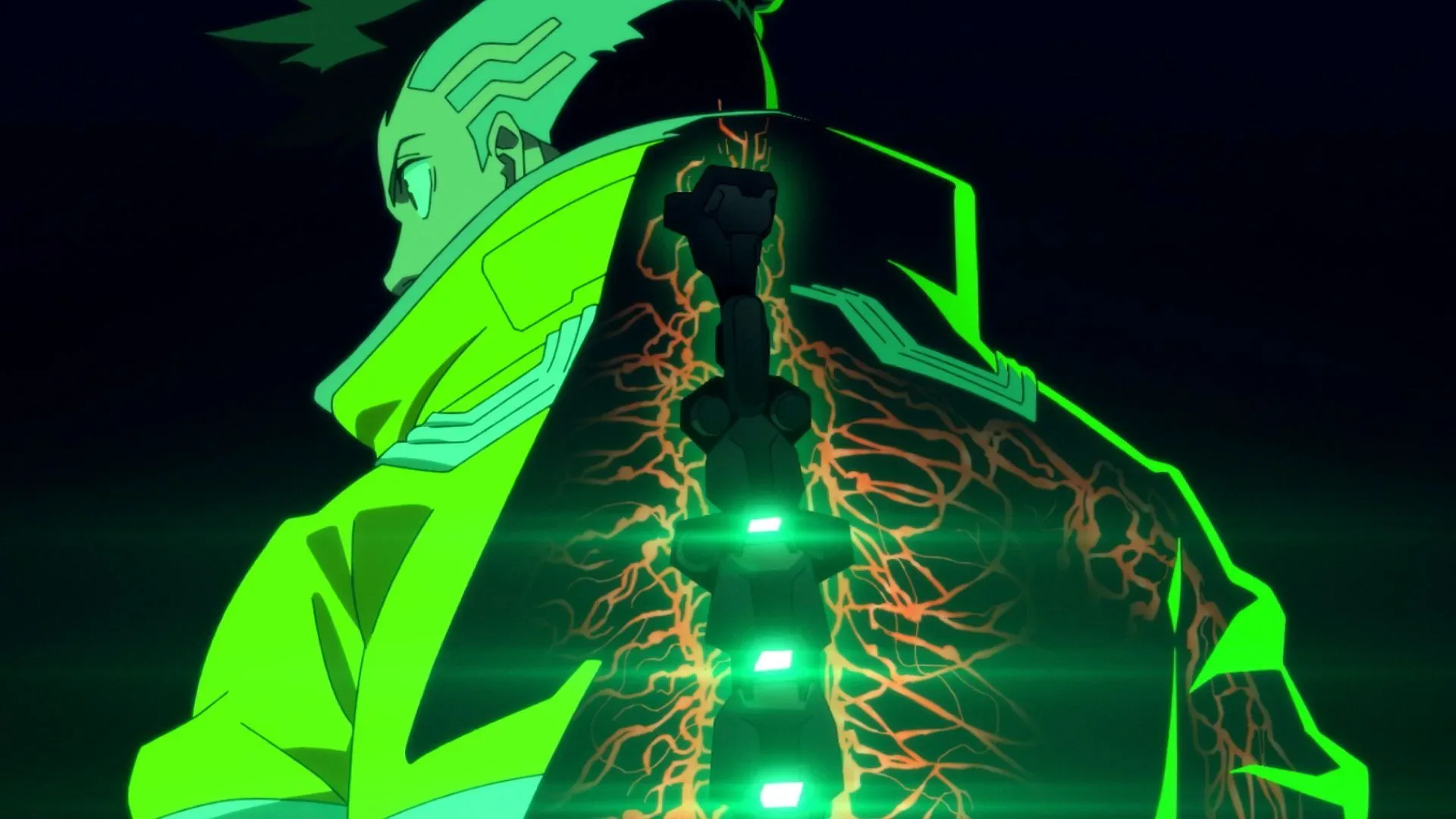
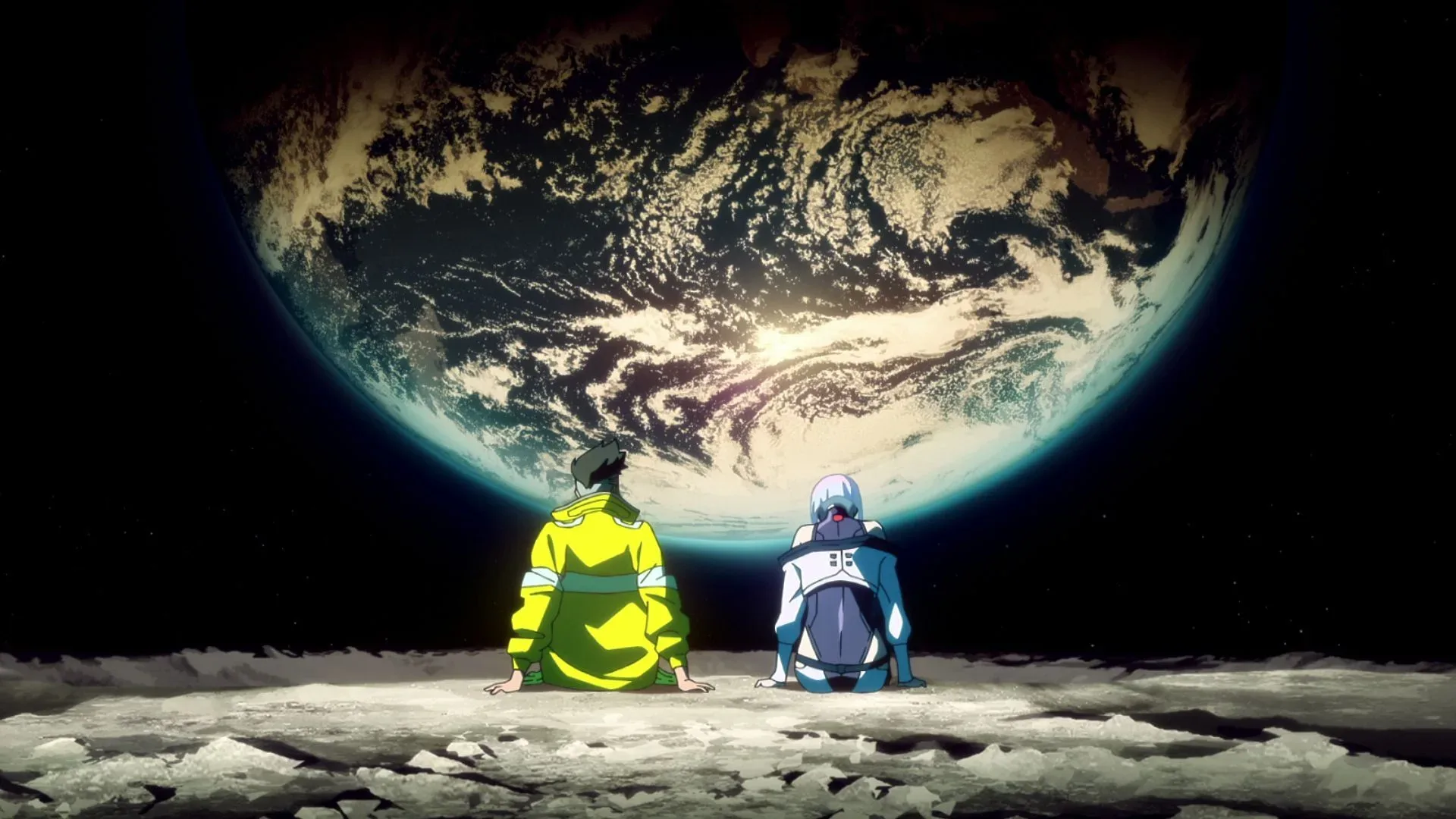
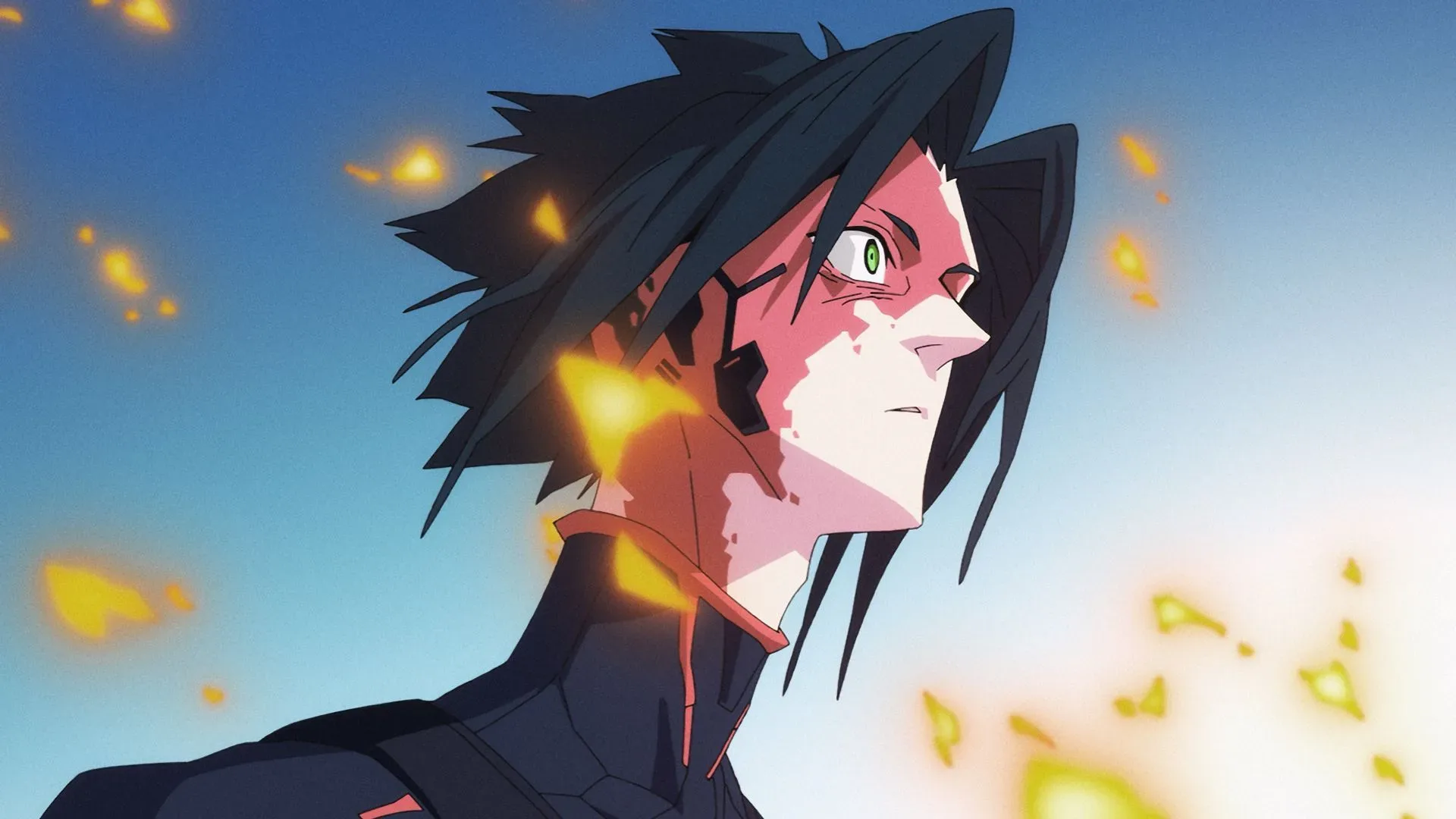
Cyberpunk: Edgerunners season 2 closes on a question rather than a body, a rescue, or an unambiguous victory. D., whose real name is David, reunites the two halves of the AI entity Capri in his neural chip, cuts through an initial Arasaka assault in the Badlands, and then heads toward a shimmering star at Capri’s request. Militech is also looming. What happens after that is deliberately left off-screen.
That ambiguity is not an accident born from an unfinished storyline. Creator Bartosz Sztybor has said that he knows what occurred after season 1 and knows what happens after season 2. The important distinction is that knowing an answer exists behind the scenes is not the same thing as the show confirming it to viewers.
“I know what happened next after season one, and I know what happens next after season two.”
For now, the cleanest reading is also the least satisfying for anyone wanting a definite answer: D.’s survival status is unknown. Season 2 gives the audience meaningful evidence of his emotional direction, but it does not give enough to settle his physical fate.
What the finale actually establishes
Several events in the ending are clear. D. again combines Capri’s divided parts within his own neural chip. A neural chip, in this context, is an implanted piece of technology tied directly to the character’s mind and nervous system, making it a highly personal place for an AI entity to exist. That decision binds D. to Capri’s situation while placing him in the middle of an immediate military threat.
He destroys the first group of enemies coming for him in the Badlands, then departs for the distant shining point in the sky after Capri asks him to do so. The show also provides a quieter emotional marker: the final tape he sends Roman shows D. smiling again.
Those are the confirmed pieces. They establish that D. is capable, active, and emotionally changed by the time he makes his final move. They do not establish where he arrives, what the star represents, whether the journey succeeds, or whether he survives the danger surrounding him.
Related coverage includes Cyberpunk: Edgerunners Season 2 Leaves D.'s Fate Unanswered.
Why the smile matters, even if it is not proof
The final recording to Roman is arguably the most revealing element of the ending, though it should not be mistaken for a survival clue. D.’s renewed smile gives the conclusion a sense of completion: whatever he chooses next, he does so after recovering a piece of himself. It brings his personal arc full circle without turning the finale into a simple, reassuring escape.
That is a useful way to separate character resolution from plot resolution. Character resolution means the story has brought a character to a meaningful emotional state. Plot resolution means it has plainly answered the external questions around events: who lived, who died, where they went, and what consequences followed. Season 2 offers a measure of the former while withholding much of the latter.
In other words, the tape can support the idea that D.’s story reaches an emotional endpoint. It cannot prove that he safely reaches any destination afterward.
Does the creator’s comment mean D. will return?
Not necessarily. Sztybor’s statement confirms that there is a continuing idea of what follows season 2, but it does not promise another season, a direct continuation, or a return for D. It also does not say whether the known next chapter is centered on him, on Capri, on Roman, or on entirely different people in Night City.
There is already reason to be cautious about treating the larger story as a straight sequel chain. Season 2 follows a new set of characters around Night City rather than picking up directly with season 1’s characters. That structure shows that the series can move through the same setting while changing whose lives it examines.
So the creator knowing “what happens next” should be read as confirmation of authorial intent, not as a production roadmap. It tells fans that the ambiguity has an answer in the creator’s mind. It does not tell them when, or even whether, that answer will become canon on screen.
What viewers can reasonably infer — and what remains speculation
There is room to interpret D.’s departure as hopeful, tragic, or intentionally suspended between those possibilities. His success against the first wave of attackers demonstrates that he is not immediately overwhelmed. The restored connection to Capri gives the final journey narrative purpose. And the smile on the tape prevents the ending from feeling like pure defeat.
But none of those points outweigh the dangers named in the finale. Arasaka forces are present, Militech is approaching, and D. heads away under circumstances that the audience cannot verify. A blaze-of-glory framing can signal sacrifice, escape, transformation, or simply a final act whose cost is still concealed.
The practical spoiler-discussion rule is straightforward: saying D. is definitely dead goes beyond what has been shown. Saying he definitely escaped does too. The accurate phrasing is that D.’s fate remains unresolved.
That careful boundary matters particularly with endings designed to invite debate. It is easy for an interpretation to harden into a supposed fact once fans repeat it enough. The finale leaves clues and tone to discuss, but it does not provide a definitive reveal. Viewers looking for other examples of how a finale can balance answers with unresolved fallout may find value in our breakdown of the Slow Horses season 6 ending.
Capri is central to the unanswered question
The biggest unresolved thread is not only whether D. survives, but what his new relationship with Capri means. The finale has him merge Capri’s two halves in his chip before the escape attempt. That makes the AI’s fate inseparable from his own at the moment the story cuts away.
An AI entity here means a digital intelligence treated as a character with agency and a role in the plot, rather than merely a device or background system. Capri’s request is what prompts D.’s final movement toward the star, so any future explanation of D.’s fate would likely also need to explain what Capri wanted and why that destination mattered.
Still, the show does not provide enough information to label the star a safe haven, a destination beyond the immediate conflict, or a symbol of death. Those may be compelling readings, but they remain readings.
An ending built to survive the lack of an immediate answer
There is a difference between a cliffhanger that stops before a plot beat and an ambiguous ending that uses uncertainty as its final statement. Season 2 appears closer to the latter. D. has made his choice. His emotional arc has reached a recognizable point. The external outcome is withheld because the uncertainty itself is part of the ending’s impact.
That choice may frustrate viewers who want a firm answer about D., especially after the scale of the confrontation in the Badlands. Yet it also preserves the tension between the intimate image of a recovered smile and the enormous machinery closing in around him. The season refuses to turn one into an easy answer to the other.
Cyberpunk: Edgerunners season 2 is streaming on Netflix. Until a future story chooses to revisit this moment, D.’s destination, survival, and the full meaning of Capri’s request remain open questions — albeit questions whose creator says he has already answered privately.