Major spoilers for Slow Horses Season 6, including the finale, “Judgement Day,” follow.
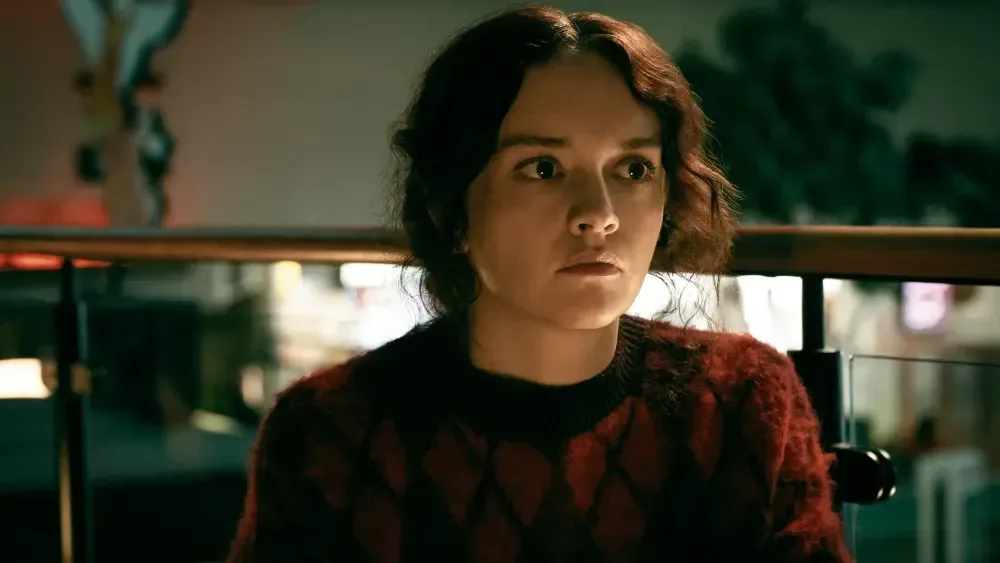
Season 6 of Slow Horses does not ease Olivia Cooke’s Sidonie “Sid” Baker back into the series. It fires her directly into an overnight chase, places her beside River Cartwright once again, turns her old loyalties inside out and then leaves River’s survival unresolved in the final moments.
For viewers who remember Sid primarily as the promising MI5 agent from Season 1—the colleague who appeared to die after being shot in the head—the return is designed to have two effects at once. It restores a character River never really got to know, while making her absence feel like a permanent scar on both of them. Sid is alive, but she is not simply back where she started. The finale makes that distinction essential.
The season also puts a hard edge on the show’s usual dysfunctional-spy dynamic. Slough House may be a dumping ground for agents who have disappointed the service, but its people are still caught up in decisions made by MI5’s most powerful figures. Sid’s story turns that institutional ruthlessness into something intimate: a person can be valued, protected and used as an expendable piece in the same operation.
Why Sid is running in Season 6
The immediate danger stems from Diana Taverner’s use of Sid’s identity as cover for an unauthorized assassination on Russian territory. The consequences are severe. Russian sleeper agents are pursuing Sid, and the threat extends beyond her to the wider Slough House orbit, including former and current Slow Horses.
A sleeper agent is an operative who remains hidden within a country or community until activated to carry out a mission. In a story built around surveillance, deception and compromised allegiances, that concept adds a particular strain of paranoia: danger may already be embedded in ordinary surroundings, not arriving with obvious warning.
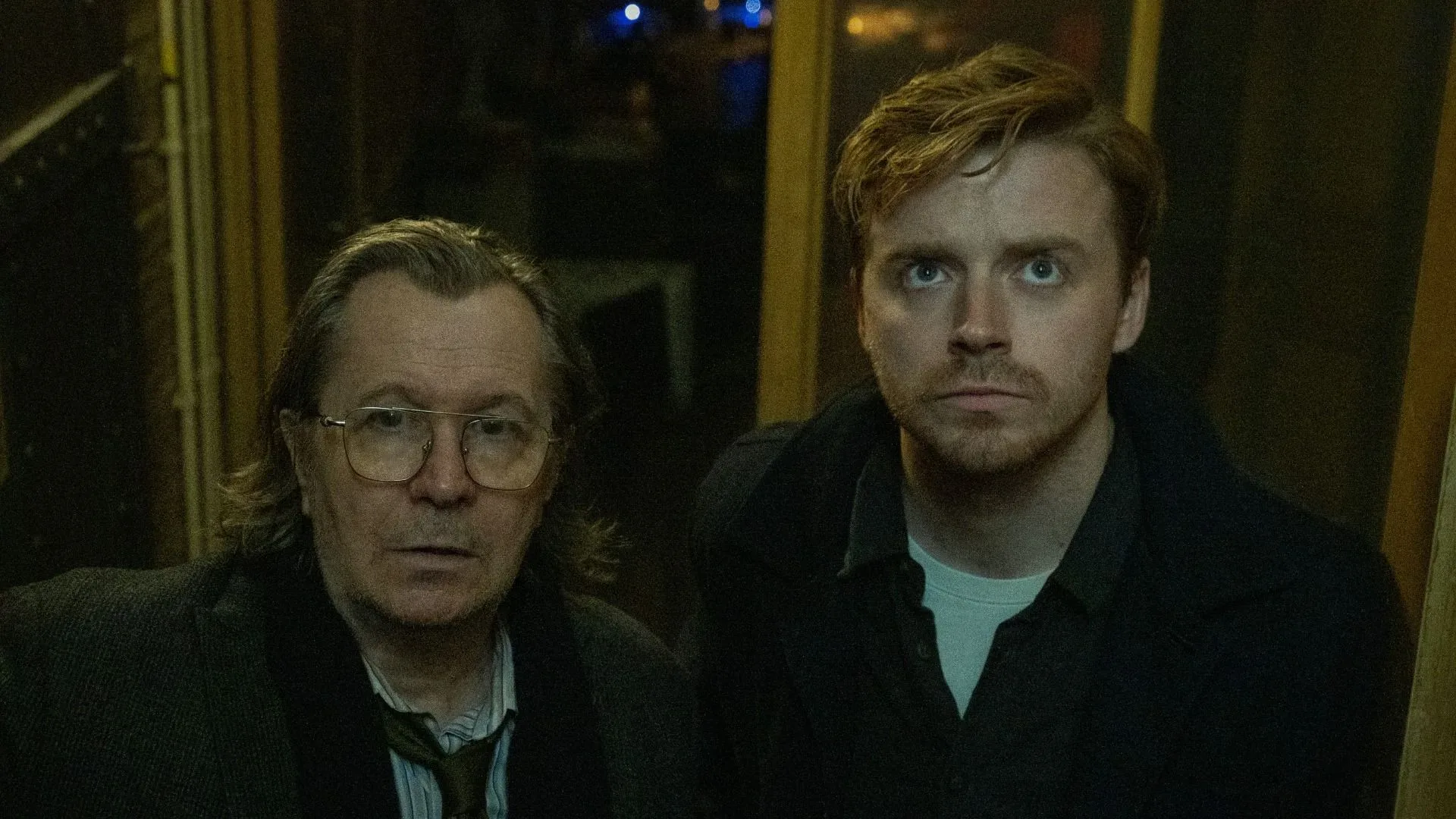
Sid turns to River for help, renewing a connection that was only briefly established before her disappearance. Their flight takes them through a barn, an arcade and eventually an airstrip. Jackson Lamb, Slough House’s abrasive chief, takes over Taverner’s beach retreat as a makeshift safe house. It is a classic compressed-thriller structure: the characters barely have time to process what Sid’s return means before they must keep moving.
That speed matters because the season is less interested in delivering a neat account of Sid’s missing years than in showing the residue they have left behind. Cooke’s own view of the character is that Sid has been through a long, lonely recovery after traumatic injuries. She and director Adam Randall discussed an off-grid MI5 rehabilitation facility for former spies and military personnel, where Sid would have had to relearn basic abilities. That is an actor-and-director interpretation of unseen backstory, rather than a complete on-screen explanation, but it clarifies why this version of Sid is more guarded and jaded than the one River knew.
Related coverage includes Slow Horses Season 6 Finale Leaves River’s Fate in Doubt.
Sid’s realization about Diana Taverner
Sid initially struggles to accept the full implications of Taverner’s actions. That hesitation is central to the emotional logic of the season. Taverner had been Sid’s mentor and had placed her in Slough House as her eyes and ears. From Sid’s perspective, Taverner was also responsible for getting her out of hospital and into specialized care after the events of Season 1.
Cooke frames Sid’s attachment to Taverner as something akin to Stockholm syndrome. That phrase is often used in popular culture to describe a captive or dependent person developing an attachment to someone who controls their safety. Here, it is best understood as Cooke’s description of Sid’s conflicted dependence and gratitude, not as a clinical diagnosis. Sid believes her survival is bound up with Taverner’s intervention. She has seen a professional, supportive side of the MI5 leader, not the colder version more familiar to others around Slough House.
The phone call that removes Sid’s remaining doubt is therefore a turning point. She understands that, in Taverner’s calculation, Sid can be sacrificed. Rather than merely making the danger more frightening, the truth gives Sid clarity. If the people trying to transport her to Russia will likely kill her anyway, compliance no longer offers meaningful safety. The season converts betrayal into agency: Sid is no longer following the assumptions built around her recovery and career; she is acting on what she now knows.
There is a practical consequence for the series going forward. A Sid who recognizes Taverner’s willingness to use her is not likely to view MI5 hierarchy in the same way again. The finale does not promise a face-to-face confrontation between the two women, but it creates a strong reason for one. Cooke has said she would like such a showdown with Kristin Scott Thomas, and dramatically it would give Sid an opportunity the season deliberately withholds: speaking directly to the person who treated her life as leverage.
River and Sid finally get their moment—briefly
Amid the pursuit, Sid and River share their long-awaited first kiss. It is not presented as an uncomplicated victory lap. Their relationship has been shaped more by interruption than by time together: flirtation in Season 1, Sid’s apparent death, years of absence and then a crisis that leaves little room for ordinary conversation.
Cooke’s reading is that Sid’s feelings for River are genuine despite the uncertainty the spy genre naturally creates. River represents a small source of hope for Sid during the time when she was isolated and adrift. Their connection may be incomplete, but unresolved feelings can grow in a person’s imagination, particularly when survival and recovery have narrowed their world.
That interpretation is useful when considering the finale’s sharp tonal turn. The kiss does not resolve the relationship; it raises the stakes of losing it. Sid escapes the immediate danger and is meant to reunite with River at his late grandfather’s country house. Instead, River collapses in the kitchen while Sid is upstairs showering.
The show presents his condition as an apparent poisoning. It does not provide a confirmed diagnosis, an identified culprit or a definitive answer about whether River will survive. The only responsible reading at this point is that River’s fate is deliberately in doubt. The cliffhanger makes an ordinary domestic location—the place where the pair might finally stop running—feel as vulnerable as the airstrip or the road.
How the action was built around Cooke and Lowden
Much of Sid’s storyline is structured as a two-hander with Jack Lowden, who plays River. A two-hander is a scene or dramatic work built primarily around two performers. In this case, the format gives the chase an intimate quality. The action does not simply move the plot from one location to another; it gives Sid and River repeated opportunities to test their trust, timing and unresolved affection.
Cooke described Lowden as a playful scene partner who can throw unexpected choices into a performance. That flexibility appears to fit the production’s approach. Randall worked in a way Cooke characterized as energetic and adaptable, with the team adjusting when stunts or locations did not work exactly as planned. Most of her Season 6 work was filmed in night shoots over five weeks before the December break, creating an unusually concentrated production period.
The physical demands were not abstract. Cooke said she injured both quadriceps while running alongside Lowden during a nighttime sequence involving a pursuing Land Rover, leaving her hobbling for two weeks. It is a useful reminder that even the least flashy part of screen action—running—can be punishing when it must be repeated, performed in the cold and coordinated with vehicles, lighting and camera placement.
The season’s more overt stunt material includes climbing, gunfire, a moving truck and explosive effects involving fire and gas canisters. Cooke also recalled working around cattle in the barn sequence. At the airstrip, Sid jumps onto a truck and kicks an oil drum that explodes as River drives around a plane. Lowden performed his own driving stunts for that sequence, according to Cooke. The scenes give Sid a forceful physical role in her own rescue rather than making her merely an object passed between competing intelligence operations.
What the finale leaves open
Season 6 resolves one major ambiguity—Sid is alive—but replaces it with several others. River’s collapse is the most immediate. The identity and motive of whoever may have poisoned him remain unknown. Sid’s future status is another question: she has survived the Russian threat, but her relationship with MI5 has been fundamentally altered by what she learned about Taverner.
There is also the question of whether Sid and River can have a relationship outside the adrenaline and suspicion of their reunion. The finale makes their feelings legible, but it does not offer stability. That choice is very much in keeping with a series where personal connection is often collateral damage in a system of covert maneuvers.
Cooke had not read the novels during her time away from the show, though she did read ahead while expecting Sid’s return. She noted that the books and television adaptation are companion pieces rather than exact copies. That distinction is important for viewers who know the source novels: they may find useful context there, but the series has room to shape events differently.
Cooke’s return also arrives after a four-season absence during which both the show and her own profile changed substantially. She has since taken on a major role in House of the Dragon, while Slow Horses has built a larger audience and received Emmy recognition. Yet the most compelling part of Sid’s comeback is not the novelty of a familiar face returning. It is that the season treats survival as its own destabilizing event. Sid did not come back to restore the past; she came back to discover that the institution she trusted may have written her off long ago.
For more genre-focused television and film news, see our coverage of Batman’s active role during Clayface and the DCU’s first live-action Gotham visit.