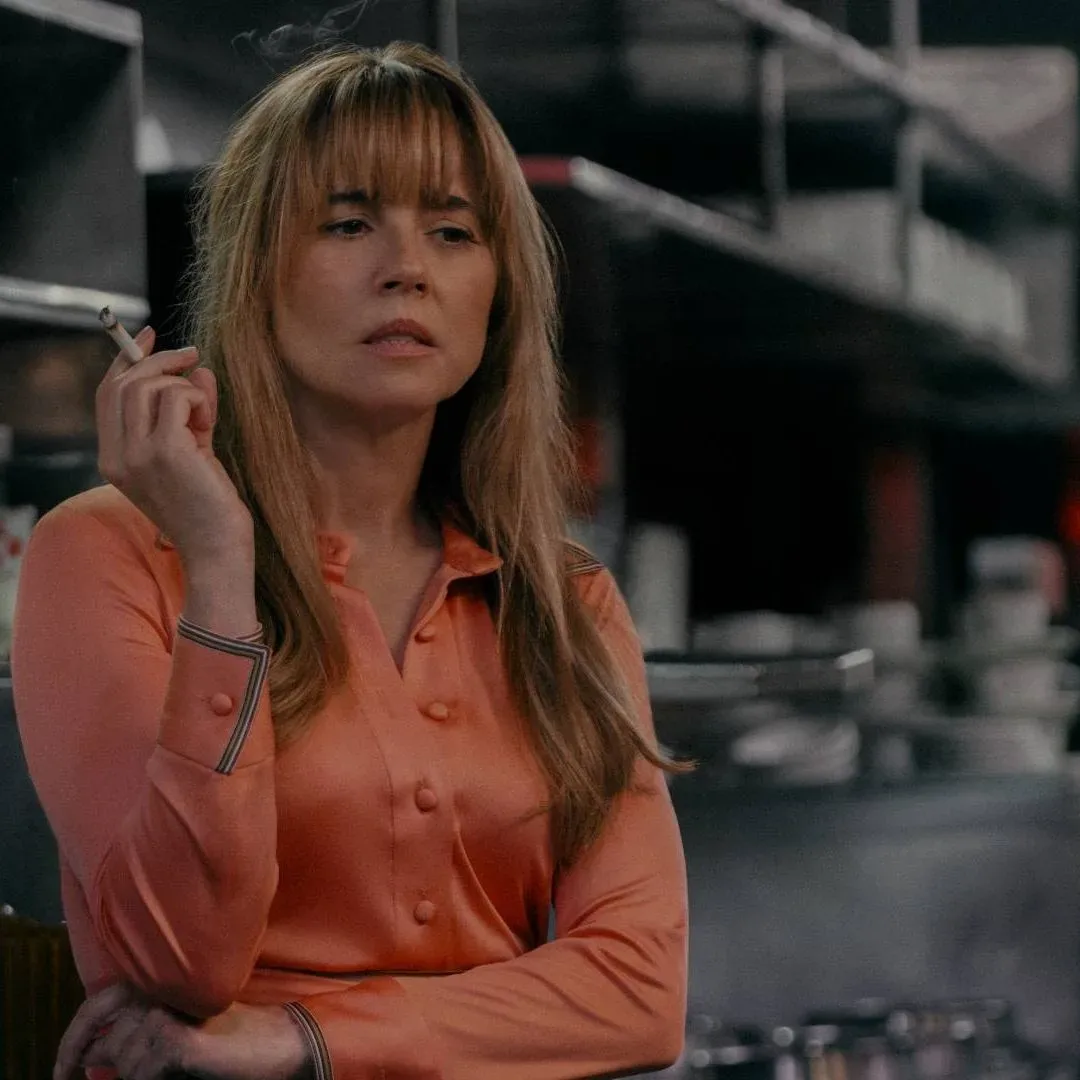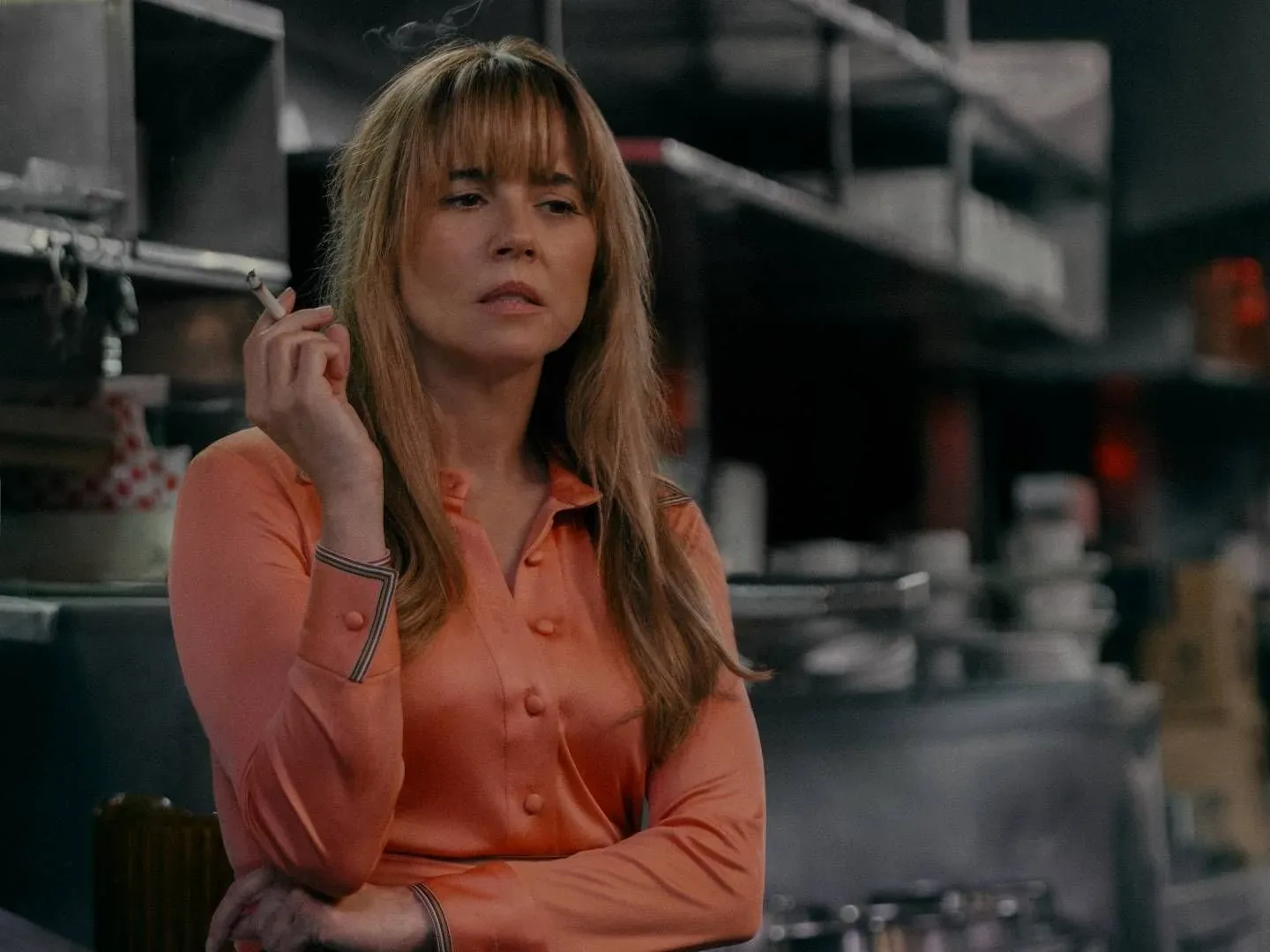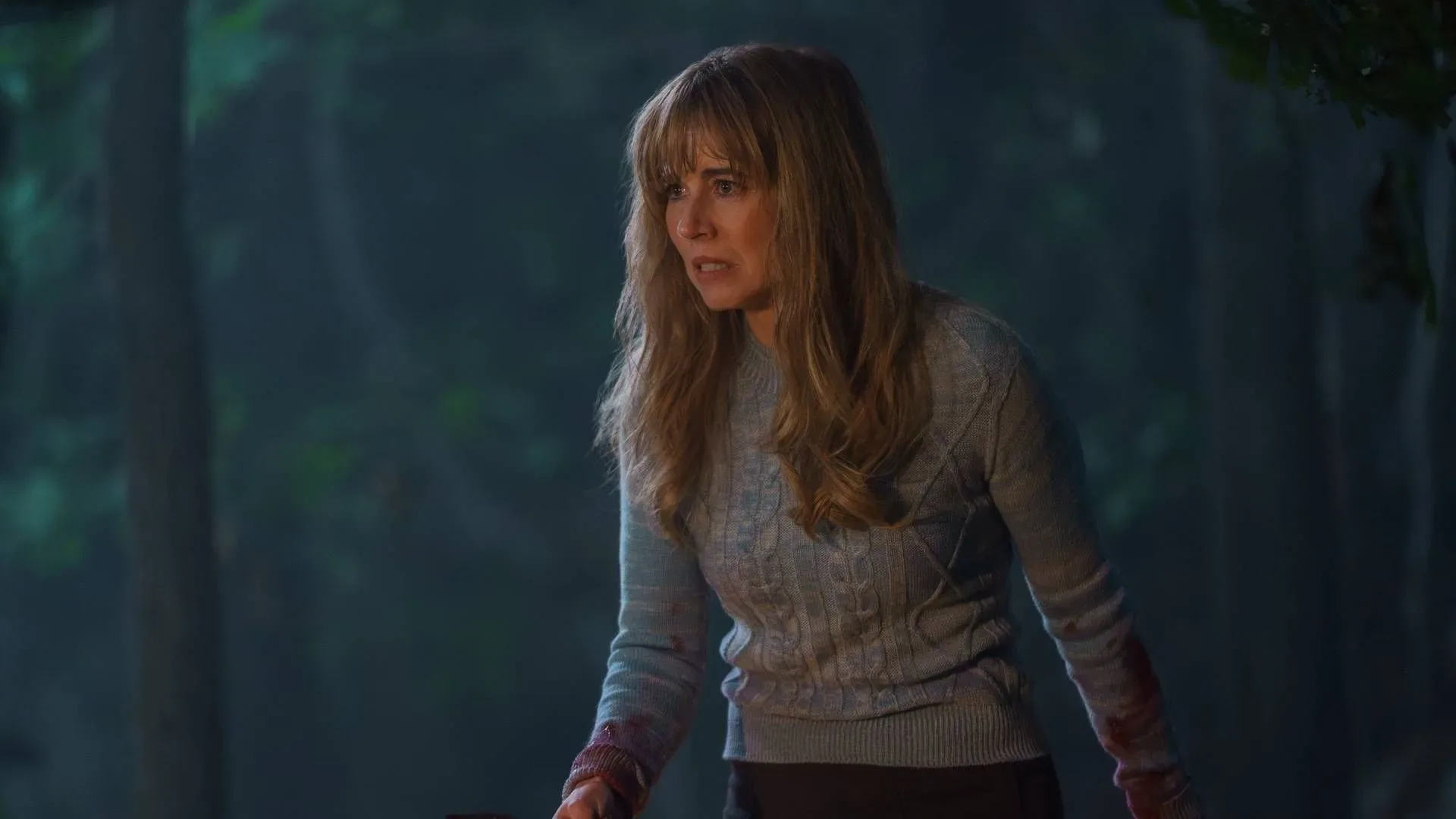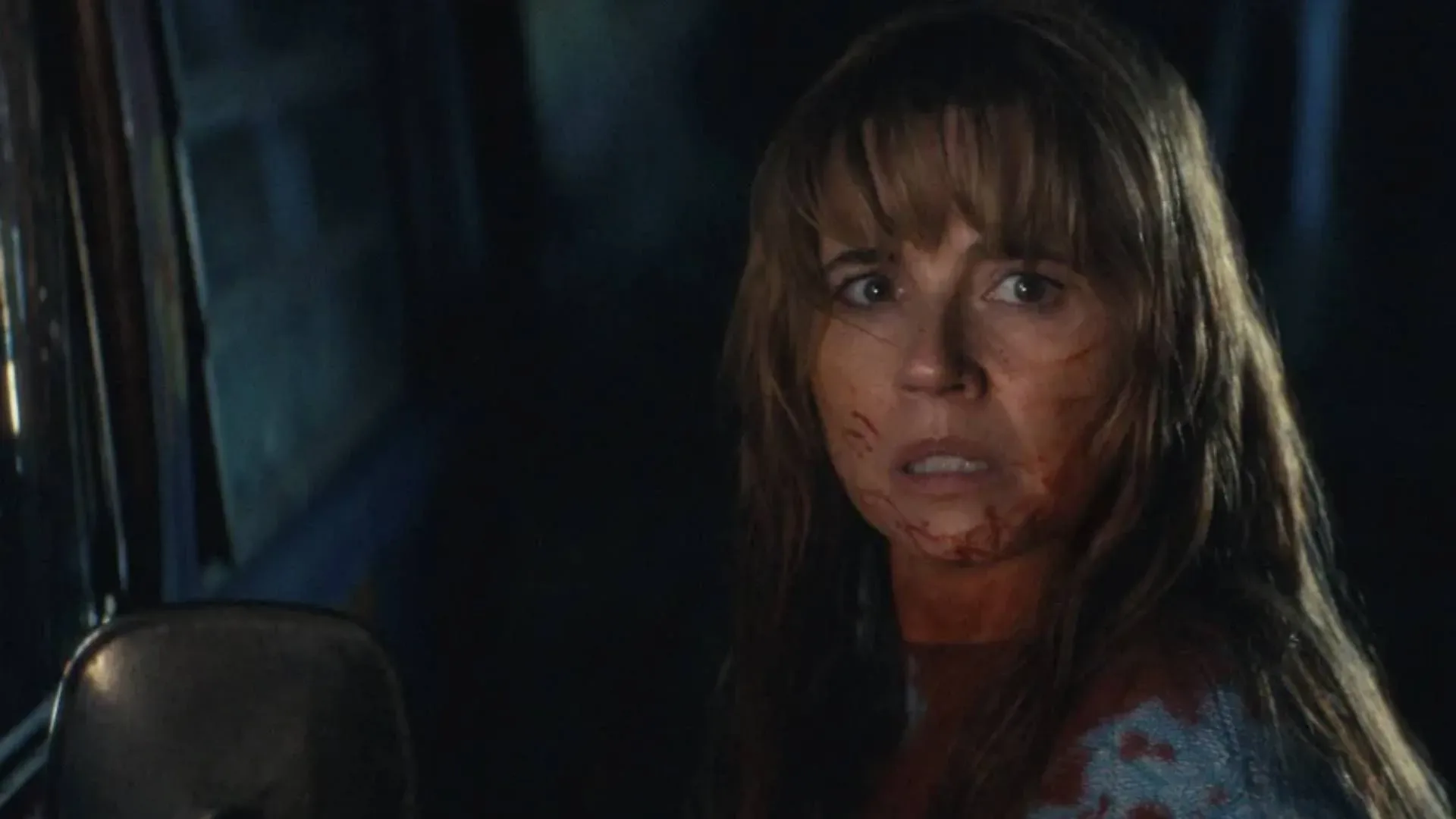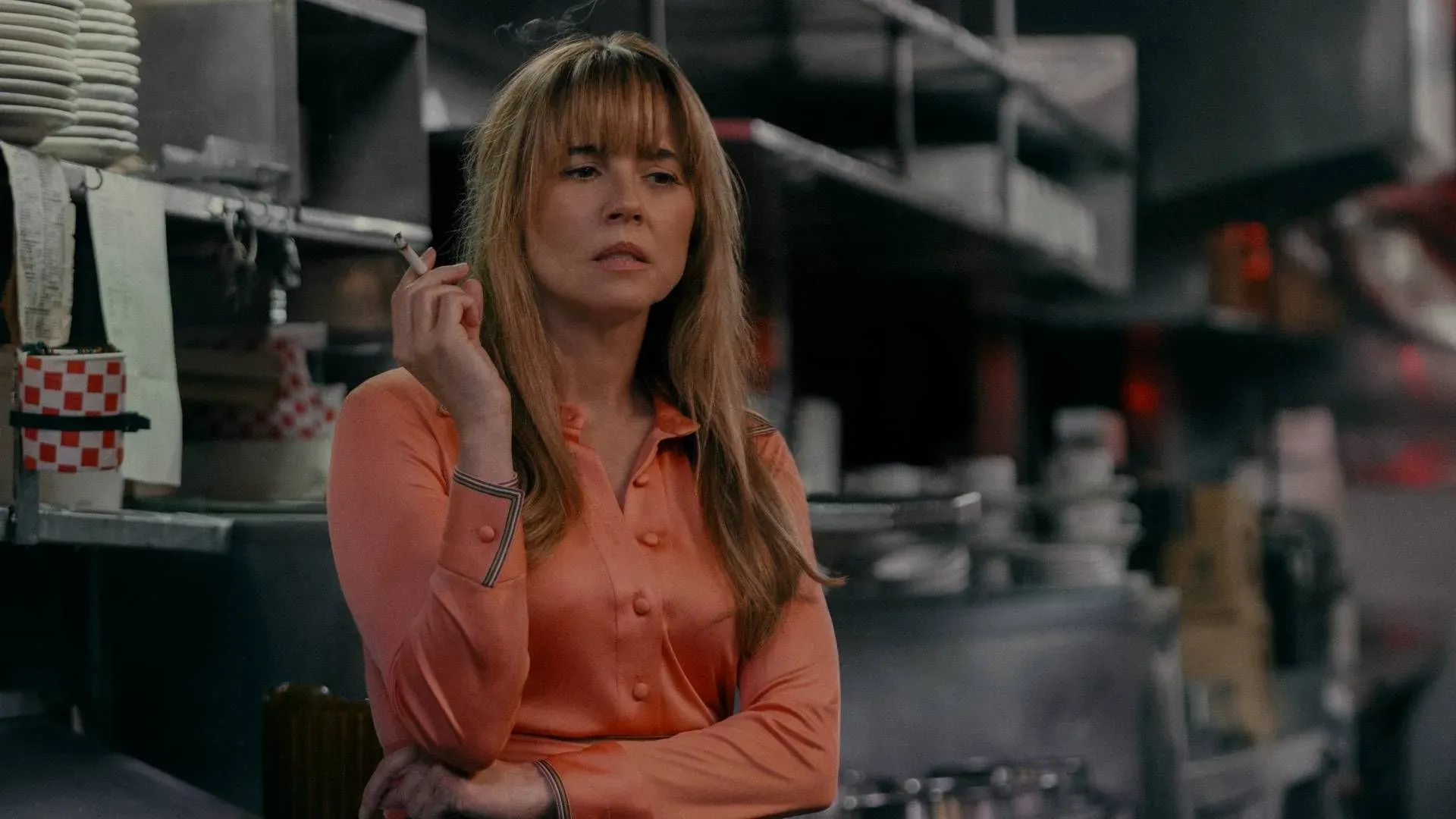
Crystal Lake is built around a piece of Friday the 13th lore that can be easy to overlook: Jason Voorhees was not the killer in the original film. Pamela Voorhees was. The new prequel series, created by Brad Caleb Kane and starring Linda Cardellini as a younger Pamela, returns to the relationship between mother and son that set the franchise’s tragedy—and its violence—in motion.
That choice matters because Jason became the enduring face of the property, while Pamela’s role is frequently compressed into a twist ending. The 1980 film begins years after a young Jason dies at Camp Crystal Lake. When the camp prepares to reopen, its counselors are murdered one by one by an unseen attacker. The eventual revelation is that Jason’s mother has been killing in revenge, believing camp staff failed her son when he drowned.
For Kane, the short moment in which Pamela explains herself is not merely an origin footnote. It is the core dramatic material that the series intends to expand.
“It forms the basis for the whole series,” Kane said of Pamela’s confession in the first film.
The original gives Pamela very little screen time before her identity is revealed, and her confession lasts only about two minutes. Yet those minutes establish the essential bond that later entries transform into franchise mythology: Pamela’s grief, her fixation on Jason, and the sense that Camp Crystal Lake has become inseparable from an unresolved loss. Crystal Lake is set years before the 1980 movie and follows Pamela as she raises a young, sickly Jason in a small town.
The show’s premise places Jason’s drowning at the camp as the event that triggers a disturbing sequence of consequences. Pamela is forced to confront her past and moves toward the figure viewers know from the original movie. This is a prequel in the literal sense—its destination is already known—but its emphasis is on the emotional route to that destination rather than on treating Pamela solely as a late-film reveal.
A return to the franchise’s first killer
Friday the 13th has long been culturally associated with Jason: the imposing, nearly mythical killer whose image eclipsed the more grounded mystery of the first film. The confusion is so familiar that it became part of the dialogue in Scream, where a victim answers “Jason” when asked who killed the counselors at Camp Crystal Lake. The answer is wrong, but it reflects how thoroughly Jason’s later prominence has overwritten Pamela’s place in casual memory.
Crystal Lake’s focus therefore revisits a key distinction. Pamela is not simply an earlier version of Jason, nor is her story just a checklist of references to later films. In the original setup, she is a grieving parent who assigns responsibility for Jason’s death to the people connected with the camp. Her revenge makes her the immediate threat, while Jason’s death supplies the trauma driving it.
That is what Kane means by a dramatic foundation. A plot fact tells an audience that Pamela loved Jason and blamed the camp. Drama asks what that closeness looked like before the loss, what pressures surrounded it, and how grief can turn into the murderous campaign seen in the film. The series has room to examine those facets because it begins before the events that audiences already recognize.
The approach also changes the viewer’s relationship with suspense. In the 1980 movie, the killer’s identity is withheld for most of the running time. In a prequel centered on Pamela, the audience knows who she becomes. The tension is consequently less about identifying a culprit and more about observing the events, choices, and emotional breaks that push her toward a fate viewers already understand.
What a prequel can—and cannot—answer
Prequels can be tempting because they promise explanation. But explanation is not automatically the same as depth. The most productive question for Crystal Lake is not simply how Pamela turns into a killer; the supplied premise indicates that Jason’s drowning is the catalyst. The more meaningful opportunity is to give dimension to a woman whose defining screen moment in the original is brief, heightened, and delivered at the point where a mystery has already been solved.
Kane’s comments suggest the series is approaching Pamela and Jason’s relationship as the central subject rather than as background material. That framing gives the show a specific narrative identity. It is not trying to replace the original’s reveal, and it does not need to pretend viewers are unaware of the eventual tragedy. Instead, it can explore the human context that the original establishes quickly before moving to its violent finale.
There is still an important limit inherent to this kind of story. Pamela’s actions in the 1980 film remain her actions; expanding her history should not be mistaken for excusing them. A character-focused horror prequel works best when it can make a person legible without removing the horror of what they do. The available details point to a story about loss, past trauma, and a path toward violence, not a simple effort to recast Pamela as harmless.
That distinction is particularly relevant for an icon-driven franchise. Horror series often build their mythology around a recognizable killer, mask, weapon, or setting. Crystal Lake appears to be shifting attention to the person behind an earlier foundational event. Pamela’s story is tied to the camp, but it is also a story about a mother and child before Camp Crystal Lake becomes the place audiences associate with death.
Linda Cardellini’s Pamela is not meant to be an imitation
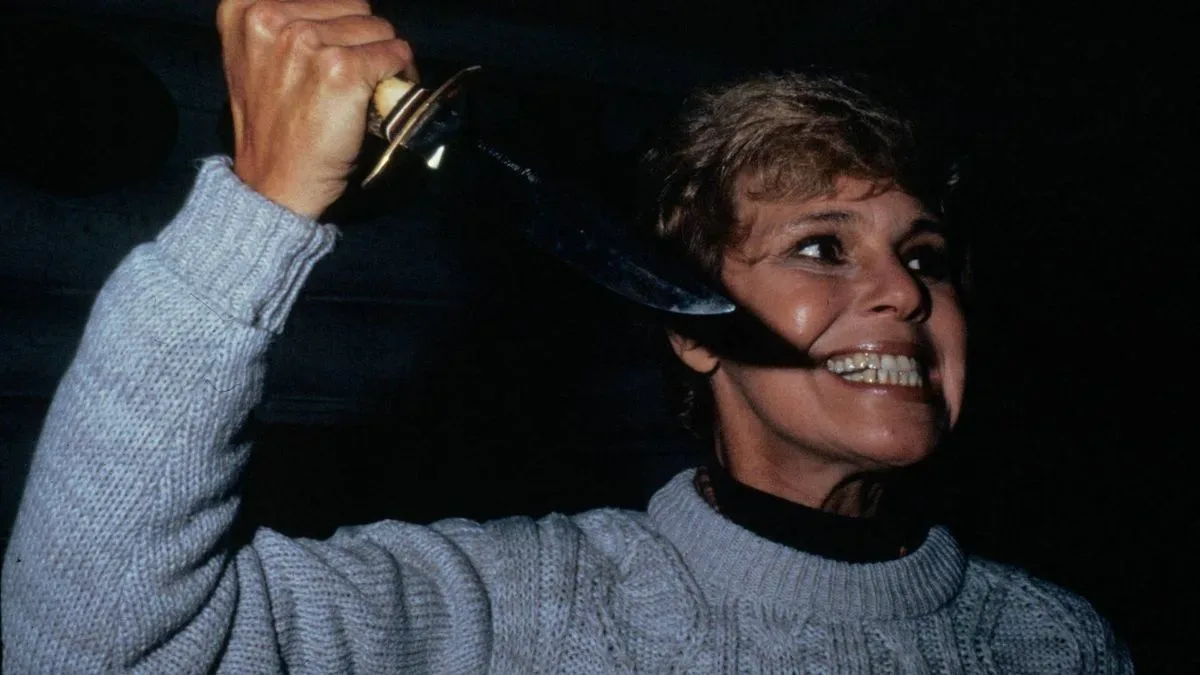
Cardellini takes on the role first played by Betsy Palmer, whose work in the original remains central to Pamela’s reputation. Cardellini said she studied prior performances but deliberately avoided trying to duplicate Palmer’s portrayal. That is a sensible challenge for a prequel: Pamela needs to feel connected to the character audiences know, while still being recognizably younger and situated at an earlier point in her life.
“Her performance is so amazing,” Cardellini said of Palmer’s work. “It’s so wild and captivating that I didn’t want to try to mimic her.”
Instead, Cardellini said she included small “nods and echoes” to honor the original. In adaptation and franchise terms, that language describes continuity through suggestion rather than replication. An echo can preserve a character’s lineage—a quality of behavior, an emotional rhythm, or a recognizable trace—without asking a new actor to recreate another performer’s exact choices.
That balance is especially useful here because the series is about a younger Pamela. Mimicry could make the character feel frozen in the final-state performance audiences already know, even though the premise requires her to have more life ahead of her. Cardellini’s stated goal recognizes that a prequel character needs development, not merely resemblance.
Palmer’s Pamela is memorable in part because she appears at the climax and changes the meaning of everything that preceded it. Cardellini’s Pamela will have a different responsibility: carrying a longer story before the familiar version of the character exists. The connection to Palmer’s performance is thus an act of respect and continuity, while the new portrayal must establish its own dramatic space.
Why the Pamela angle is more than a lore correction
Correcting the “Jason was the first killer” misconception is useful trivia, but Crystal Lake’s premise has more at stake than franchise bookkeeping. It returns to the original movie’s motive and asks viewers to spend time inside the circumstances surrounding it. The approach gives the prequel a clear reason to exist beyond simply revisiting a famous location.
Camp Crystal Lake remains important, because Jason’s drowning there defines the tragedy. But the show’s stated premise starts in the domestic and personal sphere: a mother raising a vulnerable young son in a small town. The camp then becomes the site of an irreversible event. This setup can give greater weight to why the place becomes so haunted in the franchise’s mythology.
It also spotlights the contrast at the heart of the first film. Friday the 13th opens with an apparently anonymous threat attacking counselors, then reveals a murderer whose violence is rooted in a personal grievance. Pamela is frightening precisely because she is not introduced as an abstract legend. Her motive emerges from grief, anger, and a belief that others failed Jason. Crystal Lake is positioned to explore that material before it hardens into vengeance.
For audiences who mainly know the franchise through Jason’s later status as a horror icon, the series offers a route back to the original structure. For those who remember Pamela’s reveal, it offers an expanded look at the relationship that Kane identifies as the basis of the entire story. Both perspectives lead to the same idea: before the legend of Jason Voorhees dominated Camp Crystal Lake, there was Pamela.
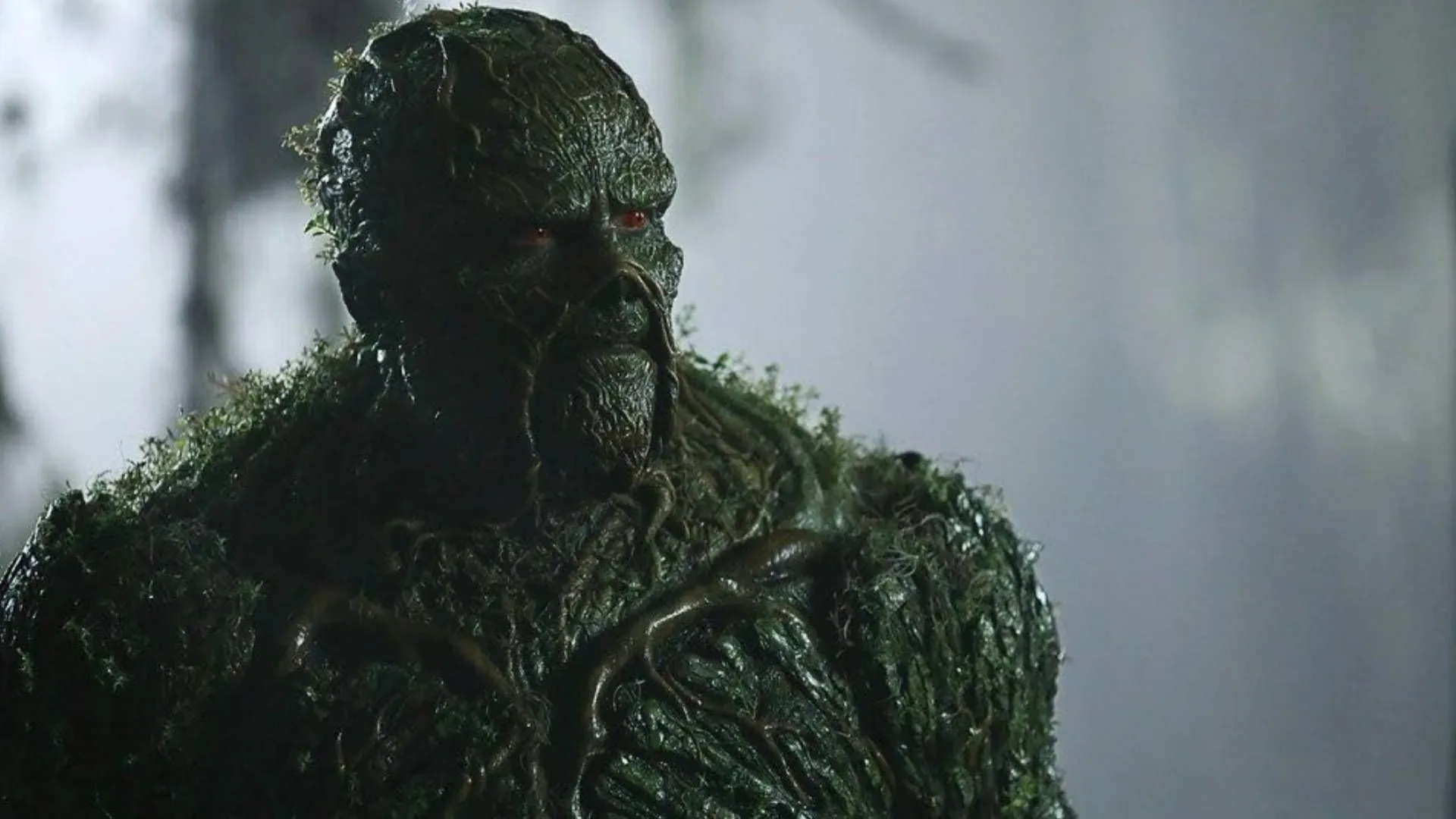
Crystal Lake is scheduled to premiere on Peacock in the United States on October 15, followed by Sky and NOW in the United Kingdom on October 19. Its Pamela-first angle arrives as genre franchises continue to revisit foundational characters; elsewhere, Swamp Thing remains in development with its script being written.