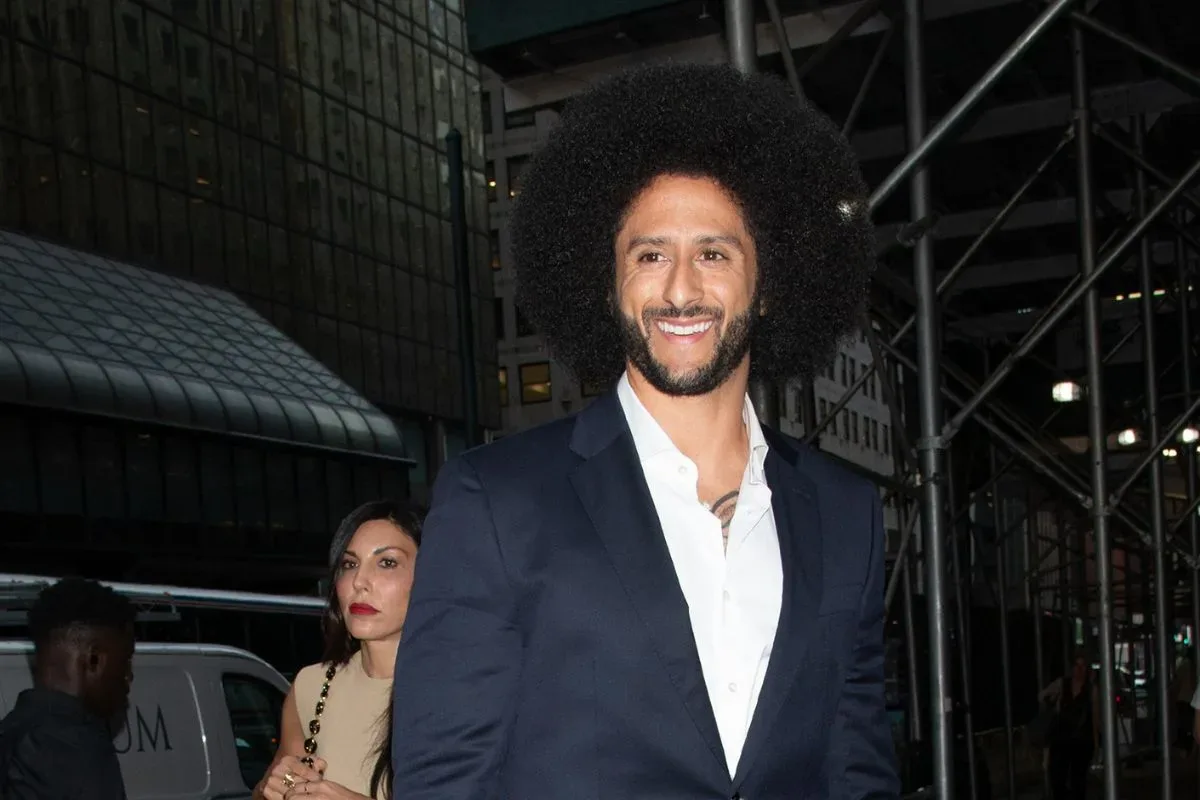
Colin Kaepernick will receive the Muhammad Ali Center’s Humanitarian of the Year Award, an honor that places the former San Francisco 49ers quarterback’s public advocacy alongside the enduring civic legacy of Muhammad Ali. The award is scheduled to be presented on November 7 in Louisville, Kentucky, during the 13th annual Muhammad Ali Humanitarian Awards.
The recognition is specifically tied to Kaepernick’s commitment to racial justice, equality and empowerment for underserved communities. It is not a football accolade, a career-statistics debate or a retrospective on wins and losses. The Muhammad Ali Center’s choice instead focuses on what can happen when an athlete decides that a platform is also a responsibility—and continues working after the arena that created that platform is no longer the center of daily attention.
For a site that spends plenty of time on the cultural afterlife of sports, games and entertainment, that distinction matters. The biggest legacies are not always measured in a box score, a cabinet of trophies or a stack of collectibles. Sometimes they are measured by the issues a public figure brings into view, the communities they support, and the professional consequences they are willing to bear for a conviction.
An award built around a legacy bigger than competition
Muhammad Ali’s name carries uncommon weight because his public impact was never confined to boxing. He was a champion in the ring, but the story that has endured is also one of a world-famous athlete speaking publicly on race, religion, war and human rights. Those choices were not consequence-free. Ali’s readiness to confront powerful institutions came with profound costs to his boxing career, yet it became fundamental to how he is remembered.
The Muhammad Ali Center sees a meaningful connection between that history and Kaepernick’s path. Kaepernick became an international focal point while he was the 49ers’ quarterback, protesting racial injustice during the national anthem. The protest sparked a vast and divisive national conversation, but its visibility also made the underlying issues impossible to treat as background noise.
Over time, Kaepernick’s public work moved beyond the football field into broader efforts centered on civil rights, equality and community empowerment. That continuing work is at the core of this humanitarian recognition. The Center is honoring a sustained commitment rather than treating protest as a brief viral moment that can be filed away once public attention shifts elsewhere.
There is an obvious reason the venue and occasion are significant. Louisville is Ali’s hometown, and an award in his name carries an expectation that recipients embody more than fame. The point is not to declare two public figures identical; their careers, eras and circumstances are their own. It is to recognize a shared willingness to use visibility in service of human dignity, even when that choice brings personal and professional risk.
Why the Kaepernick selection carries particular resonance
Lonnie Ali, co-founder of the Muhammad Ali Center and Muhammad Ali’s widow, described Kaepernick as a choice rooted in courage, commitment and service to underserved communities. Her statement directly connected his stand against racial injustice with Ali’s example of using celebrity to advocate for equality and social change despite serious consequences.
“To be recognized in his name is simultaneously humbling and a responsibility,” Kaepernick said in his statement about the honor.
That word—responsibility—is central to the moment. Awards can function as a finish line, a polished ceremony that turns a complicated history into a neat commemorative plaque. But Kaepernick’s response frames this one differently. An honor bearing Ali’s name naturally asks its recipient to consider what comes next, because Ali’s legacy remains active precisely because people continue to debate, study and draw strength from his choices.
Kaepernick’s recognition also arrives years after the events that put him at the center of intense public debate. That distance is important. It gives the award a different meaning than an immediate reaction would have carried. This is not merely a response to a headline cycle. It is an acknowledgement of long-term advocacy and of the way an athlete’s actions can keep resonating after the original moment has passed.
Public memory is often impatient. It reduces difficult stories to a single image, a sentence fragment or a polarized argument. The Ali Center’s award offers a broader frame: Kaepernick’s story includes the protest that made him globally recognizable, but also the work and principles that followed it. The focus on underserved communities makes clear that the recognition is about lived impact, not only symbolism.
From sporting platform to public purpose
Sports have always produced larger-than-life figures, but being famous and using fame deliberately are different things. A player can become a household name through extraordinary performance. Turning that recognition into a durable civic platform requires a choice, and it can require the willingness to lose comforts that celebrity otherwise provides.
Ali understood that tension in a uniquely visible way. His athletic brilliance ensured he had a platform, yet his willingness to speak and act outside the ring made him a figure whose influence reached far beyond boxing. The Muhammad Ali Center’s humanitarian award exists in that space between achievement and purpose. It recognizes people whose contributions are better understood through action and advocacy than through conventional competitive rankings.
Kaepernick’s selection places his name within that tradition. His career as a quarterback remains part of the story: he played for San Francisco, and football gave his protest an enormous stage. Still, the forthcoming honor does not ask audiences to revisit his career as a sports argument. It asks them to consider what it means to use a highly visible position to advocate for racial justice and community empowerment.
That is also why cultural coverage of athletes cannot stop at the final whistle. The public life of an athlete can extend into philanthropy, entrepreneurship, artistic work, education and activism. Sometimes those pursuits reshape how their earlier accomplishments are understood. They also create connections across communities that may not have initially shared the same interest in a sport.
There is a parallel in other forms of cultural outreach. When an artist brings creativity and mentorship into a classroom, the work is about more than a performance; it becomes a practical investment in young people. That broader kind of platform use was recently visible when Latto turned a Bronx third-grade class into a freestyle and songwriting workshop. The details and fields are different, but the underlying idea is familiar: public visibility can be directed outward toward participation, opportunity and encouragement.
What happens on November 7
The 13th annual Muhammad Ali Humanitarian Awards will take place in Louisville on November 7, when Kaepernick is set to receive the Humanitarian of the Year Award. The event connects the recognition to Ali’s hometown as well as to the institution devoted to preserving and advancing principles associated with his life.
No honor can erase the complexity of the national debates surrounding Kaepernick’s protest, nor should it pretend to. The debate itself was part of why the moment was so consequential. However, the Muhammad Ali Center’s decision makes its position on the relevant values unmistakable: courage in confronting racial injustice, a commitment to equality and human dignity, and work intended to empower communities that have been underserved.
In that sense, the award is also a reminder that a legacy is not controlled solely by the loudest immediate reaction. Time gives institutions, communities and audiences room to assess what endured. Kaepernick’s forthcoming recognition reflects the endurance of his advocacy and the continuing relevance of the issues he raised.
A civic honor, not a nostalgia item
It is tempting to treat famous athletes as fixed cultural artifacts: a jersey number, a trading card, an iconic photograph, a highlight clip replayed until it becomes detached from its original context. Ali and Kaepernick resist that flattening. Their public identities are inseparable from choices made beyond competition, choices that invited scrutiny rather than easy applause.
That does not make their stories simple. It makes them consequential. Muhammad Ali’s reputation was shaped as much by his challenges to authority as by his championship belts. Kaepernick’s recognition confirms that the work associated with his protest belongs in a humanitarian conversation, not simply in sports history.
When the award is presented in November, it will mark an institutional acknowledgment of that continuing work. More importantly, it will reinforce the premise behind the honor itself: a public platform can be used for equality, human dignity and social change, and the value of that decision cannot always be captured while the controversy is still at its loudest.