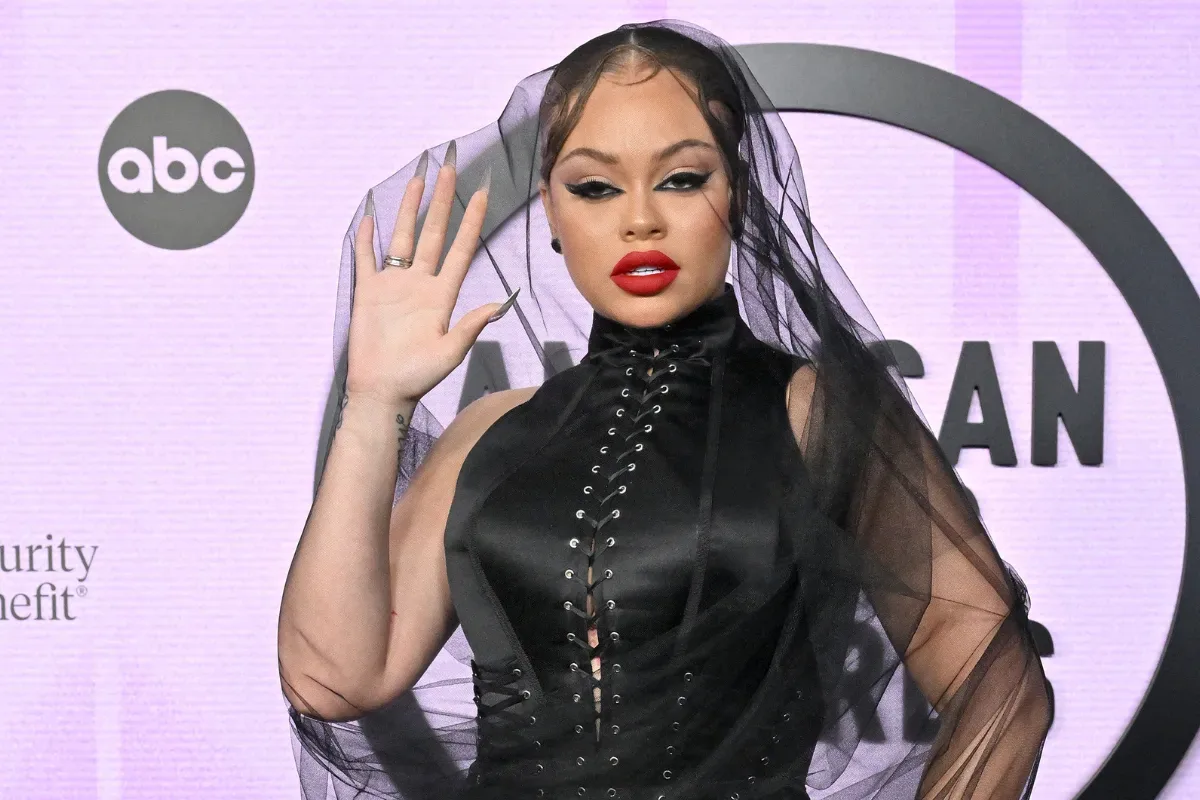
For a room of third graders, the toughest opponent was not a final boss, a timed math sheet, or the cafeteria’s most mysterious vegetable. It was the blank space before the first rhyme. Latto’s visit to PS 369 in the Bronx turned that intimidating moment into the point of the lesson: rap can be a practical, personal and playful way to put thoughts into words.
The Grammy-nominated artist appeared at the school as part of Celebrity Substitute, leading students through a session on freestyle, songwriting and expression while a music video for a remix of her track “Mama” was filmed. The day ultimately expanded beyond the classroom exercise. Students joined Latto for a performance in the school auditorium, and Amazon supplied new lighting, a wireless sound system and professional audio-visual equipment intended to support PS 369’s arts programming and later school performances.
It is a notable setup because it treated hip-hop less like a soundtrack dropped into a school for a one-day surprise and more like a creative discipline with techniques to learn. The class did not need to become fully formed recording artists before dismissal. They were invited to find a subject, choose language that mattered to them, follow a rhythm and take the risk of saying something aloud. That is a much more useful assignment than demanding that every eight-year-old arrive with a platinum hook ready for the lunch bell.
Freestyling without the perfection trap
Latto began with the basics of freestyling: making up lyrics in the moment rather than laboring over a finished written verse. Her central message was reassuringly simple. A freestyle is supposed to be loose, spontaneous and fun; mistakes are part of the process, not evidence that somebody has failed at rap before the beat has even settled in.
That distinction matters for young students, especially in a classroom setting where the instinct to give the single “correct” answer can be powerful. Freestyle turns that expectation upside down. The point is not to locate a hidden approved response. It is to connect an idea to a sound, react to the moment and keep moving when a line lands awkwardly. In game terms, it is closer to improvising through an unexpected challenge than memorizing a walkthrough. You do not reset because one sentence comes out strange; you adapt and continue.
Students including Jaylee, Alexander and Baiana took turns stepping up to freestyle, with Latto encouraging them to work through any nerves. The names are a reminder of what made the event more meaningful than a celebrity appearance: the focus was on the children doing the creative work themselves. An adult with a major platform could command attention simply by entering the room. Asking students to create, however, gave them ownership of the moment.
Latto framed rap as a vehicle for emotion as well as entertainment, comparing it to poetry delivered over a beat. She discussed using music to process different feelings, including anger and sadness. For children still building the vocabulary to explain what is happening inside their heads, that framework can be especially accessible. A rhyme does not solve every problem, obviously, but it can create an entry point. Sometimes “I’m upset” is difficult to say. Sometimes a beat, a rhyme pair and a line about a bad day make it easier to start.
A writing lesson rooted in lived experience
The workshop also connected to Latto’s own school memories. She described herself as independent and academically engaged when she was younger, and identified fifth grade as a pivotal period in her early path toward rapping. A teacher, Miss Harris, encouraged her interest in writing, offering the kind of support that can stay with a student long after the classroom changes.
That connection between a supportive teacher and an artistic future is not a side note. It explains why a classroom visit can carry a different weight from a standard promotional stop. Creative ambitions often look impractical to children until an adult makes room for them. A teacher does not have to promise that everyone will become a famous performer. They can do something more immediate: make clear that writing, listening closely, revising and finding one’s voice are legitimate skills worth practicing.
Latto also addressed a broader cultural point: young people already encounter rap, so teaching them to appreciate how it is made can help them recognize its craft. Hip-hop is frequently flattened into a stereotype by people who overlook its wordplay, storytelling, rhythm, regional traditions and emotional range. A lesson that puts emphasis on composing rather than merely consuming offers a practical response to that misunderstanding.
For a third-grade class, appreciation can begin with fundamentals. What rhymes with a word? Which phrase feels true? How do you describe a person you care about? When should a performer pause? None of those questions requires expensive studio time or advanced music theory. They do ask students to listen, think and communicate—skills that travel well whether a child eventually writes songs, stories, speeches, game dialogue or absolutely devastating notes to their future group-project teammates.
“Big Mamas” became the subject of the students’ verses
The songwriting portion asked students to write about the “Big Mamas” in their lives: mothers, grandmothers and other women who matter to them. It was a personal prompt with a clear emotional center, and it drew specific details from the class rather than generic rhyming drills.
Melissa delivered a playful line about responding to her mother with a fashionable compliment. Irving expressed affection for both his mother and father and recalled trips to the park. Diana turned home life into a compact rhyme, praising her mother’s rice and acknowledging the household expectation that chores get done without repeated reminders. These are small snapshots, but that is exactly why they work. The children were not asked to imitate somebody else’s persona. They were encouraged to identify scenes from their own lives.
The assignment was inspired by Latto’s album Big Mama, which she described as a musical record of the roughly nine or 10 months when she was pregnant with her daughter. The project explores motherhood and personal development, themes she tied back to the children in front of her. She spoke warmly about being a parent and imagining a day when she might walk her daughter through school hallways of her own.
That perspective made the subject matter feel especially fitting. A song associated with motherhood became a way for young students to recognize the care, rules, food, trips, sayings and everyday rituals that shape family life. The writing was not presented as a formal tribute that needed adult-level polish. It was allowed to be kid-sized: direct, affectionate, funny and occasionally guided by the eternal truth that someone’s mother has already asked twice.
From classroom exercise to auditorium performance
The day concluded with Latto and the students performing the “Mama” remix in the auditorium. That shift from classroom to stage provided a tangible endpoint for the lesson. The children had learned about improvisation, written their own material and then participated in a shared performance rather than watching from the sidelines.
The equipment donation is also significant because a performance does not have to remain a one-off memory. New lighting, wireless audio and professional AV tools can give the school resources for future productions, assemblies and arts activities. A creative program needs more than inspiration; it also needs a place to be heard. Technical gear cannot write a verse for anyone, thankfully, but it can help students present their work with confidence and give school events a stronger foundation.
One child’s assessment of Latto’s teaching was candid and efficient: she received an A, alongside the observation that rhyming is hard. That may be the most accurate review possible. Rhyming is hard, particularly when the speaker is nervous, the clock is ticking and a professional rapper is somewhere nearby. But the workshop’s message was that difficulty is not a reason to stay silent. It is a reason to try another line.
Latto’s PS 369 visit placed that idea at the center of the day. Rap was presented as art, language, emotion and skill—not an unreachable thing that only exists after fame arrives. For another recent example of hip-hop’s enduring story and influence in pop culture, see our coverage of Future’s early mixtape run reaching streaming services. At the Bronx school, though, the immediate story was not about streaming numbers or celebrity status. It was about a group of students discovering that their own everyday experiences could become lyrics, and that a shaky first rhyme can still be the start of a real verse.