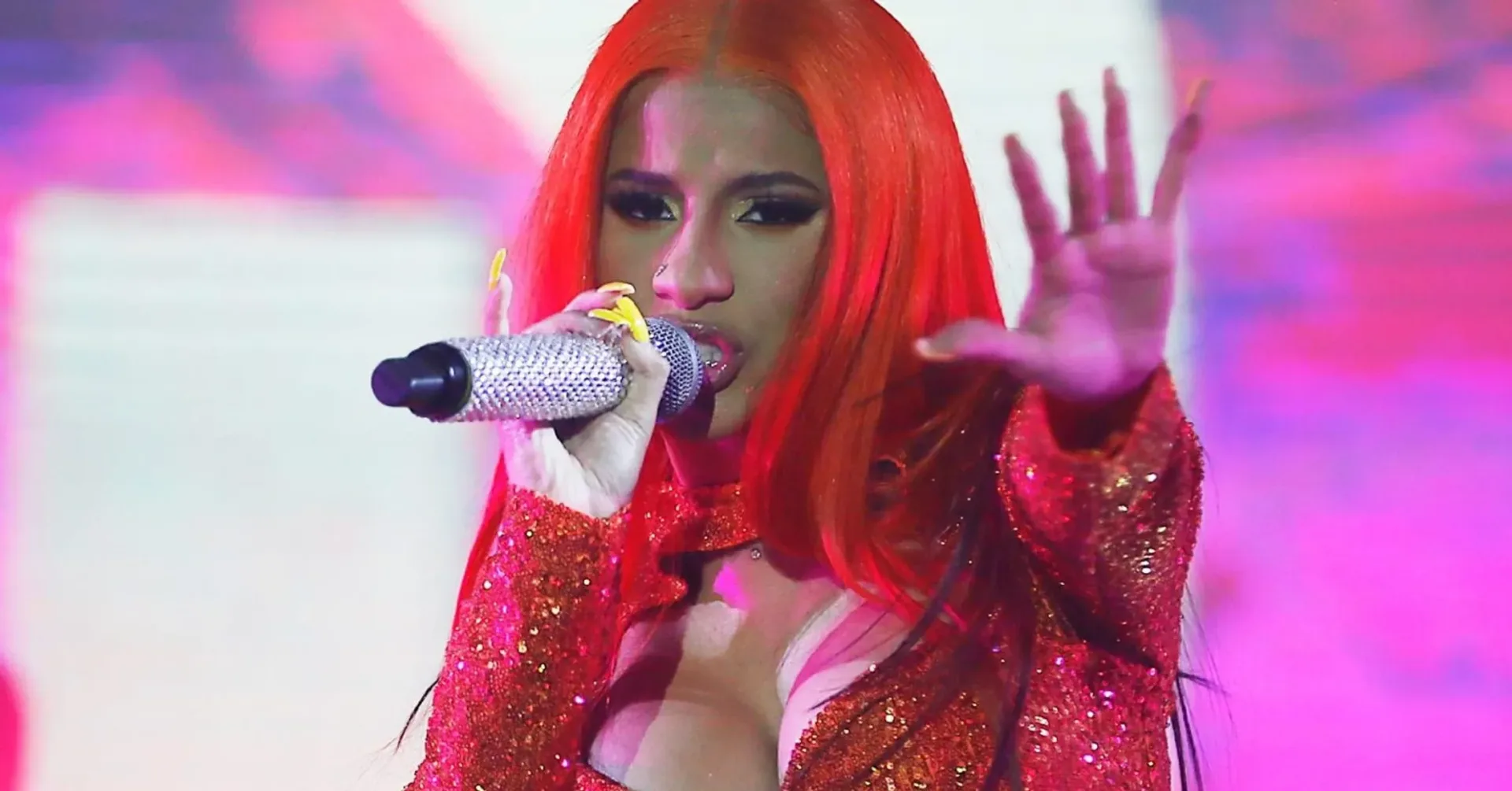
Cardi B gave “ErrTime” a pointed lyrical update during her first Tiny Desk Concert appearance, replacing a former reference to Latto with one for Kelly Rowland. The adjustment was brief, but it carried obvious context: Cardi has previously removed Latto’s name from the song amid a publicly discussed rupture between the two rappers.
In the revised line, Cardi changed the description from a comparison to Latto to one praising Rowland. The former Destiny’s Child member embraced the moment on Instagram Stories, sharing a clip and writing, “Get it Cardi!!!” Cardi responded by reposting the message with an affectionate declaration of love.
It is not evidence of a newly announced feud escalation or a final statement on Cardi and Latto’s relationship. Rather, it is the latest public performance choice in a disagreement that has played out through a leaked call, an apology, a later song response and changing live lyrics. That distinction matters: a bar can say plenty without formally closing the door on a future conversation.
A small substitution with a large amount of context
The lyric came during an eight-song set supported by a live band led by Adam Blackstone. Cardi’s selections included material from Am I The Drama?, along with earlier hits “Bodak Yellow” and “I Like It.” Yet the “ErrTime” revision became a notable point of discussion because the song has direct ties to Latto.
Cardi and Latto collaborated on an “ErrTime” remix in September 2025. Soon afterward, a leaked phone conversation captured Cardi insulting Latto while discussing issues involving Ice Spice. Cardi publicly apologized after the leak, saying she had been upset during the call while maintaining that she respected Latto.
That apology acknowledged the harm without establishing that the underlying relationship had been repaired. Public apologies can clarify intent, accept responsibility, or attempt to calm a situation; they do not necessarily restore trust on the same timeline for every person involved. In this case, Latto later addressed the incident in her own music and interviews.
On “Gimme Dat,” from her May 2026 album Big Mama, Latto revisited the dispute. She later confirmed that the song concerned Cardi and explained why the comments landed especially hard. Latto said she recorded her “ErrTime” remix verse while pregnant and wanted to help Cardi’s first-week album sales, only to hear the leaked remarks shortly afterward. She also indicated that reconciliation remained possible.
That is why changing one proper name in “ErrTime” reads as more than ordinary live-show improvisation. The original comparison had been a high-profile sign of collaboration. Removing it now reflects the fact that the connection behind it remains unresolved in public.
Kelly Rowland’s role is supportive, not a new conflict
Rowland’s reaction supplied the warmest part of the exchange. She publicly celebrated Cardi’s performance, and Cardi reciprocated. The interaction turns the lyric replacement into a moment of mutual admiration between two artists, not merely an omission aimed at someone else.
Still, it would be a mistake to frame Rowland as a participant in Cardi and Latto’s dispute. Nothing in the exchange indicates that she is. Her role is simply that of the artist Cardi chose to name in the revised line, and Rowland’s response made clear that she enjoyed the tribute.
The updated wording also shifts the line’s imagery rather than only swapping celebrity names. Cardi’s revision changes both the person referenced and the descriptor used before that reference. Live lyric changes can accomplish several things at once: they can tailor an old line to a current moment, redirect attention toward a guest or admired peer, and make a performer’s present-day stance legible without an extended speech.
In this instance, the response on social media gave the moment a second life beyond the performance itself. Rowland’s post and Cardi’s repost confirmed that the name change was received as intended between them. It did not, however, produce any comparable public interaction with Latto.
This was already part of Cardi’s live version of “ErrTime”
The Tiny Desk performance was not the first occasion on which Cardi omitted Latto from “ErrTime.” She had already done so at Essence Festival in July. That earlier change is important because it makes the newer version look less like a spur-of-the-moment reaction and more like an established choice for performing the song.
For listeners, that provides the clearest practical takeaway: the Latto reference should not be assumed to be fixed in Cardi’s current live presentation of “ErrTime.” Songs often evolve onstage, whether artists alter a line for timing, censorship, local context, mood or personal reasons. Here, repeated use of an alternate lyric makes the personal context difficult to ignore.
There is also a difference between a recorded release and a performance variation. The available information concerns what Cardi has performed live; it does not establish a newly issued recording, a replacement on existing releases, or any other distribution change. Fans should therefore treat the development as a documented performance decision rather than presume that every version of the track has been altered.
Why lyric changes become headline moments
In rap especially, a reference can function as a timestamp. A namedrop may record a friendship, a collaboration, a rivalry, an influence or simply an observation. When that namedrop changes, audiences naturally compare the old and new wording against events that occurred in the intervening period.
That does not mean every changed bar is an attack. Here, the most supportable reading is narrower: Cardi has moved away from invoking Latto in “ErrTime” performances, and she has replaced the line with a complimentary nod to Rowland. The decision arrives after a dispute whose broad outlines have been publicly discussed, while neither Cardi nor Latto has announced that they have settled it.
There is a broader pop-culture lesson in the speed of that cycle. A live moment, a repost and a few words of encouragement can shape the public narrative around a performance almost immediately. But the underlying history still matters more than the viral-sized fragment. Rowland’s enthusiasm is clear; Cardi’s live revision is clear; the status of her relationship with Latto is not fully resolved in public.
For related coverage of how personal history and rap lyrics can intersect, see this look at 50 Cent discussing a defining verse and a connection with Jay-Z.
What remains unanswered
There has been no announcement that Cardi and Latto have reconciled, and there has been no indication that the new Tiny Desk lyric itself represents a formal final break. Latto previously left open the possibility of making peace, while Cardi’s apology had emphasized respect despite the remarks heard in the leaked conversation. Those positions leave room for a future resolution, but room is not the same as confirmation.
Until either artist addresses the relationship again, the most accurate reading is straightforward. Cardi’s current live treatment of “ErrTime” no longer includes the Latto comparison. Kelly Rowland has publicly welcomed the replacement. The history surrounding the original lyric is why an otherwise compact rewrite has become one of the set’s most discussed details.