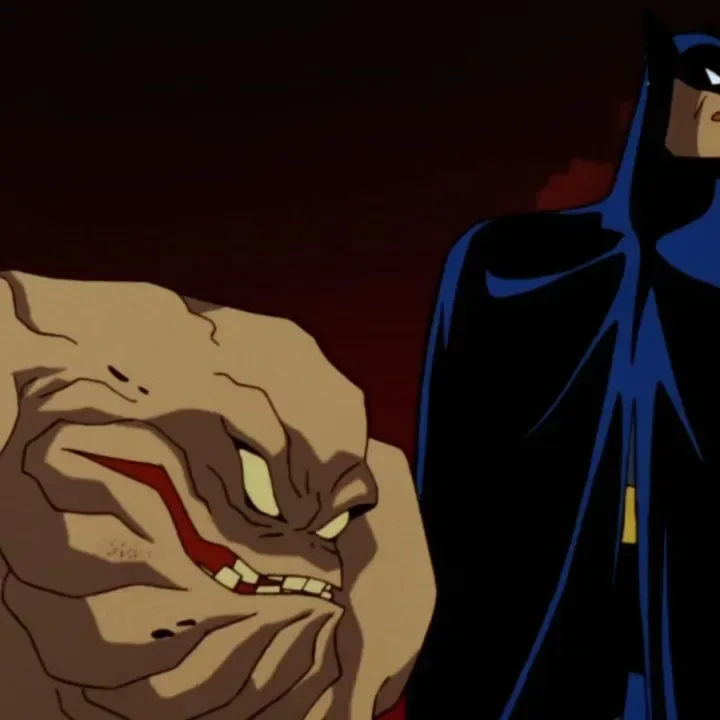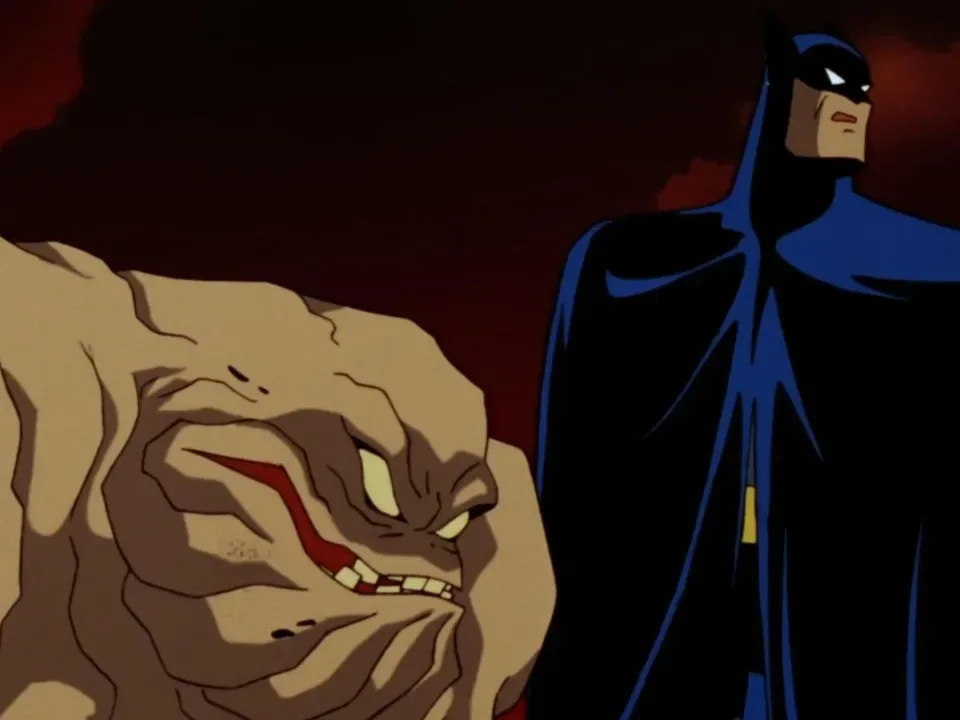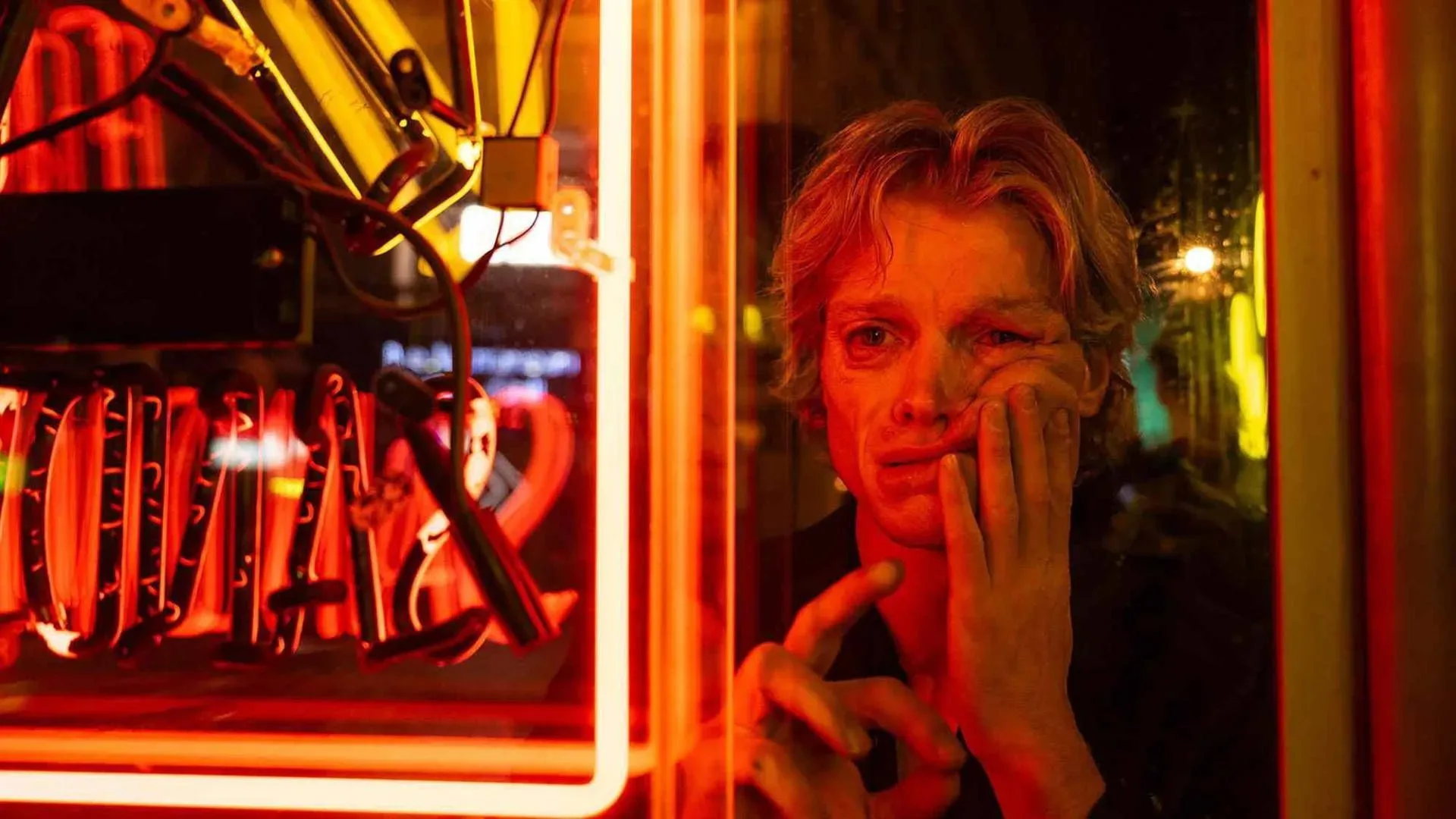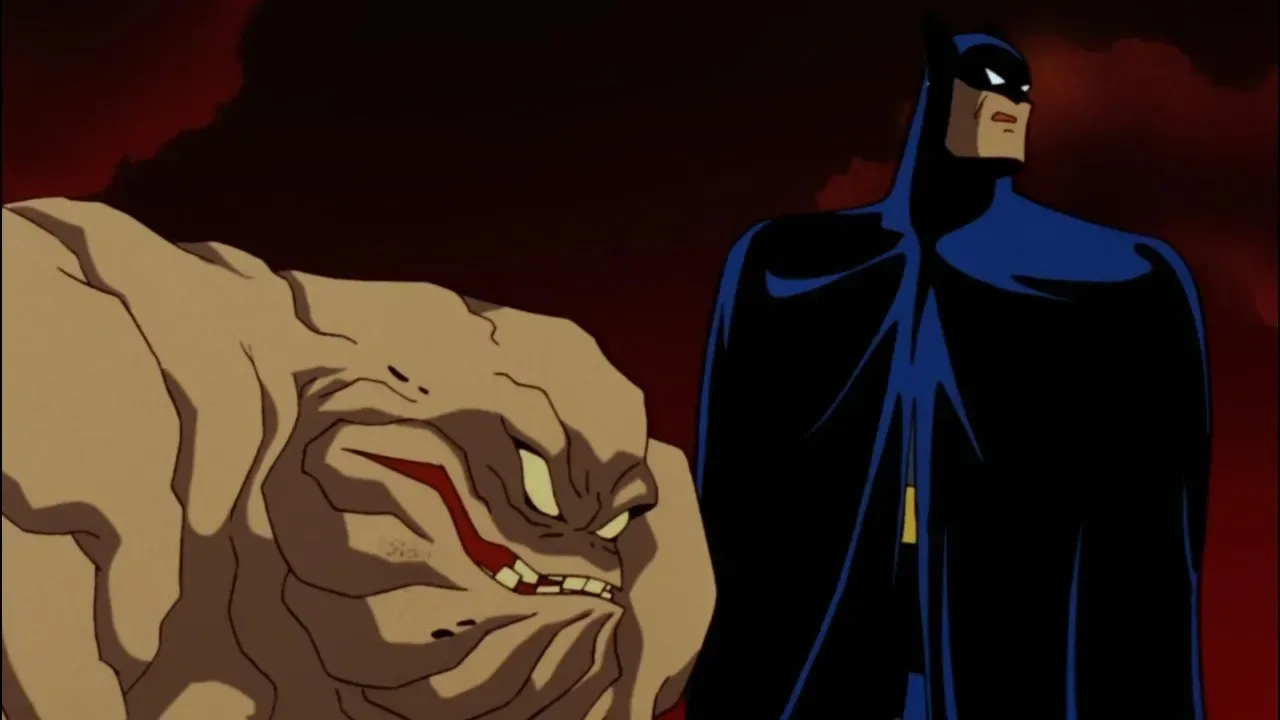
Clayface stars Tom Rhys Harries and Naomi Ackie have identified a particularly important piece of Batman history behind the new DC film: Batman: The Animated Series, and specifically its two-part Clayface story, “Feat of Clay.” For both actors, the show was not simply a distant influence from a superhero canon checklist. Growing up in the UK, they remember it as an after-school fixture.
“It was a ritual for a long time,” Ackie said of the routine: school ending at 3:30, then getting home in time to watch Batman. That personal connection now meets the material directly. Mike Flanagan’s original screenplay for Clayface takes inspiration from “Feat of Clay,” the animated story that reworked actor Matt Hagen’s path into becoming the shape-shifting villain.
The emphasis matters because Clayface is a character whose premise can read as either wonderfully pulpy or deeply sad: a person who can change into other people, but may lose any stable sense of who he is in the process. Harries singled out Ron Perlman’s voice performance as Clayface in the animated series, calling it amazing, and focused on the character’s painful uncertainty amid the transformation.
Ackie, meanwhile, highlighted the balance the new interpretation aims to retain. The character’s horror is not being separated from his humanity. It is part of what makes the horror work.
Why “Feat of Clay” is such a useful blueprint
“Feat of Clay” gives the character an actor-centered tragedy. Rather than treating Clayface solely as a visual-effects obstacle for Batman to punch, the story frames the villain through performance, identity, aspiration and collapse. Matt Hagen is an actor, which makes a shapeshifter’s abilities feel cruelly appropriate: he can embody almost anyone while becoming less secure in himself.
That is a potent foundation for a film described through both heartfelt and horrific terms. The supplied details do not establish how closely Flanagan’s screenplay follows the episode’s events, nor should viewers assume a scene-for-scene adaptation. “Inspired by” is not the same as “adapted directly.” It does, however, identify the emotional and conceptual lineage: an actor’s transformation, a body-horror premise, and a villain whose suffering is intended to register rather than merely decorate an action sequence.
Body horror is horror built around unsettling changes to the body: mutation, transformation, loss of physical control, or the fear that the body is no longer recognizably one’s own. Clayface is unusually suited to that mode because shapeshifting can be both a spectacular power and a nightmare. The same ability that lets a character alter their face, voice or physique can also turn identity into something unstable.
For a character like Clayface, that instability is not just a monster-movie effect. It can be the emotional subject of the story. Harries pointed to a moment in the animated version in which Clayface confronts Batman and expresses that he does not know who he is. That idea gets to the core of the villain more efficiently than an inventory of powers ever could.
Ron Perlman’s performance looms large
Harries’ praise for Perlman is also an acknowledgment of why Batman: The Animated Series remains such a consequential reference point for DC characters beyond Batman himself. Voice acting must establish character through sound alone, and Clayface needs several qualities to coexist: theatricality, menace, grief, rage and the disorientation of someone whose identity is physically collapsing.
Perlman’s work, in Harries’ view, lands that combination. He specifically recalled the shapeshifting sequences and the character’s exchange with Batman. The appreciation is not just for a recognizable vocal performance; it is for how that performance supports the episode’s sense of tragedy.
This is where the distinction between a villain and a tragic villain becomes important. A villain can function as an antagonist because their actions oppose the hero. A tragic villain has an additional dramatic burden: audiences need to understand the wound, flaw or catastrophe that made the antagonism possible, even while not excusing harmful choices. Ackie’s remarks suggest Clayface is pursuing that latter mode.
“You feel so sorry for him,” Ackie said of the animated character. She added that the new iteration holds onto the tragedy while remaining “absolutely horrific.” Those ideas are complementary, not contradictory. If the audience can recognize the person inside the monster, transformation becomes more disturbing. If the film’s horror has emotional stakes, it can carry greater weight than a purely cosmetic display of shapeshifting.
An after-school Batman ritual becomes creative context
Ackie and Harries’ memories offer a small but meaningful reminder of how superhero media persists across generations. The pair did not describe discovering the animated series later as research. They described racing home from school to watch it. That makes revisiting “Feat of Clay” for this project a return to a formative work as well as preparation for a new role.
That experience can matter when performers approach a well-known comic-book character. Familiarity can help them recognize why a previous version connected, but it does not require imitation. The useful lesson is often tonal rather than literal: in this case, Clayface works when the grotesque transformation is linked to a recognizably human fear of losing oneself.
It also speaks to the durability of animation as a place where superhero stories can take significant emotional chances. The supplied information does not make a broader claim about every version of Clayface, but “Feat of Clay” clearly left a durable imprint on these actors and on the screenplay’s stated inspiration. A television episode can remain an active creative touchstone years later because a strong character interpretation travels well across formats.
For more television-focused pop-culture coverage, see our report on writer-director Tim O’Donnell’s television career.
What viewers should and should not infer
The revealed connection provides a useful expectation for tone, but it does not establish a full plot, a release timetable, or the exact scope of Clayface’s place in the DCU. No such details are specified here. Likewise, the actors’ affection for the animated series does not mean the film will replicate its visual style or its particular scenes.
What is clear is more focused: Flanagan’s original screenplay looks to “Feat of Clay” for inspiration; Harries sees Perlman’s animated performance as exceptional; and Ackie identifies compassion, tragedy and horror as elements being preserved in the new take. Those are substantial clues about the character’s dramatic center.
That center is a compelling one. Clayface’s powers lend themselves to striking transformations, but the character becomes more than a technical showcase when the shifts are connected to the person experiencing them. An actor who can become anyone, and fears he may no longer be himself, has a built-in conflict that can support horror and pathos at once.
Batman stories often work best when their villains are not interchangeable problems for the hero to solve. “Feat of Clay” appears to remain memorable precisely because it approaches Clayface as someone whose monstrosity is inseparable from a personal catastrophe. Harries and Ackie’s comments indicate that this is the aspect of the character they value most—and the aspect they hope audiences will feel in Clayface.