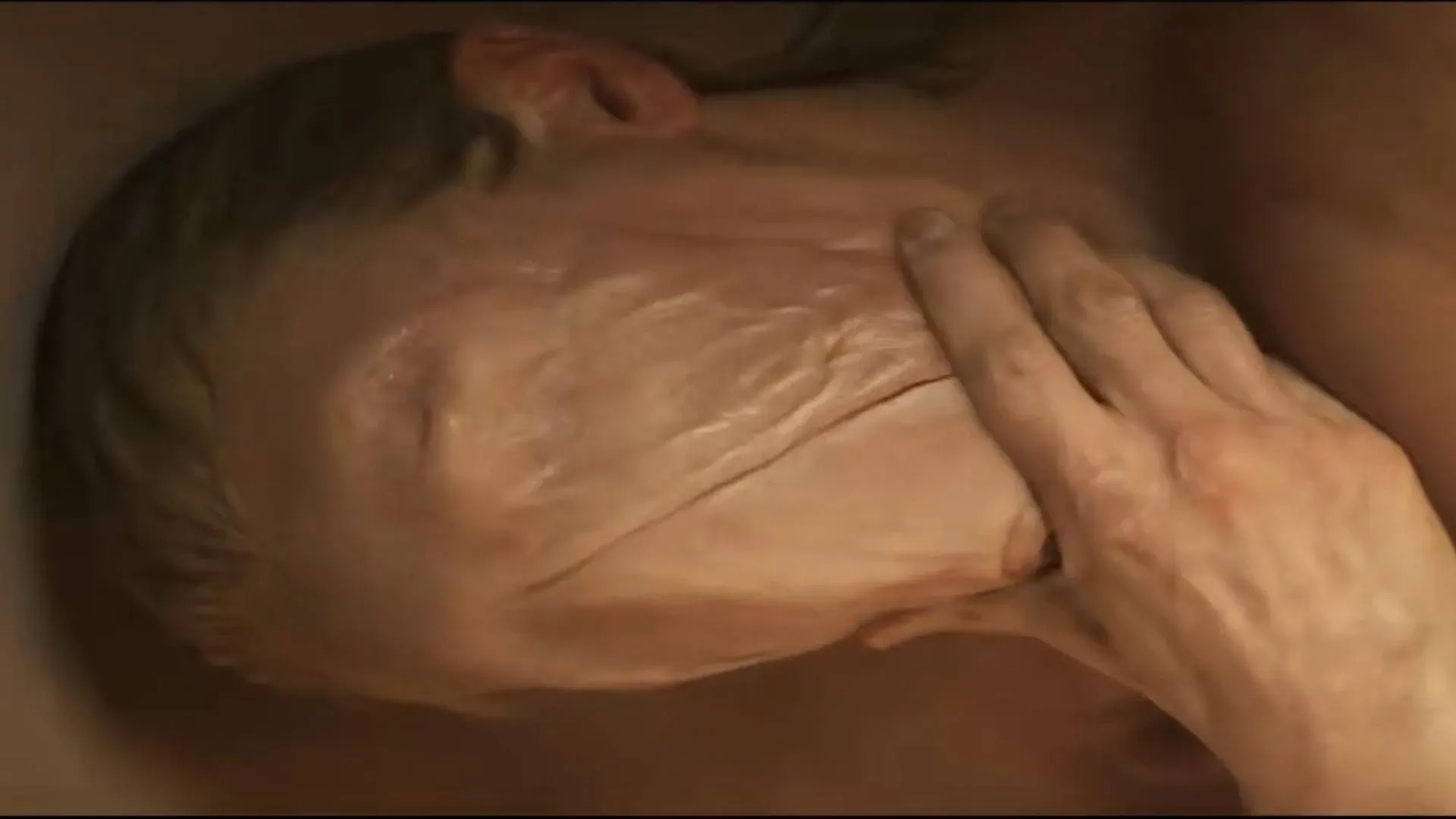
DC’s Clayface is being framed less as an exercise in cape-and-cowl genre blending and more as a horror movie that happens to be built around one of DC’s most famously mutable villains. That distinction matters. Ahead of the film’s October 23 theatrical release, DC co-CEO James Gunn shared a body-horror viewing list that offers a useful, if not definitive, guide to the filmmaking territory surrounding Matt Hagen’s big-screen transformation.
The recommendations include four David Cronenberg films: Shivers, The Brood, The Fly, and Videodrome. Gunn also named Invasion of the Body Snatchers, John Carpenter’s The Thing, Guillermo del Toro’s Cronos, and his own 2006 film Slither. It is a compact collection, but its range is revealing: invasive physical change, damaged identity, mistrust of the body, paranoia, infection and grotesque mutation all sit close to its center.
What “body horror” means for Clayface
Body horror is horror in which the body itself becomes the principal site of fear. The terror may come from disease, transformation, injury, infection, mutation, loss of bodily autonomy, or the unsettling sense that a person’s physical form no longer matches who they believe themselves to be. It can be visceral and graphic, but gore is not its only tool. Just as often, the genre is about anxiety: the dread of becoming unrecognizable to oneself or to everyone else.
That is a natural fit for Clayface, a character whose very name suggests unstable appearance. Yet Gunn has made a sharper claim about this particular film: Clayface is intended as a straight horror picture, not a horror-superhero hybrid in the mould of Blade or The Crow. The implication is not simply that there will be frightening imagery. It is that horror should determine the movie’s dramatic priorities, tension and emotional texture, rather than merely decorate a more familiar superhero structure.
For more context, explore DayZ Creator Dean Hall Backs Brutal, an Open-Source Framework Built to Reduce Engine Dependence.
For viewers, that may be the most valuable expectation to bring in. A horror-first approach leaves more room for an origin story to focus on deterioration, desperation and consequence. A superhero narrative often treats extraordinary change as a route toward mastery, even if the power initially arrives through trauma. Body horror is more likely to ask what the change takes away, who gets hurt by it, and whether the transformed person can ever return to an ordinary life.
The Cronenberg concentration is significant
Four of the eight named films come from Cronenberg, making him the overwhelming presence in the watchlist. That does not establish that Clayface will imitate any one movie, nor does a recommendation amount to a list of direct influences. Still, grouping those films together highlights a particular tradition of horror: one where physical metamorphosis is inseparable from inner disturbance.
Shivers, The Brood, The Fly, and Videodrome each approach flesh-and-identity horror from a different direction. Taken as a group, they suggest the possibility of a film interested in how a body can become alien, expressive, vulnerable and dangerous all at once. That is especially resonant for an actor protagonist. Acting involves presentation: face, voice, movement and the ability to inhabit an image for an audience. A transformation that destroys control over one’s own physical form therefore attacks both personhood and profession.
That reading is reinforced by the material established for Matt Hagen. Tom Rhys Harries plays the Hollywood actor, whose career is effectively ended after a mobster has his face cut up. Hagen then turns to experimental treatment administered by Dr. Caitlin Bates, played by Naomi Ackie. The results, evidently, are not what he expects.
Even before any further plot details, that setup establishes a potent body-horror chain of cause and effect. Hagen is violently disfigured, loses the livelihood tied to his appearance, and chooses an uncertain medical intervention because conventional recovery is no longer enough. The horror does not need to begin only when the treatment goes wrong. It is already embedded in the pressure driving him toward the treatment: physical damage becomes professional ruin, and ruin makes risk look like hope.
A tragedy about a face, an image and a cure
There is an unusually direct connection between Hagen’s work and his injury. For an actor, a face is not merely private. It is part of the instrument through which a role is performed and, in a Hollywood context, part of the image that can sustain a career. The film’s premise therefore gives its protagonist a concrete reason to seek a miraculous solution. That makes experimental treatment more than a familiar science-gone-wrong device; it is the answer to a crisis in which identity, vanity, survival and ambition can be impossible to cleanly separate.
The involvement of a trusted doctor also gives the premise an important note of uncertainty. The available details identify Bates as someone Hagen trusts, but do not establish her motives, what the treatment is, or why it fails to provide the result he wants. It would be premature to treat her as an antagonist or to assume the medical procedure follows any particular genre template. What is clear is that trust is part of the setup, which can make bodily transformation more unsettling than a change imposed by an obvious enemy.
The event that begins Hagen’s ordeal has a criminal edge as well. He gets involved with a mobster’s girlfriend, and the mobster’s retaliation leaves him disfigured. That creates a human source for the initial violence before the experimental treatment introduces a second, more fundamentally destabilizing threat. The first wound is deliberate and intimate; the next stage promises repair but apparently produces something far worse. It is a clean route into horror without requiring the story to abandon the noirish danger of Hollywood, organized crime and compromised choices.
The rest of the watchlist broadens the horror vocabulary
Outside Cronenberg, Gunn’s picks bring several neighboring modes of horror into view. Invasion of the Body Snatchers evokes fears around replacement and the question of whether a familiar person is still truly themselves. Carpenter’s The Thing is inseparable from distrust, unstable appearances and the nightmare of a creature that can pass for human. Those ideas connect naturally to a figure defined by malleable form, although the selections should be read as tonal preparation rather than evidence of specific story beats.
Cronos adds Guillermo del Toro to the list, while Slither represents Gunn’s own entry in body horror. Together, the recommendations make the category feel wider than a single aesthetic. Body horror can be tragic, paranoid, grotesque, strange, darkly comic or deeply sad. The presence of Gunn’s film does not mean Clayface will share its approach, but it does underline that he is engaging with the genre from both a viewer’s and filmmaker’s perspective.
For an audience planning a pre-release marathon, the sensible use of this list is not to hunt for a hidden checklist of plot spoilers. Instead, it is a way to get accustomed to the emotional logic of body horror: transformation is rarely neutral, the desire to fix oneself may intensify the disaster, and a person’s outward form may become the source of both power and isolation. That is the language Gunn appears to be invoking around Clayface.
Why the “not a superhero hybrid” label changes expectations
Comic-book adaptations frequently use horror imagery while ultimately moving through the rhythms of action, vigilantism and world-saving spectacle. Gunn’s description sets a different bar. If Clayface is genuinely a horror film first, the major question need not be how Hagen becomes capable of spectacular things. It may be whether he can endure what he becomes, whom he can trust, and what remains of the actor after the face that anchored his career and public identity is lost.
That approach also places the movie in an interesting position within adaptation conversations. Comic-book characters can survive enormous tonal shifts across decades and media, but the key is whether the new version retains a recognizable dramatic core. That same tension is at the heart of a recent discussion of [what it means for an adaptation to keep a character’s core intact](https://jokingjoystick.com/joystick-takes/street-fighter-s-cammy-debate-is-really-about-whether-an-adaptation-kept-her-core-intact/). For Clayface, mutability is already part of the concept. A horror interpretation does not have to preserve every familiar detail to feel appropriate; it needs to make the character’s transformation, performance and instability matter.
The announced creative team makes the horror designation feel deliberate. James Watkins, whose credits include Eden Lake, directs from a screenplay by Mike Flanagan and Hossein Amini. Alongside Rhys Harries and Ackie, the cast includes David Dencik, Max Minghella and Eddie Marsan. No character information for those additional performers has been provided here, so their roles remain an open part of the film’s picture.
The practical takeaway for prospective viewers
Gunn’s watchlist is a useful entry point for anyone who knows Clayface mainly as a DC villain and wants a clearer sense of the film’s intended genre lane. The recommendations indicate that viewers should expect horror rooted in altered flesh and altered selfhood, rather than treating “body horror” as shorthand for shock effects alone.
They also suggest a movie likely to be concerned with the cost of trying to restore a damaged life. Matt Hagen’s decision to accept experimental treatment follows a devastating assault and the apparent end of his career. That makes him a protagonist pushed into horror by desperation, not someone chasing transformation for its own sake. If the film follows through on the bleak promise of its setup, his change may be frightening precisely because it begins with an understandable wish: to get his face, work and life back.
Clayface reaches theaters October 23. Until then, Gunn’s selections offer a clearly signposted route into the kind of nightmare the film is aiming to become: intimate, physical and focused on the frightening possibility that a cure can leave someone less recognizable than the wound ever did.