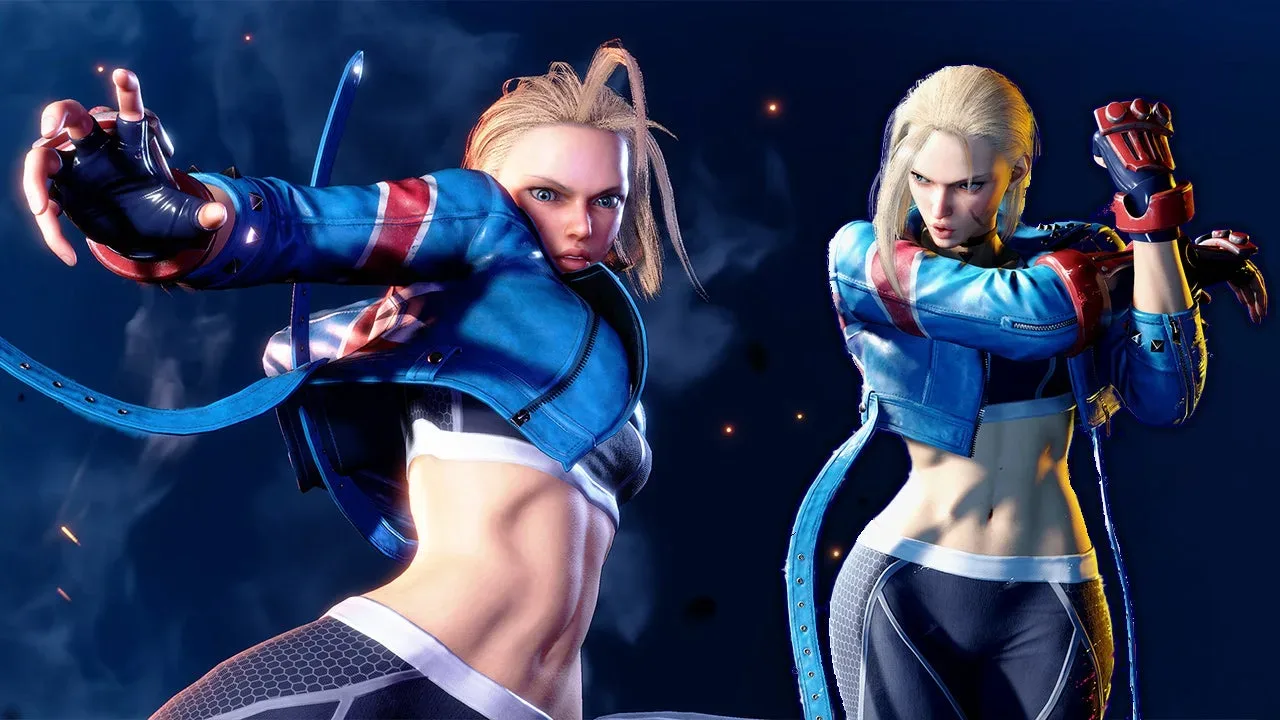
Street Fighter adaptations have always had a difficult job: translate a fighting game’s instantly recognizable faces, rivalries and visual shorthand into people who must carry scenes when nobody is throwing a Sonic Boom. That process allows room for reinvention. It also creates a basic question for every major character: what can change without making the person on screen feel like somebody else entirely?
For a vocal group of fans, the new Street Fighter film crosses that line with Cammy. The issue is not simply that the movie places her in M. Bison’s service. That is a meaningful part of her established premise. The sticking point is the apparent personality shift: a character generally associated with restrained, soldierly resolve is presented as more seductive, volatile and gleefully cruel.
Cammy is played by Mel Jarnson, previously seen briefly as Nitara in the 2021 Mortal Kombat film. In this adaptation, Cammy operates as Bison’s right hand and carries out his commands with a degree of authority uncommon among those around him. She can be direct and commanding, but the film also gives her flirtatious behavior toward Chun-Li and sudden emotional outbursts. That combination has led viewers to argue that the movie has retained Cammy’s name and broad visual identity while replacing her defining temperament.
Why Cammy’s allegiance is not the main objection
In Street Fighter lore, Cammy’s story is built around lost agency and its recovery. She is one of the Dolls: young women brainwashed by the Shadaloo organization under M. Bison. Her history includes serving as a weapon for the villain before fighting against him and working to reclaim her own autonomy.
That distinction matters. A pre-liberation Cammy who serves Bison is not automatically an unfaithful interpretation. It can be a logical dramatic starting point, especially for a film that wants an antagonist’s lieutenant who carries personal stakes beyond simple villainy. The tension in Cammy’s history comes from the fact that her obedience was manufactured rather than freely chosen.
Cammy has been a recurring Street Fighter figure since Super Street Fighter II, and much of her game role is shaped by that trajectory from tool to hero. Her connection to Bison and Shadaloo is therefore not incidental background. It is the material that gives an adaptation a path toward conflict, revelation and eventual independence.
Jarnson has said in an interview that the film’s Cammy is mind-controlled, as the other Dolls are. That detail potentially establishes a route for a future sequel: Bison’s influence could be broken, and the character could develop toward the hardened version players recognize. But the movie reportedly does not spend much time clarifying that condition. Without enough on-screen context, viewers are left to judge the behavior in front of them rather than an explanation provided elsewhere.
The personality gap fans are reacting to
Cammy is often understood as stoic, disciplined and emotionally guarded. Those qualities do not mean she has no inner life; rather, they provide the contrast that makes her struggle for self-determination resonate. A character who has been manipulated and used as an instrument may reasonably be wary, controlled and difficult to read.
The film’s version reportedly takes a very different register. She is forceful when dealing with Bison’s orders, yet also plays scenes with a flirtatious edge and unpredictable eruptions. Fans have compared the resulting performance energy to Harley Quinn, while others see it as borrowing traits associated with Juri Han.
Those comparisons are shorthand, not a technical diagnosis. They nevertheless identify a real adaptation problem: character coding. This is the collection of repeated signals—speech rhythm, posture, reactions, humor and interpersonal behavior—that tells an audience who a character is before the plot explains them. Change the coding too aggressively and a familiar name can cease to do much work.
It is possible for an adaptation to revise events, chronology or even alliances while preserving core character coding. Conversely, it can reproduce an origin point while shifting the personality so far that the adaptation feels disconnected. The Cammy debate falls into the second category. Critics of the portrayal are not necessarily demanding that every beat match the games. They are arguing that the film’s changes alter the emotional logic that makes Cammy recognizably Cammy.
Why Juri keeps coming up
Juri Han is an understandable reference point because she represents a different kind of Street Fighter antagonist energy: sadistic, provocative and notably chaotic. Fans who see Juri’s traits in this Cammy are reacting to the presentation, not claiming the movie has literally substituted one character for another.
There is also an obvious narrative complication. Juri was introduced in Street Fighter IV, while the film is framed around the Street Fighter II-era cast. More importantly, she is not a natural Bison ally. The suggestion that Juri-like traits have been placed on Cammy is therefore a criticism of the adaptation’s tonal choices, not an easy casting fix the story ignored.
One online response summed up the concern by calling the result a “chimera”: Cammy’s exterior paired with another character’s mannerisms. That language is harsh, but it captures why the reaction has been so specific. Fans can accept an adaptation making room for a villain’s enforcer. They are less persuaded when the enforcer’s voice, behavior and scene function seem to come from a personality template associated with someone else.
The core complaint is not that Cammy begins under Bison’s control. It is that the film’s version may not communicate the controlled, capable, internally constrained figure whose freedom is worth fighting for.
Mind control can explain behavior, but it does not automatically solve the portrayal
Mind control is a plot mechanism: it explains why a person acts against their will. It is not, by itself, a complete characterization strategy. If a movie wants viewers to understand that an unusually theatrical or cruel version of Cammy is the product of coercion, it must make that coercion legible in the drama.
That can mean showing the control, establishing its limits, revealing moments of resistance, or otherwise letting the audience perceive a person underneath the imposed behavior. None of those specific approaches is confirmed here, and a sequel remains only a possibility rather than an announced resolution. The practical point is simply that the reveal needs enough narrative weight to reframe what came before.
If the film eventually follows Cammy’s liberation, the contrast between her controlled persona and her authentic self could become part of the story’s intended arc. A break from Bison could allow her to shed the eccentricity and move closer to the colder, more disciplined fighter familiar from the games. That reading is plausible because her Doll history supplies the foundation for it.
Until such a turn is actually depicted, however, the criticism remains understandable. Audiences cannot be expected to grant a future correction for a present characterization they find unconvincing. An origin setup and a payoff are different things; the former does not guarantee the latter.
Adaptation faithfulness is more than costumes and lore labels
Debates over game adaptations often get reduced to a false choice: either reproduce every game detail or accept any departure as necessary creative freedom. Cammy demonstrates why that framework is too narrow. Faithfulness is not just a checklist of names, costumes and affiliations. It can also mean preserving the central tension a character brings to the story.
For Cammy, that tension is agency. She is tied to Bison, but not defined by loyalty to him. She is a highly trained fighter, but her history gives that competence a darker context. She is emotionally reserved, but that reserve supports rather than erases her eventual heroism. A movie can reconfigure many surface details while still keeping those relationships intact.
The reported portrayal risks changing the emphasis from a controlled weapon whose personhood has been compromised into an active, erratic sadist who appears comfortable in Bison’s orbit. That is why the difference is larger than a few jokes or a single strange reaction. It changes how viewers interpret the character’s responsibility, vulnerability and potential redemption.
Street Fighter’s broader tone may be loose and knowingly excessive, and the film reportedly takes broad liberties with several characters. That context explains why the adaptation may not be pursuing strict game continuity. It does not make every revision equally consequential. A wilder line reading, a remixed rivalry or an updated costume may be easy for an audience to absorb. Reworking the internal engine of one of the series’ most enduring characters asks more.
There is a useful parallel in the way other game adaptations are judged: audiences often accept strange setups when the work understands the feeling of the original. Kingdom Hearts’ famously surreal opening, for example, shows how an adaptation-minded reading of a game can value mood and identity alongside literal plot mechanics. With Cammy, the dispute is precisely over whether the film has retained that identity.
What the reaction says about Cammy’s place in Street Fighter
The intensity of the response is also a reminder that Cammy is not merely a recognizable costume or a convenient member of Bison’s organization. Her past as a Doll gives her a distinct thematic role within Street Fighter. Her story concerns a person emerging from an apparatus designed to erase personhood.
That makes a superficial “villain lieutenant” interpretation especially vulnerable to pushback. The material is already there for a more tragic, controlled and unsettling screen presence—one that can be threatening without turning her into an entirely different archetype. If the adaptation ultimately explores her mind control and break from Bison in earnest, it may still use the current setup to reach that destination. If it does not, the reaction is likely to persist because the objection is rooted in character purpose, not simple lore policing.
For now, the film’s Cammy has become a focused example of the tightrope every video-game adaptation walks. Reinvention can be valuable. But when reinvention obscures the qualities that made a character compelling in the first place, familiarity turns into friction—and viewers notice the gap immediately.