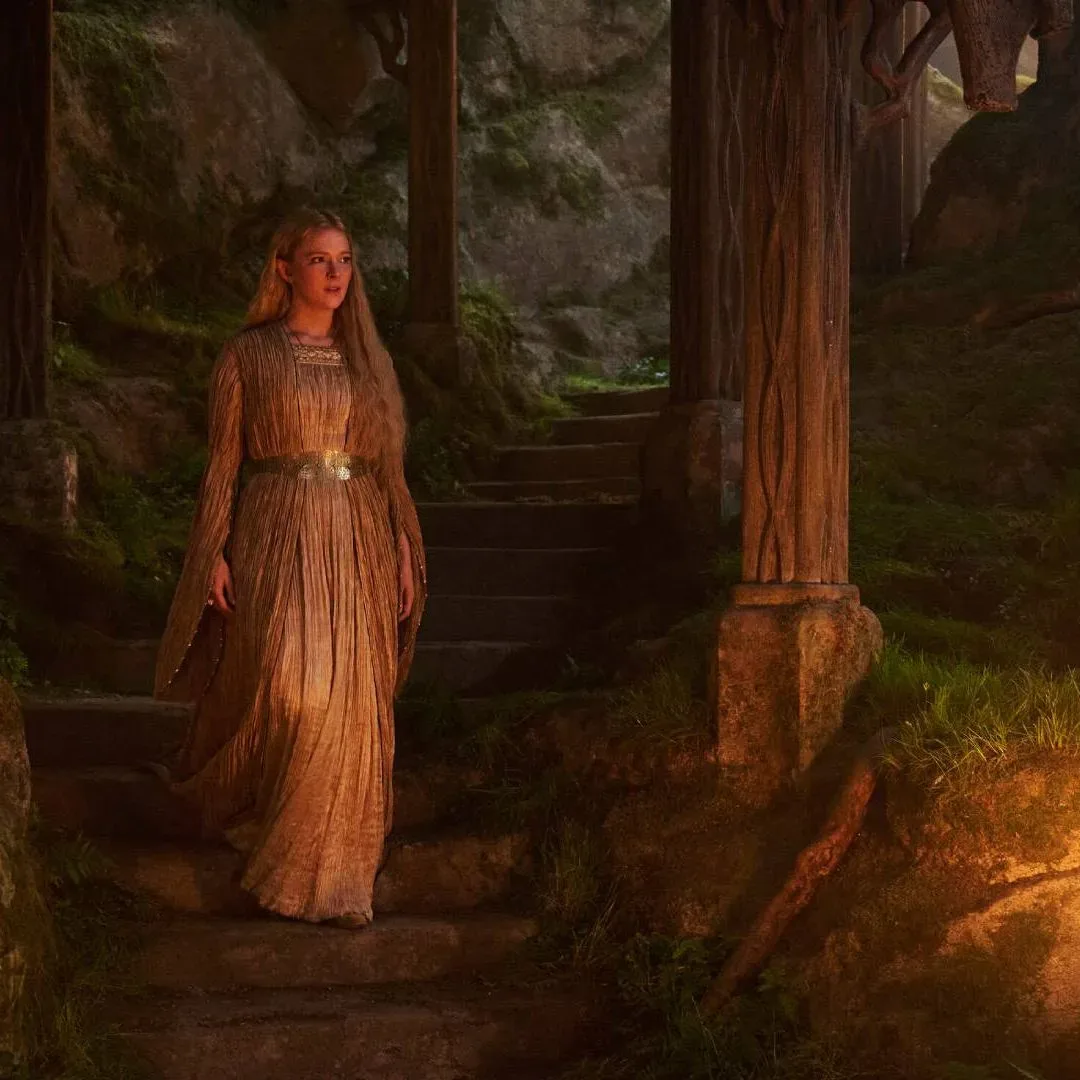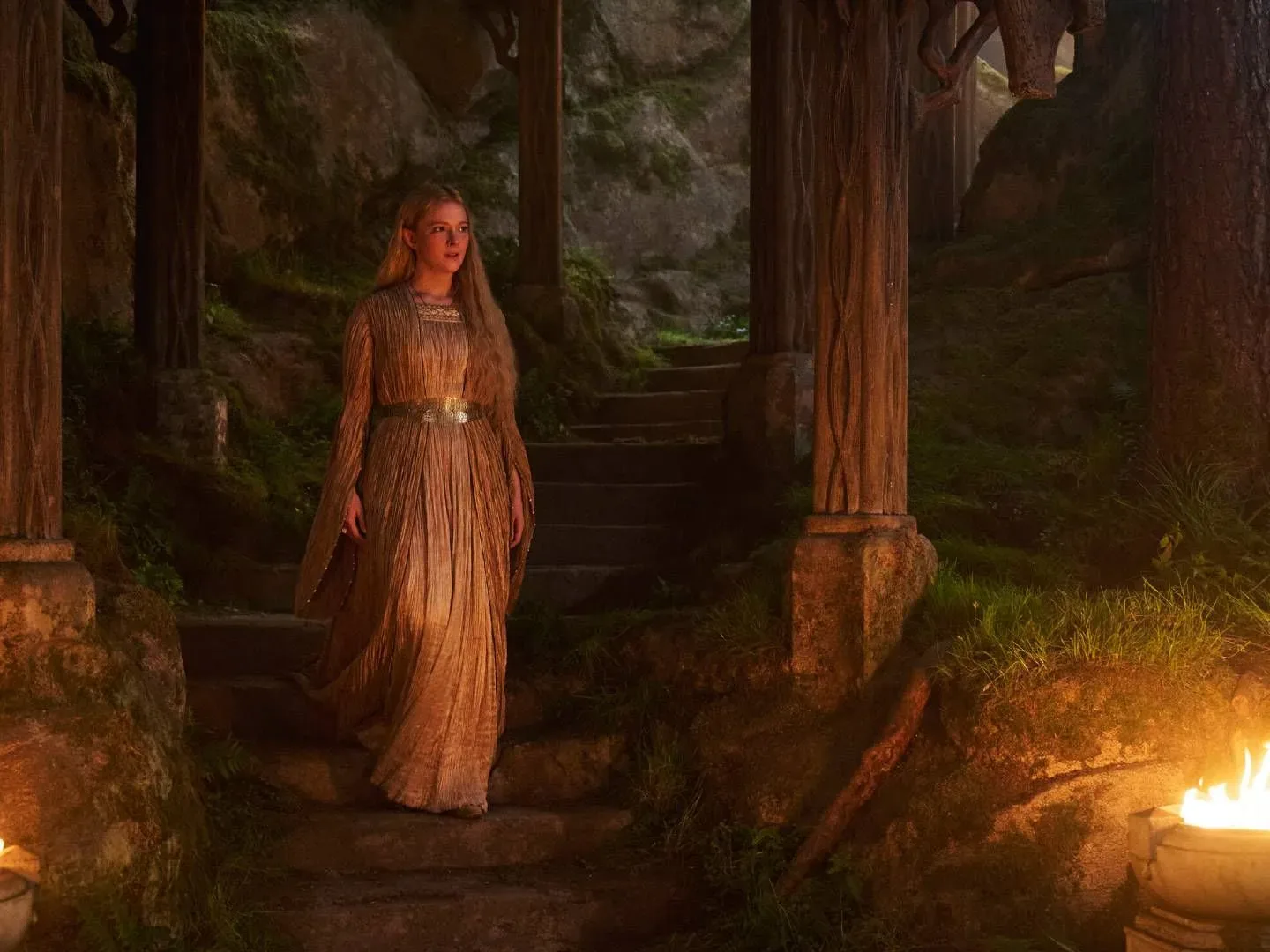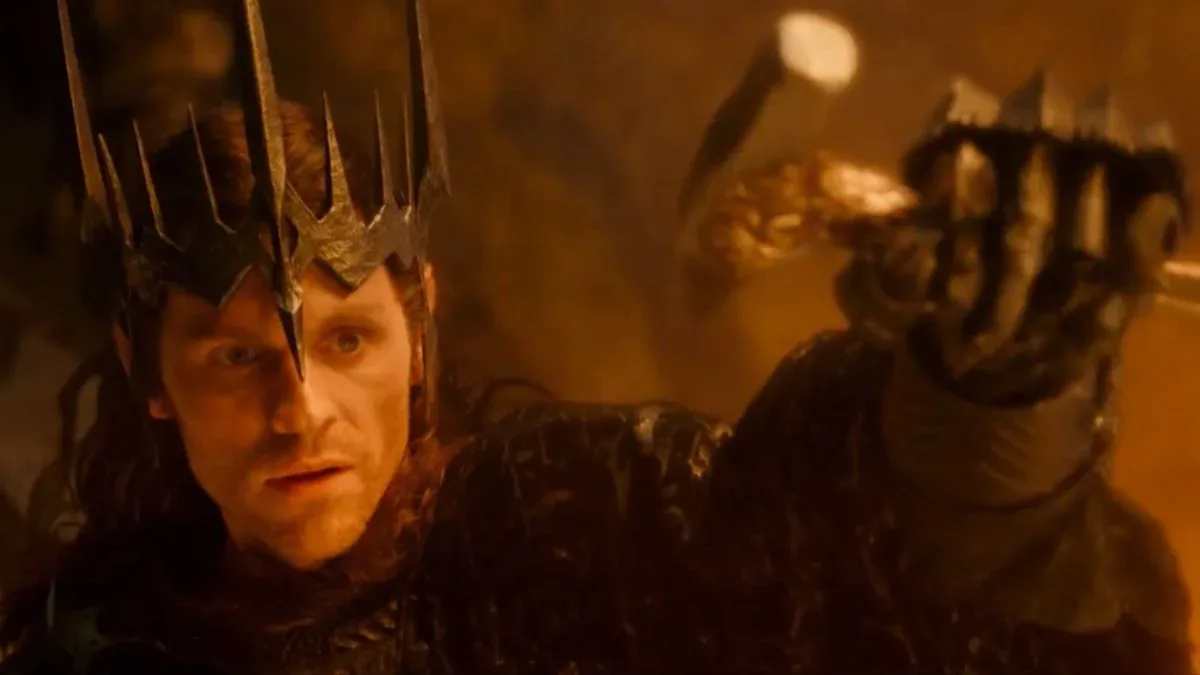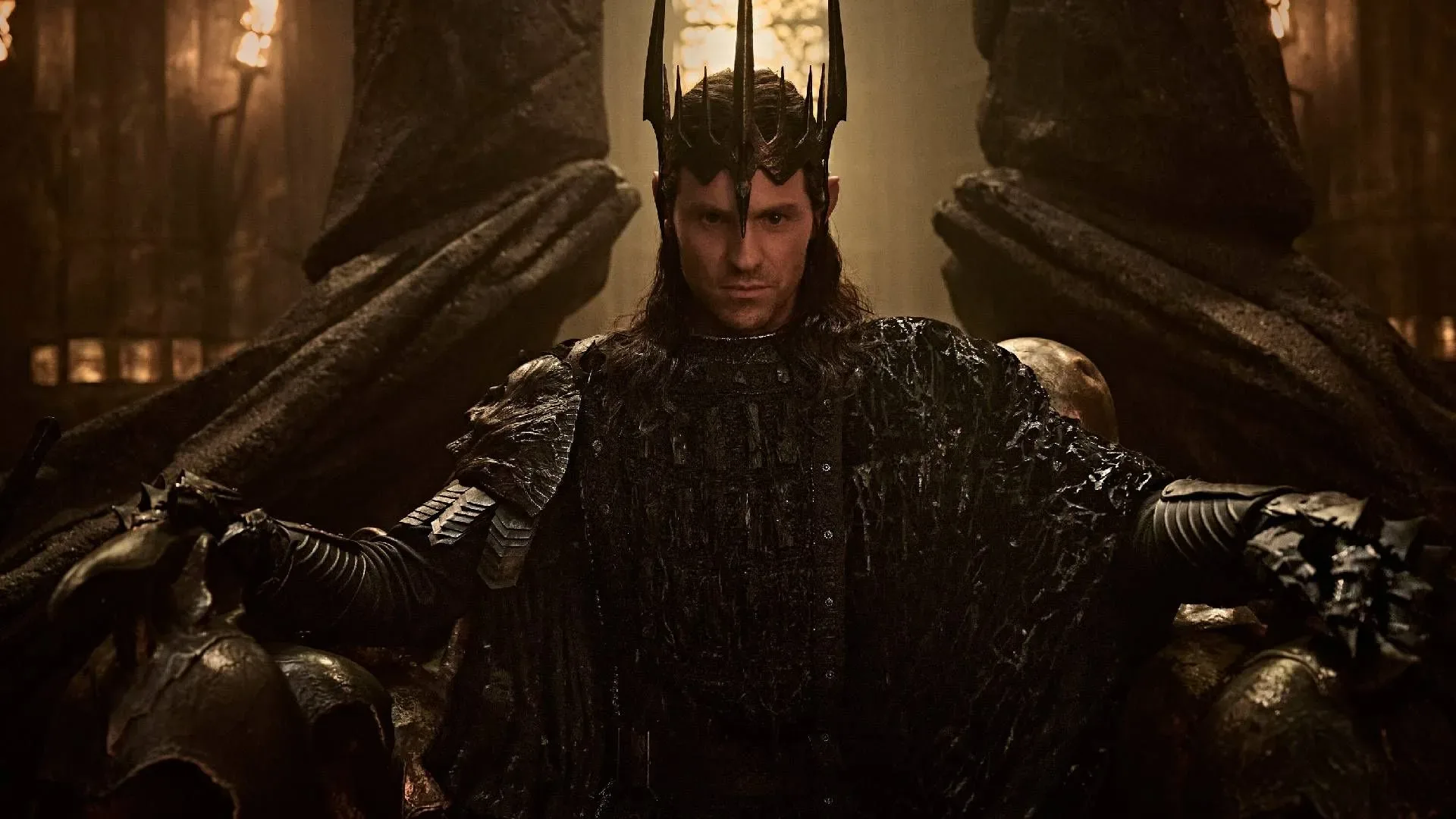
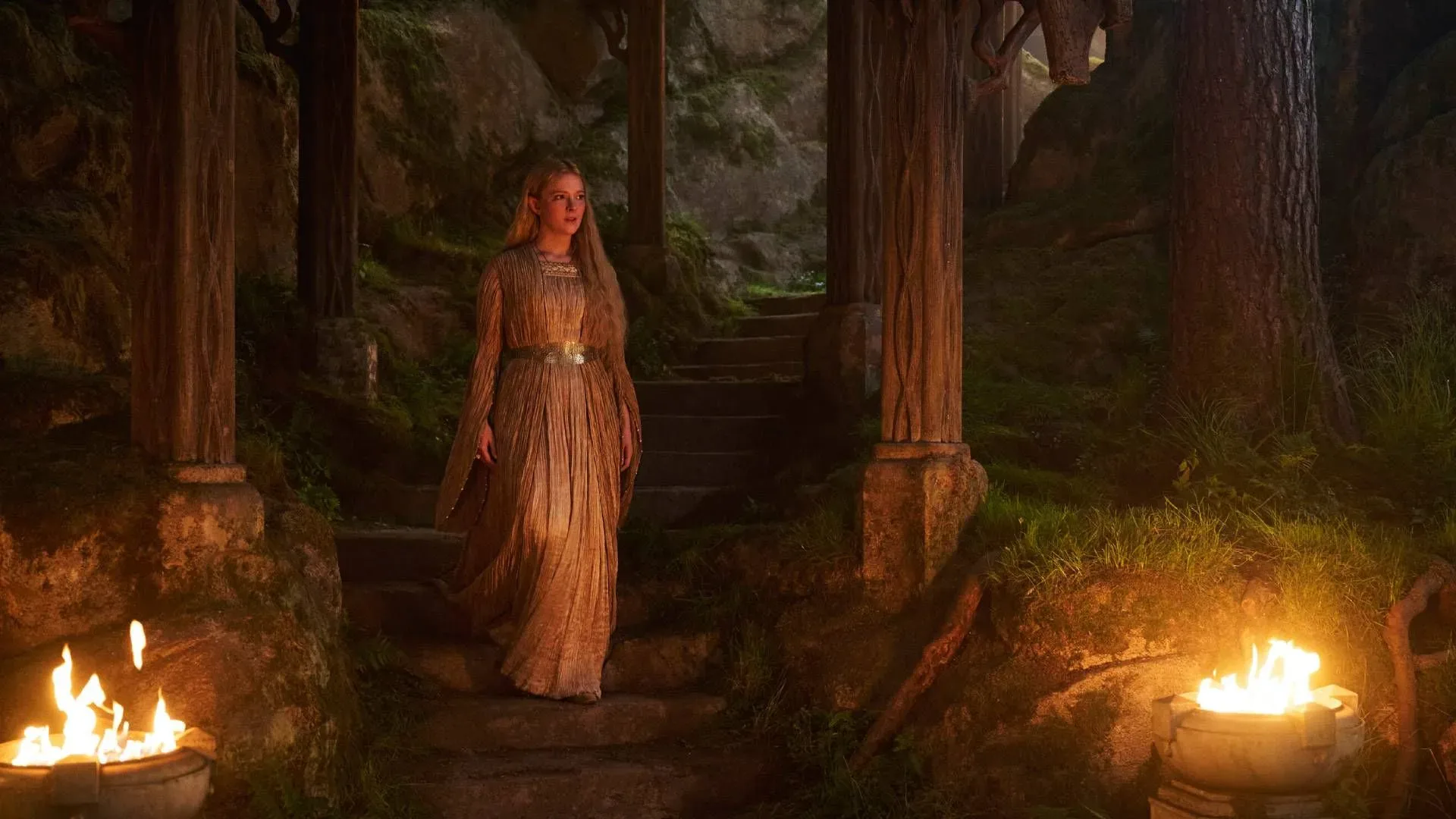
The Lord of the Rings: The Rings of Power season 3 will return to one of its most charged conflicts with a key change in the balance between Sauron and Galadriel. Charlie Vickers, who plays Sauron, describes the Dark Lord as frustrated by an opponent he can no longer reach or control after the events of season 2.
The new season begins five years after the previous season’s climax. Sauron has withdrawn to Barad-dûr, while Galadriel is back among the Elves as they face an expanding threat. Their separation does not mean the connection between the characters has disappeared. Instead, the material points to a conflict shaped by distance, unresolved influence and the fact that Galadriel remains uniquely able to get under Sauron’s skin.
Season 3 premieres on November 11 with four episodes. The remaining episodes will then arrive on Prime Video in two-episode batches.
Sauron has lost the ally he wanted to make of Galadriel
The foundation for Sauron and Galadriel’s current position was laid when Halbrand was exposed as Sauron in disguise. In season 2, Sauron openly pushed Galadriel to join his effort to seize control of Middle-earth. She rejected him in their final confrontation, closing off the possibility that he could convert a powerful Elven adversary into a partner.
Vickers frames that rejection as an important source of the character’s season 3 anger. “I think he is frustrated because she is now beyond his reach,” he said. The actor described the end of the second season as a moment in which Sauron left the door open, only for Galadriel to decisively shut it.
That is more meaningful than a villain simply failing to win an argument. Sauron’s objective was control, and Galadriel’s refusal denies him both a formidable ally and the personal validation of bringing someone associated with goodness to his side. Vickers put it plainly: “He’s frustrated that he can’t control Galadriel. She represents the good.”
In that sense, Galadriel is not merely an obstacle on the road to power. She is evidence of a limit to Sauron’s influence. The season 2 confrontation establishes that he can tempt, deceive and make offers, but cannot automatically bend every person to his will. Season 3 appears poised to explore what happens when a figure defined by domination must reckon with that boundary.
Isolation is part of Sauron’s season 3 position
Vickers also identifies isolation as central to Sauron’s starting point. He no longer has Galadriel as the potential companion he sought in the first season, and he no longer has Celebrimbor, whom he killed. The actor’s description leaves Sauron in Barad-dûr without either of those relationships available to him.
That detail matters because it differentiates isolation from simple physical solitude. Sauron has lost access to two very different kinds of connection: Galadriel was the person he wanted to bring into his project, while Celebrimbor was a figure he manipulated before killing him. Neither relationship was healthy or equal, but each served Sauron’s purposes. Their absence makes his position more stark.
Barad-dûr, Sauron’s seat of power, therefore represents more than a new location. It is the place from which he is consolidating his position after the five-year jump, but it also underlines the gap between his ambition and his personal circumstances. He wants command over Middle-earth, yet Vickers describes him beginning the season cut off from the people who had occupied the closest places in his plans.
That does not make Sauron sympathetic, nor does it soften what he did to Celebrimbor. Rather, it gives the season a clear dramatic pressure point: a controlling character must respond to the fact that Galadriel has made herself unreachable on his terms. The trailers have already suggested that their psychological connection remains potent, even with both characters now on opposing sides of the conflict.
Galadriel’s story is not defined by Sauron alone
For Galadriel, Sauron’s presence remains consequential, but Morfydd Clark suggests that he is not the only difficulty surrounding her reunion with Celeborn. Jamie Campbell Bower joins the franchise as Celeborn, Galadriel’s husband, and the characters will have to contend with the long time they have spent apart.
Clark called Sauron the “big elephant in the room” around the reunion, acknowledging that his impact cannot simply be ignored. But she also stressed that the couple’s separation has created its own challenge. The issue is not only a villain casting a shadow over a relationship; it is two very old people attempting to understand each other again after an extended absence.
“Sauron thinks he’s the big problem, but it’s not necessarily that,” Clark said. Her point suggests a useful distinction for viewers: the external threat and the intimate conflict are related, but they are not identical. Sauron may believe his influence is the defining factor in Galadriel’s life, while Galadriel and Celeborn still have personal history to confront that exists beyond him.
Clark described the pair as needing to “re-find who they are” after being apart for so long. She also characterized the idea of old love as romantic. The emphasis here is on rediscovery rather than an easy restoration. A reunion does not automatically return a relationship to what it was before separation, especially when both people may be holding onto different memories, expectations and versions of the past.
Celeborn must move beyond an idealized past
Bower’s comments give Celeborn’s side of the reunion a more specific emotional shape. He said Celeborn has been holding on to the idea of what the couple once were, rather than who they are now. For the character, the task is to reassess that memory and find what remains enduring within it.
This makes the Galadriel-Celeborn material more than a straightforward homecoming. Celeborn’s attachment to an earlier version of their relationship may be comforting, but it can also prevent him from seeing Galadriel as she is in the present. The distinction between an idea of someone and the person before you is a familiar emotional problem, yet it has particular weight here because their lives stretch across such an immense span of time.
Bower called the prospect of finding that continuity “a beautiful thing” and “a gift.” That language points to a hopeful possibility within a storyline otherwise surrounded by Sauron’s growing power. The couple’s reunion will still involve obstacles, but the actors’ comments do not present it as purely tragic or purely defined by the Dark Lord. There is room for recognition, adjustment and renewed connection.
It also provides a useful counterpoint to Sauron’s outlook. He sees Galadriel in terms of control and possession: someone who ought to join him, and someone whose refusal frustrates him. Celeborn’s challenge, by contrast, is to let go of a fixed image of the past and learn who Galadriel is now. The characters face different forms of distance, but their responses could not be more different.
What the five-year jump changes
The five-year time skip gives season 3 a practical new starting line. Sauron has had time to retreat to Barad-dûr, and Galadriel has had time to regroup with the Elves. This is not presented as a fresh start for either side. The characters carry the consequences of the season 2 finale into the new episodes, particularly Sauron’s failed attempt to bring Galadriel under his influence.
For viewers, the time jump also makes the personal stories more important, not less. It raises questions that the coming episodes will need to answer: How has Galadriel processed Sauron’s betrayal and continued interest in her? What has changed in her position among the Elves? How will Celeborn respond to the woman she has become? And how will Sauron react now that overture has failed and isolation has set in?
None of those questions requires assuming that the series will take a particular direction. What has been established is that Sauron is no longer approaching Galadriel from a position where he imagines he can simply persuade her to become his partner. His frustration is a direct consequence of her decision, while Galadriel’s reunion with Celeborn introduces a separate emotional thread that Sauron cannot entirely claim as his own.
The contrast could prove central to the season’s character drama. Sauron is trying to impose a future. Galadriel and Celeborn are trying to understand a past without becoming trapped by it. Both stories turn on the difficulty of reaching another person, but only one is grounded in control.
When and how to watch The Rings of Power season 3
- Premiere date: November 11
- Opening release: Four episodes
- Later release pattern: Episodes will be released in two-episode chunks
- Streaming platform: Prime Video
The upcoming season also arrives while the wider screen future of Middle-earth remains a topic of interest. For related context, The Hunt for Gollum has been described as being “in conversation” with the Prime Video series.
For season 3 itself, the immediate focus is clear: Sauron is building power from Barad-dûr, but his inability to reach Galadriel remains a wound to his larger ambition. Galadriel, meanwhile, must face the lingering effect of Sauron while navigating a reunion that has its own history, distance and hope. The first four episodes will establish how those pressures collide after five years apart.