Major spoilers for all eight episodes of Carrie follow.
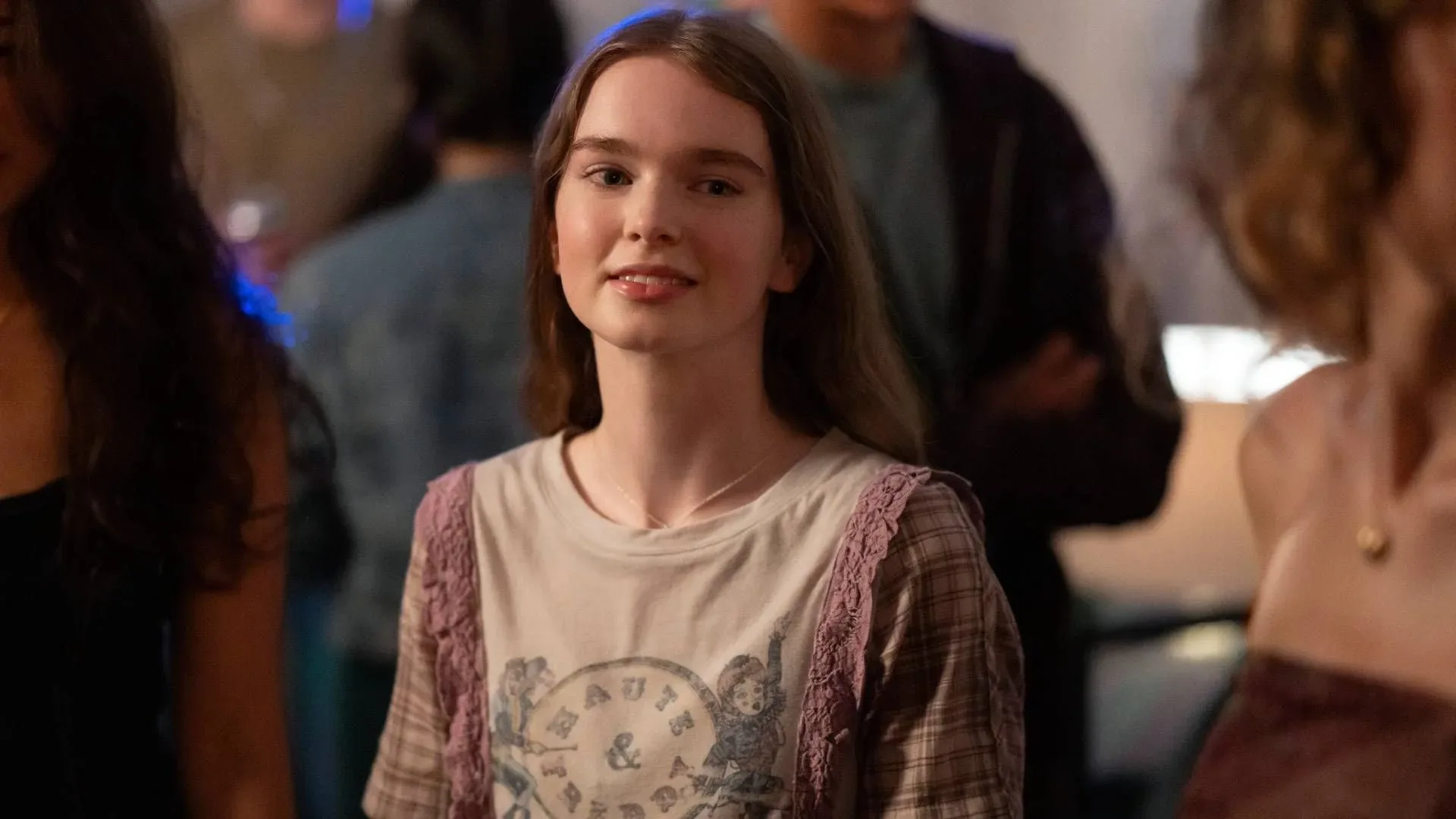
The first season of Prime Video’s Carrie arrives at a destination familiar to Stephen King readers: Carrie White, played by Summer H. Howell, is humiliated at prom with pig’s blood and answers the cruelty around her with catastrophic violence. Yet the finale adds a consequential new element to that well-known tragedy. Adelaide, the composed interviewer and narrator heard through the season, finally appears on screen—and proves that she is neither a detached historian nor a sympathetic witness.
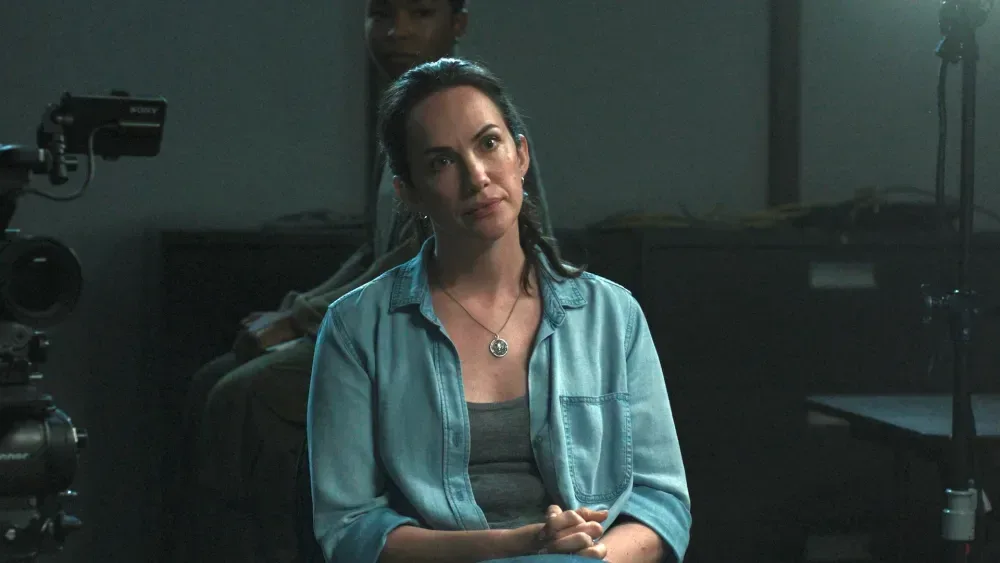
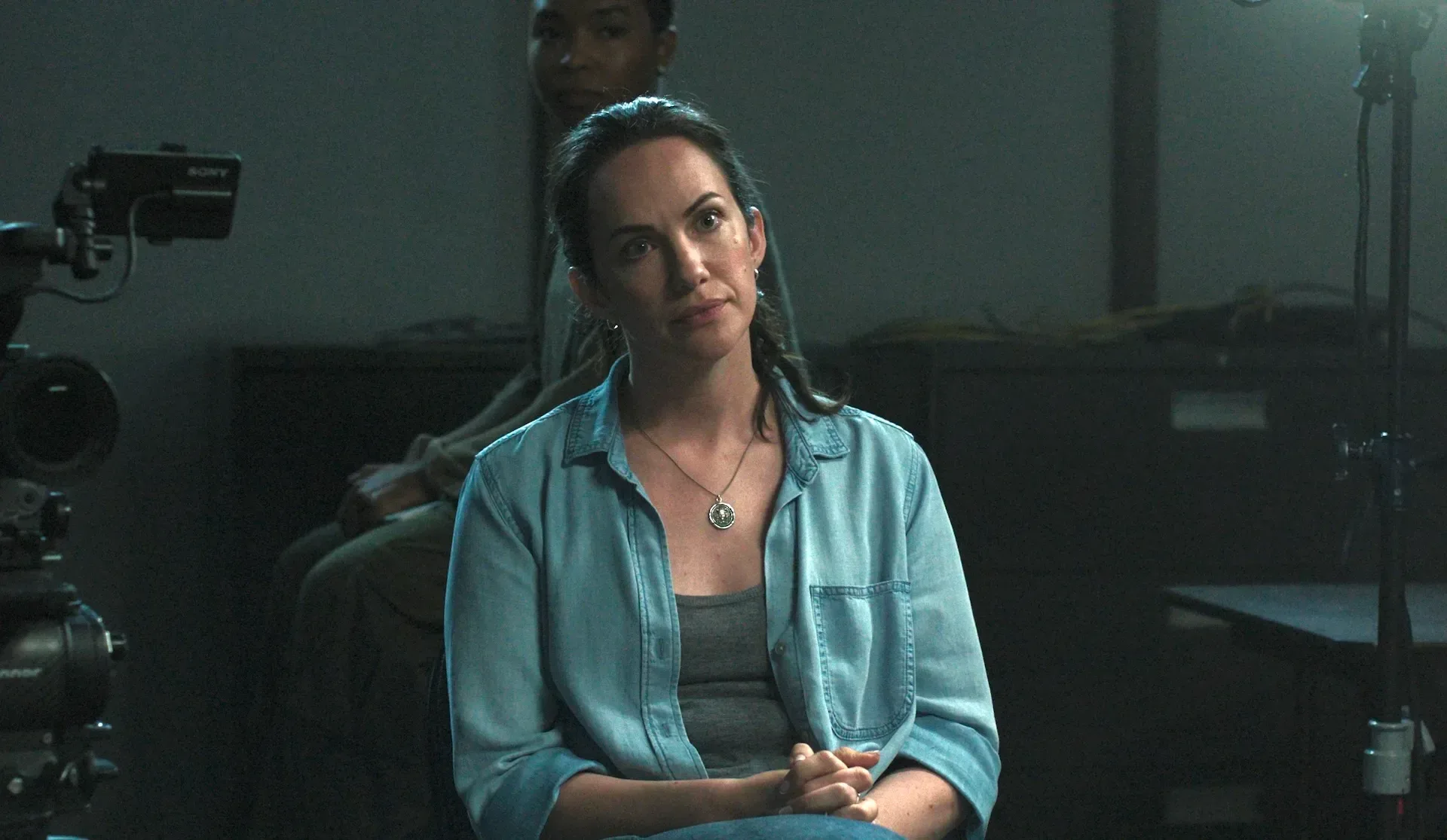
Played by Kate Siegel, Adelaide kills Margaret White (Samantha Sloyan) after the latter rejects a chance to explore her newly resurfaced psychic ability. The act changes the meaning of the interviews that frame the season. Adelaide has not merely been preserving testimony from the survivors of prom night. She has been gathering material, assessing people with unusual powers, and apparently pursuing an agenda that remains intentionally unclear.
Adelaide’s murder of Margaret is an assessment, not an accident
Margaret’s survival already marks a notable alteration to the expected shape of the story. In this version, Carrie’s mother possesses telekinetic gifts of her own, though they have long been repressed. Her confrontation with Adelaide in the finale makes clear that the ability is not unique to Carrie—and that Adelaide is acutely interested in people who have it.
When Margaret refuses to engage with those abilities, Adelaide treats that refusal as a verdict. She uses telepathy to compel Margaret’s mind to stop her own heart. There is no indication that Adelaide acts in self-defense, or that Margaret represents an immediate danger. The killing is calculated, quiet, and chilling precisely because it is delivered in a controlled interview-room setting rather than amid the season’s public chaos.
That difference matters. Carrie’s destruction is rooted in a lifetime of confinement, humiliation, manipulation, and an unimaginable public betrayal. Adelaide’s violence is a choice made from a position of authority. She decides Margaret has wasted, denied, or failed some test connected to her gift. The finale therefore positions Adelaide not as a conventional protector of gifted young women, despite her apparent role as headmistress of a home for them, but as someone willing to impose her own standards on anyone she studies.
Siegel has described Adelaide as occupying a “chaotic neutral” space: a character who is not guided by an uncomplicated good-versus-evil framework. In practical terms, that means viewers should be wary of assuming she is hunting Carrie to help her, punish her, recruit her, or even understand her in a humane way. All of those possibilities remain open, and the murder of Margaret establishes that Adelaide’s curiosity can become lethal.
The key question is not simply where Carrie is
Across the first seven episodes, Adelaide is principally a voice. She narrates the cold opens and appears to conduct on-camera interviews with people who survived the prom-night massacre. Those scenes initially play like familiar retrospective testimony: a device that lets a story show the consequences of a disaster while withholding its full account until later.
Related coverage includes Kate Siegel’s Adelaide Changes the Meaning of Carrie’s Finale.
Episode 8 makes that framing device part of the mystery. Adelaide is holding the camera side of the conversation, selecting questions, collecting recollections, and pursuing Carrie and Emaline, played by Thalia Dudek. Emaline is described as an astral projector, meaning her consciousness can operate apart from her physical body. That makes her a potentially essential ally to a fugitive Carrie, but it also makes both young women especially relevant to Adelaide’s evident interest in psychic capability.
The season leaves its largest questions hanging around the purpose of Adelaide’s archive. Why document the survivors? Who is supposed to receive their account? Is she building a case, conducting research, assembling recruits, or shaping a story for someone else? The finale does not answer those questions, and Siegel has indicated that the questions of why Adelaide is filming and who the eventual audience might be are central to the character.
That ambiguity also reframes Adelaide as an unreliable narrator—not necessarily because every word is false, but because narration always involves selection. She determines which voices are heard and which details are emphasized. Once the finale shows she is an active psychic force with her own objectives, the season’s earlier interviews stop feeling neutral.
“The shine” connects this story to a wider psychic vocabulary
Adelaide gives viewers one particularly deliberate clue when she tells Margaret that many people may possess “a little bit of shine” without realizing it. The term refers to psychic abilities in King’s fiction, most prominently associated with The Shining, but it does not appear in the original Carrie novel.
Its inclusion does not, by itself, confirm a specific crossover or future plot. What it does establish is a shared vocabulary for Adelaide’s worldview. She does not seem to regard Carrie’s telekinesis as a one-off anomaly. Adelaide appears to see psychic potential as something distributed among people, sometimes dormant and sometimes denied—exactly the condition Margaret embodies before her death.
That language gives Adelaide’s interest a broader scope than the immediate disaster in Carrie’s town. She may be looking for a category of person rather than a single missing girl. It also helps explain why Margaret’s refusal appears to anger her so profoundly. In Adelaide’s eyes, a gift might be an obligation, a resource, or a sign of hidden potential that must be developed. Margaret sees it through a completely different lens, one tied to fear and repression. Their scene is a collision between those beliefs.
Siegel drew on several of King’s works in locating Adelaide’s general type, pointing to resonances with women in The Institute, Firestarter, and the original Carrie. This is useful context rather than a declaration that Adelaide was imported from another story. She is a new character, and the series intentionally has not supplied a definitive history, allegiance, or future.
Why Adelaide’s voice is as important as her power
Adelaide’s menace is rooted as much in delivery as in telepathy. Siegel distinguished the calm narration used in the cold opens from Adelaide’s presence in the finale. Her performance inspiration came from therapist Dr. Orna Guralnik’s measured interviewing style: an apparently neutral mode of listening that can subtly narrow toward the point a questioner wants to examine.
That choice gives Adelaide an unnerving method. Her questions feel gentle, but the gentleness is not necessarily kindness. It is a form of control. By the time she turns on Margaret, the change in cadence reveals the coercion underneath the professionalism.
It is also why Adelaide’s role as narrator becomes more unsettling than a standard villain reveal. The audience has spent seven episodes being guided by her voice before being given the information needed to judge her. She has effectively framed Carrie’s catastrophe before revealing that she can alter a person’s fate with a thought.
Kate Siegel’s Episode 3 sets up the finale’s emotional damage
Adelaide is not Siegel’s only contribution to the season. She directed Episode 3, “Social Studies,” her first time directing an episode of television after making her directorial debut on a segment of V/H/S/Beyond. The episode was shot after Siegel had already filmed Adelaide’s finale appearance, even though it arrives much earlier in the released story.
“Social Studies” centers on Carrie’s first high-school party, a milestone that gives the character a genuine glimpse of belonging. Siegel prepared by looking at photographs of early-2000s parties and revisiting teen-party films including Can’t Hardly Wait and 10 Things I Hate About You. The goal was not simply to stage a party, but to capture the intensity of a rare adolescent night that seems to fulfill all its anticipatory promise.
That emotional lift is vital because viewers know the direction of the larger tragedy. Carrie dances with classmates and shares a warm, platonic connection with Tommy, played by Joel Oulette. They lie on the lawn discussing the stars; later, when Tommy dies amid the finale’s violence, his final words return to that image. The earlier scene makes the loss sharper by giving it genuine tenderness rather than treating Tommy only as a prom-night casualty.
After the party, Carrie’s elation manifests literally: she levitates Tommy’s car. The scene contrasts the small-scale power associated with Carrie’s distress, confusion, and anxiety—such as lifting a raindrop—with the huge, involuntary expression of joy that sends a vehicle into the air. Her abilities are not presented as a simple meter of anger. Emotion changes their scale.
Siegel also introduced a cross-cut not present in the initial script. Carrie’s exhilarated ride home is paired with Chris, played by Alison Thornton, sitting blacked out and despondent after a miserable party. Chris’s grief over her parents’ divorce, fears of replacement, and uncertainty over who she will become do not excuse her cruelty toward Carrie. But the juxtaposition provides the emotional pressure behind their looming collision: one teenager experiences an extraordinary sense of connection while another sinks into alienation and resentment.
What a second season would need to answer
Carrie has not been renewed for a second season, so Adelaide’s long-term purpose remains unresolved. If the series continues, its most pressing story is no longer only the fate of Carrie and Emaline after the massacre. It is Adelaide’s project: the institution she seems to lead, the interviews she has collected, the psychic people she may be searching for, and the authority she believes gives her the right to judge them.
The finale’s most effective twist is that Adelaide does not merely widen the mythology. She changes the moral geometry of the show. Carrie’s story remains a tragedy of abuse and retaliation. Adelaide’s story could become one about surveillance, classification, and the danger of someone who views extraordinary people as material to be managed. That is a promisingly sinister question for any continuation to explore.
For viewers keeping track of how television franchises build outward, the expanding adaptation landscape also includes projects such as Marvel’s planned live-action Zodiac spy thriller. Carrie, however, has chosen a different route: it revisits an established tragedy, then places a new figure at its edge whose real story may be only beginning.