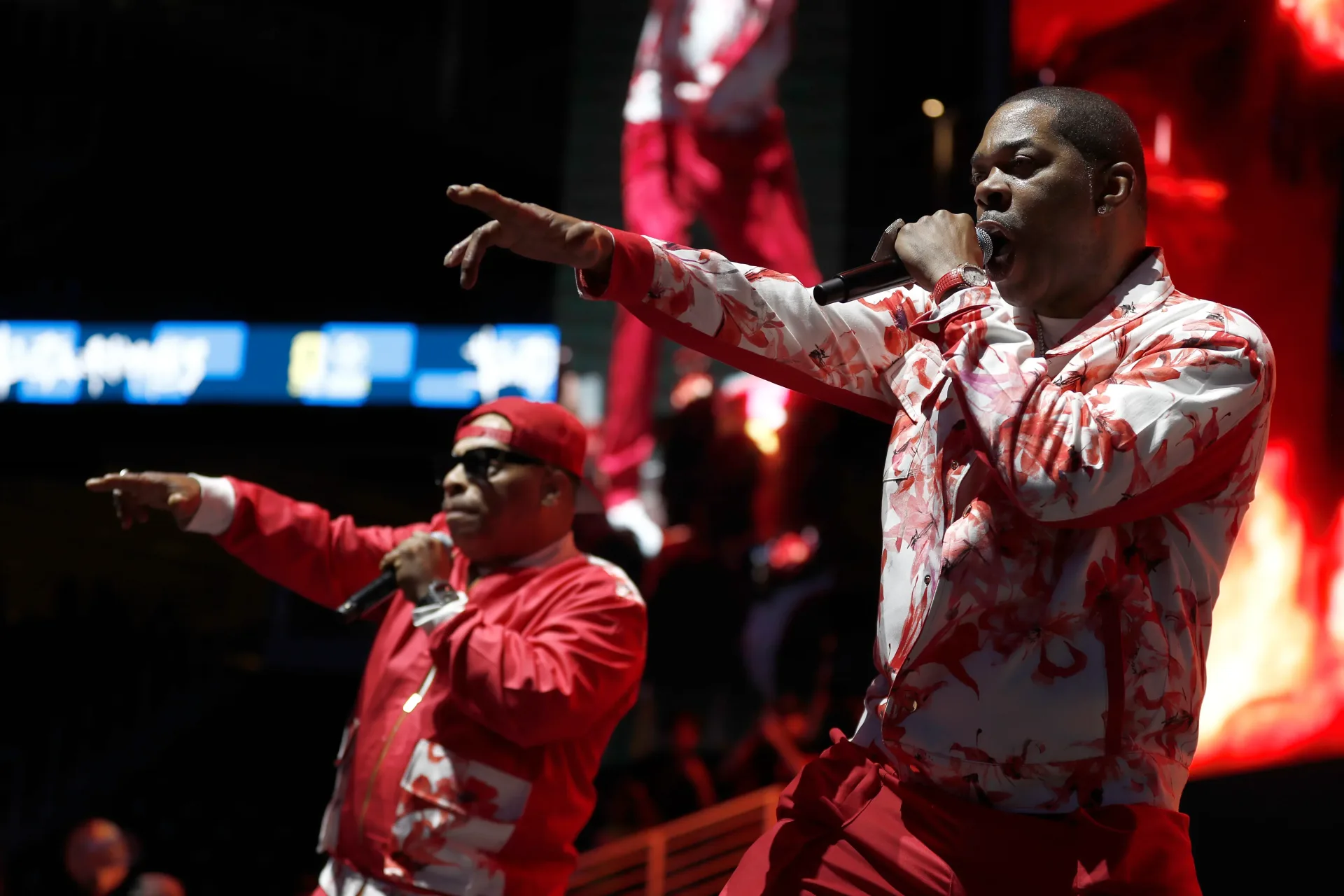
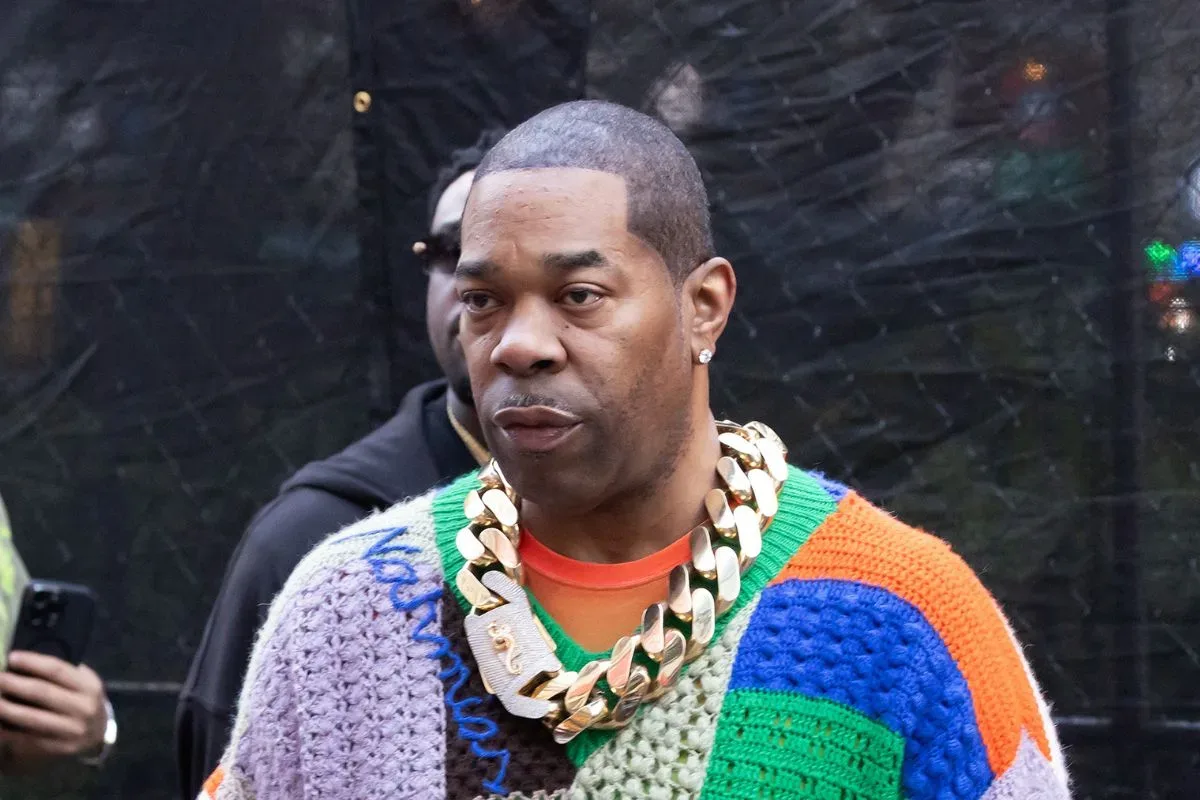
Busta Rhymes has drawn a sharp distinction between being a veteran rapper and becoming creatively fixed in place. Speaking while reflecting on three decades since his solo debut and on his latest J Dilla-centered release, Busta argued that some established MCs should step aside—not because they have reached a particular age, but because they have stopped growing.
“Because they get stuck and they’re not evolving,” Busta said. “They’re a little too stubborn with ‘yesterday.’”
It is a blunt opinion from an artist whose own catalog offers a useful frame for what he means by evolution. Before going solo, Busta had already become recognizable through Leaders of the New School and appearances on A Tribe Called Quest records including “Oh My God” and “The Scenario.” When Elektra released The Coming in 1996, he carried that visibility into a debut that did not rely on only one mode of performance.
“Woo Hah!! Got You All in Check” delivered the enormous, shouted energy that many listeners immediately associate with Busta Rhymes. “It’s a Party,” meanwhile, demonstrated a smoother side. The contrast matters because it complicates the easy shorthand of treating an artist’s signature as a limitation. A recognizable voice, cadence, or persona can be an asset. In Busta’s view, the issue begins when familiarity turns into resistance to change.
His argument is about creative movement, not an age limit
Veteran is often used as a proxy for age in conversations about hip-hop, but Busta’s comments point somewhere else. His criticism is directed at artists who become comfortable repeating yesterday’s solutions. That can mean clinging to an old approach even when a song calls for another one, or treating an earlier era’s expectations as a rulebook rather than a foundation.
That is different from saying an artist must chase every new fashion. Evolution does not necessarily require abandoning a voice, erasing a history, or copying younger performers. The more practical reading of Busta’s point is that an MC needs to remain responsive: to the beat, to the emotional purpose of a record, and to the possibilities still available within their own skill set.
It is an especially notable stance given the anniversary context around The Coming. Anniversary editions and retrospectives can encourage a backward-looking mindset because they ask audiences to revisit a defining period. Yet Busta is using a milestone to make the opposite creative case: past work can be honored without being treated as the only acceptable version of an artist.
The debate also arrives at a time when hip-hop’s relationship with games and other entertainment spaces remains highly visible. The conversation around which artists and sounds are represented in the medium continues to be active, as seen in the discussion around hip-hop and GTA VI’s listed radio stations. Busta’s comments concern rap craft rather than game soundtracks, but the larger point carries across platforms: a genre with a long history is continually interpreted by new audiences, technologies, and creative settings.
J Dilla is central to the story behind Dillagence II
Busta’s newest project is not simply a nostalgic return to an old collaborator’s work. It extends a creative association that reaches back to his debut. J Dilla was part of The Ummah, the production team that worked on The Coming. The album’s 25th-anniversary edition includes Dilla’s remix of “Woo Hah!!” as well as The Ummah’s remix of “It’s a Party,” preserving two direct links between the rapper’s early solo era and the producer’s work.
Their connection continued over Busta’s solo catalog. After Dilla died in 2006, Busta built the first Dillagence mixtape around the Detroit producer’s beats; it was released the following year. That makes Dillagence II part of an ongoing relationship with the material, not a one-off commemorative exercise.
The newer project began with a call from Dilla’s mother, Ma Dukes, who wanted to commemorate 20 years since her son’s death. Busta initially intended to record one song. The idea expanded into a full album instead. Dillagence II is a 19-track release, credited jointly to Busta and Dilla, and it arrived in August. It also includes “This Woman,” which pairs Dilla’s work with a vocal from D’Angelo.
Those facts establish a careful balance in the project’s premise. The beats are unreleased, but the release is not presented as a newly created collaboration in the ordinary sense. Dilla is a late producer whose work is being brought forward, while Busta supplies a present-day performance and shares artist credit. Ma Dukes’ involvement in initiating the commemoration is likewise important context: the album grew from a request connected to Dilla’s legacy.
Why Busta does not speed rap over Dilla beats
For many fans, rapid-fire rapping is one of Busta Rhymes’ most recognizable technical traits. But he has said that he has never used that approach on a Dilla beat because the music does not call for it.
“I’ve never speed rapped on a Dilla beat because his music doesn’t warrant that,” Busta said.
The remark gives his broader comments about evolution a concrete musical application. Technical ability is not simply a question of doing the fastest, loudest, or most difficult thing available. It also involves restraint. A rapper may possess a particular high-impact tool, but the song’s structure and feel determine whether it belongs there.
In this context, “speed rapping” refers to delivering a large number of syllables in a short span. It can create urgency and spectacle, but it is only one method of shaping rhythm. Busta’s point is that Dilla’s beatmaking leaves space for different choices. Rather than approaching every instrumental as a runway for a familiar signature technique, he is describing a process of listening for what the production invites.
That approach is relevant to the use of archive material as well. An unreleased beat is not a blank canvas with no identity. It already contains arrangement, rhythm, and atmosphere decisions made by its producer. A new vocal has to meet those decisions rather than overpower them. Busta’s explanation suggests that his goal on Dillagence II was not to place his best-known mode on every track, but to adapt his performance to Dilla’s music.
Legacy work still needs an active artistic choice
The two ideas—his criticism of stagnation and his return to Dilla’s unreleased beats—might seem contradictory at first glance. One looks toward the future; the other draws deeply from the past. But together they make Busta’s position clearer. The past is not the problem. Becoming trapped by it is.
Dillagence II is built from older material, yet Busta’s comments indicate that he is not treating the beats as an excuse to recreate a former version of himself. The project’s origin, its joint credit, the expansion from one planned song to 19 tracks, and the inclusion of D’Angelo’s vocal on “This Woman” all point to a release shaped around the specific material at hand.
For listeners, that distinction offers a more useful way to assess veteran artists than a simple question of whether they sound like they did at their commercial peak. The better questions are whether the performance serves the song, whether the artist still makes choices rather than relying on reflex, and whether experience is being used as a resource instead of a museum display.
Busta Rhymes’ own position leaves room for artists to retain their identities. It does not demand that every rapper abandon the techniques that made them distinctive. Instead, it argues that a long career carries a responsibility to keep applying those abilities with judgment. In the case of Dilla’s music, that judgment means knowing when not to unleash the expected rapid-fire approach—and letting the beat determine the route.