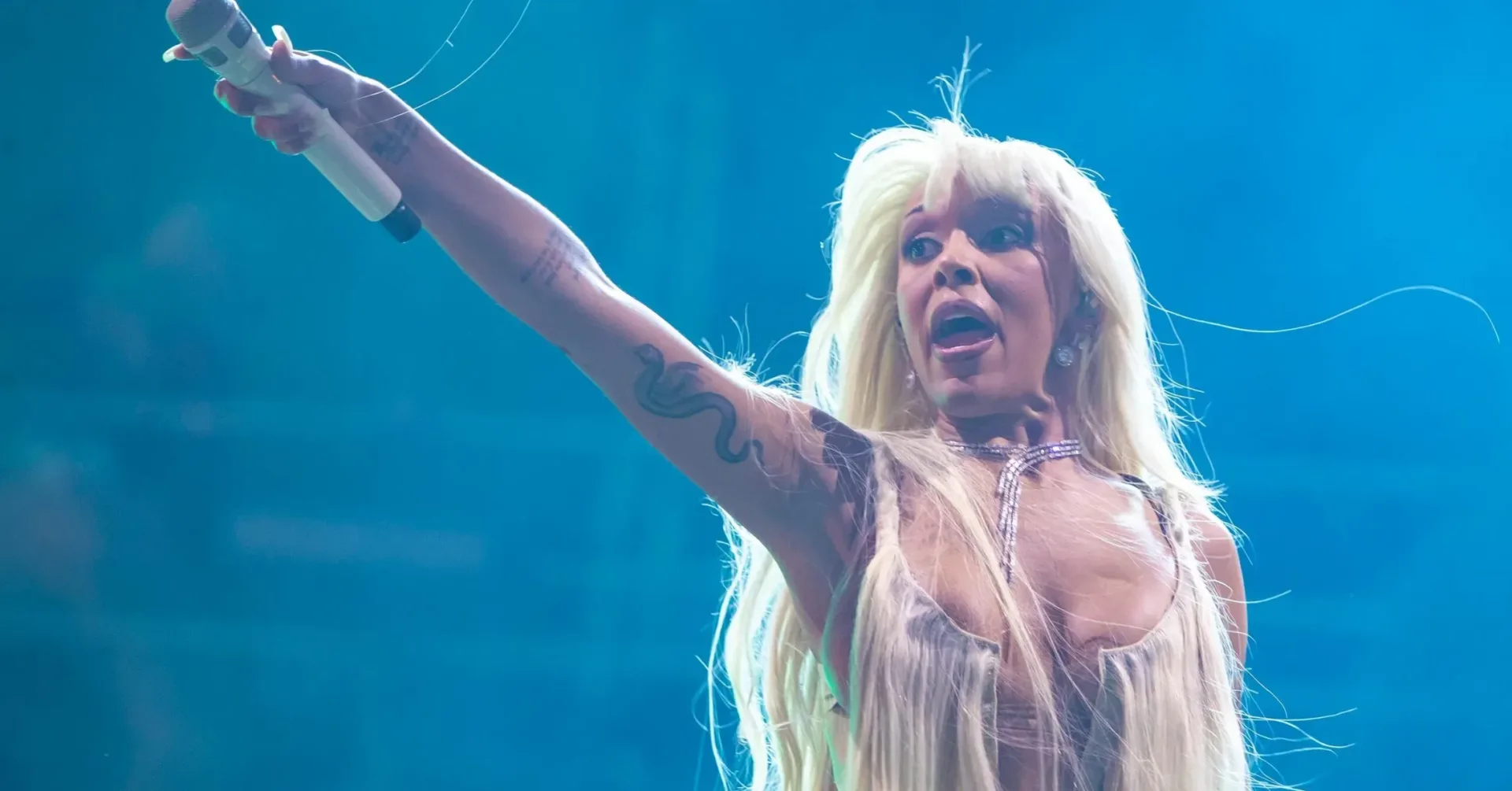
Doja Cat has publicly expressed disappointment at not appearing in the circulating Grand Theft Auto VI music lineup. In a post on X, the artist wrote that she would have loved to place music in the game and described herself as “so f*ckin bitter.” The remark may be playful in tone, but it also puts a spotlight on a meaningful omission from a list packed with major rap, pop and regional Southern artists.
The important qualifier is that the publicly circulated station list should not automatically be read as a final, complete, officially verified soundtrack. Large games can distinguish between music present at launch, music used in promotional material, tracks tied to particular radio stations, and selections later added through updates or expansions. Nothing in the available material confirms that Doja Cat has been approached for GTA VI, that a song was considered, or that her music will arrive later.
Still, her reaction makes sense in context. GTA radio is not simply background audio. Stations give players a way to shape the mood of long drives, escapes and open-world wandering, while hosts and genre identities turn playlists into part of a fictional city’s texture. Being included can place an artist’s work inside an unusually durable pop-culture setting. Being left off a list this extensive will naturally get noticed.
A soundtrack list with conspicuous range
The material currently in circulation describes several stations with distinct programming identities. VICE CITY RAP RADIO, hosted by JT and DJ Stevie J, is built around contemporary rap. Its stated selections include Playboi Carti’s “AHH YEA,” Denzel Curry and 454’s “FLA Flow,” Coi Leray’s “Players,” Cardi B’s “Don’t Chart,” 21 Savage’s “Cookin,” and “Let’s Rock” from Kodak Black and Don Toliver.
That same station is said to include Future, Young Thug, Latto, Flo Milli, Offset, Central Cee, Travis Scott, Quavo, Sexyy Red, Tee Grizzley, SoFaygo and Yung Lean. The breadth matters: it does not suggest a narrowly curated single sound so much as a contemporary-rap station designed to move among prominent voices, collaborations and different styles.
BODEGA THE DJ, also identified as VCRR programming, makes the list feel deeper rather than merely star-driven. Alongside Drake’s “Nonstop,” Future’s “712PM,” Gunna’s “COUNT UP,” Nicki Minaj and Yo Gotti’s “Rake It Up,” and Migos and Lil Uzi Vert’s “Bad and Boujee,” it includes a large array of other performers. Kodak Black appears repeatedly in this portion, as do Latto, Travis Scott, Sexyy Red, BossMan Dlow and Pooh Shiesty.
The sheer volume is a useful caution against reducing the story to one missing name. A radio soundtrack can contain many artists without representing every genre, scene, or major performer a player might expect. Doja Cat’s absence is notable precisely because her catalog can cross rap and pop spaces, while the listed programming also reaches into both of those lanes.
Pop, classic Southern rap and global selections are also represented
The available list is not exclusively contemporary rap. FLASH FM, hosted by Robyn and Alex Consani, is described with four high-profile selections: Drake and Majid Jordan’s “Hold On, We’re Going Home,” Doechii and SZA’s “Persuasive,” Gwen Stefani and Eve’s “Rich Girl,” and Ol’ Dirty B*stard and Kelis’ “Got Your Money.” Even in this brief excerpt, the station’s presentation suggests a pop-facing format with hip-hop connections rather than a hard divide between the two.
WORLDWIDE FM, hosted by Gilles Peterson, is listed with “Lion” by Little Simz and Obongjayar. Meanwhile, THE SNIPER OF LA PERLE, hosted by Kodak Black, includes several Kodak Black-associated tracks—“Haiti,” “300 Blackout,” and “Haitian Scarface”—plus “Guantanamera” credited to Wyclef Jean, Ms. Lauryn Hill, Celia Cruz and Jeni Fujita.
The most historically oriented group in the material is DIRTY SOUTH CLASSICS, hosted by Trick Daddy and Trina. Its selection spans artists including 2 Chainz, Drake, Jeezy, Lil Wayne, Outkast, 2Pac, Juvenile, Gucci Mane, T.I., Three 6 Mafia, Rick Ross and Trick Daddy. Songs named there include “A Milli,” “Player’s Ball,” “Bling Bling,” “Lemonade,” “Big Pimpin’,” “Hustlin’,” “Dey Know,” and “Da Baddest B*tch.”
In radio terms, a format is the broad programming identity that guides a station’s songs, hosts and atmosphere. These names indicate a format approach: VICE CITY RAP RADIO handles a large contemporary-rap pool; DIRTY SOUTH CLASSICS is built around a regionally framed legacy set; Flash FM provides a more pop-oriented counterpoint. That structure is more significant than a flat playlist because a player encounters songs through a station’s character and host presentation.
Why the Doja Cat omission is easy to understand—and hard to interpret
There is a straightforward fan response: Doja Cat is a prominent artist whose material could fit the hip-hop or pop selections described above, so it is reasonable to wonder why she is not listed. But it does not follow that there is a known dispute, rejected track, licensing problem, or final decision to keep her out. The supplied information supports only one clear claim: she said she wanted music in GTA VI and felt bitter about not being represented on the circulated lineup.
It is also worth separating an artist from a particular track. A radio station’s eventual selection depends on the individual song licensed and its fit with the station, not just whether a performer is famous or associated with a genre. The list does not explain how tracks were chosen, what material may have been unavailable, whether the listed lineup is final, or whether other stations and songs have yet to be disclosed.
That uncertainty is particularly relevant because Rockstar Games can continue supporting a release after launch. Updates and expansions are possibilities for any game’s content plan, but possibility is not confirmation. At present, there is no basis to promise Doja Cat music in a future GTA VI update, to identify a prospective track, or to put a timetable on any addition.
The practical takeaway for GTA VI players
For players keeping track of GTA VI radio, the useful approach is to treat the list as a snapshot of reported programming rather than an exhaustive promise. The names point toward a substantial concentration of hip-hop, with recurring representation from performers such as Kodak Black, Future, Travis Scott, Latto, Sexyy Red and Rick Ross. The supporting station details also show room for pop, older Southern rap, and an internationally oriented selection.
Doja Cat’s post adds a human angle to what could otherwise be an enormous checklist of songs. It captures a familiar part of modern game culture: artists do not only view a major soundtrack placement as a licensing credit. They can see it as a cultural appearance in a world their own fans will spend time inhabiting.
For now, the firm takeaway is limited but interesting. Doja Cat is not named in the available station list, she has voiced frustration about that fact, and the cited lineup is rich enough that the absence has prompted discussion. Players looking for a wider GTA VI picture can also see why the game’s framing matters in this look at why reducing GTA 6 to a single comparison misses the point. As for any future soundtrack change, it remains something to watch—not something established.