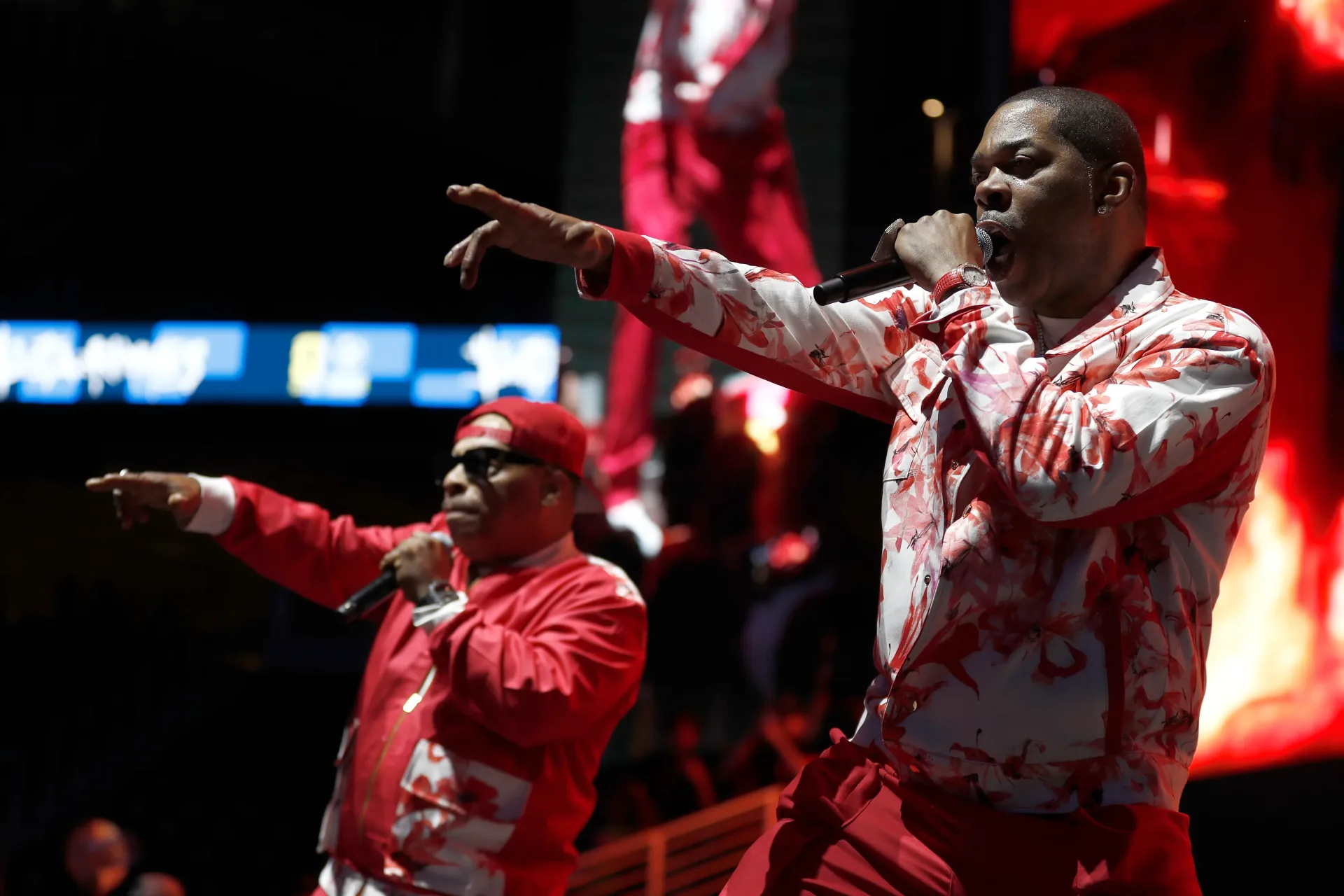
Busta Rhymes used a Grammy Museum appearance in Los Angeles to put the creation of Dillagence II in personal terms: not simply as a new release, but as the result of years spent holding onto music made by James “J Dilla” Yancey. The August album pairs Rhymes’ rapping with beats from the influential producer, who died in 2006, and the evening’s discussion made clear that the material arrived through a real relationship rather than a distant archival exercise.
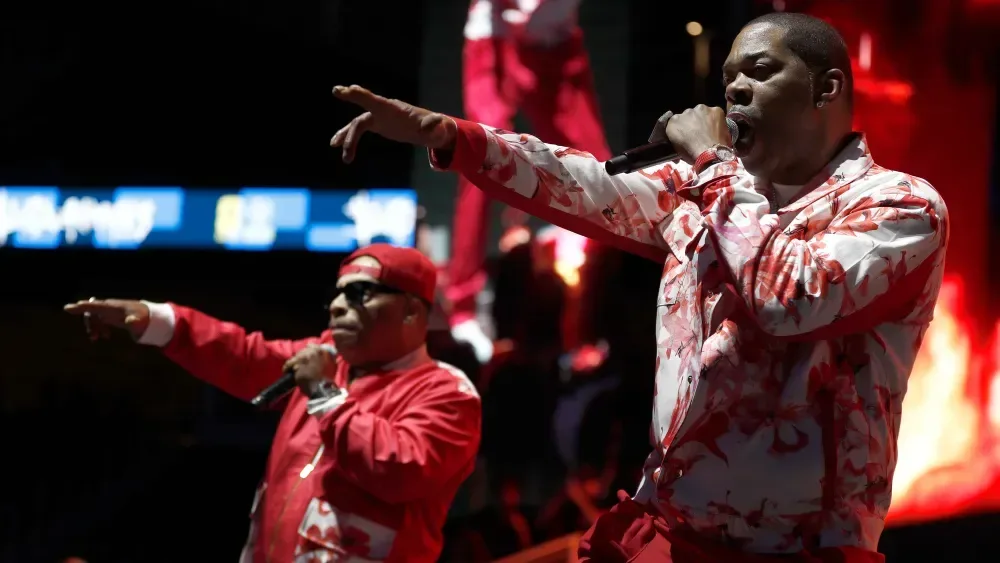
Musician and album executive producer Anderson .Paak led the conversation before Rhymes performed a roughly 30-minute set. Common joined him for “What We Got in Common,” while the performance also included newer material and familiar songs including “Put Your Hands Where My Eyes Could See,” “I Know What You Want” and “Break Ya Neck.”
The event had an understandably emotional charge. Rhymes spoke of tearing up backstage and thanked the people in the room, including Dilla’s mother Ma Dukes, music executive Sylvia Rhone, manager Mona Scott-Young and Jimmy Jam. His focus repeatedly returned to the Yancey family’s blessing and to the care involved in bringing Dilla’s work forward.
From beat CDs to a completed album
The core story behind Dillagence II is unusually direct. Rhymes said Dilla had personally given him many of the instrumentals on CDs that commonly held 25 beats. But these were not necessarily packaged like conventional, ready-to-license song demos. He described pieces fading in and out, a format that made it harder to loop an instrumental into a full track.
That detail matters. A loop is a musical passage repeated to establish or sustain a song’s rhythmic and melodic foundation. For a rapper, a beat with changing sections, brief excerpts or fades may be inspiring but not immediately structured as a complete recording backing. The eventual album, then, represents a process of turning long-preserved ideas into finished songs without treating the instrumentals as disposable raw material.
Rhymes recalled visiting Dilla at his mother’s Detroit home during the producer’s health struggles. He described Ma Dukes as a central part of that creative environment: cooking for the visitors, working as Dilla’s engineer, and finding records from an alphabetically arranged collection in a coat closet when he wanted to sample something.
In this context, an engineer is the person helping manage the practical recording and sound-production work. A sample is an excerpt of an existing recording incorporated into another piece of music. Rhymes’ account does not reduce Dilla’s process to a technical checklist; instead, it illustrates a household system in which creative decisions, equipment work and record selection were all close at hand.
He said he lived with the recordings for years and sometimes felt reluctant to rap over them because he rated the music so highly. That hesitation speaks to the particular challenge of a posthumous collaboration. Completing an album from work associated with an artist who is no longer here can invite a simple nostalgia pitch. Rhymes’ framing was different: he presented the songs as material whose strength remained intact, but which needed the right present-day voices and arrangement choices to become a record.
Related coverage includes Busta Rhymes Unpacks ‘Dillagence II’ and J Dilla’s Lasting Craft at Grammy Museum.
The collaborators around ‘Dillagence II’
.Paak’s role reaches beyond hosting the public conversation. He is featured on the album and executive produced the project after hearing the previously unreleased instrumentals. The guest lineup also includes D’Angelo, Ludacris, Lil Wayne and Jon Batiste, among others. Their presence situates the record as a collaborative production rather than an isolated pairing between Rhymes and a catalog of beats.
Rhymes discussed “This Woman,” featuring D’Angelo, and said he received the late singer’s vocals in February before recording his own rhymes that same day. He also addressed “What We Got in Common,” which features Common and Batiste, as well as “Kingpin (Knock Ya Head Off),” his collaboration with .Paak and Ludacris.
The reported timing around “This Woman” underlines a useful distinction: an album built from older instrumental foundations does not automatically mean every creative component is old. A finished track may combine work preserved from one period with new verses, vocals and production decisions from another. Rhymes’ broader argument was that the music does not have to sound trapped in the era in which it was made.
That approach fits a bigger idea in hip-hop production: the durability of a beat is not determined just by its age. Rhythm, texture, sample selection and space for a vocalist can retain their impact across changing trends. Rhymes called Dilla’s work timeless and said the production on the album was more than two decades old, yet still felt current when combined with the project’s new elements.
Why the family blessing is central
One of the evening’s most significant moments came when Rhymes brought Ma Dukes onstage and publicly thanked her for approving Dillagence II. He said the Yancey family and estate’s grace and blessing had made the project possible.
That acknowledgement gives the album’s backstory an important boundary. A music estate generally refers to the people or entity responsible for managing the rights and legacy associated with a deceased artist’s work. The available details do not lay out the album’s legal arrangements, but Rhymes explicitly credited the family and estate’s support. For listeners, that is a meaningful part of how he wants the project understood: as an undertaking undertaken with permission and personal trust, not merely access to old recordings.
His description of production as a collection of irreplaceable “moments in time” also helps explain why he held on to the Dilla material. Rhymes said he has similarly received large quantities of beats from producers including the Neptunes, Swizz Beatz and Timbaland. He characterized those recordings as snapshots of artistic periods that cannot be recreated on demand.
There is a collector’s instinct in that statement, though it is not about treating songs like trophies. The value Rhymes described is creative and historical: each beat preserves a specific artistic decision, a particular sound and the circumstances of its making. Dillagence II is the point at which some of those preserved Dilla moments were finally placed into a new public context.
Recognition, legacy and the performance itself
Asked what recognition from the Recording Academy would mean, Rhymes noted that he has received 12 nominations without a win. He said the prospect would be difficult to describe, especially for an album he views as a captured moment rather than a routine release.
Whether awards recognition follows is unknown. What is concrete is the project’s ambition: match Dilla’s long-held instrumentals with contemporary performances while respecting both their origin and their unfinished potential. The Grammy Museum set brought those layers together in one room—conversation, gratitude, new songs, familiar catalog highlights and Common’s appearance on “What We Got in Common.”
For Rhymes, the public presentation was evidently not just an album breakdown. It was a chance to identify the people who helped shape the conditions for Dilla’s music, recognize a family’s role in allowing it to be used, and explain why years-old production can still feel alive. Readers following another recent account of an artist reflecting on the impact of a major creative relationship can also see AZ Chike’s discussion of rebuilding his identity after Kendrick Lamar’s co-sign.