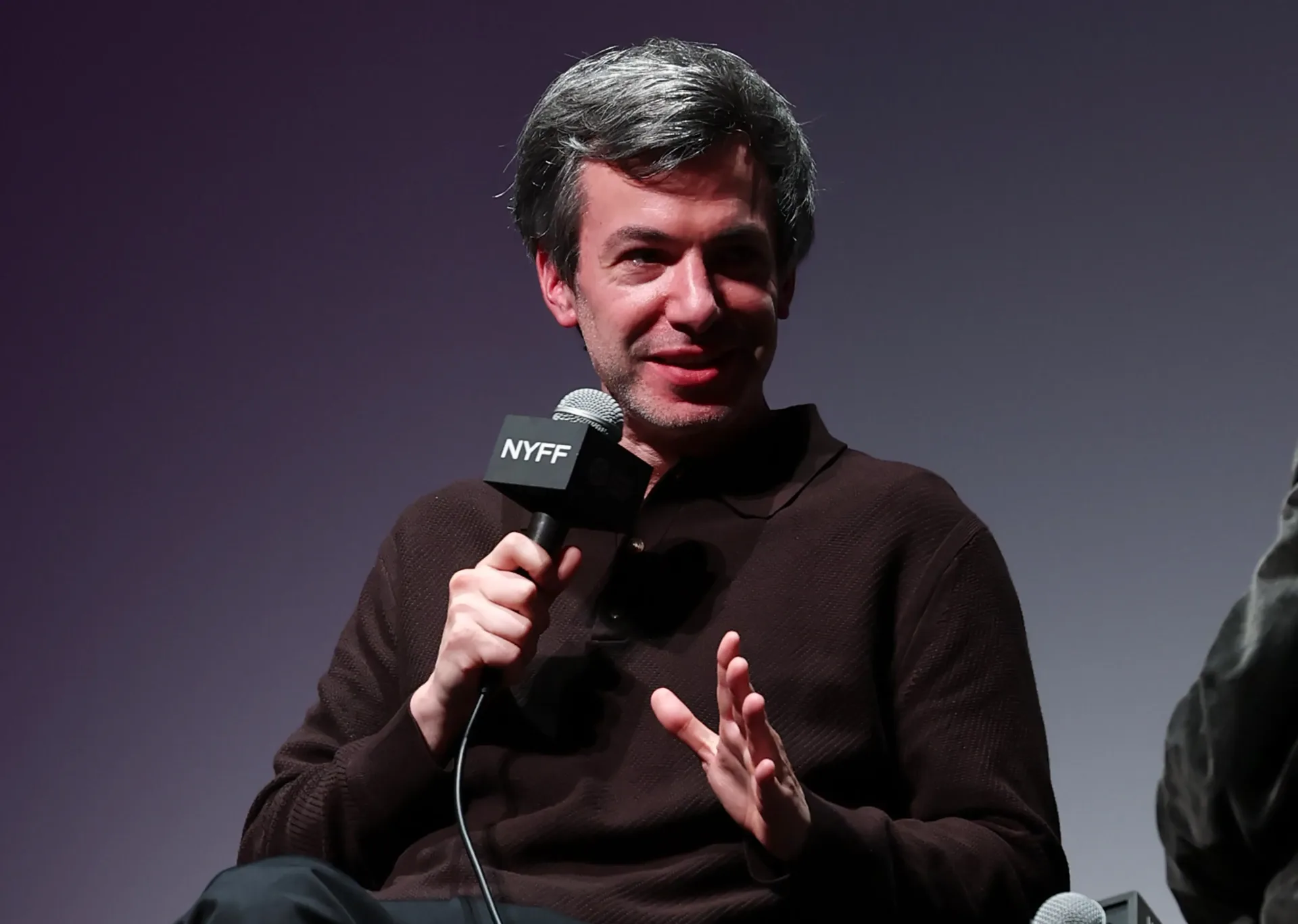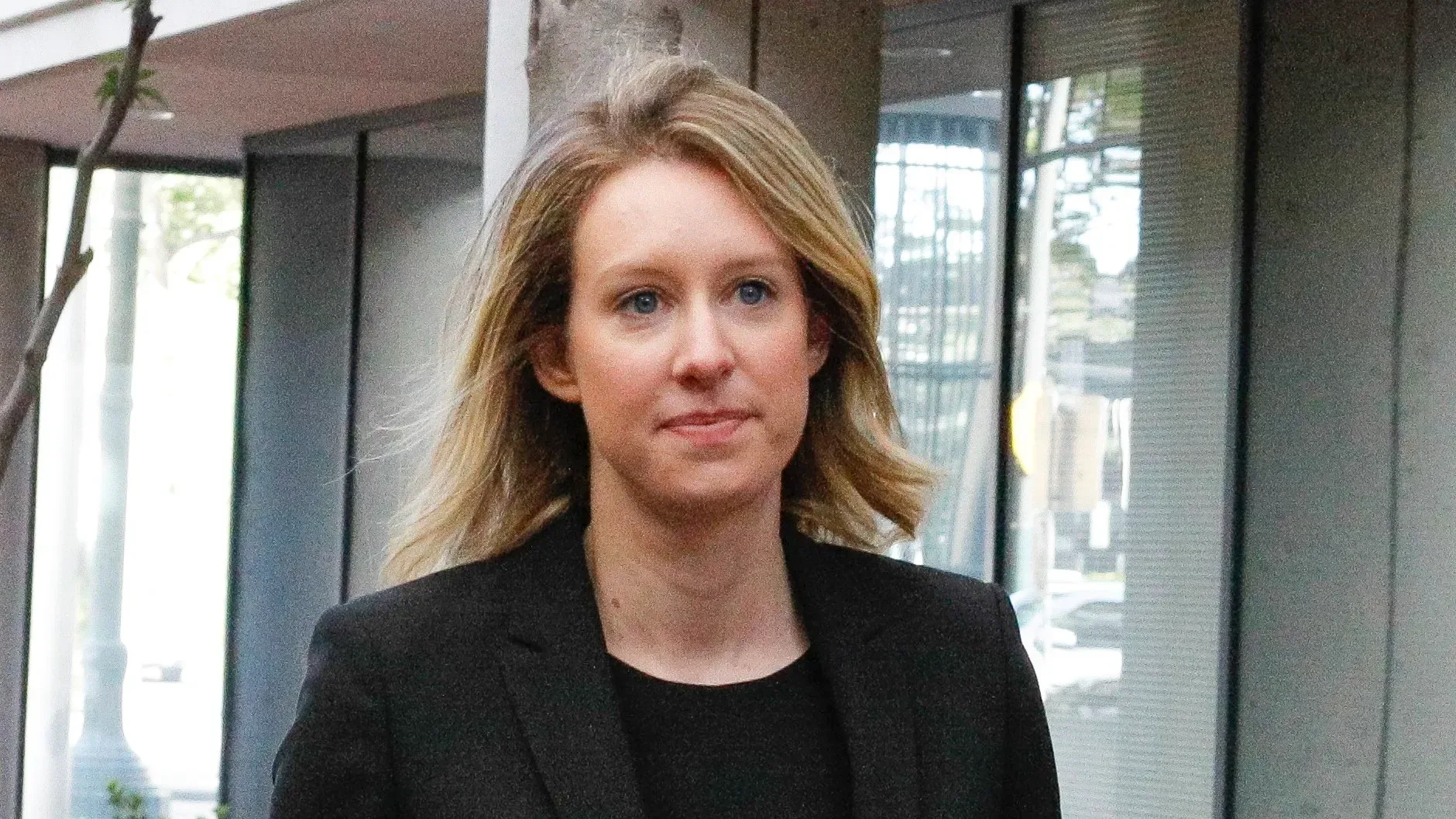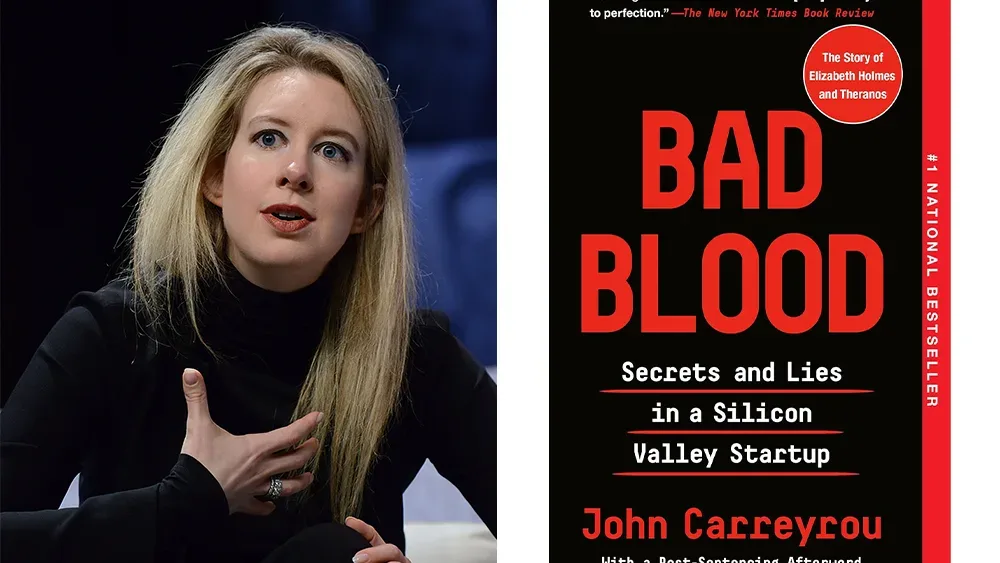
Books and documentaries often work as companion pieces, but the latest resurgence for Bad Blood: Secrets and Lies in a Silicon Valley Startup is an unusually sharp example of that feedback loop. John Carreyrou’s 2018 book about Elizabeth Holmes and Theranos has climbed Amazon’s charts following the nationwide theatrical opening of You Can See Everything, the new documentary from Nathan Fielder and Lance Oppenheim.
As reported Monday, Bad Blood held the No. 1 position in Amazon’s biomedical engineering, business infrastructure and venture-capital bestseller categories. It was ranked No. 3,048 across all books on the retailer at that point. Those category standings are snapshots rather than a measure of a book’s overall historical sales, but they indicate that a major new screen release has sent readers back to the detailed account of the Theranos story.
The connection makes sense. You Can See Everything examines Holmes, her partner Billy Evans and their two children in the final weeks before Holmes entered federal prison in May 2023. Meanwhile, Bad Blood traces the earlier rise and fall of the blood-testing company: the investor pitch, the technology claims, the internal failures and the reporting that brought those issues into public view.
A new film has reopened an old, unresolved public fascination
You Can See Everything opened nationwide on October 16 and brought in $15 million domestically during its first weekend. The A24 release runs for nearly three hours and was filmed largely in secret. Its stated focus on the period just before Holmes reported to prison naturally places its attention on a later, more intimate chapter than the one that made Theranos a defining Silicon Valley scandal.
Bad Blood, by contrast, is built around the company’s business and technological claims. Published in 2018, the book followed Carreyrou’s reporting that first exposed serious problems with Theranos’ technology in 2015. The central promise presented by Holmes was a revolutionary device that could perform hundreds of blood tests from only a few drops of blood. That promise was crucial to Theranos’ appeal: a successful version of such a machine would have represented a dramatic change in how many laboratory tests could be conducted.
The core problem, as the Theranos collapse demonstrated, was that the technology did not work as advertised. By the time the company dissolved in 2018, its former $9 billion valuation had disappeared. The story is not merely about an unsuccessful product. It is about the gap between an extraordinary claim and a system capable of reliably delivering on it—and about what can happen when that gap is hidden from investors, employees, patients and the public.
What the chart categories say—and what they do not
The three Amazon categories where Bad Blood was No. 1 are revealing. Biomedical engineering is the most directly connected to Theranos’ claimed area of innovation. Venture capital and business infrastructure point to the other enduring dimension of the case: the institutions that finance and support companies built around ambitious promises.
Biomedical engineering generally concerns the application of engineering to medicine and biology. In the Theranos context, it is the category most closely associated with the purported testing technology. Venture capital refers to investment funding for businesses with high growth potential, typically businesses that may be risky or not yet profitable. Theranos’ once-enormous valuation illustrates how persuasive an innovation narrative can be in that setting.
Related coverage includes ‘Bad Blood’ Returns to Amazon Charts After ‘You Can See Everything’ Debut.
Neither chart placement should be read as a new scientific assessment of Theranos or as a direct measurement of the documentary’s total audience. Amazon categories can be narrow and change frequently. Still, the return to the top of several relevant lists shows that the story retains power across both technology and business readerships, years after the company’s dissolution and years after the book’s initial release.
Why the book remains an important companion to the documentary
A documentary centered on the final period before imprisonment and a reported investigation of a startup’s operations do different jobs. The film’s setup suggests a close look at the people and family circumstances around Holmes at a pivotal late moment. The book’s premise is more structural: how a startup built credibility around a transformative promise, why that promise failed to hold up, and how reporting challenged a company that had attracted powerful investors.
That distinction matters for readers deciding what they want from the renewed Theranos conversation. A viewer interested in the immediate human circumstances surrounding Holmes’ incarceration may find the new film’s timeframe especially relevant. A reader looking to understand the claimed technology, Theranos’ ascent, its eventual collapse and the investigative path that surfaced its problems will find the book’s scope more directly aligned with those questions.
The two works also show why a story can continue to generate attention long after its major corporate events have ended. Theranos dissolved in 2018, but the themes embedded in its history—technical accountability, secrecy, investor confidence and the cultural pressure to treat disruption as inherently virtuous—remain intelligible to audiences. The fresh movie has provided a new entry point; the book offers an established route back through the events that preceded it.
The legal outcome remains central to the story
Holmes was convicted in 2022 on four counts of wire fraud and conspiracy connected to Theranos. She was later sentenced to more than 11 years in federal prison. She has continued to maintain her innocence, a position that is described as a recurring tension in You Can See Everything.
Wire fraud is a criminal offense involving a scheme to defraud using electronic communications. In broad terms, the charge is tied to deceptive conduct carried through communications systems rather than a dispute over whether a business simply succeeded or failed. That difference is vital when discussing Theranos: startups can fail without becoming criminal cases. The allegations and subsequent convictions made the Theranos matter one of fraud and conspiracy, not simply a story of an overhyped product that missed its goals.
It is also why the public’s interest has not settled into a simple “rise and fall” narrative. Theranos combined a high-stakes medical claim with extraordinary investor confidence and a criminal prosecution. The company’s story raises questions about due diligence, transparency and what evidence should be demanded when health-related technology is presented as revolutionary.
From bestseller to renewed reference point
Bad Blood was already a major success before this renewed spike. It reached No. 1 on the New York Times bestseller list and spent more than 100 weeks across that publication’s bestseller lists. That history helps explain why it was positioned to benefit from a new cultural moment. It was not an obscure title rediscovered by chance; it was already widely known as a major book about the company.
Carreyrou has also praised Fielder and Oppenheim’s documentary and argued that it merits Oscar attention. That response links the two projects without making them interchangeable. Their approaches, based on the information available, are distinct in time period and emphasis. For audiences, that can be an advantage rather than a conflict: the documentary appears to extend the public record into the years after Theranos’ corporate collapse, while the book remains focused on explaining how the scandal took shape.
The situation is a reminder that documentaries can trigger renewed demand not only for books adapted for the screen, but also for earlier reporting that supplies context. For readers and viewers interested in another recent example of a screen project reshaping conversation around a major franchise, Joking Joystick has also covered Hideo Kojima’s return to the world of Cyberpunk: Edgerunners 2.
For Theranos, the return of Bad Blood to the charts is less about nostalgia than continued scrutiny. The new documentary has drawn attention to Holmes’ life immediately before prison; the book remains a prominent account of the claims, reporting and corporate collapse that made that final chapter consequential in the first place.
Shop the products
Check current price, model and availability at the retailer.