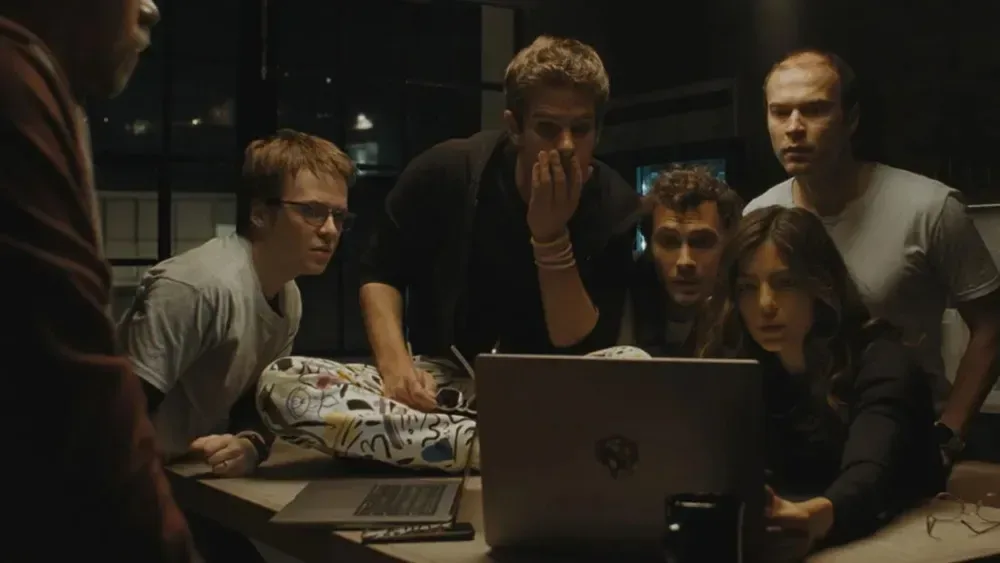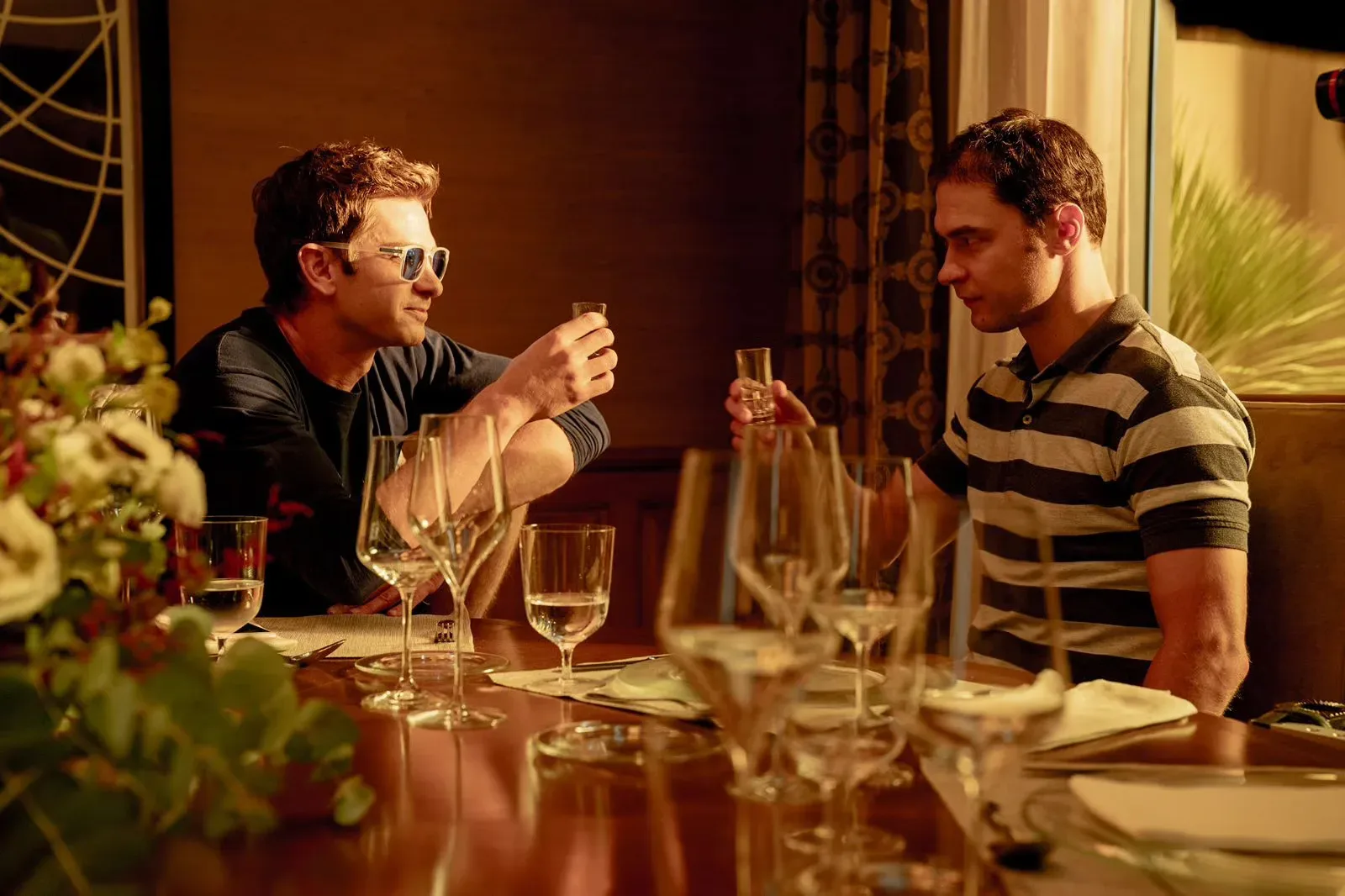
For a film reportedly left looking for a new distributor after a major studio’s change of plans, Artificial has made an unusually forceful first impression. Luca Guadagnino’s genre-blending project has received applause at its New York and London festival premieres, an early 96% Fresh score on Rotten Tomatoes, and the sort of awards conversation that makes an alleged “streaming-only” dismissal look decidedly premature.
That reversal is more than a neat industry plot twist. Artificial is described as a film about the dangers of artificial intelligence and Sam Altman, placing it directly in the middle of the technology debate now reshaping entertainment. Its journey has also arrived amid questions over studio investment in AI, the limits of digital likeness agreements, and whether efficiency-minded technology programs can coexist comfortably with the people who make films and television.
Neon now holds global rights after Amazon MGM dropped the project from its summer release plans. The film’s early reception does not establish why that earlier decision was made; distribution decisions involve far more than a movie’s finished quality. But the enthusiastic response does mean the simplest narrative—that the film was not suitable for a theatrical release—has become much harder to sustain.
A film about AI now caught in an AI-era business story
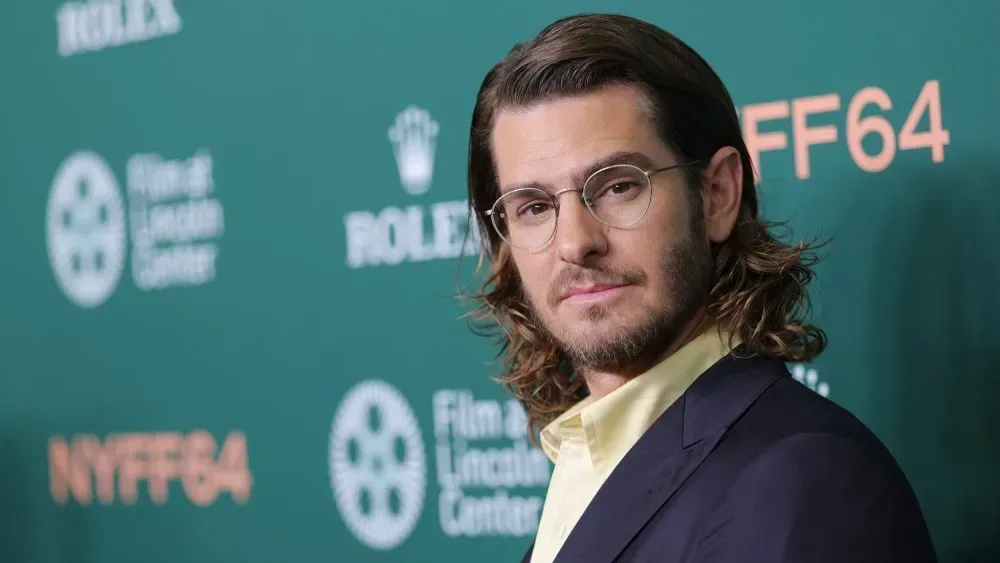
At the London Film Festival, Guadagnino appeared with Andrew Garfield and Yura Borisov at Royal Festival Hall, where the film received a warm reception. That followed its world premiere at the New York Film Festival one week earlier. The combination of festival placement, audience response and broadly strong early reviews has transformed the public conversation around the picture from uncertainty over its release path to curiosity over what, exactly, prompted the original split.
One influential review characterized Artificial as a story with several modes operating at once: a tale of a changing world, a corporate betrayal narrative and a horror movie in which AI escapes the controlled environment of the lab. The same review called it a playful but historically careful docudrama. That description matters because “docudrama” is not the same thing as a conventional documentary. It generally means a dramatized work rooted in real people, events or institutions, rather than a nonfiction work built around interviews, archival footage or direct reportage.
The framing also suggests that the film’s AI subject is not simply a futuristic visual gimmick. Its drama appears tied to the human power structures around the technology: founders, companies, loyalty, fear and control. That focus could help explain why early commentators have compared its cultural-business ambition to The Social Network, rather than treating it as a standard techno-thriller.
Garfield, meanwhile, has attracted particular attention in the supporting-actor conversation. Early praise for his villainous performance has pushed him into awards speculation, though festival acclaim and awards prospects are not guarantees of nominations. At this stage, the important fact is the momentum: the performance has become a prominent part of the movie’s reception rather than an afterthought to the project’s distribution controversy.
What changed after the Amazon MGM departure?
Amazon MGM said at the time that it believed Artificial would be better served by another studio. Shortly afterward, Neon stepped in with a global-rights deal. This is a consequential distinction. A distributor holding global rights is positioned to oversee, sell or coordinate the film’s release strategy across territories, instead of leaving its international future fragmented among multiple buyers.
Related coverage includes ‘Artificial’ Wins Strong Early Response After Amazon MGM Exit.
The departure drew attention because it came three months after Amazon entered a significant partnership with OpenAI, including a reported $50 billion investment. The timing naturally fueled speculation about whether a company so closely tied to AI might be uneasy about backing a movie sharply critical of AI and a major figure in the field. Yet timing and suspicion are not proof of motive. No verified explanation in the available information establishes that the OpenAI relationship caused Amazon MGM to part ways with the film.
That uncertainty is worth preserving. It is easy for a satisfying industry narrative to become an assumed fact, especially when the movie itself concerns corporate conflict. The firm evidence is narrower: Amazon MGM removed the film from its planned slate; Neon acquired the rights; and the film has since been warmly received at two major festival launches.
Still, the initial chatter around the film has aged poorly. A July report cited anonymous people close to the project who questioned whether it met a theatrical standard. Anonymous assessments can sometimes point toward genuine internal disputes, but they are not a replacement for a film’s eventual public reception. In this case, critics and festival audiences have offered an emphatic counterpoint.
A rival-studio executive went further, arguing that distributors may have been conflicted by their own AI investments. That is an allegation from an unnamed industry figure, not an independently established account of how competing studios evaluated the movie. It nevertheless identifies the central tension surrounding Artificial: businesses are increasingly pursuing AI tools and partnerships while also deciding whether to finance and distribute art that interrogates the consequences of that push.
The AI issue is bigger than one release
The debate around Artificial has unfolded alongside separate concerns involving actors and digital replication. Nicolas Cage said he declined to sign a document that would have permitted AI use in connection with his likeness for the since-canceled Spider-Noir. He indicated that the issue could affect whether he works with Amazon again.
People close to the production offered important context: the form reportedly came from producer Sony Pictures Television, not Amazon, and was described as an industry-standard agreement used to make a duplicate of a costumed actor for visual-effects work. Actors may opt out, and the form was said to align with SAG-AFTRA guidelines.
That context does not erase Cage’s concern, but it does clarify the technical distinction at stake. A digital duplicate is a computer-created representation of a performer. In visual effects, such a model can help a production complete shots, adjust costume-related details or handle other postproduction work. It is not automatically the same as giving a studio unlimited authority to generate new performances by an actor. The scope depends on the actual agreement, the production’s practices and the permissions granted.
That is why the word “AI” can obscure as much as it reveals. It can refer to generative systems that create text, images or audio from prompts; machine-learning tools used to classify or assist with material; and digital-production workflows that build virtual versions of performers. These uses raise different questions about consent, credit, compensation, authorship and employment. A broad claim that a project is “using AI” is rarely enough to answer any of them.
The performer-likeness issue has special force because a face, voice and physical performance are inseparable from an actor’s work. The practical question is not merely whether a tool saves time. It is whether a performer meaningfully understands what is being captured, how long it may be retained, what future uses are permitted and whether new uses require fresh consent.
Training meetings and fears over creative jobs
Another report from an unnamed creative team member on an Amazon MGM series described an AI training session presented as workplace education. The participant said the company’s AI group spent an hour introducing a suite of products characterized as tools, but came away worried that the systems could remove entire production jobs. Amazon MGM declined to comment on that account.
A person with direct knowledge of Amazon’s process disputed one key point, saying such meetings are not mandatory and that people direct every part of the process involving the tools. Both accounts can be held in view without pretending they resolve the underlying concern. A human-supervised tool may still change who performs certain tasks, how departments are staffed and which skills are valued.
In production language, a “tool” is not a neutral guarantee of harmlessness or harm. It is a broad term for software intended to support a task. The real implications depend on the task, the human review involved, the training data or inputs, and whether the software supplements workers or replaces work they previously did. That is why creative teams often ask for specifics rather than broad promises that technology will merely assist.
The reported atmosphere of discomfort in the meeting is telling even if it cannot answer every operational question. Entertainment companies are under pressure to explore new technologies, while the employees and artists working inside those companies must consider whether the same technologies affect their livelihoods, their creative authority or their personal identities. The corporate case for cost efficiency and the human case for transparency may overlap sometimes, but they are not identical.
Why the response to ‘Artificial’ matters
Artificial has not settled the entertainment industry’s AI argument. A strong premiere cannot prove that every concern about studio partnerships is justified, nor can it show how every AI-related production tool will be used. What it has done is make the contradiction visible: a film warning about AI’s darker possibilities is now attracting acclaim after being released from the orbit of a company with major AI ties.
That irony may become part of the film’s public identity, but its reception also deserves consideration on its own merits. Audiences and critics appear to be responding to a movie that approaches a live corporate and cultural subject through drama, history and horror. If those reactions continue beyond the festival circuit, Neon’s acquisition will look not just like a rescue, but like a bet on a film whose subject matter and release story amplify one another.
For viewers tracking where pop culture meets technology, the lesson is not that every corporate decision hides a conspiracy, or that every AI workflow is interchangeable. It is that details matter: which company made which decision, what a likeness waiver actually authorizes, whether workers can decline participation, and who remains accountable for the work produced. Those questions are becoming central to film and television, not side issues.
And for an adjacent look at how screen stories are evaluated on their own terms, see our review of Beach Fictions.