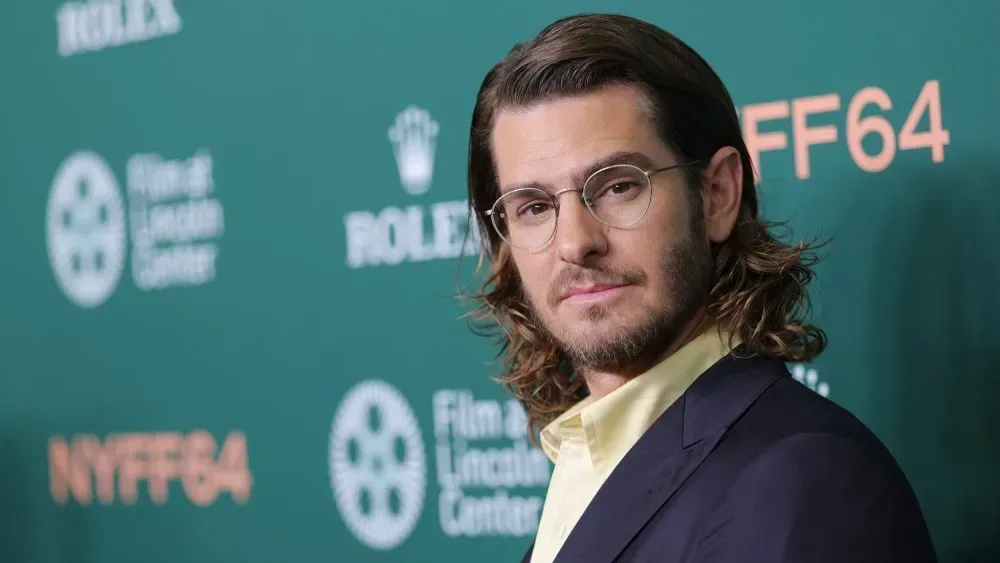
Andrew Garfield approached Sam Altman, the OpenAI CEO he plays in Luca Guadagnino’s Artificial, with a problem that is bigger than imitation: how do you portray a public figure whose presentation, power and public reputation are all part of the story?
Speaking at the film’s world premiere, Garfield said he had initially found Altman compelling when he watched him testify before Congress. At the time, he saw a figure who appeared candid about regulation and persuasive about the responsibilities around artificial intelligence. But, Garfield added, further learning changed the simplicity of that first impression.
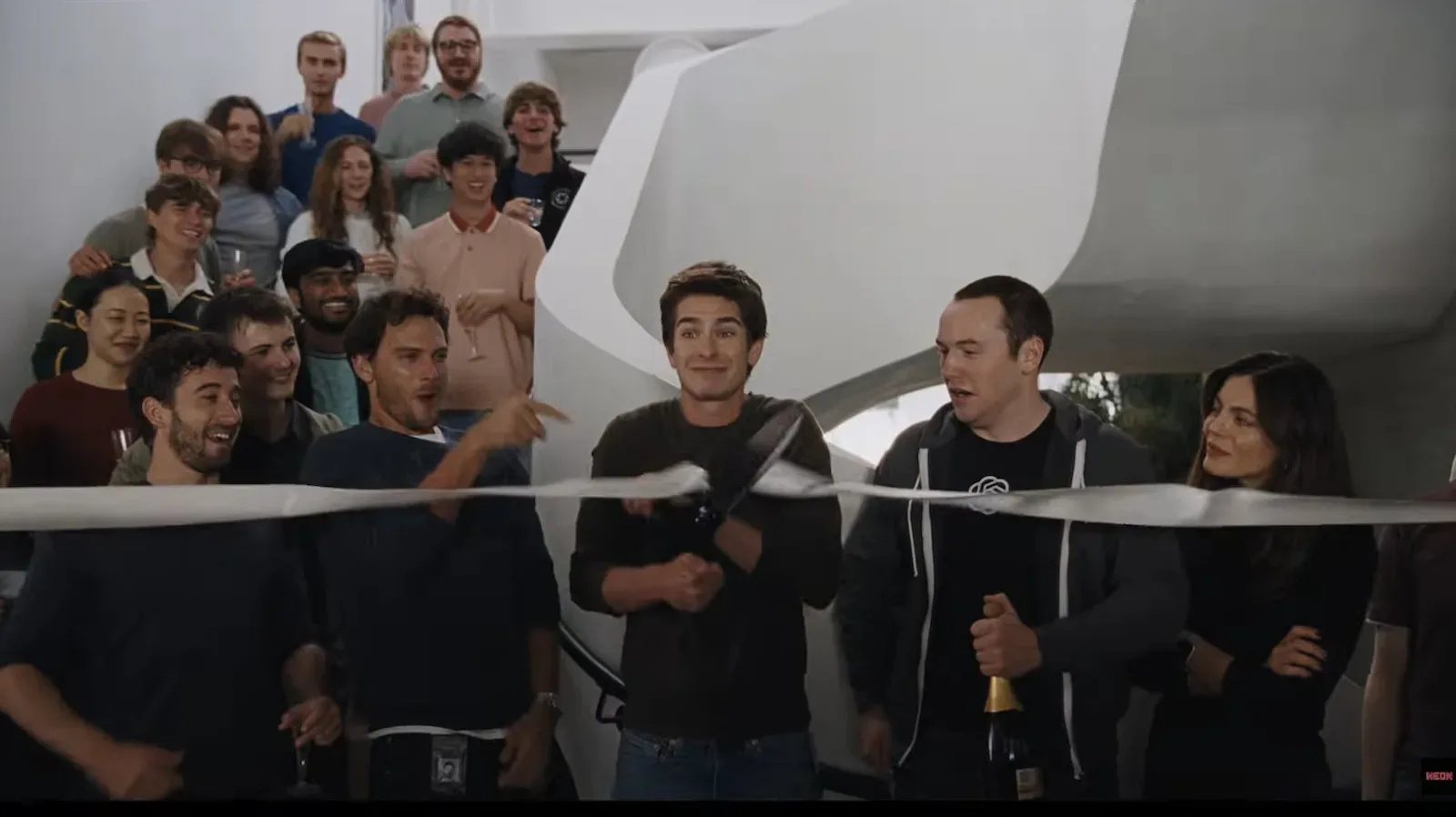
That shift appears central to Artificial. The movie charts OpenAI’s evolution and dramatizes the company’s turbulent period in which Altman was fired and subsequently rehired. It is not simply a film about software; it is a story about the people who hold influence over technology that increasingly affects work, information and personal decision-making.
Months of study, not a claim of documentary truth
Garfield spent roughly two to three months listening to and watching footage of Altman before filming. That kind of preparation can help an actor find vocal rhythms, physical habits and public-facing confidence. It cannot turn a dramatized feature into a literal record of private conversations or motives.
That distinction matters here because the people depicted are alive, recognizable and closely connected to an ongoing debate about AI. Garfield has previously played real people, including Facebook co-founder Eduardo Saverin in The Social Network and composer Jonathan Larson in Tick, Tick… Boom!. At the premiere, he acknowledged the personal unease that can come with watching someone else interpret your life, even while saying he felt compassion for what Altman might feel about the portrayal.
Altman has not seen Artificial. He has said that the filmmakers may make a good movie, but that he does not expect it to be an accurate depiction. That is a useful framing for prospective viewers: a dramatic film can investigate public events and larger tensions without functioning as a definitive account of the people involved.
What “dramatizes” means in this case
In a film context, dramatization means shaping real events into scenes with performances, structure and emotional stakes. The approach can make complicated institutional conflict legible to an audience, but it also involves interpretation. A viewer can appreciate the performances and the questions the film raises while keeping separate ideas in mind: what is publicly established, what is a filmmaker’s framing and what is necessarily imagined to make a narrative work.
That balance is especially important when the subject is an organization associated with AI. “AI” is a broad term covering computer systems able to perform tasks often associated with human cognition, such as generating text or analyzing patterns. The film’s concern, as described by its participants, is less a technical explainer than a question of governance: who makes consequential choices, how those choices are challenged and what the public is asked to trust.
A story of power, personality and governance
Garfield described a moral responsibility in taking on Artificial, recalling that news about potential AI dangers was appearing constantly during production. He said he wished the movie could press even harder on the question of people receiving so much autonomy and power.
That comment identifies the movie’s most immediate hook. The phrase “AI safety” can sometimes sound abstract, but the underlying issue presented here is concrete: major technology is built and deployed by organizations led by particular people, with particular incentives and internal disagreements. A leadership dispute therefore becomes an accessible way to explore a sprawling technological subject.
Simon Rich wrote the film after years of concern about artificial intelligence, encouraged in part by his childhood friend Danny Selsam. Rich said Selsam had been warning him about AI since 2008, long before the wider public began to pay closer attention. He also described seeing material on Selsam’s computer in the year before ChatGPT’s release that he found frightening, and said his earlier attempts to raise concerns through writing had not reached many people.
Rich’s comments help explain why the project is being presented with dark humor rather than as a conventional corporate procedural. Satire can make a difficult subject more approachable, particularly when the topic combines technical complexity, high stakes and behavior that might otherwise feel too strange or consequential for straightforward treatment. Humor does not resolve the debate; it can give audiences a way into it.
The ensemble behind OpenAI’s onscreen conflict
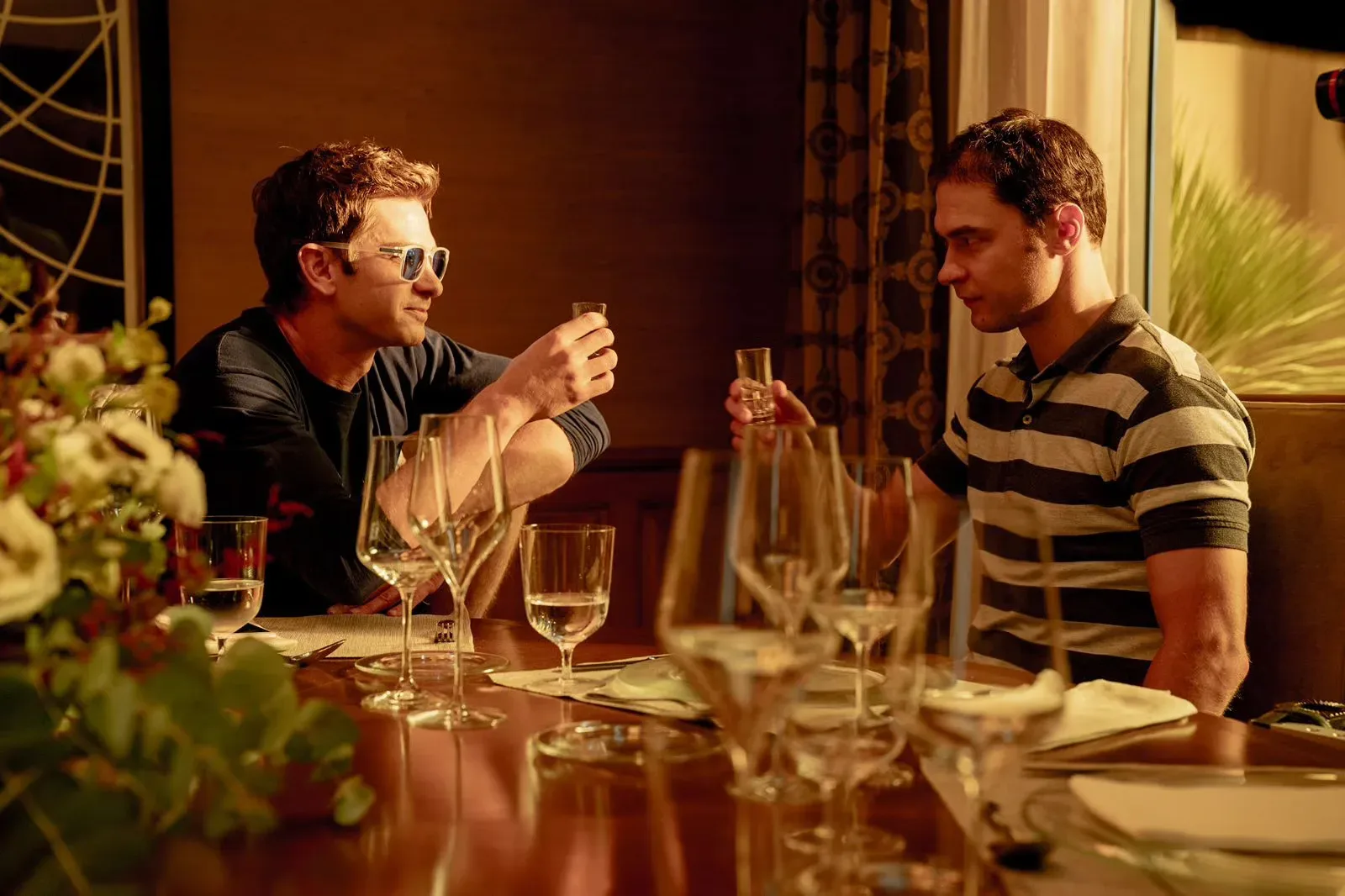
Garfield is joined by Yura Borisov as OpenAI co-founder Ilya Sutskever, Cooper Hoffman as OpenAI president Greg Brockman, Monica Barbaro as chief technology officer Mira Murati and Ike Barinholtz as Elon Musk. Borisov said he was nervous ahead of seeing the completed film for the first time, both because of the emotion tied to the work and because of how Sutskever and audiences might respond.
Barinholtz, meanwhile, described his version of Musk as rooted in 2014, a particular period rather than a catch-all portrait of the entrepreneur. He said Guadagnino’s direction was not to begin with the actor’s own complicated opinions, but to locate what the character loves about himself. That is a revealing performance principle for a film built around powerful, polarizing real-world figures. It does not ask the actor to endorse the subject; it asks him to locate an internal logic.
The presence of several recognizable technology figures also increases the need for viewers to resist treating casting as a verdict. Public familiarity can make a performance feel authoritative before a scene has even started. But a film’s casting and characterization are artistic decisions, not evidence on their own.
An unusual release path for a film about AI
Artificial arrived at the New York Film Festival as a late addition after Amazon MGM stepped away from the nearly completed project, saying it would be better released by another studio. The change came after Amazon entered a $50 billion partnership with OpenAI. Neon later acquired the film and plans to release it theatrically on Dec. 25.
The distribution history gives the movie an additional layer of interest, because its subject is not distant history. It is a current technology debate involving companies that have major commercial relationships and leaders who remain prominent. None of that establishes what the finished movie says or whether its dramatic choices are fair. It does, however, underline why an independently released feature about OpenAI’s internal turmoil is likely to receive close scrutiny.
Festival leadership characterized the film as both timely and entertaining, pointing to AI’s near-daily presence in public discussion and the project’s darkly comic approach to a worrying present. That positioning may be the clearest expectation to carry into the theatrical release: Artificial is designed as a provocative movie about a pressing subject, not as an instructional guide to artificial intelligence or a final word on the people portrayed.
What viewers should watch for
- Performance versus biography: Garfield’s preparation may lend specificity to his Altman, but it remains an interpretation of a real person.
- Institutional conflict: The firing-and-rehiring storyline puts questions of corporate governance at the center. Governance refers to the rules, oversight and decision-making structures through which an organization is run.
- Dark humor as a lens: Rich’s background in comedy suggests the film may use satire to expose contradictions and anxieties around AI power.
- A live controversy: The technology, organizations and public figures involved are still part of an evolving conversation, which makes careful viewing more valuable than assuming any one film settles the matter.
That same awareness is useful across biographical screen stories: drama can illuminate how a public narrative is constructed, even when it cannot fully contain the person behind it. For another recent example of creators reconsidering the framing of public narratives, see Lizzo’s comments on reclaiming her story through a children’s book.