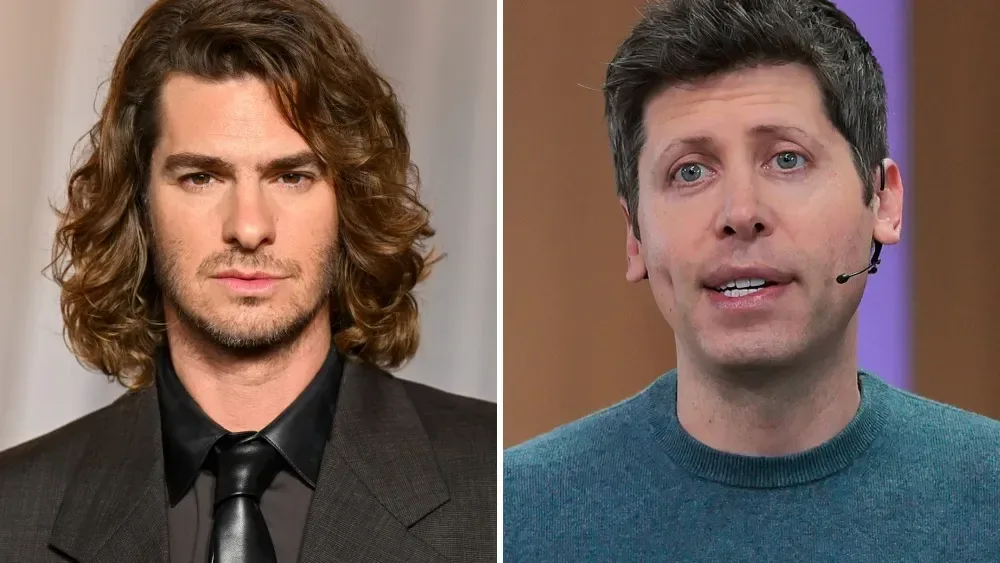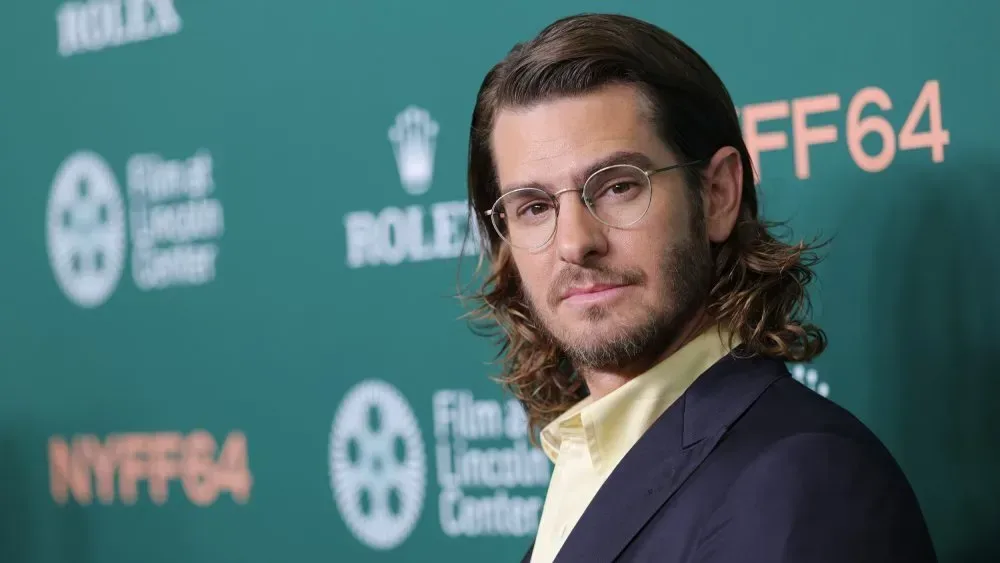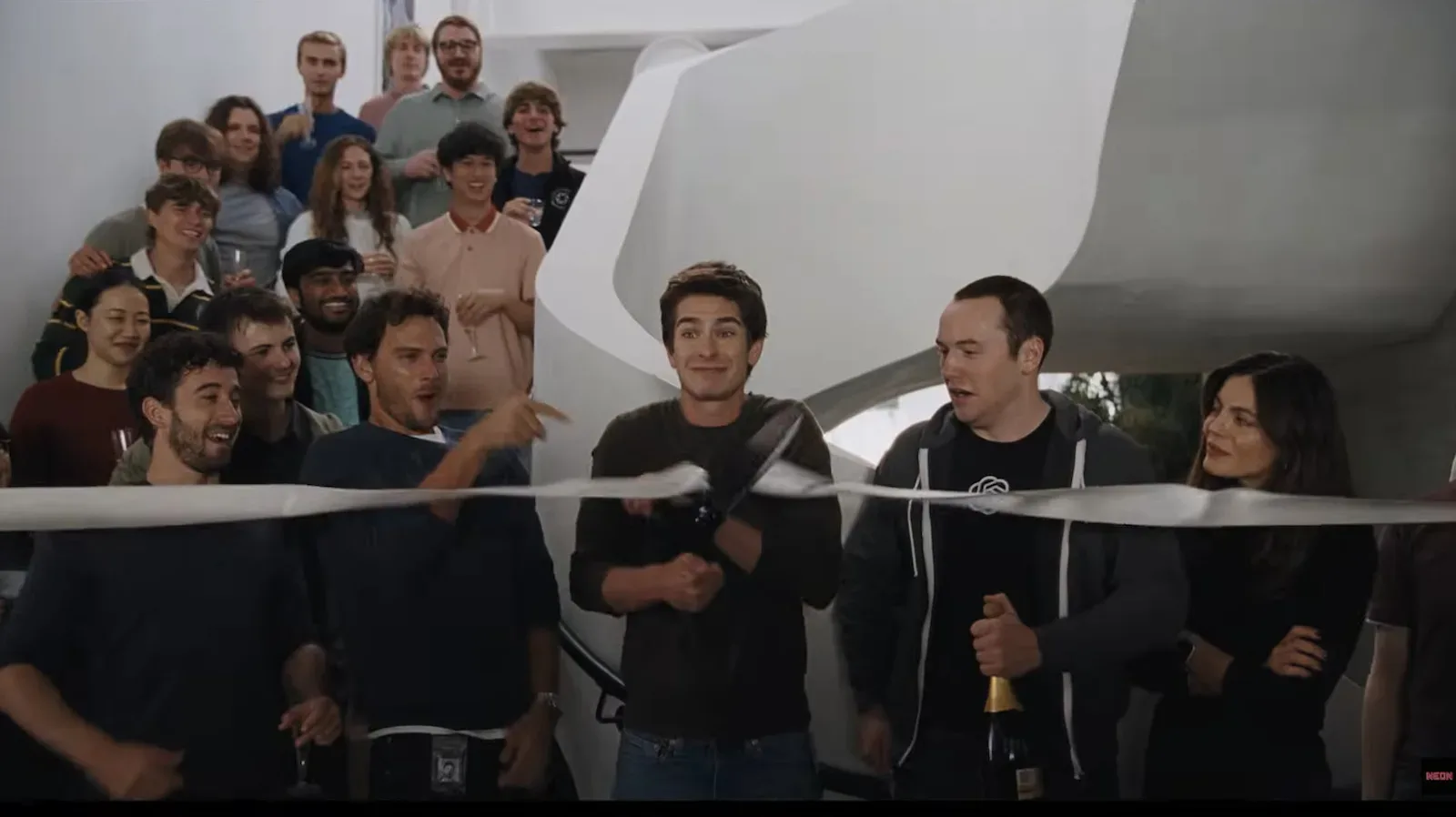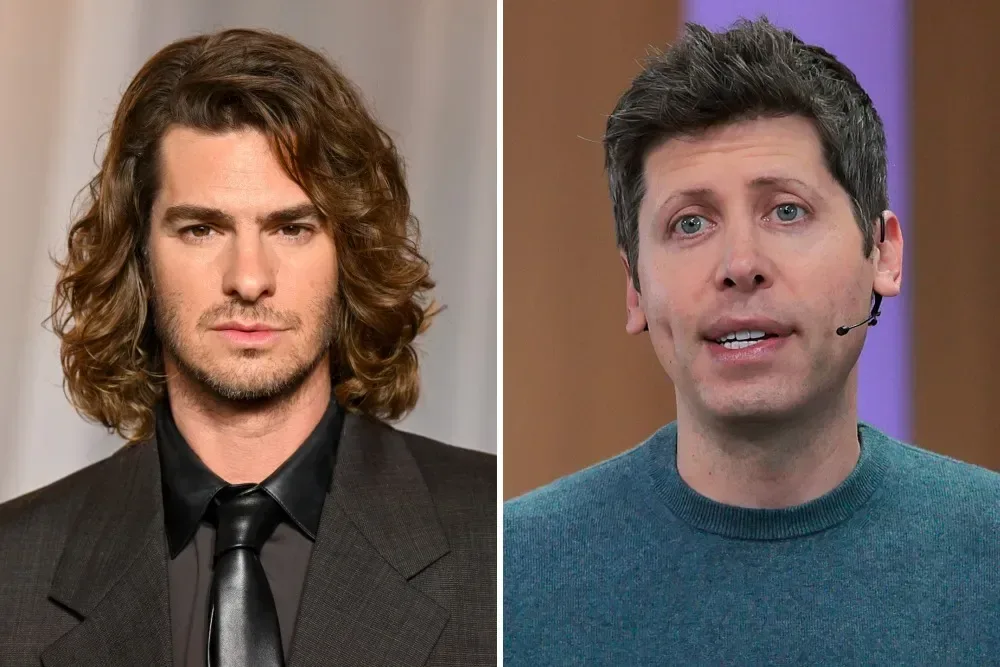
Andrew Garfield says the real Sam Altman was not part of his preparation for Artificial—at least not face-to-face. Garfield, who plays the OpenAI chief executive in Luca Guadagnino’s forthcoming film, has said he never interacted with Altman during a shoot outside Altman’s home, despite Altman previously recalling that the two had waved at each other.
The disagreement is small in practical terms: it concerns a quick sighting on a street occupied by a film crew, rather than the film’s production or its depiction of events. But it is an unusually apt bit of real-world confusion for a movie called Artificial, centered on a public technology figure and a turbulent corporate episode involving artificial intelligence.
Garfield says there was no encounter
Garfield addressed Altman’s account in an interview, explaining that he had watched and replayed Altman’s remarks because he could not work out what Altman meant. His position was direct: he said he had never had an interaction with Altman and had never seen him in person.
The actor confirmed that production had filmed outside Altman’s house. However, Garfield said the cast and crew had been told Altman was not home. He recalled seeing security personnel, including one guard, but not Altman himself. Garfield’s best explanation was that Altman may have mistaken another person for him.
“I’ve never seen him in real life,” Garfield said, adding that he had not waved at Altman.
Garfield also ruled out one straightforward explanation for the mismatch in memories: he said there was no body double. In film production, a body double is another performer who can stand in for a principal actor in particular shots or situations. If one had been used, an observer might plausibly have waved at someone resembling Garfield while the actor was elsewhere. Garfield says that did not happen here.
Altman remembers seeing his screen counterpart
Altman’s version begins with filming notices on his street. He said he had not paid much attention to them until he walked out to get coffee and encountered cameras and a performer dressed like him, including a matching backpack.
Altman described the image as disorienting: someone appearing to reproduce his look and movements made the scene feel, in his words, like a simulation glitch. He said he soon understood that a production was making a movie about him. Altman recalled exchanging a wave with the actor before each continued on their way.
Related coverage includes Andrew Garfield Says He Never Met Sam Altman While Filming ‘Artificial’.
A representative for OpenAI maintained that Altman was home during filming and reiterated that Altman waved at Garfield. That leaves two accounts that do not line up on the core point of whether Garfield was present for that moment. Neither account, as presented, establishes why the recollections differ.
There are modest possibilities, but they should remain possibilities rather than be treated as answers. A crowded location shoot can contain performers, crew members, security staff and passersby; a brief glance can also be difficult to reconstruct later. Yet the available information does not identify another actor or crew member as the person Altman saw. Garfield’s statement that he had no body double narrows one theory without resolving the discrepancy.
Why a location shoot can create mixed signals
A location shoot is filmmaking conducted in a real place rather than on a purpose-built soundstage. It can bring a production into direct contact with residents, traffic, security arrangements and the ordinary routines of a neighborhood. Notices alert nearby people that filming is expected, but they do not necessarily convey every production detail or make every person at the site identifiable.
In this case, the setting creates the oddity at the center of both recollections. Garfield was playing Altman outside Altman’s own residence. Costume and behavior are central tools in portraying a real person on screen: wardrobe can establish a recognizable silhouette, while physical choices can help an audience understand who the character is before dialogue fills in the picture. Altman said the portrayal had captured some of his “quirky mannerisms,” as well as his look.
That does not mean a performance is a documentary record. A biographical performance generally uses available public impressions, costumes and a script to create a dramatic character. It is not inherently a direct imitation approved by, or built through meetings with, the person being played. Garfield’s comments make clear that an in-person encounter with Altman was not part of this production experience.
The episode also shows the strange feedback loop that can occur when a film recreates very recent events involving living, highly visible people. The individual being portrayed can physically encounter the recreation of himself while it is still being made. Here, however, the encounter itself is now disputed.
What ‘Artificial’ is about
Artificial is set during the 2023 period in which Altman was fired and then rehired by OpenAI. The supplied details characterize that stretch as tumultuous, and the film’s cast indicates that it will place several prominent figures from the AI world around that story.
Garfield plays Altman. Ike Barinholtz plays OpenAI co-founder Elon Musk, Monica Barbaro plays former OpenAI chief technology officer Mira Murati, Yura Borisov plays former OpenAI chief scientist Ilya Sutskever, and Mark Rylance plays Nobel Prize winner Geoffrey Hinton.
For viewers less familiar with the job titles involved, a chief technology officer, often shortened to CTO, is an executive role concerned with an organization’s technological direction. A chief scientist is typically a senior research leadership role. Those labels identify the real-world positions associated with Murati and Sutskever in the film’s setup; they do not, on their own, reveal how extensively either character appears or how the script handles their relationships.
The broad subject also puts Artificial in a category that can be especially difficult to dramatize: an ongoing story about technology, leadership and public power. The film is not simply reconstructing a distant event with settled cultural distance. Its main figures remain closely associated with contemporary debates around AI, and its central episode occurred in 2023. That makes choices around characterization, chronology and point of view especially noticeable to audiences who recognize the people involved.
It is worth separating what is known from what has not been detailed. The announced premise places the film around Altman’s firing and return. The supplied information names its director, distributor and principal cast. It does not describe the screenplay’s interpretation of the events, identify specific scenes beyond the filming outside Altman’s home, or say whether Altman participated in the film’s development. Garfield’s account should not be read as proof of any broader consultation process; it establishes only that he says he did not personally meet Altman during this situation.
A very on-theme case of competing recollections
The disagreement has naturally compelling symmetry. A person known for work in artificial intelligence recalls seeing an actor apparently transformed into him, while that actor says he was not there and never saw the person he was playing. The facts currently available do not turn it into a grand mystery, but the resemblance to a mistaken-identity scene is hard to miss.
There is a useful distinction between a story’s atmosphere and its evidence. The “simulation glitch” language captures how surreal Altman found the sight of his on-screen stand-in. It is not evidence that the incident was anything more than an uncertain moment around a live location production. Similarly, Garfield’s certainty that he had no contact with Altman does not itself establish whom Altman saw. The most precise account is simply that their recollections conflict.
That kind of precision matters with films based on recent public events. Audience interest can quickly move from a movie’s premise to questions of access: Did the actor meet the subject? Did the subject see the production? Was there approval? In this instance, only one answer is clear from Garfield: he says he never met Altman. The rest of the street-side episode remains a pair of incompatible memories.
Artificial is directed by Guadagnino and is scheduled to open in theaters on Christmas Day through Neon. Its release will give audiences their first opportunity to judge the finished portrayal, rather than the isolated visual impression Altman says he encountered on the street. For another look at how casting and timing shape a video-game adaptation, see the discussion around Captain Price and the Call of Duty movie.