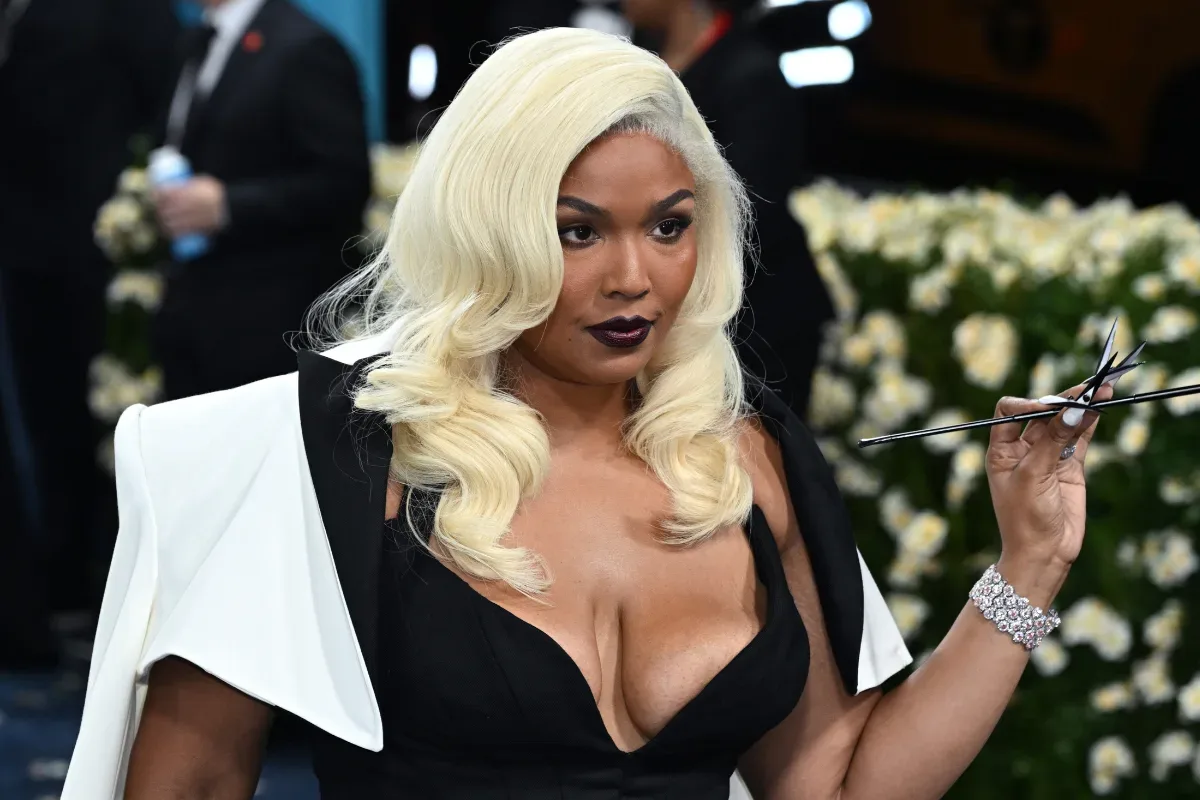
Lizzo is addressing the distance between a legal outcome and the much messier afterlife of a public controversy. In a conversation with Willie Geist at Books of Wonder in New York, the Grammy-winning performer discussed her new children’s book, Lil Lizzo Meets Sasha B. Flootin’, alongside the lawsuits filed against her and her production company by former employees in 2023.
The supplied account states that two cases alleging sexual harassment, a hostile work environment and weight-shaming were dismissed. Yet Lizzo, born Melissa Viviane Jefferson, made clear that dismissal does not instantly erase the version of events that may have taken hold for audiences online and in headlines.
“I had to make peace with the fact that there’s a version of Lizzo that exists now that the world controls,” she said. “The world controls the narrative and I don’t. But what I can control is who I really am.”
That distinction is central to what Lizzo described. A court dismissal is a legal development; public perception is something else entirely. The first concerns how particular claims proceed through the legal system. The second is shaped by attention, discussion and repetition, often long after the initial news cycle. Lizzo’s comments focus on that second terrain: not relitigating the allegations in public, but deciding what she can productively make and share next.
A new book at the center of Lizzo’s next chapter
Lizzo’s immediate creative focus is Lil Lizzo Meets Sasha B. Flootin’, a children’s book about a young girl finding confidence. The project draws from Lizzo’s own path and from Sasha B. Flootin’, her Instagram character, which the supplied information says has built an audience of 300,000 followers.
Confidence is not an incidental fit for the project. Lizzo has long been publicly associated with messages of self-acceptance, while the book’s premise puts that idea into a format aimed at younger readers. A children’s story can present difficult feelings—uncertainty, self-consciousness and the need for reassurance—in direct, approachable terms. In this case, the character’s journey gives Lizzo a way to explore those themes outside the immediate frame of celebrity controversy.
It also represents the kind of work Lizzo says she wants to foreground. Rather than treating every appearance as an opportunity to directly combat the public narrative around the 2023 litigation, she described a strategy built around new, positive headlines connected to projects she is proud to have completed.
“You know, I’m not a fighter. I’m a lover,” Lizzo said. “I think that is the business that I’m in now because I do realize it’s a headline game.”
Related coverage includes Lizzo Reflects on Public Narrative and Growth After 2023 Lawsuits.
Her framing is practical as much as it is personal. In entertainment, an artist may not be able to dictate what past stories people revisit. They can, however, choose the work they make available now, the ideas they emphasize and the settings in which they speak. A book launch does not erase a difficult period, nor did Lizzo claim that it would. But it can place a different piece of work—and a different purpose—into the public conversation.
What “the narrative” means in this context
The phrase “public narrative” can sound abstract, but Lizzo used it to describe a recognizable problem for anyone whose life becomes a widely circulated story. Public narratives are not simply facts; they are the simplified versions of events that persist once a complicated situation is turned into posts, headlines and arguments.
That does not mean that legal claims or workplace allegations are inherently unimportant. It means the legal process and the culture surrounding it move differently. Litigation involves filings, standards and procedural decisions. Public attention moves faster and often preserves the opening accusation more readily than later developments. A dismissal may be legally significant while still failing to settle every audience member’s opinion.
The supplied material identifies the allegations made in the 2023 suits and says they were dismissed, but it does not provide the courts involved, the grounds for dismissal, the procedural timelines or the underlying rulings. Those details matter when interpreting any legal case, so it is more accurate to avoid treating the available account as a complete legal record. Lizzo’s own remarks, meanwhile, are less about those specifics than about the emotional and reputational impact she says the period has had.
For public figures, this is an especially difficult distinction. A celebrity’s name is also a professional identity, a search term and a commercial brand. The person and the public-facing image are intertwined, but they are not identical. Lizzo’s observation that “there’s a version of Lizzo” controlled by the world acknowledges that separation: an audience may form a fixed image of an artist while the artist continues to live, work and change beyond it.
Growth rather than a media counteroffensive
Lizzo’s answer was not to promise a public fight over every perception. Instead, she characterized her response as an effort to concentrate on work and personal development. That approach fits the lesson she said she took from the past three years: adversity can become an opportunity for self-reflection.
“My biggest takeaway is that everything that happens to you, good or bad, is an opportunity for growth,” Lizzo said. “It’s an opportunity for self-reflection and to learn about yourself.”
There is an important limit in that statement. Calling hardship an opportunity for growth is not the same as saying hardship is good, deserved or simple. Lizzo described a process of looking at herself, confronting parts she may not like and working on them. It is an inward-looking response, rather than a claim that changing public opinion is fully within her power.
That may be why the children’s book has particular significance in this moment. Its subject—building confidence—lines up with the kind of self-work Lizzo discussed. The connection is thematic, not proof of a direct autobiographical retelling. Still, presenting a story about a young girl discovering confidence allows the project to speak to a value Lizzo has publicly emphasized: developing a sturdier relationship with oneself.
Her conversation also covered the arc of her career, from being classically trained as a flute player to becoming a Grammy-winning pop star. That background reinforces why Lizzo’s current focus is not limited to one public controversy. Her professional identity includes music, performance and now children’s publishing. The book does not replace that history; it adds another medium through which she can communicate.
Why positive work is not the same as pretending the past vanished
It would be easy to reduce Lizzo’s approach to a simple reputation-repair campaign. Her own comments suggest something more nuanced. She openly acknowledged that the controversy still affects how she is seen. She did not claim that dismissals caused the subject to disappear, and she did not argue that one new release could compel the public to adopt a different view.
Instead, her approach appears to be about agency. When she speaks of getting headlines for projects she is proud of, the goal is to create a fuller record of what she is doing now. That is different from trying to erase past coverage. It recognizes that public attention is competitive and cumulative: if old controversy occupies all the space, newer creative work may struggle to be seen on its own terms.
This tension is familiar across celebrity culture. Audiences frequently ask public figures to answer for past news indefinitely, while artists and entertainers continue producing work that may be unrelated to those stories. There is no automatic point at which the public moves on, particularly when legal allegations were involved. Lizzo’s remarks do not solve that conflict; they show her attempting to navigate it without making the conflict the entire subject of her present-day work.
Other entertainment disputes have likewise shown how quickly private conflict can become an enduring public spectacle, including the public-facing custody dispute involving Chris Brown and Diamond Brown. That situation illustrates how disputed personal matters can keep evolving in the public eye, even when the people involved may be dealing with far more complexity than a headline can hold.
The practical message behind Lizzo’s comments
For readers, Lizzo’s account offers a useful reminder not to confuse legal terminology with a complete cultural resolution. A dismissal has a specific legal meaning in a given proceeding. It does not necessarily dictate the public’s feelings, repair a reputation on a fixed timetable or answer every question people may continue to ask. Conversely, ongoing online discussion is not itself a substitute for understanding the legal record.
Her remarks also underline the pressure created when a person’s identity becomes something debated by strangers at scale. “The world controls the narrative” is a bleak feeling, but Lizzo paired it with a narrower form of control: who she is, what she makes and how she responds. Lil Lizzo Meets Sasha B. Flootin’ is the clearest example currently available of that response—a confidence-centered story connected to a character her audience already knows.
Lizzo is not presenting her recent years as uncomplicated, and the supplied account does not support treating them that way. What it does show is an artist choosing to put energy into a new creative project while acknowledging that legal victories do not automatically end reputational consequences. Her goal, as she described it, is not to win every argument about a public version of herself. It is to keep making work that reflects the person she says she is.