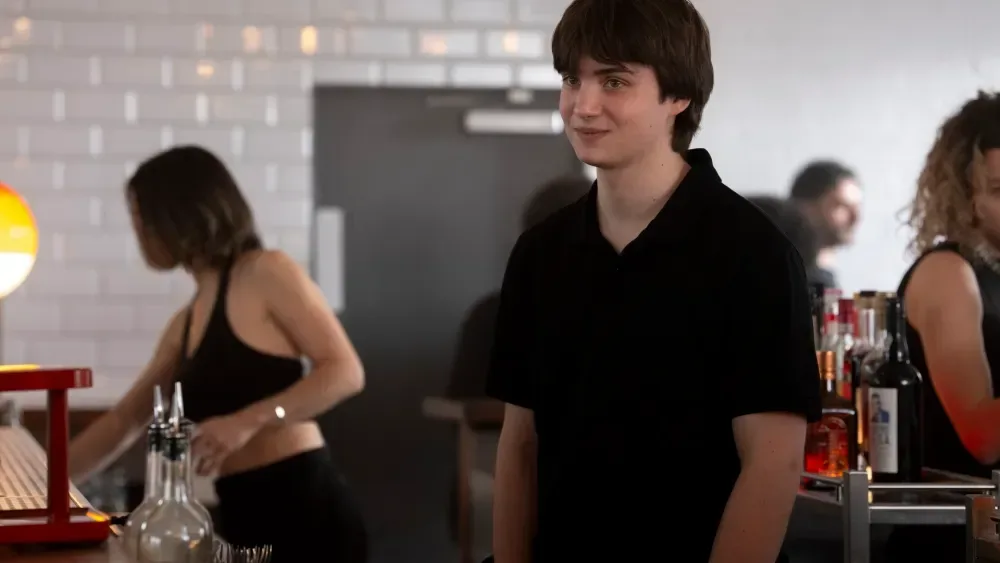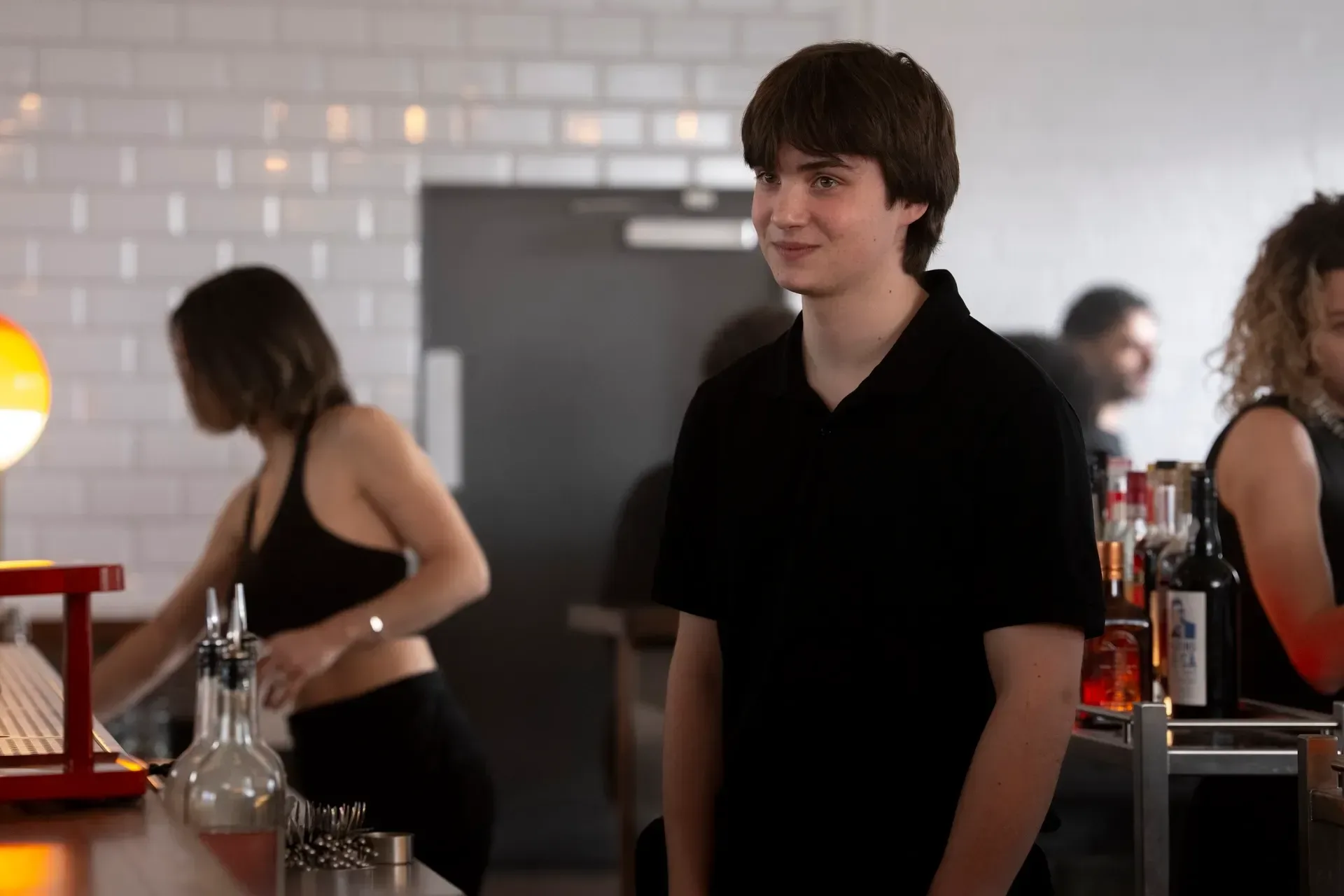
Aran Murphy’s October has put him in three distinct corners of screen storytelling at once: an uneasy domestic drama in Youth, a wealthy family’s public implosion in War, and a dystopian film, Taika Waititi’s Klara and the Sun, arriving October 23. The 19-year-old actor is at an early point in his professional career, but the roles share a demanding quality: each asks him to inhabit young people dealing with problems bigger than they are equipped to solve.
That is especially apparent in the HBO series. In both, Murphy plays a teenager whose parents’ separation becomes a defining pressure in his own life. Yet the overlap does not make the parts interchangeable. Rauri in Youth is inward-looking and difficult to read; Gabriel in War channels his distress in a more overtly volatile direction. Together, the characters give Murphy an opportunity to explore two radically different responses to instability at home.
It is also a busy stretch that may introduce him to viewers who know the surname first. Murphy is the son of actor Cillian Murphy and Irish visual artist Yvonne McGuinness, but he has described the public association as less novel within his family life than it may be from the outside. He does not particularly see the physical resemblance that other people identify, and frames his father’s importance chiefly as personal support and an informed person with whom to discuss acting.
Rauri’s ambiguity is the point in ‘Youth’
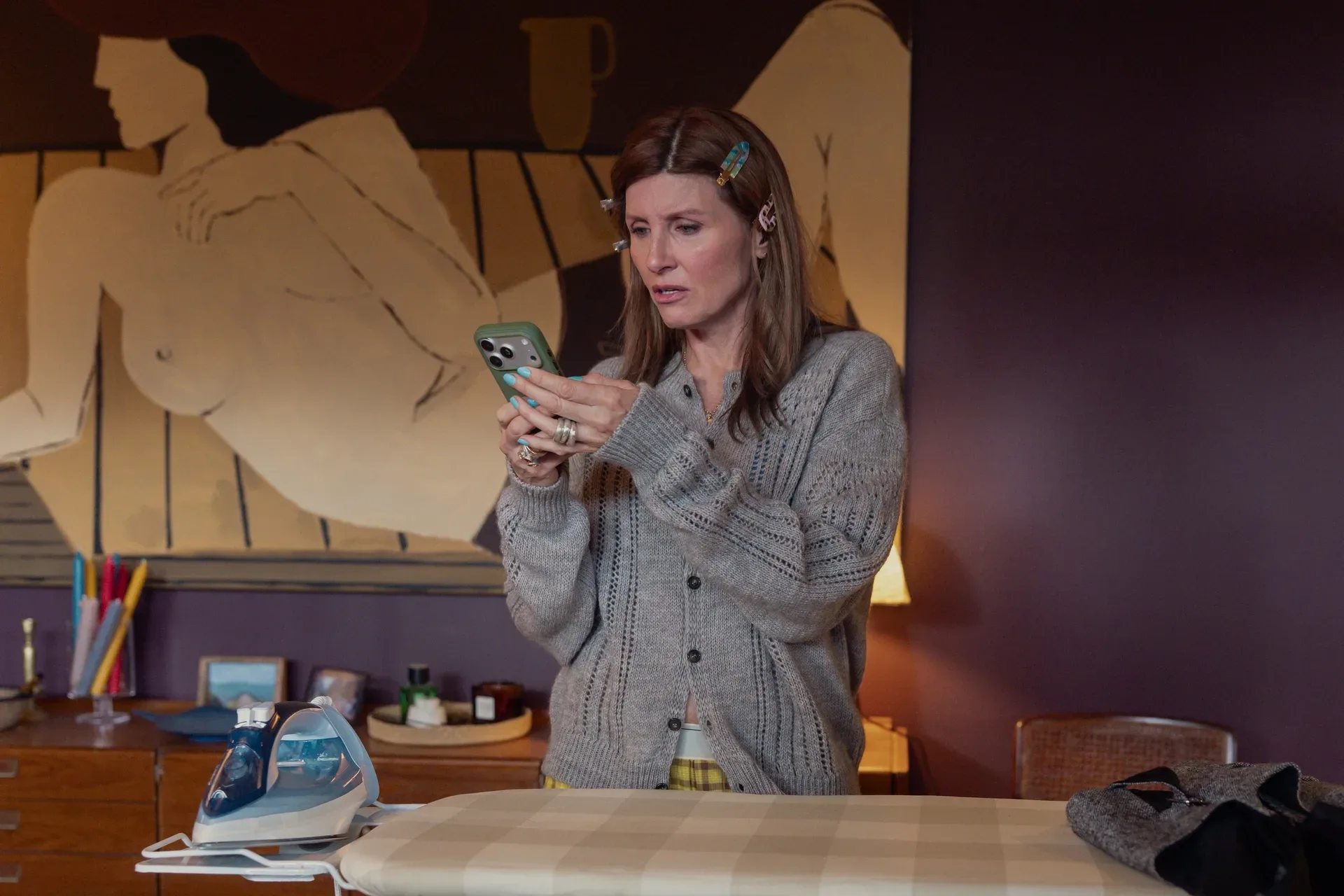
Youth follows Sharon Horgan’s newly divorced character as she re-enters dating life at 50. Murphy plays her son, Rauri, a university dropout who returns home after only a few days at school. A rumor concerning a drunken hookup has spread, one that suggests he may be a predator. That premise places the character and audience in an intentionally uncomfortable position.
Murphy’s approach is not to declare the question solved for viewers. He has said that he wanted to stand behind Rauri as the performer playing him, while leaving the assessment of the incident to the audience. It is an important distinction. Backing a character is not the same thing as presenting that character as unquestionably right. In performance terms, it means locating a person’s emotional logic: what he fears, what he denies, what he believes about himself, and why he behaves as he does.
That approach matters in a story built around incomplete certainty. If a performer plays ambiguity as though it were a puzzle with a single answer that must be signposted, the drama can collapse into a verdict. A more open interpretation lets the audience sit with Rauri’s combination of brooding behavior, vulnerability and troubling accusation. The character can be sympathetic without the show requiring that sympathy to settle every moral question around him.
Murphy found a practical entry point through age and timing rather than trying to mirror Rauri’s circumstances. He had recently left school and was 18 when working on the part, making the character’s crossroads recognizable: the early-adult questions about higher education, choices and how to proceed when the expected route no longer feels secure. The similarity stops there, but it supplied an emotional foothold for a role whose broader life trajectory is quite different from his own.
He has also pointed to Horgan’s writing and openness on set as central to building the on-screen relationship. That highlights a basic but often overlooked aspect of television acting: scenes are not constructed by one performer alone. A parent-child dynamic relies on listening, timing and a shared willingness to adjust in the moment. Strong scripts establish the foundation; collaboration shapes how the relationship breathes once the cameras are rolling.
Related coverage includes Aran Murphy Balances ‘Youth,’ ‘War’ and ‘Klara and the Sun’ in a Breakout Month.
In ‘War,’ Gabriel cannot escape the dispute
Gabriel’s situation in War is louder, more public and more openly transactional. In the October 15 episode, Murphy’s character is caught between his mother Carla, played by Sienna Miller, and his stepfather Morgan, played by Dominic West. Their high-profile divorce turns Gabriel into something to be negotiated over rather than simply protected from the conflict.
Carla is a former major actor whose career has faded, while Morgan is a billionaire social-media entrepreneur. Those details put Gabriel at the center of a family with extraordinary resources and visibility, but they do not make him powerful. If anything, the premise suggests the opposite: he is caught in adult conflict that he cannot control, while his position becomes useful to competing sides.
Murphy has credited creator George Kay’s script with providing Gabriel’s core contradiction. The teen has a great deal of frustration and no clear place to direct it. That feeling is recognizable even if the character’s circumstances are not. Anger in drama often risks becoming a shorthand for depth; here, its potential value is in what it reveals about being treated as part of the dispute rather than a person with separate needs.
One scene makes that anger physical. Gabriel throws a punch while drunk at a party after a friend makes a cruel remark about his parents’ divorce. Murphy said the moment was new territory and nerve-racking because screen violence must be carried out without genuinely hurting another performer.
That is a useful reminder of what a fight scene is: it is choreography, not spontaneous combat. The goal is to create a convincing impression of impact through positioning, timing and performance while keeping everyone safe. Murphy’s concern about accidentally hitting someone reflects the responsibility inherent in that work. For an audience, a punch may last a second. For the performers, it must be carefully controlled enough that the scene’s intensity does not become actual harm.
The contrast between Rauri and Gabriel is therefore sharper than their shared family pressure initially implies. Rauri’s drama centers on uncertainty, judgment and withdrawal; Gabriel’s lands in visibility, fury and action. Murphy is not merely repeating a troubled-teen role twice. He is working through different expressions of young people reacting to lives destabilized by their parents’ decisions.
‘Klara and the Sun’ turns attention toward AI and human connection
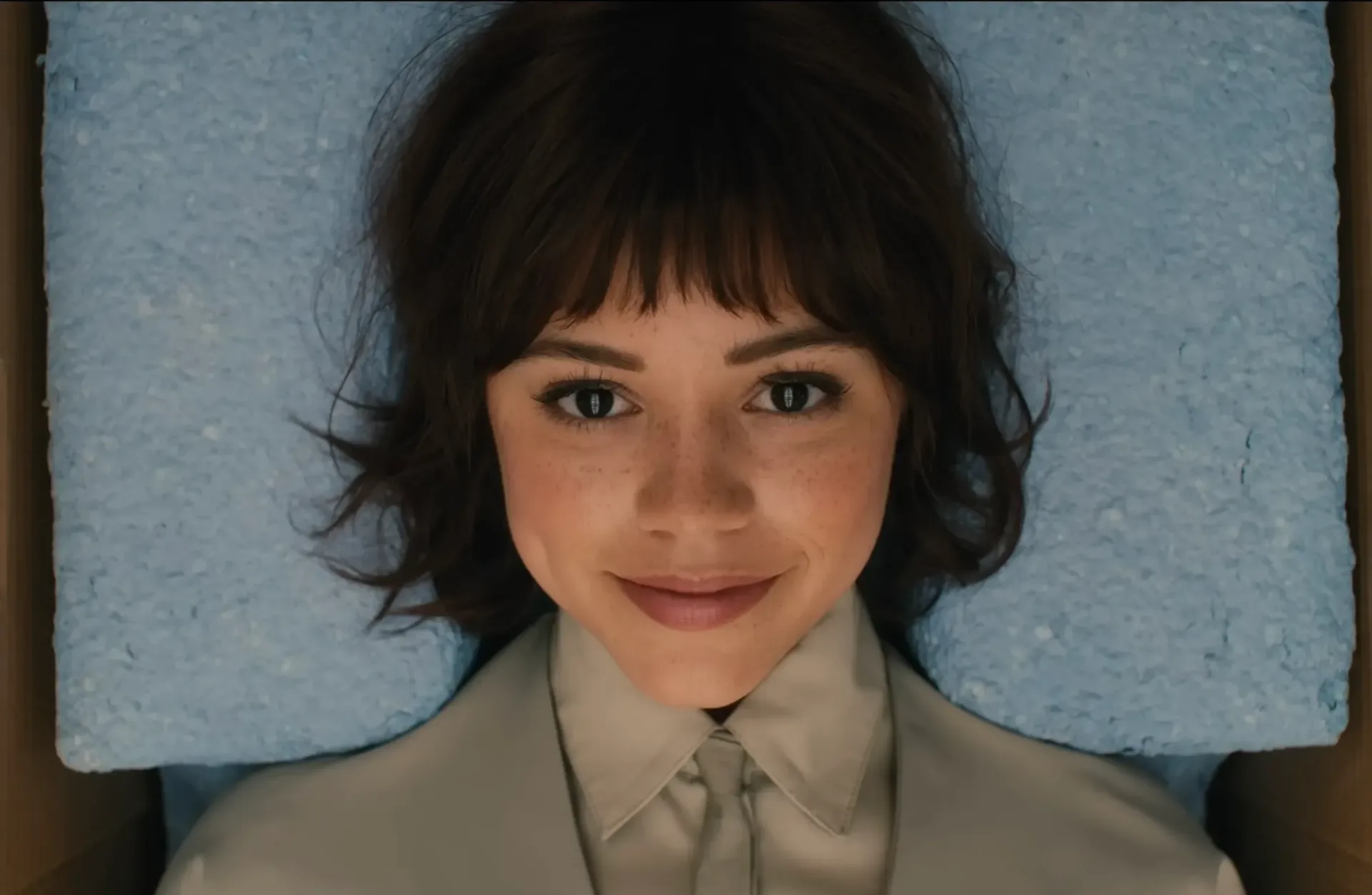
Murphy also appears in Klara and the Sun, Waititi’s film adaptation of Kazuo Ishiguro’s novel. Starring Jenna Ortega and Amy Adams, the dystopian story follows Ortega as a robot girl encountering the scale and complexity of human life for the first time. Murphy was 16 when the film was shot in New Zealand in early 2024, making the production a striking transition from school life to a major international set.
He has described the experience of working alongside Waititi, Ortega and Adams as surreal and as a significant learning opportunity. The scale of that jump should not obscure the usual work involved: a high-profile cast and filmmaker can provide a valuable environment to observe, but an emerging actor still has to arrive ready to do the job, absorb direction and contribute to a scene.
The film’s subject also intersects with a current industry debate. Murphy has said he is not a fan of AI and does not view it as a net positive for the business. His emphasis is not on a technical argument about particular tools, but on the story’s capacity to prompt discussion about human life, friendship, love and other human qualities.
In this context, AI means artificial intelligence: systems designed to generate outputs or perform tasks associated with human cognition. Discussions about AI in entertainment can cover many separate concerns, including how it may affect creative labor and what audiences value in art. Klara and the Sun provides a fictional lens for a related question: what distinguishes a meaningful human relationship from the appearance of understanding or companionship?
That theme makes the timing of the release especially apt without requiring the film to supply easy answers. A robot character observing human life can make familiar behavior strange again, drawing attention to the care, conflict, affection and dependence people might otherwise take for granted. Murphy sees value in the project as a way to keep those conversations active.
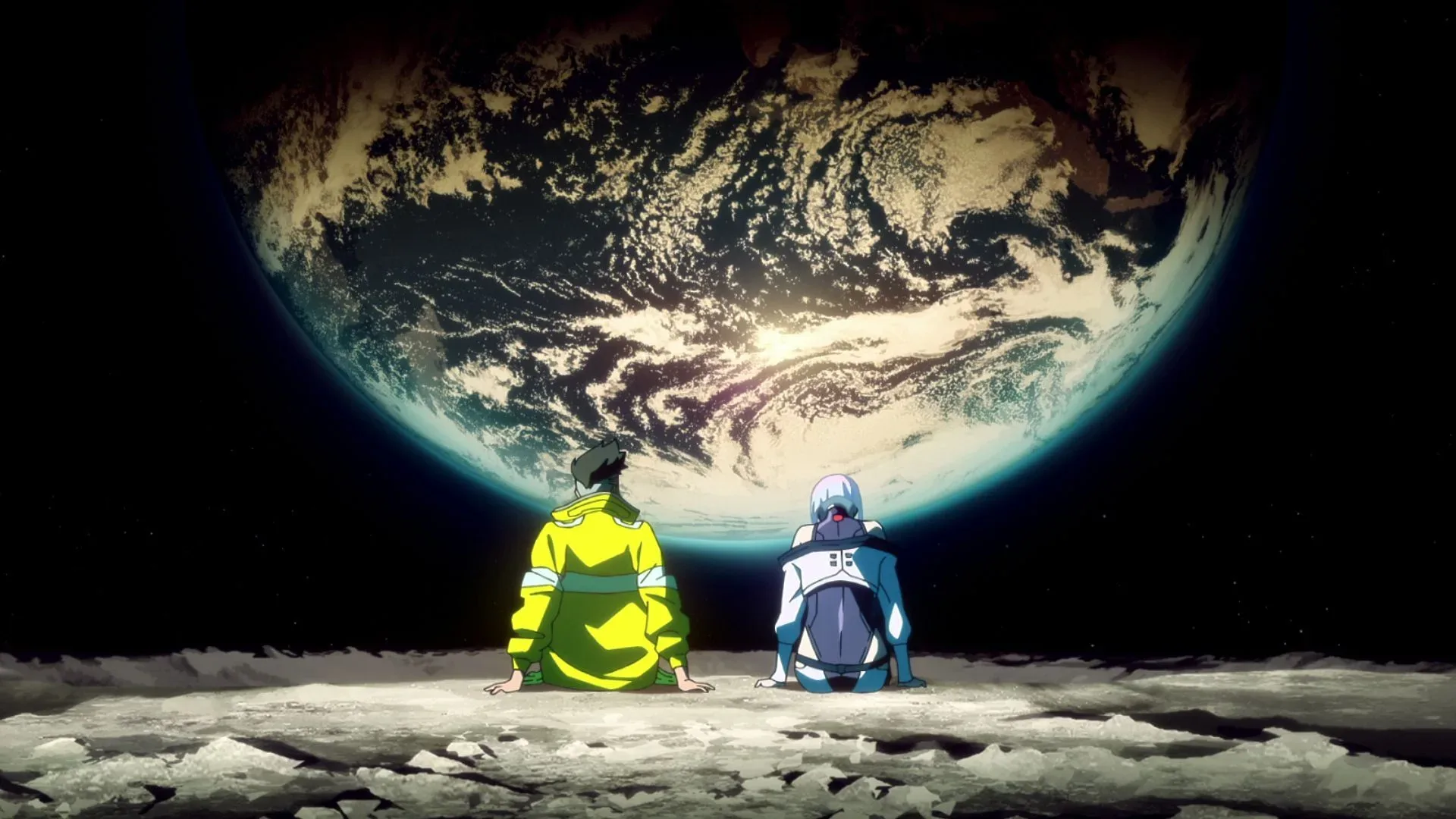
For readers following the overlap between screen entertainment and games culture, stories about AI characters and machine-mediated relationships continue to travel across formats. The recent debate around the ending of ‘Cyberpunk: Edgerunners’ is another example of how speculative fiction can invite sharply different interpretations about technology, identity and connection.
A career decision made early, but still in progress
Murphy initially imagined a future in football. That changed after he performed in a play at 11, an experience he has identified as the turning point that made acting feel like the path he wanted to pursue seriously. Professional acting remains new to him, and his current outlook is correspondingly direct: audition, keep learning and stay open to opportunities.
Growing up around artistic work gave him a particular kind of exposure. He recalls watching his father in dramatic roles at a young age, including Ken Loach’s The Wind That Shakes the Barley, which won the Palme d’Or at the Cannes Film Festival in 2006. He has seen much, though not all, of Cillian Murphy’s work and values both the informal film education and the conversations about craft.
Still, his description of that relationship resists the idea that an actor’s child automatically experiences celebrity as glamorous or distant. Living with somebody known to the public makes the novelty fade, he has said. The more consequential influence is having a supportive parent rather than a famous reference point.
That distinction is likely to matter as Murphy’s own credits grow. Youth, War and Klara and the Sun place him in projects with very different tones, collaborators and stakes. More importantly, they offer evidence of a young actor meeting varied material with an interest in nuance: protecting a character’s internal truth without demanding audience absolution, conveying anger without reducing it to noise, and engaging with a science-fiction premise through its questions about human connection.