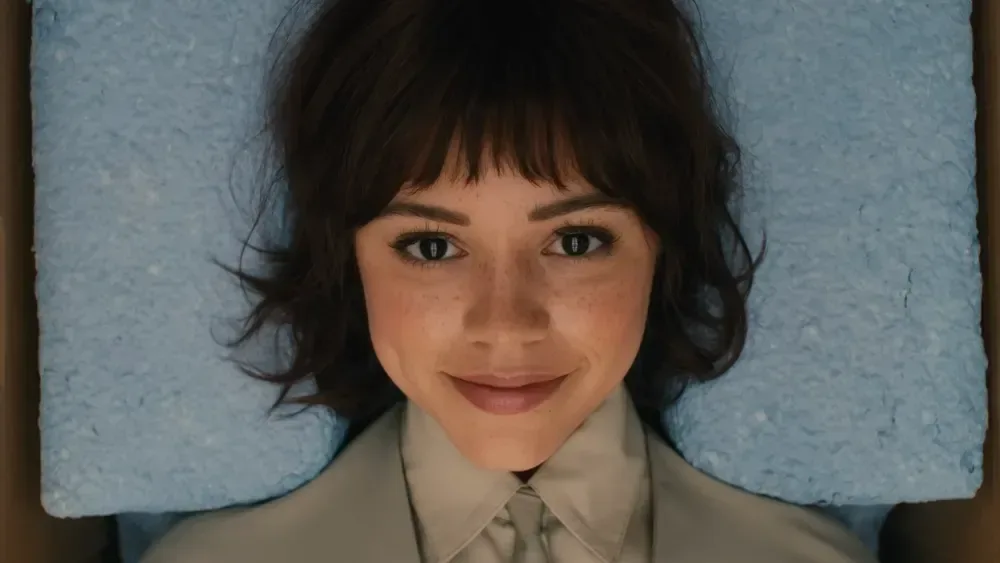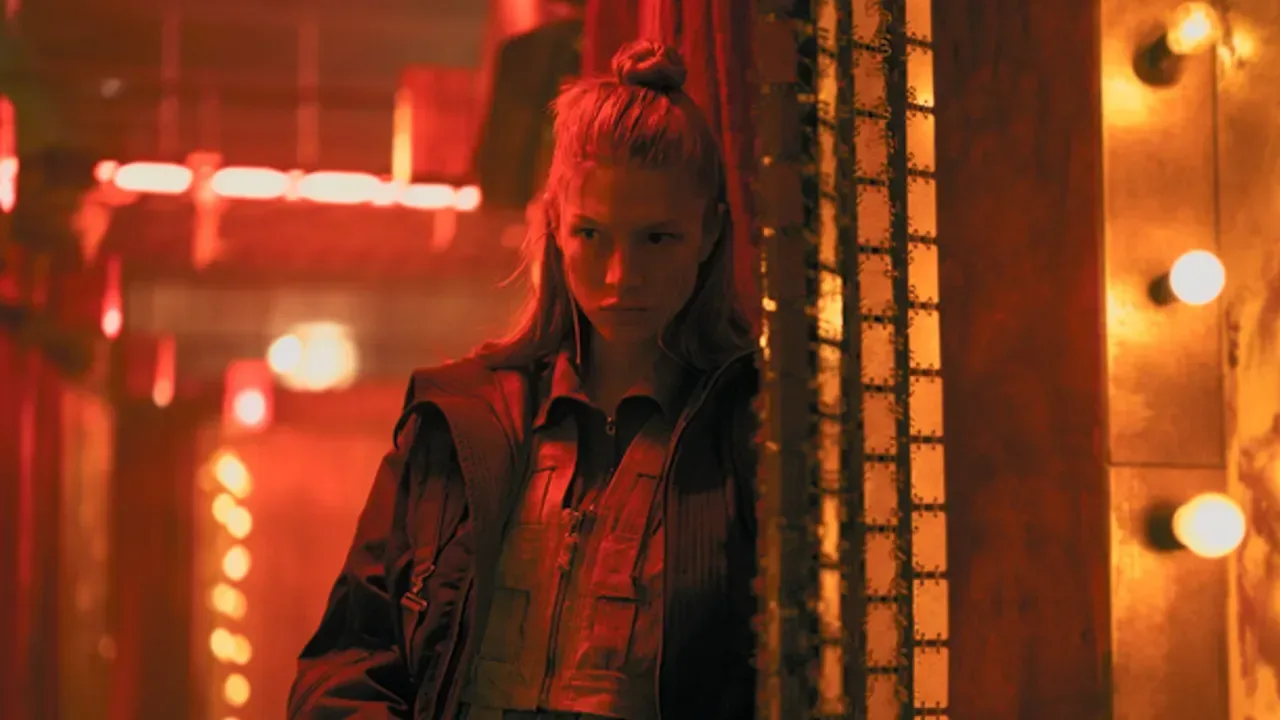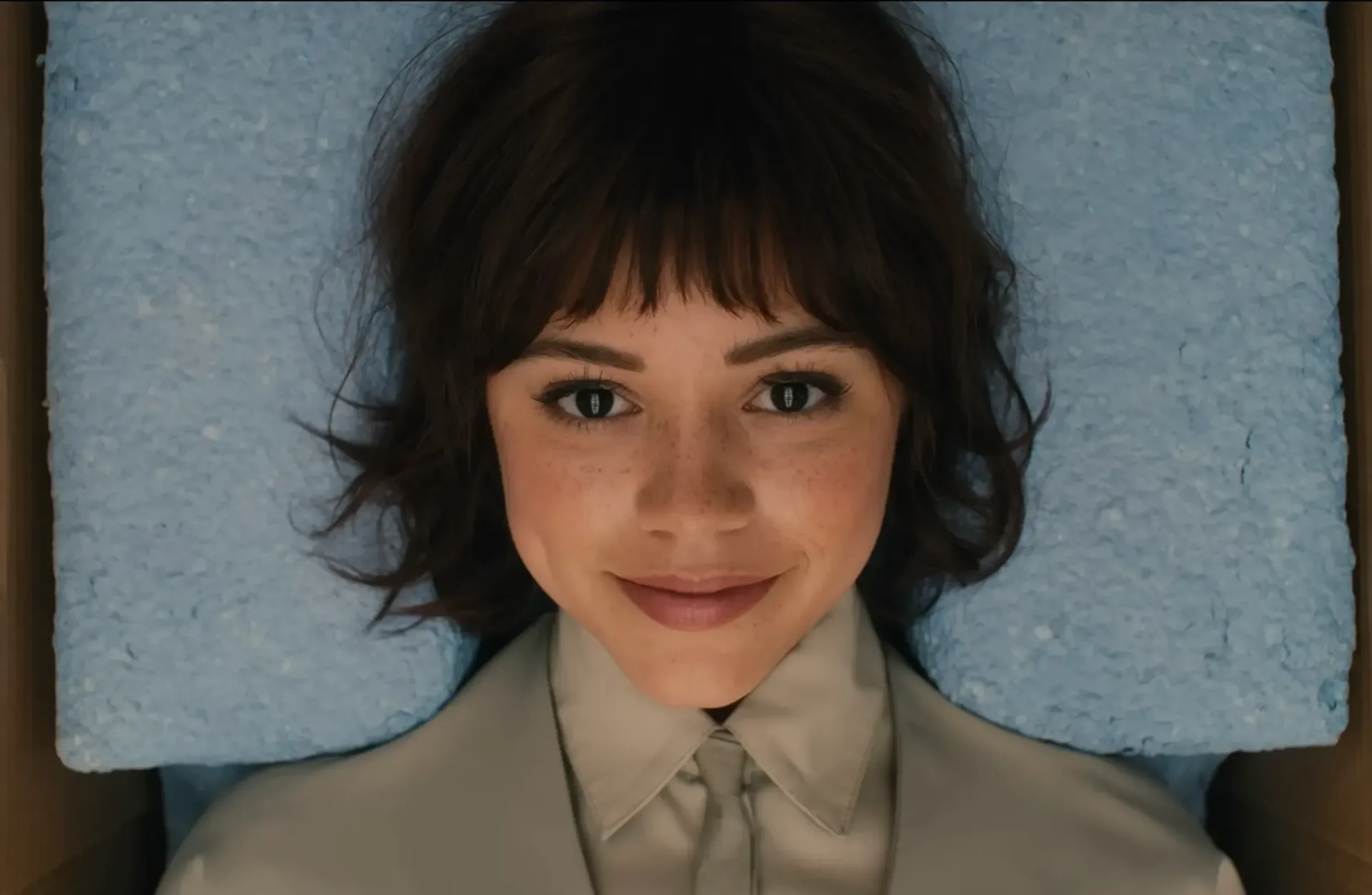
Klara and the Sun has an immediately intriguing premise: an artificial friend, or AF, is bought to accompany an isolated teenager in a damaged near-future society. Klara is solar-powered, observant and earnestly devoted to the people around her. Her outlook is designed to make the ordinary human world feel strange again, while the story gradually raises much larger questions about love, replacement, illness and whether consciousness is something that can be copied.
That is rich material for cinema, and it arrives with a formidable group of names attached. Taika Waititi directs and co-writes with Dahvi Waller, adapting Kazuo Ishiguro’s 2021 novel. Jenna Ortega plays Klara, with Amy Adams as Chrissy, Mia Tharia as Josie and Rachel House as Melania. Natasha Lyonne, Steve Buscemi, Aran Murphy and Harry Greenwood also appear. But this 116-minute, PG-13 film repeatedly runs into a central problem: its manner is far more whimsical and overtly cute than the fragile, mournful story beneath it can bear.
A bright artificial friend enters a bleak future
The film opens in a future shaped by a Third World War and the collapse of the internet. Much of the population is housebound, while affluent families purchase humanoid companions for children left isolated from one another. Klara waits in a Friend Store alongside other AFs, hoping to be selected.
“AF” is short for artificial friend: not merely a machine that performs tasks, but a manufactured companion intended to provide social and emotional support. That distinction is vital. Klara is not introduced as a weapon, a domestic appliance or an all-purpose digital assistant. Her purpose is intimate. She is meant to be loved, relied upon and perhaps treated as a member of a household, even as the story keeps pressing on the uncomfortable question of what happens when affection is built around a product.
Klara’s solar power is more than a technical detail. She sees the sun as a generous, almost sacred force, and opens with gratitude toward it. Her reverence gives the character a distinctive emotional logic. In a world where people appear disconnected, Klara’s faith in the sun offers a strange kind of purity—but it also underscores how little she fully understands about the complicated humans she is trying to help.
Josie notices Klara in the shop window and persuades her mother, Chrissy, to take her home. From there, the film moves to the family’s isolated farmhouse, where the early fish-out-of-water set-up puts Klara’s literal-minded openness against guarded adults and a fragile household dynamic. Klara finds a connection with Josie, but the stakes change when Josie’s serious illness becomes clear.
The story’s core question is bigger than robot companionship
The film’s premise may sound like conventional speculative fiction, yet its real focus is not the engineering of an android. It is the human impulse to ask technology to soothe pain that cannot truly be solved. Klara’s presence becomes increasingly important to the family, turning the AF from a companion into something much more consequential.
This is where the adaptation reaches toward its most unsettling ideas. What does it mean to ask a created being to make a sacrifice? If a person’s mannerisms, memories or emotional role can be imitated, is that equivalent to preserving the person? And how much of a self is defined by memory?
The latter question is particularly relevant as Klara’s digital memory begins to fail. Digital memory, in this context, means the stored information that allows an artificial being to recognize people, retain experiences and create continuity between one moment and the next. A damaged memory does not simply produce a visual glitch. It can threaten identity itself, because the character’s understanding of relationships and her own past depends on what remains accessible.
Visually, the film represents this deterioration with pixelated effects. The idea has power: the audience is asked to consider a mind becoming fragmented without the familiar physical signs of human decline. Yet the film does not develop a sufficiently clear or immersive subjective viewpoint for Klara. We are told that her internal system is faltering, and we see stylized effects, but the emotional consequences are often kept at a distance.
Jenna Ortega gives the film its clearest pulse
Ortega brings warmth and commitment to Klara. The character could easily become a collection of robotic tics or a one-note innocent, but Ortega finds a persuasive gentleness in her curiosity. Klara’s constant hopefulness is the screenplay’s defining trait for her, and Ortega works hard to make that quality feel like generosity rather than emptiness.
Still, the performance can only do so much when Klara is written primarily as an unwaveringly sunny observer. The script gives her a central place in the plot, but less room to become unpredictable, contradictory or newly self-defining. For a film concerned with artificial consciousness, it needs a sharper sense of the inner life that makes Klara distinct from the service she was built to provide.
Tharia has an important task as Josie, the teenager whose illness reshapes the meaning of Klara’s arrival. Josie is the doorway into the story’s grief and its fears about loss. Adams, meanwhile, plays Chrissy as tightly controlled, carrying both visible severity and considerable unspoken distress. Chrissy has enough emotional burden to anchor the drama, but the film does not always give her the scenes needed to articulate it in a satisfying way.
House’s Melania initially provides friction within the home, while Lyonne’s Friend Store manager sets the tone for the film’s brisker, more comedic opening stretch. The cast is not the issue. The larger difficulty is that the characters rarely gain enough texture beyond their roles in the plot: the ill child, the worried parent, the practical housekeeper, the eager artificial companion.
Whimsy and sorrow keep pulling in different directions
Waititi’s work often uses comedy, awkwardness and exaggeration to approach sincere emotion from an angle. That strategy has a recognizable appeal when a project is built to accommodate it. Here, however, the approach feels misaligned with the narrative’s sober concerns.
Michael Giacchino’s score frequently emphasizes a dainty, storybook quality, while the visual presentation employs pronounced golden filtering. Ra Vincent’s production design gives the Friend Store a retro flavor, even as the setting is ostensibly a future shaped by social collapse. The result is a world that can feel less like a fully inhabited dystopia than an abstracted, nostalgic simulacrum.
A dystopia is a fictional society marked by social failure, repression or widespread suffering. The future in Klara and the Sun has the ingredients of one: war, technological breakdown, isolation and stark inequalities in who can afford artificial companionship. Yet the film only intermittently makes that world feel tangible. The collapse of the internet and the population’s housebound lives are important elements, but they do not consistently shape the spaces, routines or relationships onscreen with enough specificity.
That leaves the drama in an awkward middle ground. It is not broad enough to become a full comic fable, nor restrained enough to let the grief land with quiet force. The opening stretches toward broad humor, then the story pivots toward mortality and existential distress. A tonal shift is not inherently a flaw; it can be a powerful way to unsettle an audience. But the change needs to feel like a discovery within the same world, rather than two competing approaches taking turns.
Why Ishiguro’s premise remains compelling
Even when this adaptation stumbles, the underlying ideas remain potent. Ishiguro’s book arrives in conversation with another of his works, Never Let Me Go, which considers human clones and the systems that define their place in society. In Klara and the Sun, the focus shifts to artificial beings, but the ethical pressure is similar: what do people owe to lives they have made vulnerable?
Films including Ex Machina, Her, Marjorie Prime and Robot Dreams have also explored different sides of artificial companionship, consciousness and memory. They are not interchangeable stories. Some center on manipulation, some on romance, some on remembrance and some on friendship. Their shared territory shows why Klara’s dilemma is not a narrow science-fiction concern. It is an emotional one: people increasingly build tools to mimic connection, but a convincing imitation of connection may create obligations no one is prepared to meet.
Klara and the Sun puts an unusual spin on that tension because Klara is not presented as cynical, menacing or eager to transcend humanity. Her defining desire is to care. The film’s best moments emerge from that contrast: a being designed for affection may be more attentive, more faithful and more willing to believe than the people who own her.
There is also a practical contemporary sting in the premise. Conversations about artificial intelligence often center on productivity, misinformation or automation. Klara’s role points toward a more personal frontier: systems that simulate attentiveness in homes, classrooms and health-adjacent spaces. The film does not need to predict a specific device or service to make the concern legible. If technology is used to stand in for companionship during periods of isolation or grief, the boundary between assistance and emotional substitution gets complicated quickly.
For another recent fantasy review from Joking Joystick, read our look at Forgotten Island.
An adaptation caught between its best ingredients
There is no shortage of talent in Klara and the Sun, and its setup has the makings of an intimate, unsettling drama. Ortega supplies a committed center, while the story’s attention to memory, sickness, family and manufactured devotion remains inherently affecting. But the adaptation repeatedly chooses a precious surface over a clearer emotional and social world.
The result is a film whose artificial friend often feels more emotionally available than the movie around her. Klara’s optimism, and Ortega’s attempt to give it life, keep the film from becoming entirely inert. Yet the visual softness, broad comic touches and underdeveloped human characters prevent the weightier material from reaching the quiet devastation it appears to want.
Klara and the Sun is scheduled to open in theaters October 23.