
 H.E.R.Jo (voice)
 Liza SoberanoRaissa (voice)
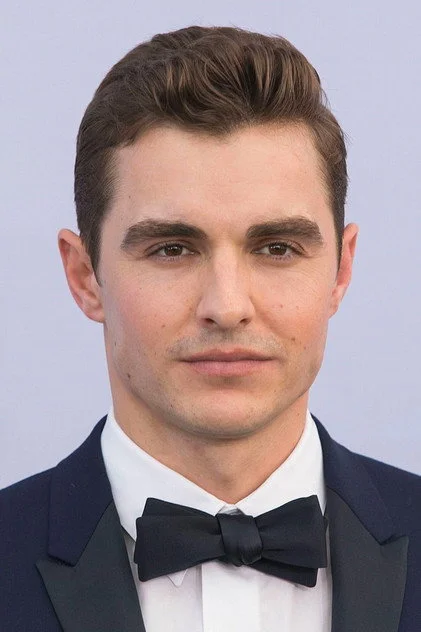 Dave FrancoRaww (voice)
 Jenny SlateBatiba (voice)
 Manny JacintoBungi (voice)
 Lea SalongaManang (voice)
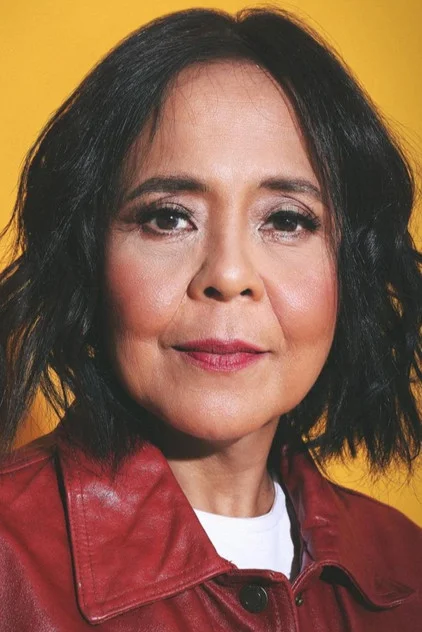 Dolly de LeonLola Fatima (voice)
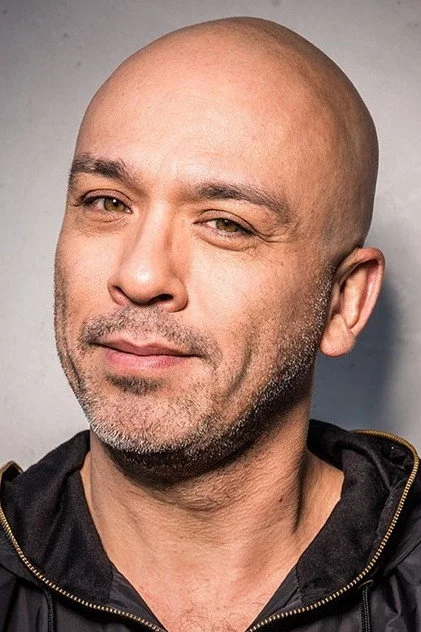 Jo KoyDatu (voice)
 Ronny ChiengKing Truffle Wuffle (voice)
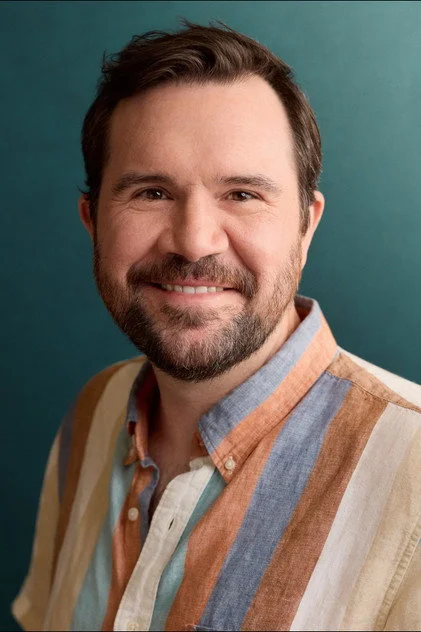 Kevin McCannPrince Mermahn (voice)
 Kailey CrawfordYoung Jo / Classroom Kid 1 (voice)
 Kayla TeruelYoung Raissa (voice)
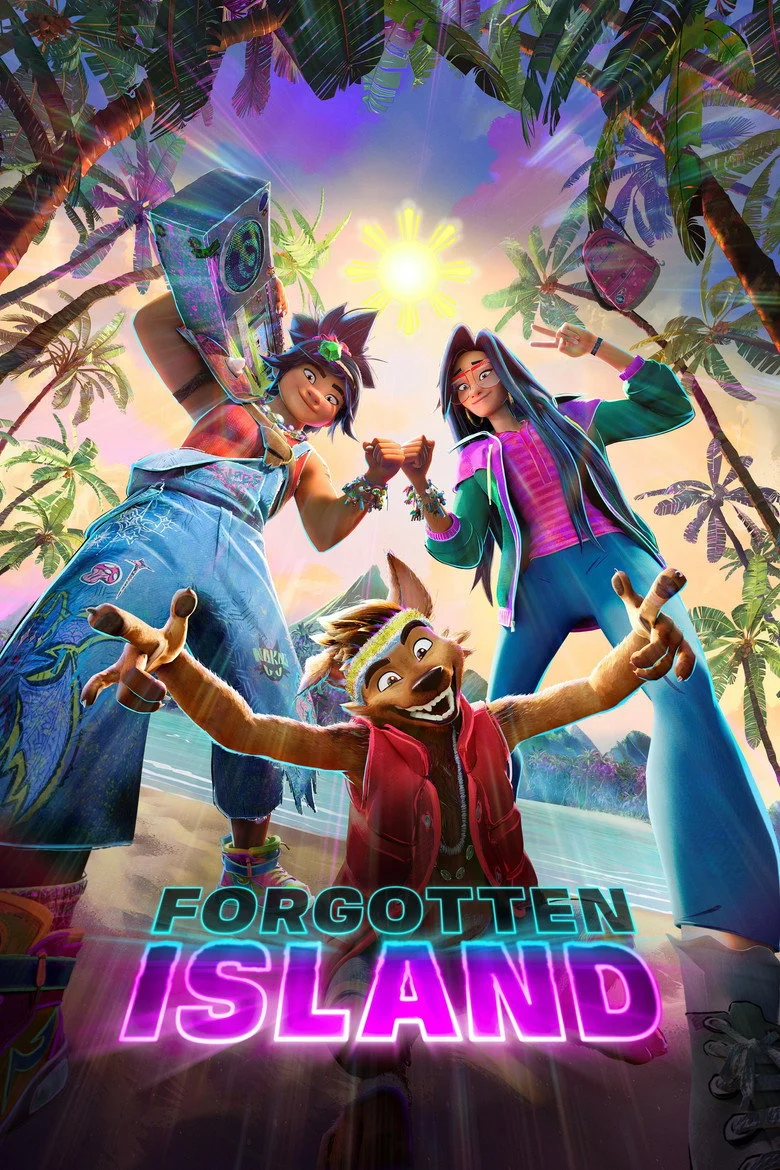
Forgotten Island is an animated fantasy with a particularly appealing contradiction at its center. It is exuberant, strange and packed with visual gags, yet its emotional engine is the quieter, recognisable fear that two close friends may want different things from their lives. That balance gives the film more weight than its wildest creature designs initially suggest. Set between the Philippines of the 1990s and the fantastical realm of Nakali, it finds room for teen uncertainty, cultural specificity, absurd comedy and genuine wistfulness.
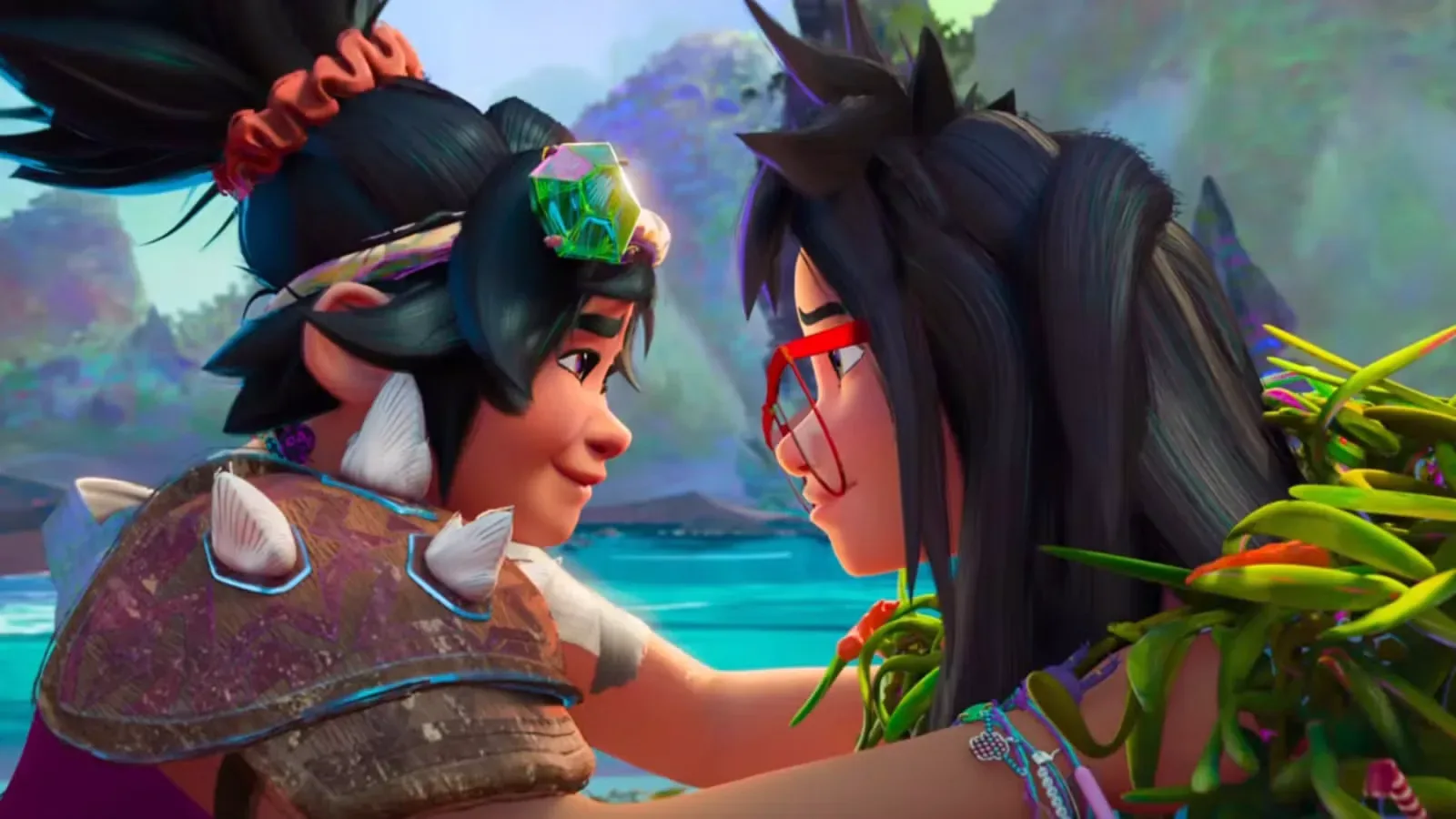
Jo, voiced by H.E.R., and Raissa, voiced by Liza Soberano, begin as children united by their outsider status after both land in the principal’s office. A montage following their early bond establishes the depth of the relationship before the story moves forward to their teenage years. By then, the two are beginning to make plans beyond high school, and those plans no longer appear to fit together as easily as they once did. It is an economical conflict, but a potent one: friendship is not treated as a pause before the “real” story, but as the story’s central stake.
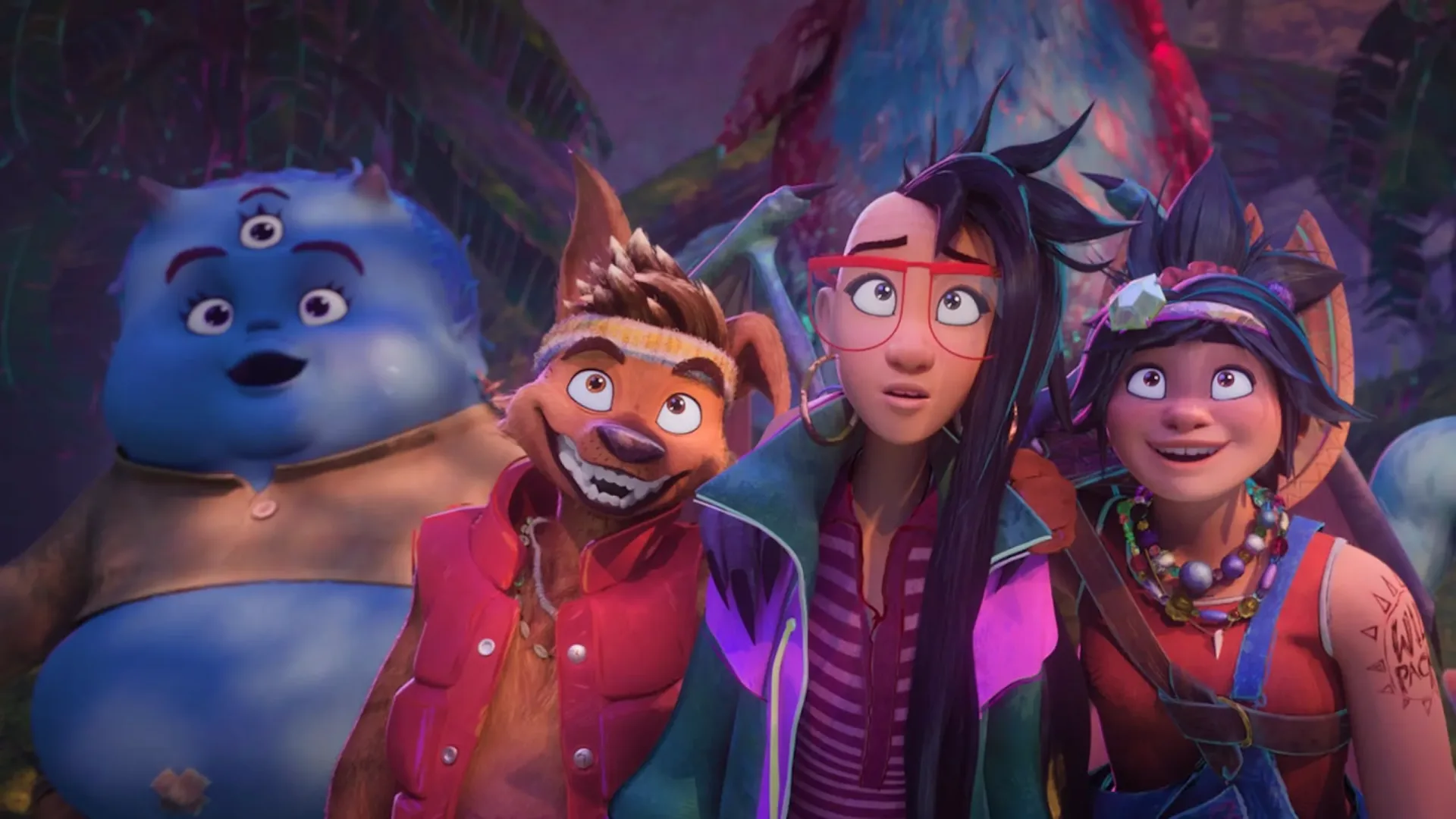
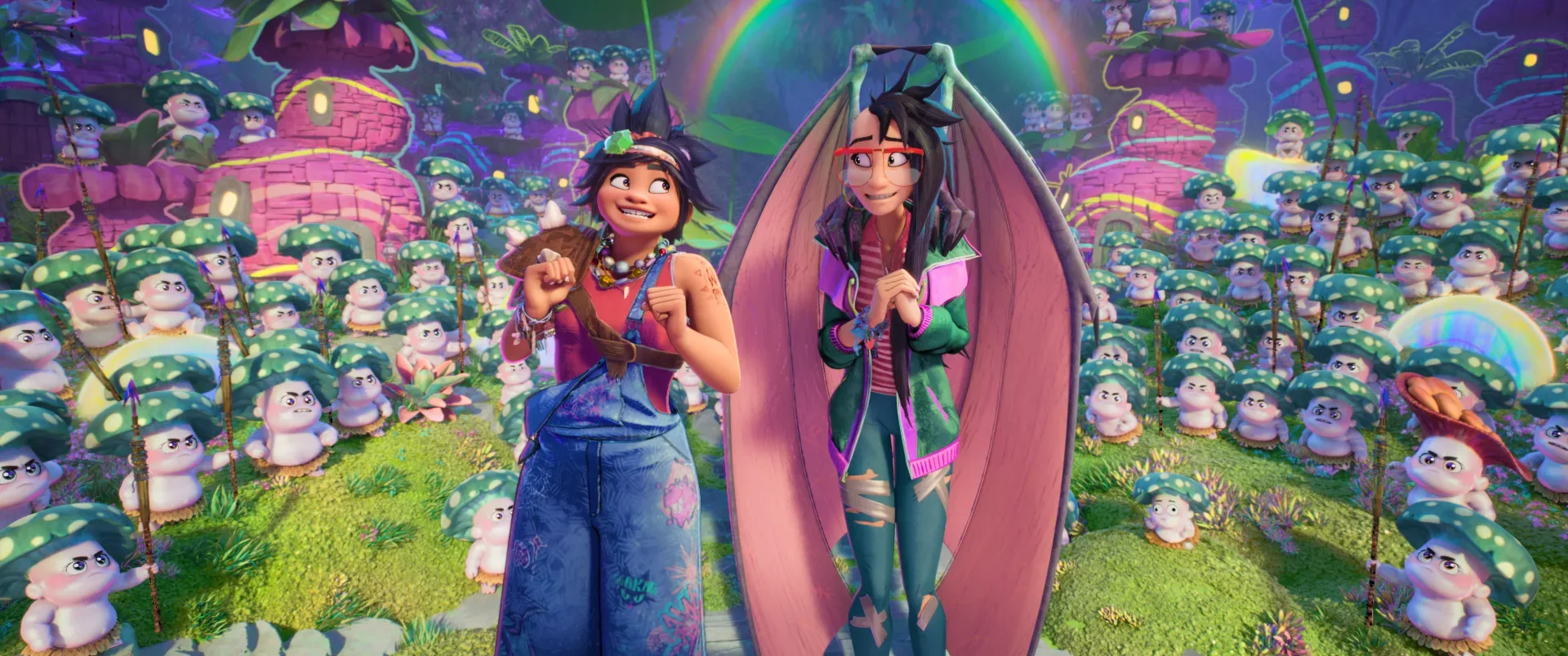
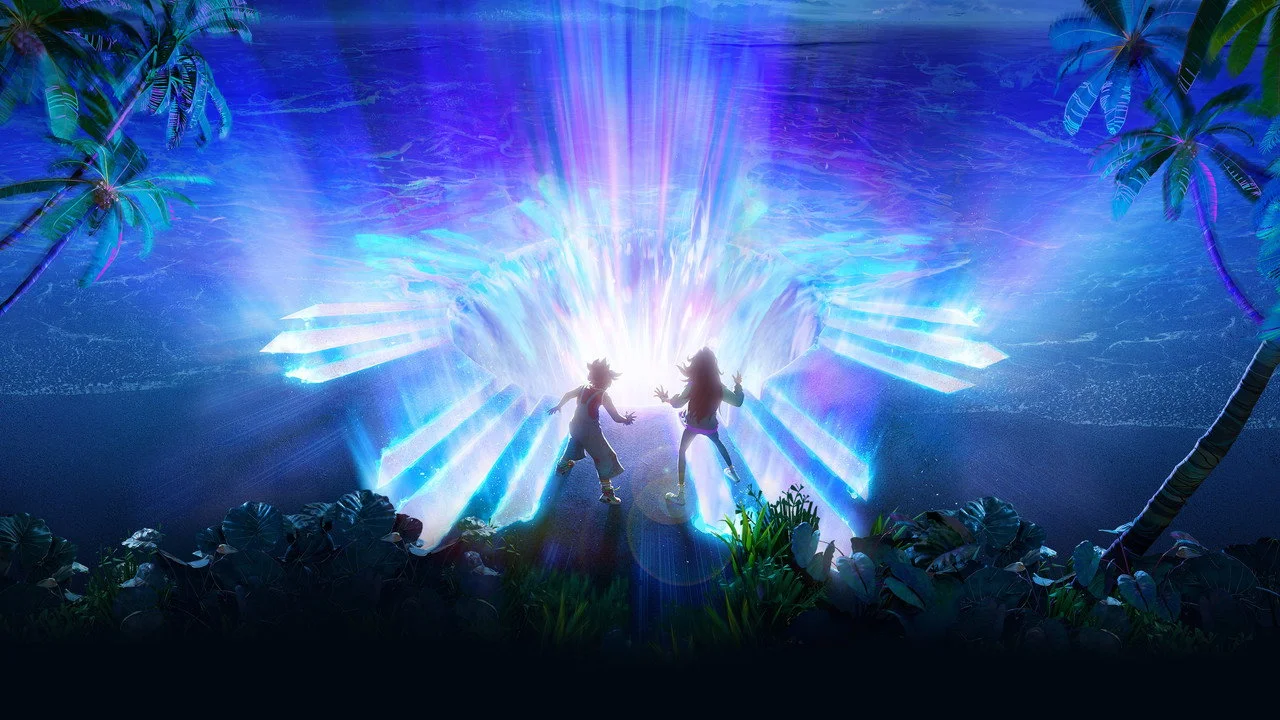
That makes the film’s portal into Nakali more than an excuse for a change of scenery. The realm is connected to folklore passed on by Jo’s grandmother, Fatima, and its existence confirms that the family stories carry real power. Once Jo and Raissa enter, the narrative takes an enjoyably off-kilter turn. They wake after their first night in Nakali with incomplete memories, leaving them to reconstruct what happened through the consequences around them. Raissa has wings, a were-dog called Raww insists he is their friend, and a manananggal named Manang is out to kill them. The premise lets the movie make discovery itself a source of both jokes and momentum.
The memory device is one of Forgotten Island’s most effective ideas. It gives the fantasy plot an atmosphere of comic confusion while also tying the adventure to questions of what people retain, lose and choose to protect in a changing relationship. The film apparently reaches for a bittersweet emotional register rather than treating memory solely as a puzzle-box mechanism. That is an important tonal choice. Jo and Raissa’s uncertainty about their future is not solved merely by escalating magical jeopardy; their situation gains feeling because the strange world pressures them to confront what their connection has meant.
Directors Joel Crawford and Januel Mercado are credited with keeping the film’s disparate modes in active conversation. Forgotten Island can move from pathos around its friends’ diverging ambitions to an intentionally ridiculous fantasy sight gag without abandoning either impulse. That is a difficult line for family animation to walk. The comedy has a deliberately bizarre edge, but it is not presented as an alternative to emotional investment. Instead, the film seems to understand that teenage friendship can be both deeply consequential and, from the outside, gloriously chaotic.
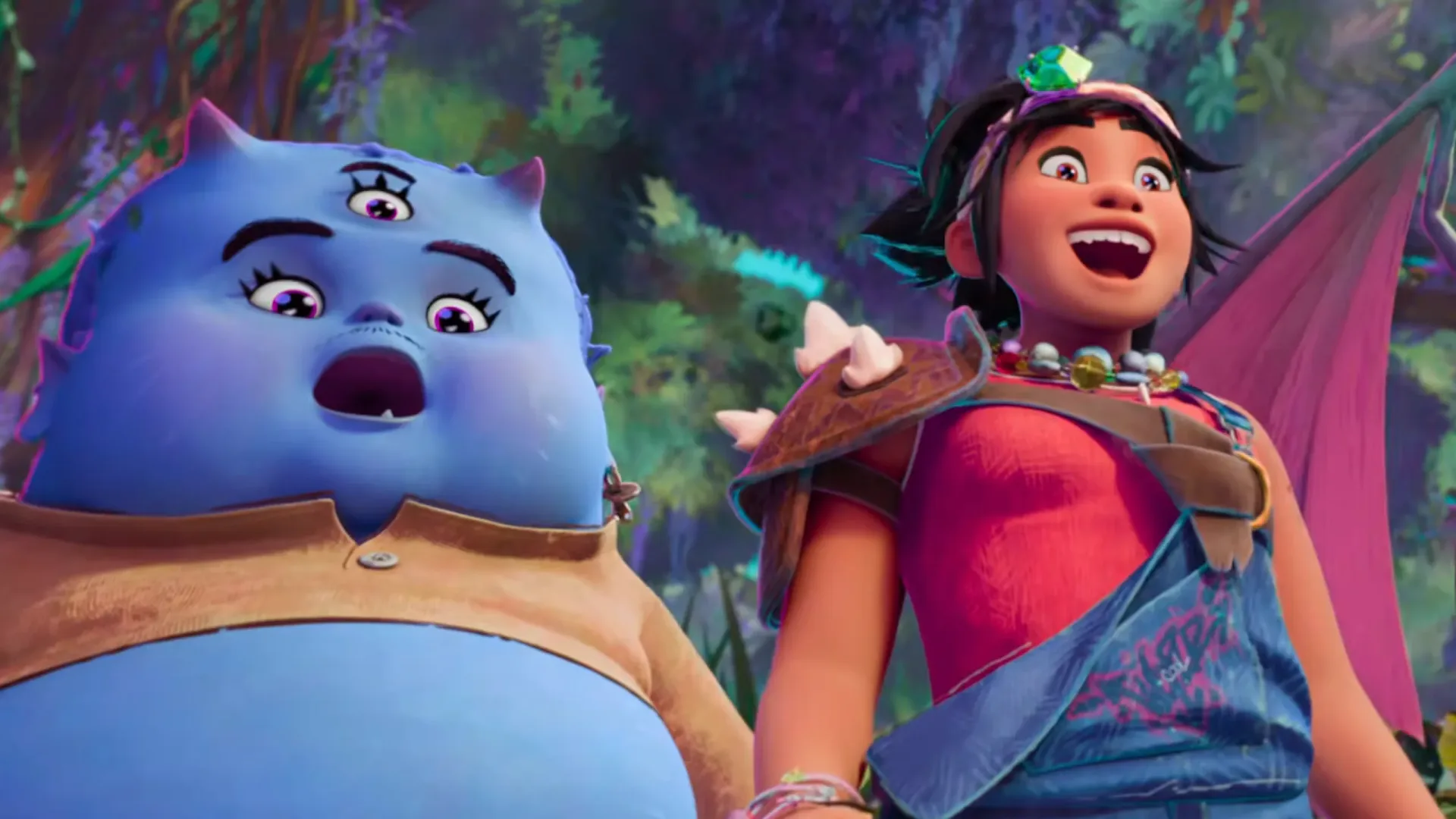
The design work sounds crucial to making that mixture land. Saturated colour and a sense of constant movement distinguish both the everyday world and the heightened fantasy island. The animation also incorporates anime-influenced devices, including exaggerated eye effects and two-dimensional thought bubbles. These flourishes are more than decorative if they reflect Jo and Raissa’s scattered, energetic teenage perspective; they give inner reactions a playful visual form. In a film that asks viewers to accept portals, demons and transformations, such elasticity can make the emotional viewpoint feel more immediate rather than less.
Nakali’s inhabitants provide much of the film’s gleeful excess. Dave Franco voices Raww, the were-dog who claims an already-established friendship with the girls, while Lea Salonga voices Manang, the dangerous torso-detaching demon pursuing them. Manny Jacinto is singled out as a three-eyed demon baby with an effective split between cute and frightening. Kevin McCann’s Mermahn, an absurd superheroic aquatic figure accompanied by singing starfish, pushes the movie into knowingly silly territory. These are not restrained inventions, and the film’s willingness to commit to them appears to be one of its pleasures.
That imaginative confidence also clarifies what the movie is offering viewers. Forgotten Island is not described as a sober folklore lesson or a narrowly conventional quest. Filipino cultural setting and folklore inform the world, while the film’s personality comes from the friction between heartfelt coming-of-age drama and visual oddity. The result should suit audiences looking for animation that is willing to be sentimental, loud and weird in the same breath. Its creature comedy and pop energy may be particularly inviting for family viewing, while the conflict between Jo and Raissa gives older viewers a more emotionally specific thread to follow.
H.E.R. and Soberano’s characters matter most because the film gives their friendship a real point of strain. They are not simply opposites manufactured to trade quips; their looming disagreement concerns the fact that growing up may ask them to move in different directions. The story’s attention to that transition is a strength, especially given how rarely close teenage female friendship is allowed to occupy the center of a broad animated fantasy. The interpretation here is that Nakali externalises the instability of that moment: a familiar bond becomes hard to recognise, memories are unreliable, and each new discovery changes what the pair think they know.
Still, Forgotten Island does not completely escape the storytelling habits it otherwise refreshes. There are stretches where the narrative is visibly running along familiar formula and cliché. That limitation matters because the film has set an unusually high imaginative standard for itself. When character designs, animation choices and the memory premise all suggest limitless possibility, routine story beats can feel more conspicuous than they would in a less inventive film. The adventure remains lively, but its surprises do not always extend to the structure carrying them.
The ending is another potential dividing line. Its earnestness is consistent with the film’s interest in memory, connection and the uncertainty ahead for Jo and Raissa. For viewers who have responded to the friendship at its center, that emotional directness may feel earned. For others, the sincerity may sit awkwardly beside a movie that has also embraced such unapologetically surreal comedy. The issue is not that a funny fantasy cannot be heartfelt; Forgotten Island’s strongest passages suggest that it can. Rather, the final tone may ask some viewers to make a sharper adjustment than the preceding material has fully prepared.
Even with those reservations, Forgotten Island comes across as a notably spirited animated feature. It has a clear emotional focus, an expressive visual identity and a roster of side characters unafraid to be strange. Most importantly, its fantasy machinery serves Jo and Raissa’s relationship instead of crowding it out. The formula occasionally shows through and the conclusion may lean too hard into sentiment, but the film’s pep, imagination and tenderness make it an easy recommendation for viewers open to a heartfelt adventure with a distinctly unruly sense of humour.
Verdict
Forgotten Island is a vibrant, emotionally alert animated fantasy that makes teenage friendship the heart of its portal-world adventure. Its formula-bound stretches and very earnest ending prevent total lift-off, but its colourful animation, inventive folklore-inflected world and funny supporting cast make the journey a delight.