
 John MalkovichChris
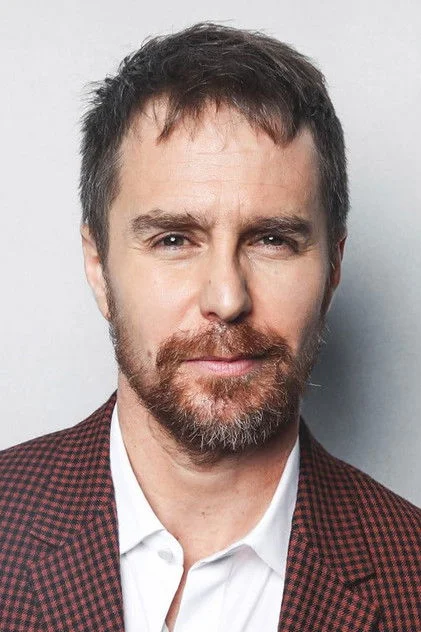 Sam RockwellLee
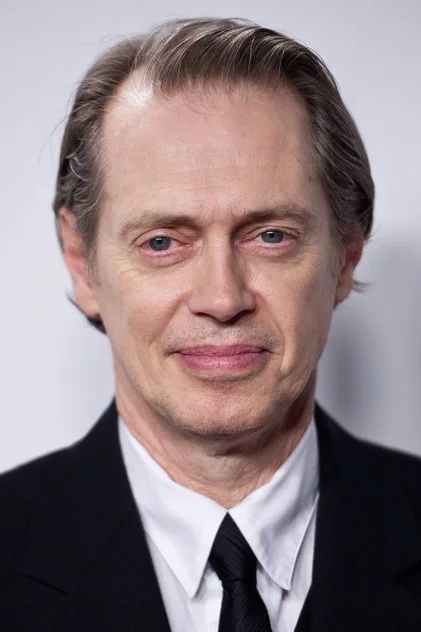 Steve BuscemiMJ
 Mariana di GirolamoMonica
 Ailín SalasAlicia
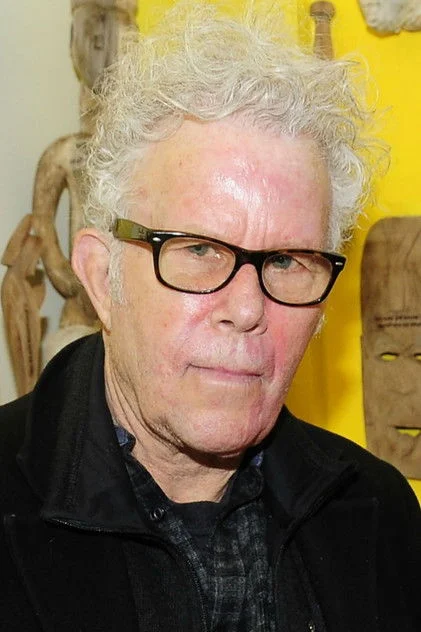 Tom Waits
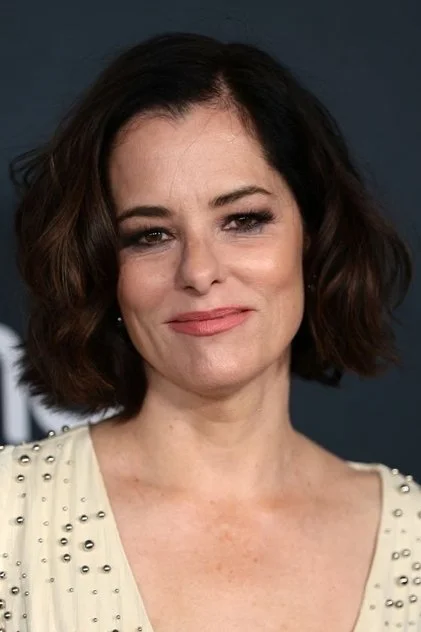 Parker PoseyMarge
 Paola Giannini
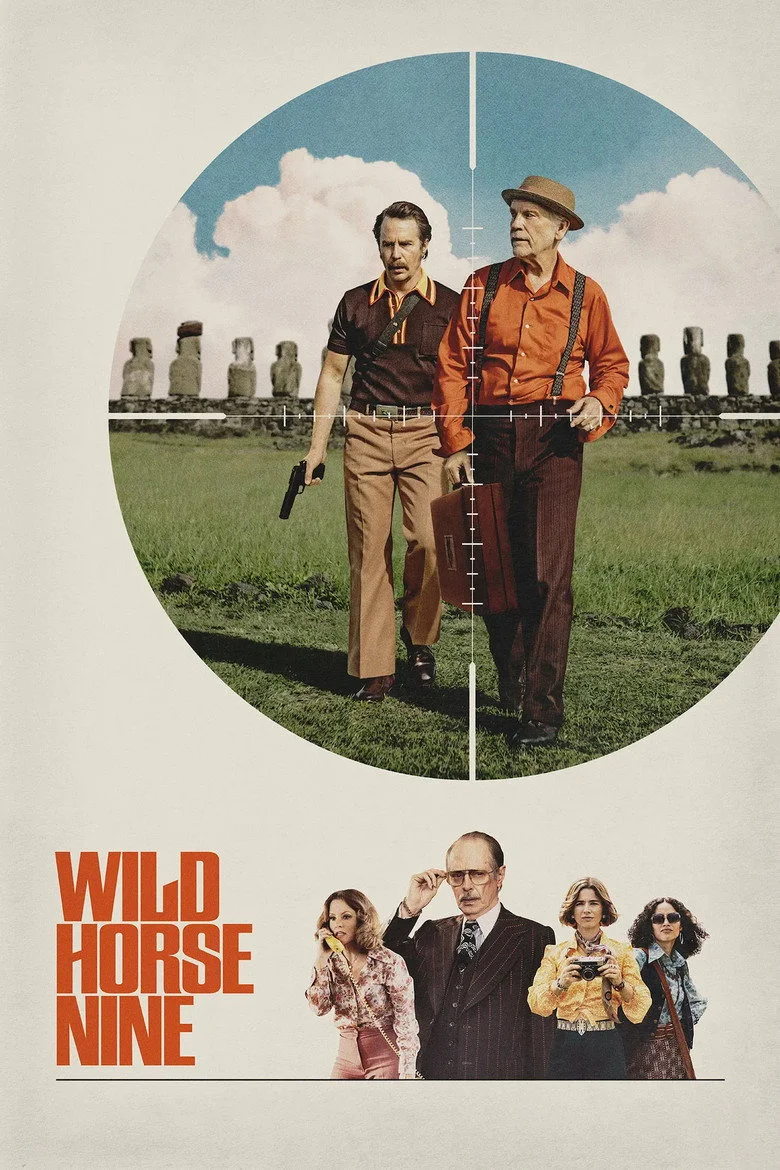
Wild Horse Nine sends two American operatives to Easter Island, but its real destination is the fraught territory between an ageing man and the colleague who may be the closest thing he has to family. The premise carries the trappings of a CIA thriller: Chris Carlisle, a veteran agent with a violent history, and Lee Chesterfield, his younger partner, have worked in Chile during the effort to undermine Salvador Allende’s government. Yet the film appears far more interested in the pair’s conversations, accumulated resentments and unspoken attachment than in conventional spy-movie machinery.
That choice is the key to its appeal. The story has turns to discover, and a thread involving Carlisle dictating his memoirs gives the trip an underlying pressure. But this is fundamentally a blackly comic hang-out film, built around the pleasure and discomfort of spending time with two men whose every exchange seems capable of turning into either a joke, an argument or a painful confession. It has political context and bursts of violence, but its sharpest weapon is dialogue.
A spy story powered by companionship
Carlisle is 72, ornery and increasingly forgetful, a man whose storied past includes lethal work in places most people would struggle to locate. Malkovich’s character is also dictating a memoir, prompting CIA chief MJ to wonder what compromising material might emerge. Chesterfield is asked to keep an eye on the older agent, a task that creates an immediate tension between professional duty and personal loyalty.
The film’s setting in Chile and its reference to American involvement in the campaign against Allende give the comedy an uneasy foundation. These are not harmless eccentrics who happen to work for the government; they are participants in destructive political violence. The film’s interest in remorse, mortality and the consequences of a violent life therefore has real dramatic weight. Its comic exchanges may be wild, but the surrounding history makes them more than a string of detachable gags.
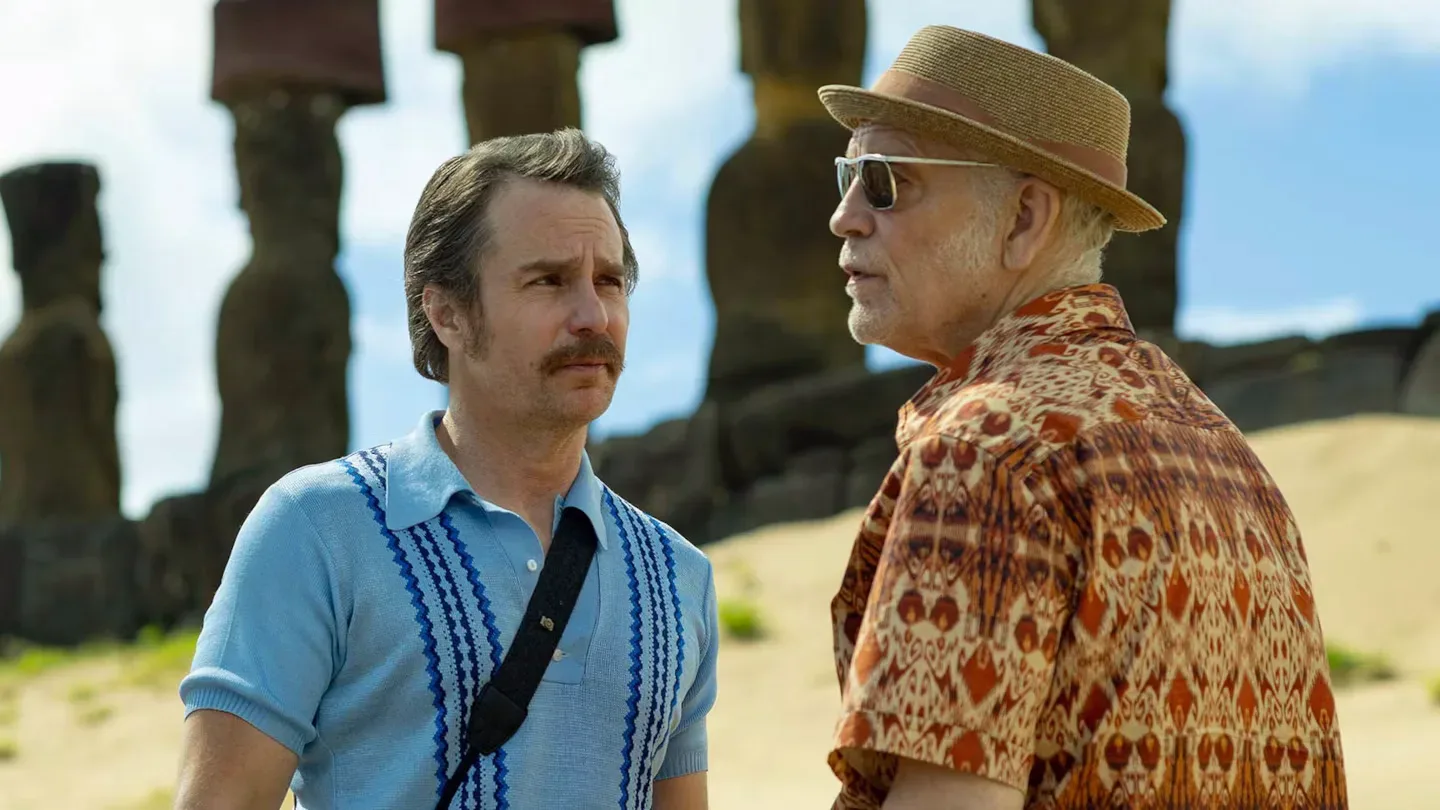
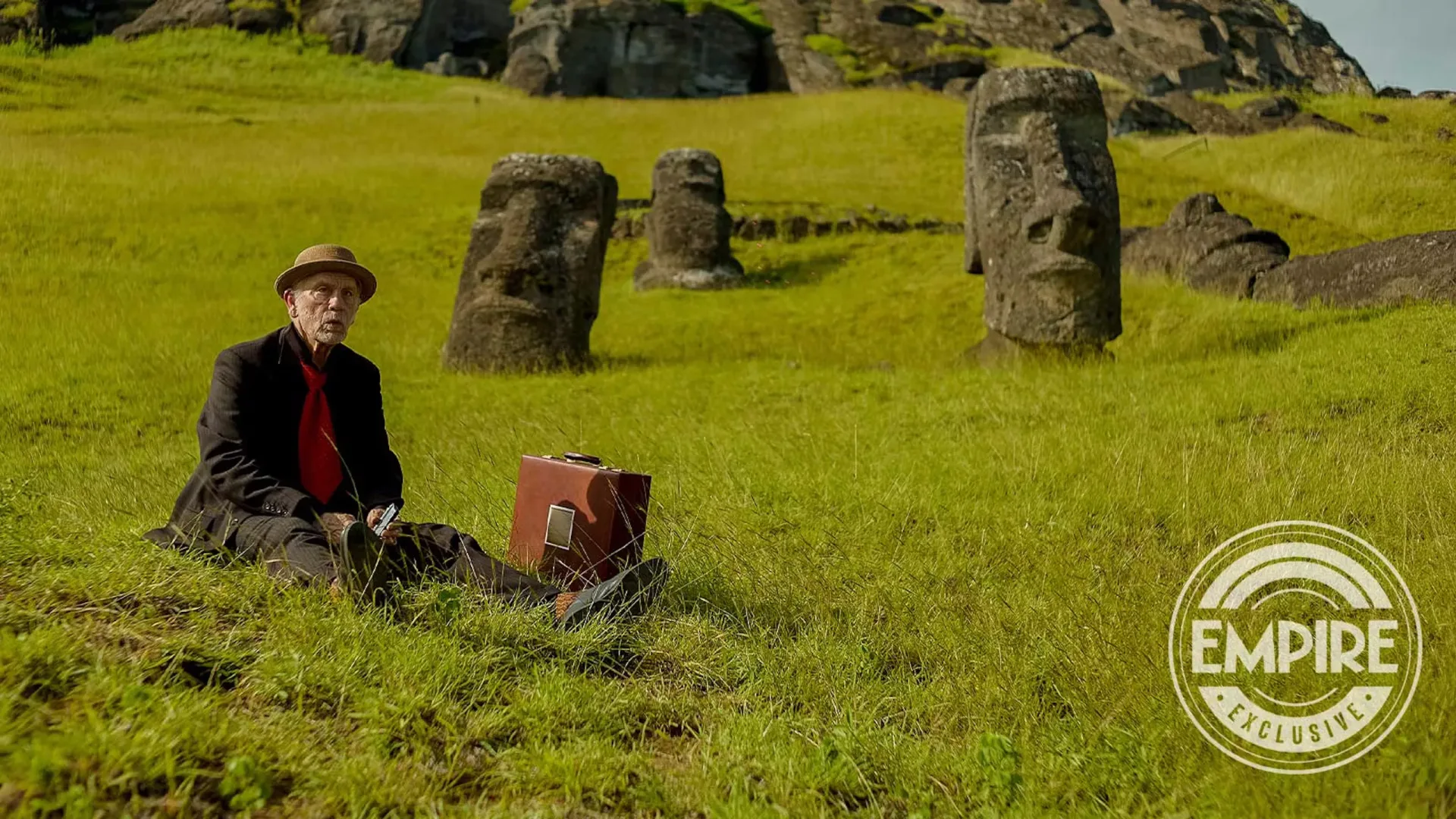
On Easter Island, the Moai and the open landscape give the material an unusually expansive backdrop. The setting seems to serve a thematic purpose as well as a scenic one: the characters are displaced, confronted by an environment that does not belong to them, and unable to escape the past they carry in with them. When Chilean students challenge the Americans’ language for the island and insist on Rapa Nui, the moment points to the film’s awareness that its protagonists are men out of step with the people and places around them.
Still, this is not presented as an intricately procedural espionage exercise. The plot’s developments are said to arise from character rather than elaborate tradecraft. Viewers seeking a tightly mechanical conspiracy thriller may need to recalibrate. The suspense comes less from decoding an operation than from seeing what Carlisle will reveal, what Chesterfield will tolerate and whether the intimacy between the two can survive what comes to light.
Malkovich and Rockwell make the odd couple matter
Malkovich has the showier part and, by all indications, makes the most of it. Carlisle’s prickliness, failing memory and formidable history could easily curdle into a collection of mannerisms. Instead, the performance is described as both laconic and irascible, with room for genuine soulfulness beneath the acid delivery. Malkovich finds a particular rhythm in the heightened language, but the important achievement is that the verbal flair does not erase the character’s vulnerability.
That vulnerability is central to the film’s deeper sadness. Carlisle’s memoir is not simply a narrative device; it places an elderly man’s memory, legacy and possible self-justifications under scrutiny. Forgetfulness can be funny in the moment, but it also raises the stakes of what a person can hold onto as time narrows. The film’s meditation on ageing seems to emerge from this contradiction: Carlisle is still intimidating, funny and capable of astonishing cruelty, but he is also confronting a self that may be slipping beyond his command.
Rockwell’s Chesterfield provides the ideal counterweight. The character is less cynical and more outwardly composed, but not remotely innocent. He can kill with chilling casualness, a fact that prevents the film from turning him into a purely corrective moral presence. Rockwell reportedly balances charisma with exasperation, allowing Chesterfield to function as the straighter half of the partnership while suggesting a much larger reservoir of feeling for Carlisle.
That balancing act gives the central relationship its force. The men’s bond is not reduced to sentimentality, nor is it treated as mere comic bickering. Their banter can be ridiculous, covering subjects from moths and cheese to dating addicts, but the very abundance of talk becomes revealing. These men communicate through provocation because direct emotional speech would be harder. The interpretation supported by the material is that the jokes are not a diversion from feeling; they are the imperfect language through which feeling is allowed to surface.
Steve Buscemi’s MJ adds another lively presence as the CIA chief trying to manage the risks around Carlisle’s book. Parker Posey also makes an impact as Marge, Chesterfield’s brassy wife, particularly in phone calls that bring a different sort of chaos into Lee’s life. Mariana di Girólamo and Ailín Salas have a smaller but pointed function as the Chilean students willing to challenge the Americans’ assumptions. Even the horse receives notable attention, suggesting that the film’s offbeat sensibility extends beyond its human ensemble.
Zingers with a bruise beneath them
The tonal blend is ambitious: political thriller, black comedy, relationship study and Western-inflected reckoning all occupy the same film. Wild Horse Nine seems to pull this off because its tones converge around the leads rather than compete for control. The comedy comes from personalities and their terrible opinions; the melancholy comes from the costs of having lived as they have; the thriller element comes from the institutional and personal secrets that bind them. Each mode feeds the others.
The Western association is especially useful. Wide-open spaces, horses and an ageing violent man assessing his own legacy bring to mind the moral weather of a late-life gunslinger tale. But the film is not described as a straight Western transplant. Rather, the genre shading gives Carlisle’s dilemma a mythic edge: a man who has spent his life treating violence as work must reckon with whether his stories can make that work sound bearable, admirable or even coherent.
Carter Burwell’s elegiac score is an important part of this tonal architecture. Rather than merely decorating the jokes, the music underlines the melancholy, regret and mortality in the material. That contrast sounds essential. A score this mournful can prevent the film’s stylish dialogue from becoming glib, reminding the audience that the men trading barbs are haunted by actions no clever line can undo.
The writing’s chief virtue is its colour. Conversations have the quality of verbal set pieces, filled with weird observations and deliberately tasteless lines. Such material will inevitably depend on one’s tolerance for abrasive humour and characters who are plainly products of another era. The film does not appear to sand down Carlisle and Lee’s uglier attitudes. Instead, it makes their being “out of time” part of the texture, including encounters in which they are directly challenged. That may be bracing for some viewers and alienating for others, but it is more interesting than treating the characters’ prejudice as a painless period garnish.
A small visual reservation in an otherwise accomplished mix
There is one meaningful qualification to the praise. The film’s imagery reportedly does not stay in the mind as strongly as its words. Given the striking location and the potential grandeur of the Moai, that is a notable missed opportunity. Wild Horse Nine may be visually effective in the moment without producing the same lingering impact as its best dialogue or its lead performances.
That limitation does not seem to disrupt the overall experience because the film’s main accomplishment lies elsewhere: the difficult synthesis of genres and emotional registers. It makes room for jokes, state violence, loneliness, friendship and the indignities of age without allowing one ingredient to cancel the others. The result sounds less like a conventional CIA thriller than a character-driven odd-couple story in which the geopolitical background keeps every laugh slightly poisoned.
For viewers drawn to actor-led films with stylised dialogue, morally compromised characters and an undercurrent of sorrow, Wild Horse Nine looks like an especially rich proposition. Its spy premise is an entry point, not a promise of wall-to-wall intrigue. Come for Malkovich and Rockwell trading barbs; stay for the more complicated portrait of companionship, memory and regret that their performances make possible.