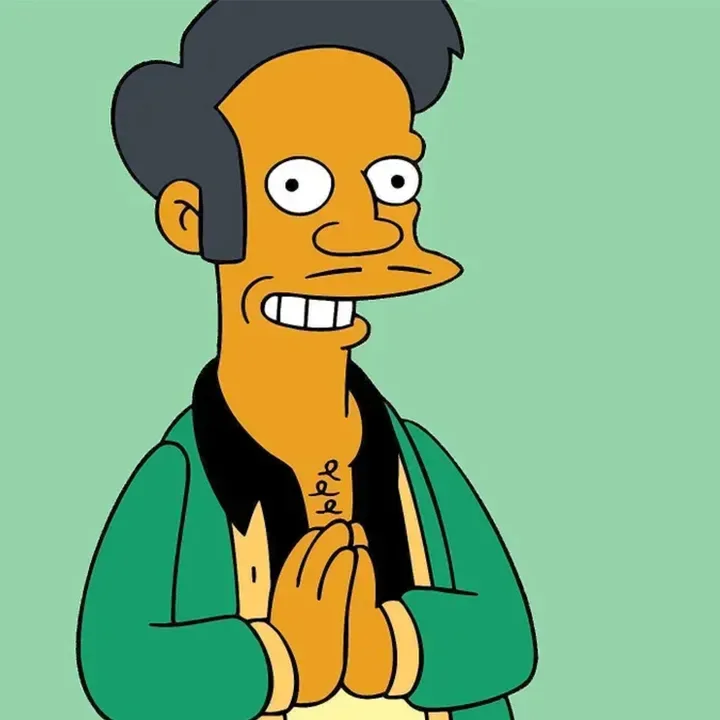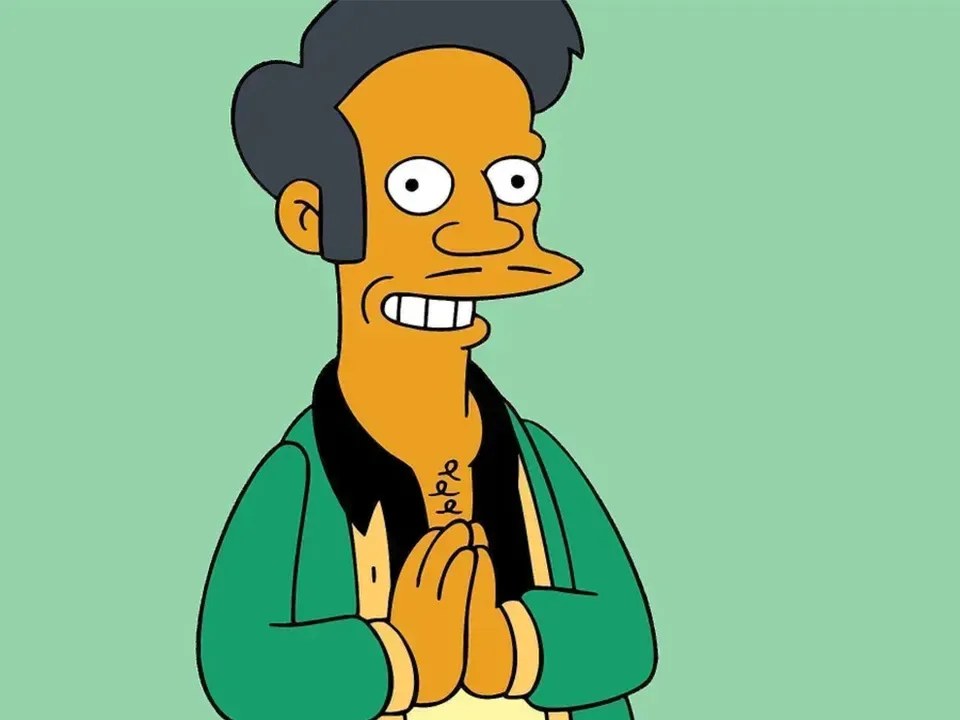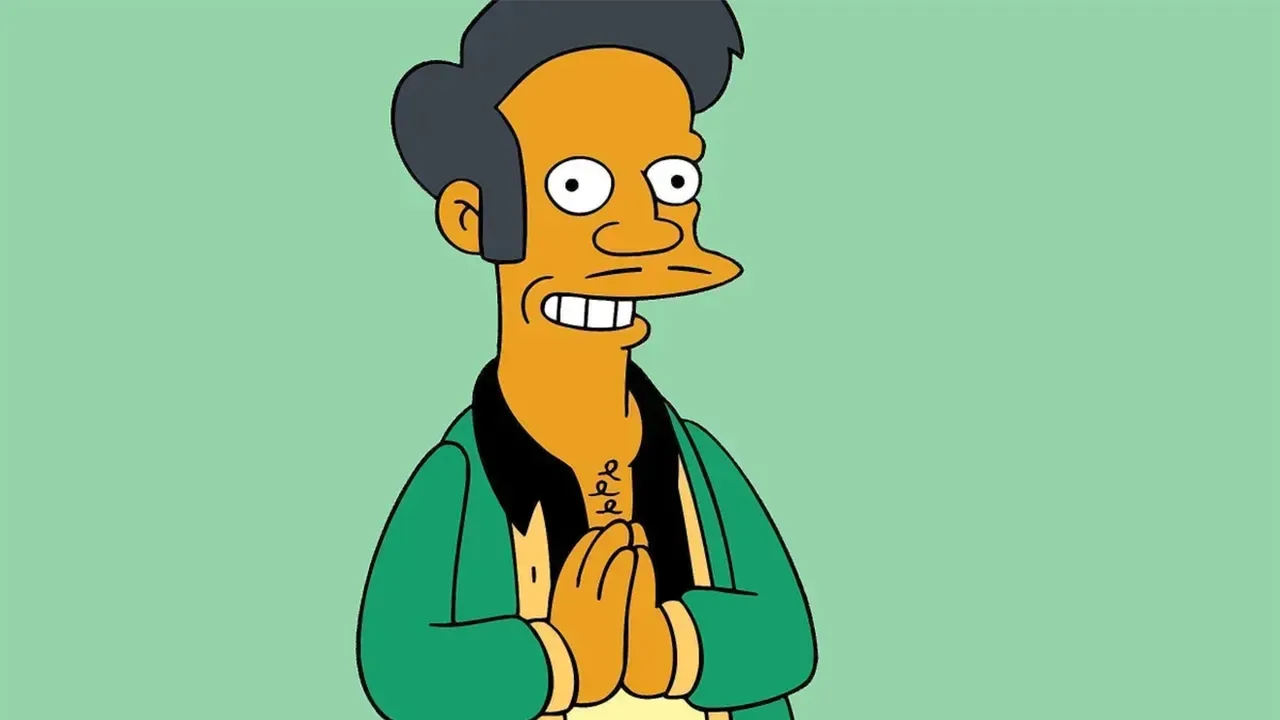
Apu Nahasapeemapetilon is speaking again on The Simpsons. The Kwik-E-Mart owner returns with new voice actor Sunil Malhotra in “The Revengening,” the third episode of the animated series’ 38th season. It is Apu’s first spoken appearance since “The Serfsons,” which aired in October 2017.
The return is not treated as business as usual. Instead, the Halloween-themed episode builds its central joke and confrontation around the fact that Apu has remained visible in Springfield while being conspicuously silent for years. In doing so, the show acknowledges a difficult history surrounding one of its most recognizable supporting characters rather than pretending the gap never happened.
Malhotra, an actor and voice performer whose credits include Grey’s Anatomy and The Legend of Korra, now voices Apu. The production reportedly kept both the table read and recording process tightly confidential under non-disclosure agreements, meaning the character’s voiced comeback arrived as a surprise rather than a long-running promotional storyline.
A return that makes the absence part of the story
“The Revengening” begins with a Springfield resident in a Daft Punk-inspired costume being repeatedly killed by other townspeople. One year later, that person is alive and targeting those responsible. The revenge plot eventually leads to the unmasking: the costumed figure is Apu.
His reveal turns the slasher-style premise into a pointed meta joke. Apu tells Springfield that he is the man the town left for dead and acted as though it did not exist. Marge apologizes, saying the town wanted to do the right thing, while Bart admits they were scared and did not know how to proceed.
Meta fiction is storytelling that comments on itself, its creators, or the conventions surrounding it. Here, the dialogue lets the characters discuss Apu’s disappearance in a way that also reflects the real-world conversation over his portrayal. It is an approach The Simpsons can use particularly well: the show frames a serious production decision through heightened genre parody, a masked-villain reveal, and Springfield’s usual capacity for chaotic self-interest.
That does not mean one scene is intended to resolve every concern attached to the character. It does establish the terms of the return, though. Apu’s absence is acknowledged directly, the show gives him anger and agency within the plot, and the first major moment of his reintroduction is built around him demanding recognition.
Why Apu stopped speaking
For the first 29 seasons of The Simpsons, Apu was voiced by Hank Azaria. The character became the focus of the 2017 documentary The Problem With Apu, in which comedian Hari Kondabolu examined the effect Apu had had on people of South Asian descent.
Related coverage includes Apu Speaks Again in The Simpsons Season 38 After Nearly Nine Years.
Azaria subsequently said he would no longer perform the role. In a 2021 appearance on the Armchair Expert podcast, he reflected remorsefully on his work as Apu and said he felt he needed to personally apologize to Indian people in the United States.
After Azaria left the part, Apu did not vanish entirely from the series. He was sometimes present in the background, but the character had no dialogue. That visual-but-silent status lasted from 2017 until “The Revengening.” It left a familiar Springfield figure in a strange dramatic limbo: still part of the animated town, but without a voice or a clearly defined new direction.
The distinction matters. Recasting is often a straightforward continuity measure in animation; a character remains fundamentally unchanged and a different performer assumes the dialogue. Apu’s new casting carries more weight because the previous portrayal itself was at the center of the debate. The task was not simply to locate a sound-alike. It was to determine whether and how the character could return in a manner that recognized why he had been quiet.
Sunil Malhotra’s cautious path to the part
Malhotra has described a mixed initial reaction to getting an audition for The Simpsons. He immediately understood which role was likely being offered and said that realization made his stomach sink. At the same time, he was curious about whether the production team could acknowledge past mistakes, whether he could make Apu his own, and whether a return could satisfy both established viewers and South Asian viewers who had stopped watching.
That hesitation is significant. It recognizes that casting a South Asian performer does not, by itself, answer every question about characterization or representation. It can be part of a different creative process, but the material, the joke structure, and the character’s treatment still matter.
Following discussions with producers, Malhotra said he became convinced the return was being approached responsibly. He characterized the process as deeply collaborative and said he hopes it will be satisfying for longtime viewers as well as South Asian children who, like him, had stepped away from the series.
Malhotra also singled out recording Apu’s forceful declaration of identity as a particularly meaningful moment. His response suggests the performance is not positioned merely as an imitation of the previous voice. The new actor’s perspective is part of what defines the character’s on-screen re-entry.
What the production team has said
Executive producer Matt Selman said the team loves Apu and wanted to bring him back in a way that allowed the character to evolve while remaining recognizably suited to the show’s voice. Selman also said the production is pleased with what Malhotra has brought to the role and anticipates more Apu in the future.
The decision to use a Halloween episode gave the series an unusually flexible container for the return. The Simpsons can use holiday horror storytelling to push characters into extravagant circumstances, then turn the absurdity toward a more self-aware point. Apu being positioned as a revenge figure is dramatic, comic, and deliberately overblown, but it also lets him verbalize the core grievance: he was present, then disregarded.
The idea for bringing him back in that setting came from staffer Nick Hahan and co-executive producer Cesar Mazariegos. From there, the show began searching for the new actor.
What viewers should and should not read into the episode
The episode is a major change in Apu’s status on the show, but it is not a complete map of what future appearances will look like. Selman’s comments indicate that more Apu is planned or expected, yet no further episode details, storylines, or schedule have been established here.
It is also worth separating two ideas that can easily get flattened into one. First, Apu has returned as a speaking character, voiced by Malhotra. Second, the show has written that return as an acknowledgment of its own hesitation and the criticism around the role. Those are connected choices, but they are not identical. A new voice concerns performance and casting; the episode’s dialogue concerns narrative framing and accountability.
For audiences, that makes “The Revengening” more than a trivia answer about a cast change. The episode is effectively the show’s statement that silence was not a workable permanent solution, while also admitting that its creators had been unsure how to move forward.
That may make the response more complicated than a typical returning-character moment, and appropriately so. Some viewers will judge the reintroduction by how Apu is written over time rather than by a single horror-comedy episode. Others may be most interested in hearing Malhotra establish a fresh performance after years in which the role had been dormant. Both responses engage with the actual stakes of the change.
The practical significance of a long-running animated recast
Long-running animation has an unusual relationship with time. Characters can maintain the same basic age and visual design for decades, while the performers, writers, audience expectations, and cultural context around them change considerably. A recast can therefore be more than a production footnote. It can signal that the show is reconsidering which aspects of an old character should be preserved, adjusted, or left behind.
In Apu’s case, the long silent period made that transition especially visible. The character was not quietly swapped from one performer to another between seasons. His lack of dialogue became part of the public reality of the show. Giving him a voice again is consequently a narrative event, an acting change, and a creative decision that viewers will continue to evaluate with future appearances.
It is a useful reminder that an iconic character is not just a catchphrase, a job at the Kwik-E-Mart, or a familiar silhouette in a crowd scene. A character’s voice affects who gets to define the role, what emotional range the performance can carry, and how directly the show can let that figure respond to the world around them.
For broader television context, another recent discussion of a returning comedy series can be found in this update on the future of Ted Lasso.
Apu’s next appearances will matter most
“The Revengening” gives Apu a high-profile spoken comeback and places the character at the center of a story designed to confront his prolonged silence. Malhotra’s arrival ends the nearly nine-year stretch since Apu last had dialogue, while the episode itself makes the awkwardness of that absence impossible to miss.
The more revealing measure will be what follows. If Apu appears again, those episodes will show how the series intends to integrate him into Springfield after this reset: as a participant in everyday stories, as a character with room to develop, and as someone whose humor does not require ignoring the concerns that led to the change.
For now, the most concrete development is simple but substantial: Apu is no longer only seen in Springfield. With Sunil Malhotra in the role, he is being heard again.