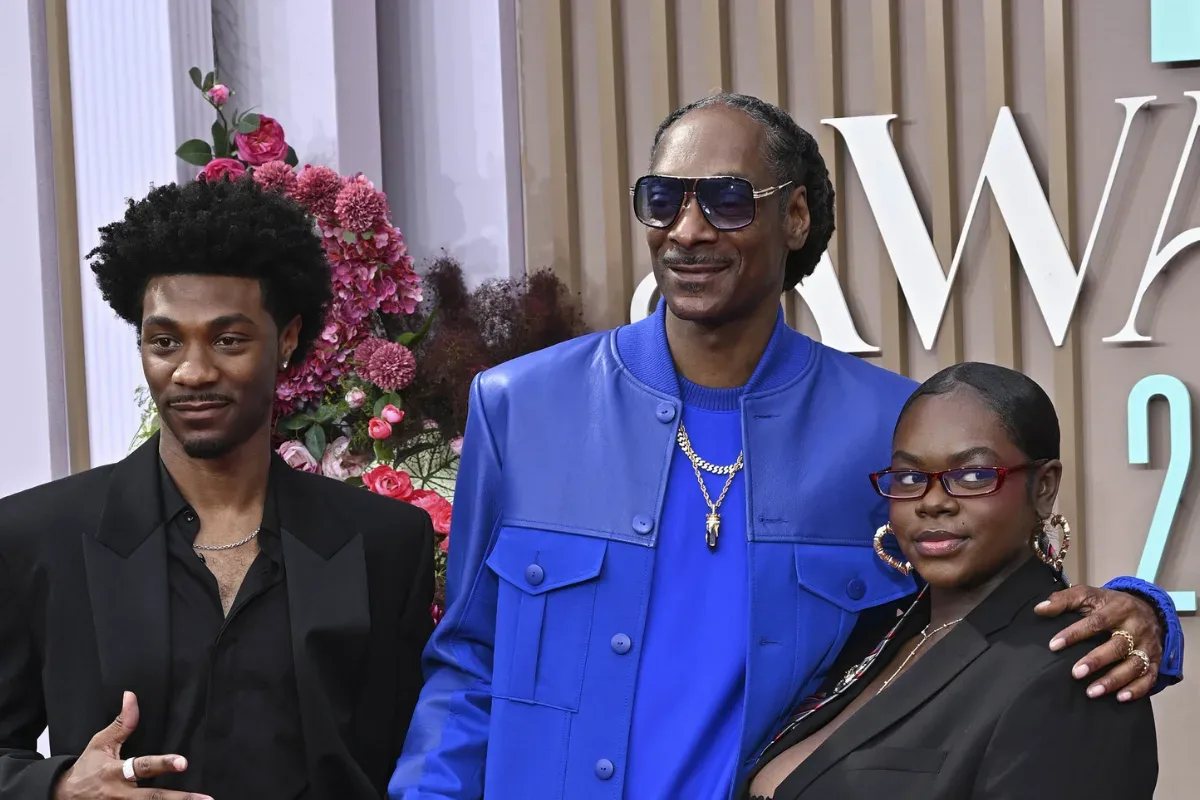
Cori Broadus is bringing a long-held interest in children’s animation into the family-friendly world of Doggyland. Broadus has joined the animated series created by her father, Snoop Dogg, as the voice of Maxine, a confident labradoodle whose development included Broadus’ own input on her personality and visual identity.
That creative involvement is the key detail behind Maxine’s introduction. Broadus did not simply arrive to record dialogue for an established part: she worked with Doggyland co-creator Claude Brooks on how the character would look and behave. In animation, voice performance is only one part of establishing a character. The design, mannerisms and traits that inform the performance all help determine how a character reads to children before and after she speaks. Maxine’s role gives Broadus a direct connection to each of those elements.
The character is already featured in the video for “You’re Enough,” the title track from the show’s latest album. That placement is especially fitting for a series built around musical lessons and positive affirmations. Maxine is described as self-assured with a little sass, qualities Broadus says matter because the character encourages children to be themselves.
“I love that she’s confident, a little sassy, and encourages kids to be themselves,” Broadus said.
A childhood ambition reaches animation
Broadus’ Doggyland role also carries a personal history. When she was younger, she auditioned for The Backyardigans but did not receive the part. Her animation debut in Doggyland therefore represents a different route to a goal she had wanted for years—one where she has helped create the character she now voices.
That distinction gives the casting more meaning than a standard celebrity voice role. An actor recording an animated part interprets material supplied by the production; a performer who contributes to a character’s conception can help define the material being interpreted. The available details do not spell out the specific visual or story decisions Broadus made with Brooks, but they do establish that Maxine was a collaborative creation rather than a finished character handed over at the microphone.
Snoop Dogg has said he is proud to see his daughter become a cartoon character that she helped bring together. For a program intended to model confidence and acceptance, adding a character developed with Broadus’ perspective aligns the production process with the values it presents onscreen.
What Doggyland is designed to do
Launched in August 2022 by Snoop Dogg, Claude Brooks and singer-songwriter October London, Doggyland is an animated children’s series centered on a group of dogs who sing, dance and rap through early-learning and social-emotional subjects. Snoop Dogg voices Bow Wizzle, the adult dog who guides the puppies.
Related coverage includes Cori Broadus Voices Maxine in ‘Doggyland’.
The show’s approach combines simple educational topics—such as letters, numbers and habits—with interpersonal lessons about sharing, bullying, feelings and treating others well. In practical terms, that makes its songs do more than teach recall. A song about sharing, for example, can introduce the idea that generosity is not limited to objects; it can involve communicating feelings with other people. That broader meaning is important for young viewers learning the language of relationships as well as basic classroom concepts.
Social-emotional learning is a term often used for content that helps children understand emotions, empathy, self-expression and interactions with others. Doggyland puts those ideas in a musical format rather than presenting them as formal instruction. Its earlier videos were generally under five minutes and used familiar nursery-rhyme structures for messages about feelings, sharing and bullying. The short format can make a lesson easier to revisit, while repetition and rhyme give families a way to discuss the idea after a song ends.
Music is not an accessory to the premise. It is the vehicle for the show’s educational messaging, with singing, dancing and rap positioned as tools for making lessons memorable for children and enjoyable for adults watching alongside them. The creative team’s stated aim has been to make something parents and children can share, while reflecting culture through both its music and its characters.
That emphasis on character and musical identity places Doggyland within a wider screen-entertainment conversation about how performers influence the worlds they enter. For a very different example of music woven into a fictional setting, Joking Joystick has also covered a trailer in which a character is taught to rap. The contexts could not be more different, but both illustrate how performance can serve storytelling rather than sit apart from it.
Why Maxine fits the series’ message
“You’re Enough” is a natural introduction point for Maxine because affirmation is central to the show’s stated mission. An affirmation is a positive statement intended to reinforce an idea or attitude. In this context, the message is not merely that a child should perform confidence, but that individuality and self-worth deserve recognition.
Maxine’s confidence and slight edge are therefore not incidental personality notes. They give the series a character who can embody its acceptance-focused lessons in a distinctive way. Children’s programming frequently uses clear traits to make characters legible: one may be especially patient, another curious or energetic. A confident character can model speaking up and maintaining a sense of self, provided that confidence is tied to empathy for others. The show’s existing focus on kindness, good habits and respect gives that trait a broader values-based setting.
Broadus’ own description of Maxine specifically pairs personality with encouragement. That pairing matters. “Be yourself” messaging can feel abstract to a young audience, but an animated character provides a repeatable example through facial expression, music, dialogue and actions. Maxine can make an affirmation tangible without turning it into a lecture.
From free videos to books and activities
Doggyland has been available through YouTube and YouTube Kids, giving families free access to its videos. The distribution choice supports the project’s goal of making its lessons broadly reachable. It also suits the series’ compact musical format: individual songs can be watched as stand-alone activities rather than requiring a family to begin with a full-length episode.
The project has also moved beyond video. A partnership with Little Bee Books, announced late last year, was set to bring Doggyland songs into board books, sound books and activities. The first book adapts the show’s affirmations song, extending the same core message into a format parents or caregivers can read with children.
That expansion is notable because it gives families more than one setting for the same lesson. A video can introduce a song through sound and movement; a board book can create a slower, conversation-based experience; an activity can encourage participation. None of those formats replaces the others. Instead, they offer different ways to return to a theme such as confidence, emotional expression or kindness during an ordinary day.
For Broadus, Maxine arrives at a moment when the Doggyland concept is extending across formats while keeping its musical foundation. The role lets her enter animation, contribute creatively to a character and attach her performance to a series deliberately aimed at positive messages for children and families.
What is confirmed about Broadus’ character
- Broadus voices Maxine, a labradoodle, in Doggyland.
- It is her animation debut.
- She collaborated with Claude Brooks on Maxine’s appearance and personality.
- Maxine appears in the “You’re Enough” music video, tied to the latest Doggyland album.
- The character is presented as confident, a little sassy and encouraging of self-expression.
There is no need to overstate what Maxine’s arrival means for the series beyond those details. What is clear is that Broadus has found a role that connects a childhood ambition with active creative participation. In a show where songs are intended to make children feel seen, supported and capable, a character shaped by the performer behind her has a particularly appropriate place.