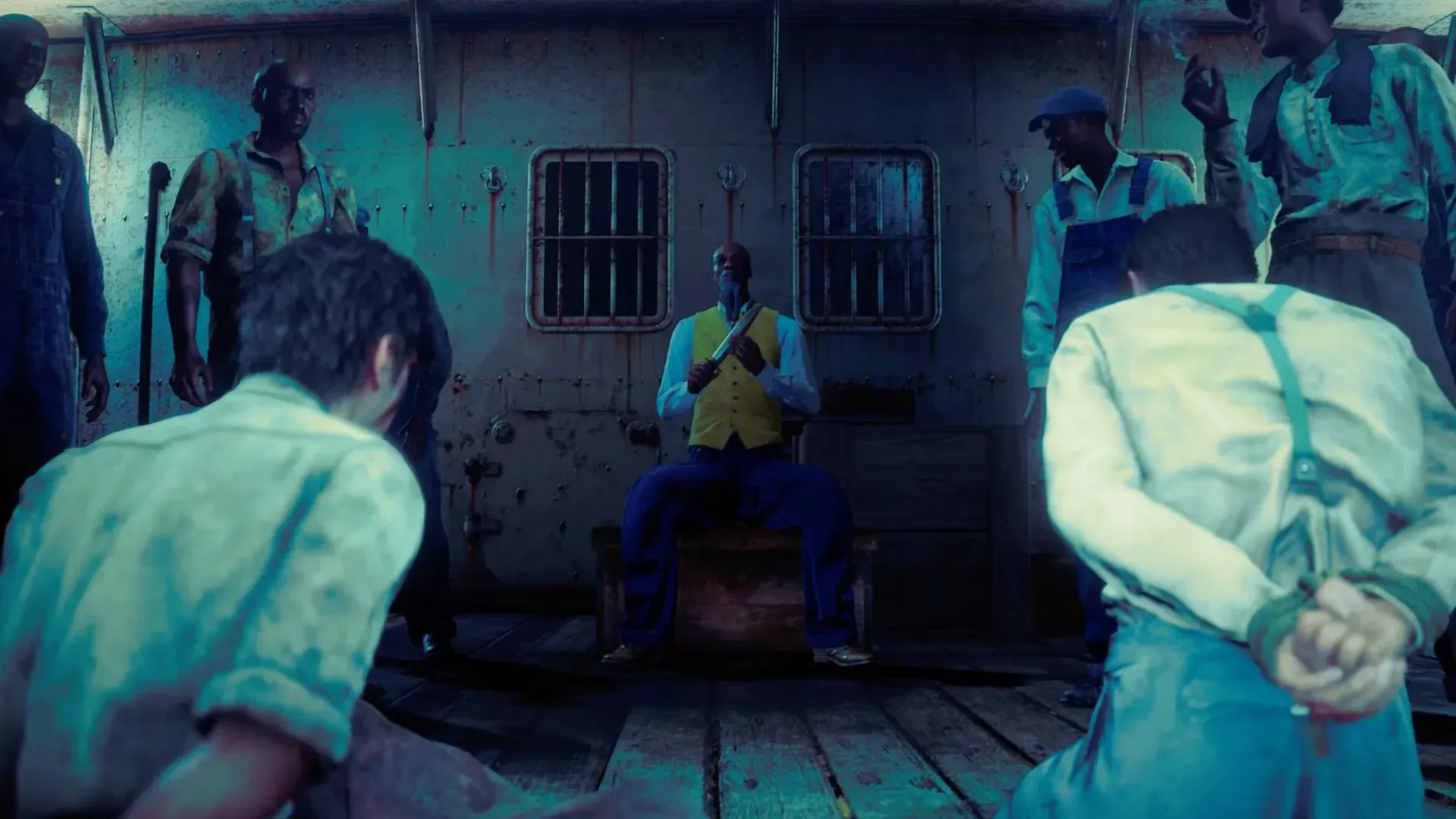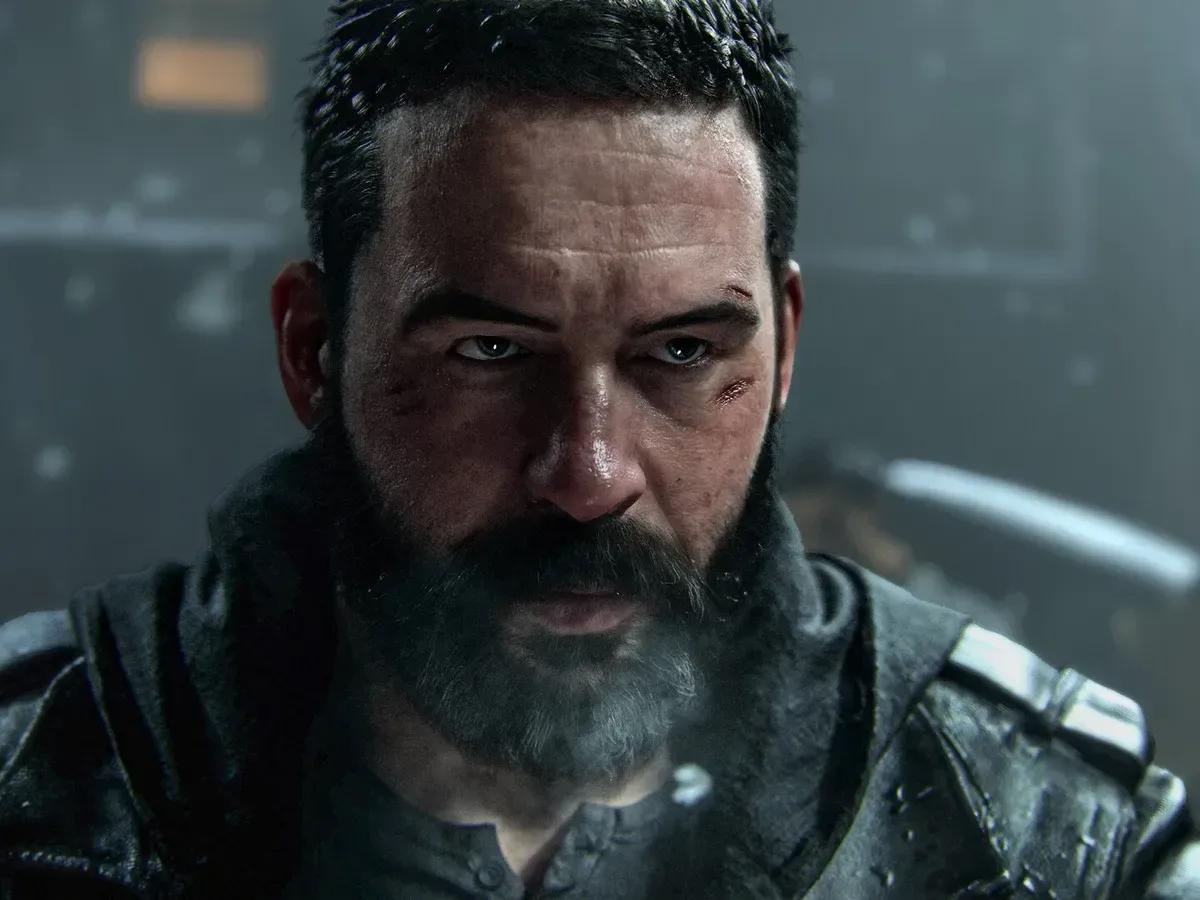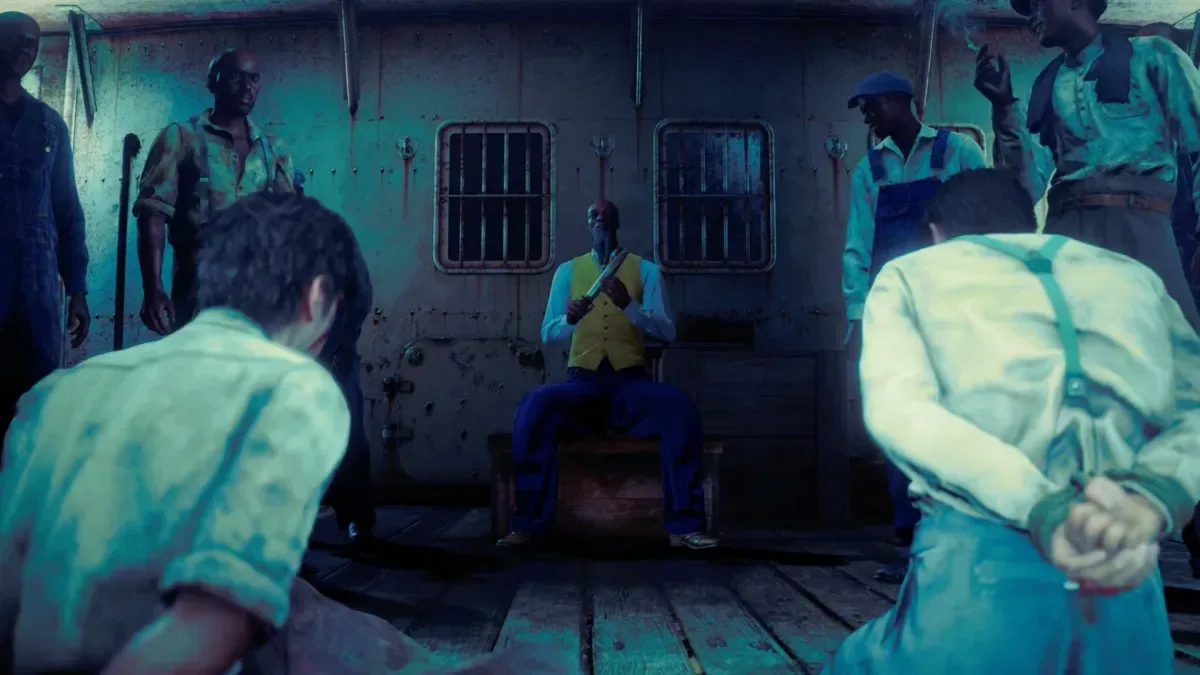
Stranger Than Heaven has narrowed its focus to the beginning of Makoto Daito’s long journey. The newly released Act 1: Kokura Story Trailer places Makoto’s first stop in Japan in Kokura, Fukuoka Prefecture, in 1915, while also showing an unexpected encounter with Orpheus, the character associated with Snoop Dogg. The trailer indicates that Orpheus helps Makoto learn to rap.
That is an unusual detail for a game whose story begins in 1915, and it gives the early chapter a distinct character-driven hook. Rather than simply presenting Makoto’s arrival as a historical backdrop, the footage frames the voyage and his meeting aboard a large ship as an important early turning point.
Ryu Ga Gotoku Studio’s game is described as a quasi-prequel and follows Makoto across five decades. Kokura is the opening destination in a larger itinerary that also includes Kure, Minami, Atami, and Shinjuku. Stranger Than Heaven launches January 15 for PlayStation 5, Xbox Series X|S, and PC.
Makoto’s route to Japan begins with language, work, and a shipboard meeting
The trailer outlines a simple but consequential chain of events. Makoto travels in order to learn English and find work, then resolves to go to Japan. On the ship, he asks Orpheus to take him there. Makoto subsequently reaches Kokura, establishing the location and period for Act 1.
Those details make the trailer more than a collection of atmospheric scenes. They provide the immediate motivation behind Makoto’s move and make clear that the story is beginning with someone in transit: a protagonist with practical reasons to leave, a desire to learn, and no settled place in the country he is about to enter.
The trailer’s title matters here. Calling it an “Act 1” story trailer suggests Kokura is not merely one historical stop among many. It is the narrative foundation for a journey that will eventually cover a 50-year span. The later settings named for the game—Kure, Minami, Atami, and Shinjuku—point to a structure in which location and era can change alongside Makoto’s life.
What “quasi-prequel” means in this context
A prequel is a story set before another established story. Describing Stranger Than Heaven as a quasi-prequel signals a looser relationship: the game has a prequel-like place around Ryu Ga Gotoku Studio’s wider body of work without the available information defining it as a straightforward direct lead-in.
That distinction is useful for players deciding how to approach the game. Nothing in the trailer details a required prior-game order, nor does it explain exactly how every setting, character, or plot thread connects to other Ryu Ga Gotoku Studio games. What is clear is the game’s own premise: Makoto Daito is the central figure, Kokura in 1915 is where the revealed story begins, and the narrative will extend across multiple decades.
Related coverage includes Stranger Than Heaven Trailer Follows Makoto’s First Steps in Kokura.
In other words, the trailer gives newcomers a starting point without requiring them to decode a larger chronology. It also gives returning fans a reason to watch for thematic or historical connections while avoiding promises that have not been made.
Orpheus gives the opening chapter an intentionally surprising angle
The appearance of Orpheus is the trailer’s most immediately unexpected element. Makoto apparently learning rap from the character creates a sharp contrast with the early-20th-century setting. That contrast is likely to be the point: the footage uses a modern cultural association to make Makoto’s first days in Japan feel less predictable than a conventional period-drama opening.
It is important, however, to separate what the trailer establishes from what remains unknown. It shows the two characters meeting and indicates that Orpheus teaches Makoto to rap. It does not establish whether rapping is a recurring gameplay system, a story-only moment, an optional activity, or a skill that affects the rest of the game. Nor does it explain the full nature of Orpheus’s role beyond this encounter and Makoto’s plea for passage to Japan.
That uncertainty is part of why the scene stands out. The trailer supplies a memorable premise, but it leaves room for the game to explain how this relationship fits into Makoto’s broader arc. With a 50-year story ahead, an early mentor-like encounter could be a defining memory, a brief detour, or simply the opening’s most playful note. The material currently available does not settle that question.
Kokura is the first anchor in a decades-spanning story
Kokura, in Fukuoka Prefecture, is explicitly identified as Makoto’s first stop in Japan. The year—1915—does more than date a single scene. It establishes the opening edge of the game’s 50-year scope. A story told across that amount of time has the capacity to show substantial change in a protagonist’s circumstances and in the places he passes through, although the trailer does not yet explain precisely how those transitions will be structured.
The announced sequence of places offers the clearest guide so far:
- Kokura is Makoto’s first destination in Japan and the setting of Act 1 in 1915.
- Kure, Minami, Atami, and Shinjuku are later destinations in the game’s larger journey.
- The full narrative spans 50 years.
For players, this means the appeal is not just a single city at a single moment. The central promise is movement through time as well as movement through Japan. Each named stop could mark a fresh stage in Makoto’s life, but that is an interpretation rather than a confirmed chapter-by-chapter plan. The trailer confirms the destinations and broad span, not the exact amount of time spent in each setting or the order and mechanics of every transition.
What the trailer confirms—and what it does not
Story trailers can prompt plenty of reasonable speculation, but the practical details are worth keeping tidy. The confirmed information is relatively focused.
- Makoto Daito is the protagonist.
- The new video is titled Act 1: Kokura Story Trailer.
- Makoto arrives in Kokura, Fukuoka Prefecture, in 1915.
- His path involves learning English and working before he decides to go to Japan.
- He meets Orpheus on a large ship and asks to be taken to Japan.
- The trailer indicates that Orpheus teaches Makoto to rap.
- The story spans 50 years and visits Kokura, Kure, Minami, Atami, and Shinjuku.
- The game is scheduled for January 15 on PS5, Xbox Series X|S, and PC.
What remains unconfirmed includes the game’s specific genre systems, the practical role of rap in play, whether every named city is freely explorable in the same way, and how the 50-year progression is divided. Players should also avoid assuming that a trailer scene is necessarily a feature demonstration. Narrative footage can introduce mood, relationships, and stakes without serving as a full mechanics overview.
Why the trailer matters ahead of launch
For a game with a multi-decade premise, opening with one sharply defined place and moment is a sensible way to establish emotional scale. Makoto is not introduced at the end of a legend or at the height of his power. The material instead begins with his attempt to reach Japan, his arrival in Kokura, and a strange but personal connection with Orpheus.
That approach puts character before chronology. The audience knows the journey will reach Shinjuku and encompass 50 years, but the trailer asks viewers to begin with the smaller question of what Makoto wants when he first arrives. Learning English, seeking work, crossing the sea, and asking a stranger for help form an immediately understandable set of motivations.
It also leaves the later chapters open. Kure, Minami, Atami, and Shinjuku now serve as landmarks on the horizon rather than fully explained settings. Fans looking for more wider-industry context while waiting can also follow developments such as Konami’s view of AI as a tool rather than a replacement for game creators.
For Stranger Than Heaven, the immediate takeaway is simpler: Makoto’s story starts in Kokura in 1915, and its first revealed chapter pairs migration, work, language, and an unlikely rap lesson. The rest of the 50-year journey is still largely under wraps, making the Act 1 trailer a starting point rather than a full explanation of where Makoto’s life will lead.